Proper 18

4th September 2022

Reflection (readings below)

Today’s reading from Jeremiah tells us that God is a God who takes an active and ongoing interest in what has been created. There is a similar  feel to the story in Isaiah of the vineyard which God tends and protects, but when it fails to produce the right fruits, God tears downs it protective hoarding and allows wild animals in. Creation is not a watch which the maker has made and wound up, leaving it to tick without deviation ever after (an analogy put forward by William Paley in the 1800s). Rather creation is always in the process of change and adaptation – and that includes humanity too. Sadly at the moment humanity is adding to this process of change at a faster rate than the rest of creation can accommodate, leading to some dire consequences. 

The reading from Jeremiah might be read as an assertion that God arranges for bad things to happen as a way of promoting repentance and a change of heart in humanity.  That bad things do and are happening I agree; that they are a consequence arising from bad actions by humans I also agree – although it is seldom the same group of humans who both suffer and cause the suffering.   What I don’t believe is that God deliberately wills bad things to happen.  In this particular parable from Jeremiah I find hope, it says that God notices when things are going badly with the clay, and by dint of reshaping the situation, produces something good in its place. 

Paul’s letter to Philemon is also about reshaping the situation. Onesimus was the one-time slave of Philemon. For some reason, Onesimus has run away which would entitle Philemon to punish him severely. Paul however has found Onesimus to be an excellent companion and wants to retain him as such. But at the same time Paul wants this reshaping of the situation – this bringing good out of bad  – to come from Philemon – ie that Philemon release Onesimus from slavery and allow him to be Paul rather than Philemon’s helper. Earlier in the letter Paul has written of ‘all the good that we may do for Christ’ and here is something that both Paul and Philemon and Onesimus too, can do in the service of Christ. Let your motivation, says Paul to Philemon, be not duty but love!

The gospel passage from Luke talks of hate in a way which is difficult to understand. Is Jesus really asking us to hate those around us? In the passage Jesus goes onto talk about working out one’s commitment: there is no point starting to build a tower if you can’t afford to finish it, or waging a war if you have no means of seeing it through to the end. By the same token, Jesus is asking can we be his disciples with less than complete commitment? And for commitment read commitment that comes not from duty but from love.  

The period from 1st September to 4th October is recognised as Creation-tide and this year’s strap line   is ‘Listen to the voice  of creation”. If we were to listen to the voice of creation right now what would we hear? Anguish and pain, fear and desperation, from all those parts affected by wild fires and heat waves, by drought, by floods and storms, by starvation and homelessness. This year more than ever before, we are hearing and seeing the devastating affects of climate change. What might once have seemed like a future risk is now very clearly a present and dangerous reality. The need for change, the need to reshape the way we live, the way we farm the land and  the food we eat, the way we travel, the ways in which we heat our homes and generate energy, the ways we work with rather than against nature, the ways in which we support one another, is now so very clear. But do we have the commitment to go all the way? To make all the changes that are needed? Do we have power to act out of love and not just duty? To go that bit further, to give that bit more? To give up all that we possess to do ‘all the good we may for Christ’?

Jeremiah 18:1-11

The word that came to Jeremiah from the Lord: “Come, go down to the potter’s house, and there I will let you hear my words.” So I went down to the potter’s house, and there he was working at his wheel. The vessel he was making of clay was spoiled in the potter’s hand, and he reworked it into another vessel, as seemed good to him.

Then the word of the Lord came to me: Can I not do with you, O house of Israel, just as this potter has done? says the Lord. Just like the clay in the potter’s hand, so are you in my hand, O house of Israel. At one moment I may declare concerning a nation or a kingdom, that I will pluck up and break down and destroy it, but if that nation, concerning which I have spoken, turns from its evil, I will change my mind about the disaster that I intended to bring on it. And at another moment I may declare concerning a nation or a kingdom that I will build and plant it, but if it does evil in my sight, not listening to my voice, then I will change my mind about the good that I had intended to do to it. Now, therefore, say to the people of Judah and the inhabitants of Jerusalem: Thus says the Lord: Look, I am a potter shaping evil against you and devising a plan against you. Turn now, all of you from your evil way, and amend your ways and your doings.

Psalm 139:1-5, 12-17

1 Lord, you have searched me out and known me; *
you know my sitting down and my rising up;
you discern my thoughts from afar.

2 You trace my journeys and my resting-places *
and are acquainted with all my ways.

3 Indeed, there is not a word on my lips, *
but you, O Lord, know it altogether.

4 You press upon me behind and before *
and lay your hand upon me.

5 Such knowledge is too wonderful for me; *
it is so high that I cannot attain to it.

12 For you yourself created my inmost parts; *
you knit me together in my mother’s womb.

13 I will thank you because I am marvellously made; *
your works are wonderful, and I know it well.

14 My body was not hidden from you, *
while I was being made in secret
and woven in the depths of the earth.

15 Your eyes beheld my limbs, yet unfinished in the womb;
all of them were written in your book; *
they were fashioned day by day,
when as yet there was none of them.

16 How deep I find your thoughts, O God! *
how great is the sum of them!

17 If I were to count them, they would be more in number than the sand; *
to count them all, my life span would need to be like yours.

Philemon 1-21

Paul, a prisoner of Christ Jesus, and Timothy our brother,

To Philemon our dear friend and co-worker, to Apphia our sister, to Archippus our fellow soldier, and to the church in your house:

Grace to you and peace from God our Father and the Lord Jesus Christ.

When I remember you in my prayers, I always thank my God because I hear of your love for all the saints and your faith toward the Lord Jesus. I pray that the sharing of your faith may become effective when you perceive all the good that we may do for Christ. I have indeed received much joy and encouragement from your love, because the hearts of the saints have been refreshed through you, my brother.

For this reason, though I am bold enough in Christ to command you to do your duty, yet I would rather appeal to you on the basis of love– and I, Paul, do this as an old man, and now also as a prisoner of Christ Jesus. I am appealing to you for my child, Onesimus, whose father I have become during my imprisonment. Formerly he was useless to you, but now he is indeed useful both to you and to me. I am sending him, that is, my own heart, back to you. I wanted to keep him with me, so that he might be of service to me in your place during my imprisonment for the gospel; but I preferred to do nothing without your consent, in order that your good deed might be voluntary and not something forced. Perhaps this is the reason he was separated from you for a while, so that you might have him back forever, no longer as a slave but more than a slave, a beloved brother– especially to me but how much more to you, both in the flesh and in the Lord.

So if you consider me your partner, welcome him as you would welcome me. If he has wronged you in any way, or owes you anything, charge that to my account. I, Paul, am writing this with my own hand: I will repay it. I say nothing about your owing me even your own self. Yes, brother, let me have this benefit from you in the Lord! Refresh my heart in Christ. Confident of your obedience, I am writing to you, knowing that you will do even more than I say.

Luke 14:25-33

Now large crowds were traveling with Jesus; and he turned and said to them, “Whoever comes to me and does not hate father and mother, wife and children, brothers and sisters, yes, and even life itself, cannot be my disciple. Whoever does not carry the cross and follow me cannot be my disciple. For which of you, intending to build a tower, does not first sit down and estimate the cost, to see whether he has enough to complete it? Otherwise, when he has laid a foundation and is not able to finish, all who see it will begin to ridicule him, saying, `This fellow began to build and was not able to finish.’ Or what king, going out to wage war against another king, will not sit down first and consider whether he is able with ten thousand to oppose the one who comes against him with twenty thousand? If he cannot, then, while the other is still far away, he sends a delegation and asks for the terms of peace. So therefore, none of you can become my disciple if you do not give up all your possessions.”

Counting on …day 298 

3rd September 2022 

Cycles of all shapes and sizes benefit from regular cleaning and maintenance: and you are rewarded with a speedy and comfortable ride. Even in the summer cycles get dirty with a grime that clogs moving parts. Once cleaned, lightly oil the chain. Check brakes and adjust or replace as necessary: in wet weather well adjusted brakes are an essential safety measure.

As the nights begin to draw in, make sure that you have a set of functioning front and rear lights. 

Counting on … day 297

2nd September 2022

As the summer holidays end and schools go back, it feels as if a new term is starting for us all. This can be a good time for setting in place new intentions or resolutions about how we live and how we care for the world around us. 

Whilst the weather is still mild, it is a good time to develop the habit of active travel – using walking, cycling and public transport as our go-to means of getting around. Good for the environment and good for both our physical and mental health.

Green Tau: There is no ‘away’ in a throw-away society

1st September 2022

We can go away on holiday to the sea side, to the mountains, to a tropical islands or a city of culture. We take away 3 from 5, or 99 from 100, and get a number. When we look away, we look in the  opposite direction. But where is away on a throw-away society?

It is said that if Henry VIII had thrown away a plastic toothbrush it would still exist today – plastics take 400- 500 years to biodegrade. In the UK we throw away in excess of 200 million toothbrushes every year. These end up in landfill, incinerators or in the ocean. As they degrade they release toxins into the water or – in the case of the incinerator – into the air. 

Plastic waste is a global issue even though most of it originates in the developed world. As plastic degrades it breaks into smaller and smaller pieces. These end up in the digestive systems of various creatures, but especially so in sea creatures, in the ice on remote mountains, and in the water we all drinks. Plastic particles can even transfer from mother to foetus through the placenta.  You cannot throw plastic away. It always goes somewhere!  There is nowhere where it can be ‘away’ from us. 

Terracycle and Colgate together offer a recycling scheme for plastic toothbrushes,  toothpaste tubes and caps, floss containers and packaging and electric toothbrush heads. So for any plastic toothbrushes etc that you are currently using, there is at least one means of ensuring that the ‘away’ to which they go is to be recycled into another product rather than polluting the environment meant. Colgate also sells a toothbrush made from 100% recycled plastic with 100% plant-based nylon bristles which maybe helping to close the loop on this product. Hopefully we can all act now – whether by using a recycled or a bamboo toothbrush – to prevent this ‘mound’ of ex-toothbrushes from continuing to grow 

One of the easiest plastics to recycle is PET (polyethylene terephthalate) which is the type of plastic used to make drinks bottles – type 1 plastic as marked inside the recycle triangle. This can be recycled to create another plastic bottle – an rPET bottle. You may be able to find rPET bottles used for Buxton Spa and Evian water and for Coca Cola but most bottles are still made from virgin PET. (PET plastic cannot be recycled indefinitely without the addition of a proportion of new plastic resin so recycling isn’t the complete answer).

It is estimated that an average of 35.8 million plastic bottles are used every day in the UK, but only 19.8 million are recycled (https://www.recyclenow.com/recycle-an-item/plastic-bottles). For a little more than half of PET bottles, ‘away’ means a new life as recycled plastic, but for the remainder ‘away’ may still be landfill, the incinerator or the ocean. 

For other plastics the recycling rates are not as rosey. HDPE plastic – high density poly ethylene – is widely used for plastic bags, milk bottles, shampoo and laundry bottles etc. Whilst it can be recycled into more bottles, drain pipes, plastic sheeting etc, only 12% of all plastic bags are recycled and 28% of milk and water bottles are recycled (https://www.plasticexpert.co.uk/plastic-recycling/hdpe-plastic-recycling/). 

Other plastics are even less likely to be recycled. Polystyrene for example – whilst it can be recycled, there are very few recycling plants (apparently there is one in Cardiff but none in London!) and no kerb side collections. Other plastics can be hard to recycle because they are a composite of several materials which are hard to separate – this has long been the case with coffee cups made from paper and lined with polythene. There are now an increasing number of recycling facilities for such cups. An optimistic estimate suggests that 1 in 25 disposable coffee cups are recycled (https://www.recycling-magazine.com/2019/10/01/reducing-coffee-waste/). But for most coffee cups ‘away’ means landfill, incinerator or the ocean.

Despite all these health threatening ‘aways’ which is where waste most plastic goes, we are still producing more and more new plastic every year. According to the OECD global plastics production doubled between 2000 to 2019 to reach 460 million tonnes. Much of this is used for packaging (146 million tonnes in 2015 (https://ourworldindata.org/grapher/plastic-production-by-sector)

It is a scary thought that there is no real ‘away’ where we can throw what we wish to discard. What happens to all the shoes, the clothes, the half empty paint tins and paint brushes, the punctured inner tubes and bike tyres, car tyres, shower curtains, kitchen sinks, soft toys, the leaky hot water bottle etc that we will throw throw away during our life times. Sometimes there be recycling options but not always and even then one wonders what the end product is. We have a foam mattress bought when we were first married. It is probably coming near to the end of its useful life as a mattress but I do not think there is any safe ‘away’ where we can send it. Were we buying that same mattress now I know we think and choose differently. 

Whenever we acquire new things, we need to consider what will be its destination when it is has ceased to be useful in its current formation. Can this pair of trainers be recycled even though it comprises several materials? Will it just end up as road fill? Can this polyester running shirt be recycled into a new shirt? Can this iron/ kettle/ printer be recycled, its metal,and plastic parts separated and reprocessed? 

Should this be solely our responsibility as consumers? The Extended Producer Responsibility is an approach that says that the manufacture must take on responsibility for their products when they re@ch their end of life. This would refurbishing and/ or recycling the product. Placing the responsibility manufacturer should encourage more sustainable designs and manufacturing processes.  Such policies are slowly be introduced in a number of countries. As a result of current legislation European manufacturers, including British ones, are responsible for taking back and recycling in all batteries, and waste electronics and electrical equipment – The Waste Electrical and Electronic Equipment Directive is the European Community Directive or WEEE. 

I am hoping that such a scheme will be introduced for mattresses (and applied retroactively)

Counting on … day 296

1st September 2022

Today is the beginning of creation-tide which is a season observed by many churches and denominations across the globe. Last year I put together a series of images, one for each day, under the title of Falling in Love Again. Here is the link to the first one – https://greentau.org/2021/09/01/falling-in-love-again/

Counting on … day 295

31st August 2022

A message from our milk delivery service: “Rinse, Return, Repeat. Did you know, our glass bottles are reused an average of 25 times before being recycled? But, this is only possible with your help!

We’re sometimes unable to re-use returned glass bottles if there are too many traces of juice and milk left behind, and this is an important part of ensuring our cycle is zero waste.”

– a message which equally applies to plastic food cartons that we put out for recycling.

Counting on…. Day 294 

30th September 2022

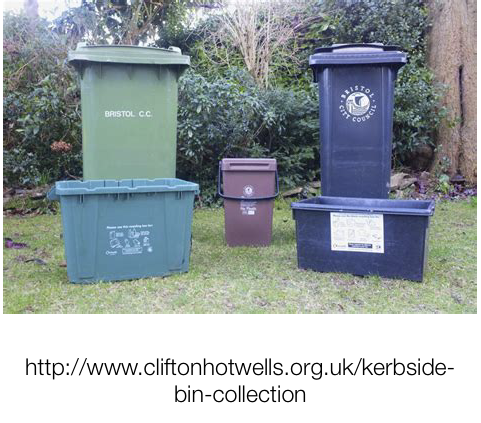
Much of the plastic that ends up polluting the oceans gets there via streams and rivers. And the plastic that ends up in the streams and rivers is either litter that has been thoughtlessly discarded or plastic that has fallen or been blown out of recycling bins. We can help in three ways – firstly not thoughtlessly discarding plastic (which I am sure we wouldn’t). Secondly by picking up litter and disposing of it safely. Thirdly by ensuring that the plastic in our recycling bins is flattened as much as possible and packed (eg stacking similar sized pots or trays together) so that there are no loose pieces that can easily be dislodged. Aim for a neat and condensely  packed  bin. 

Counting on … day 293 

29th August 2022


Pollution of our water system can begin at home. Only three things should go in the toilet – pee, poo and toilet paper. (Other paper, even things like paper serviettes shouldn’t be thrown down the loo – they are not designed to break down quickly and can cause blocked drains). Wet wipes, cotton buds, sanitary products, sticking plasters, dental floss etc should not be discarded via the toilet. NB You can biodegradable dental floss which can go into the compost bin. 

In the kitchen what goes down the drain should be limited to waste water and appropriate amounts of soap and cleaning fluids. Fat and oil (wipe excess up with a paper towel or piece of news paper) and food waste, including coffee grounds, should go into the food waste bin. Food waste and fat can block drains, and chemicals such as white spirit can cause pollution. 

Proper 17

28th August 2022 – readings are below

Reflection 

Jeremiah asks an interesting question: what wrong have we found with God? In other words, where do we feel God has let us down, or where God has messed up? 

Certainly there are times when I feel God is aloof, that I am on one side of a high wall and God is on the other. There are times when I feel that prayer is a pointless exercise and that its consolation is minimal. There are times when bad things happen and I question why God didn’t intervene. Jeremiah’s follow up question is also interesting: when did we last vocalise these thoughts? When do we ask these sorts of questions with our friends, or in our family, or – indeed – in church? Have we ever asked these questions of God? Are we too frightened to ask? Are we scared that we might find that our faith is superficial? Are we afraid that others will look down at us for being so unfaithful?

It seems to me that if we can’t ask those questions, if we can’t plumb the depths and scale the heights to find answers, then our faith is pretty pointless. Because to be honest bad things do happen. We do feel abandoned by God. We do pray without seeing results. What Jeremiah is suggesting is that it may be we who have ignored God, we who have tried to do things under our own steam,  we who have not wanted the input God offers. I am not sure that this is the complete answer. Often our individual actions are rendered fruitless by more powerful systems and institutions. This perhaps is why Jeremiah is addressing his words not individuals but to both nations – Judah and Israel – and to a groups – the priests and the law makers. Would that they had all followed God’s law!

As ever we come back to those two key laws: Love God with all your being, and love your neighbour as yourself. The writer of Hebrews is spot on: let mutual love continue! But the writer goes on to demonstrate that this is not fulfilled by merely saying, ‘I love my you’. Rather you need to imagine that you are there with your neighbour in their plight or situation. Before we can genuinely say ‘we love you’ to those asylum seekers who reach our shores on barely seaworthy boats, we need to empathise with what has pushed them to take those risks, to understand what fears they feel arriving unwanted in an alien land. When we can do that, then we will better know to actually express the love they need. Before we can genuinely say ‘we love you’ to people in war zones – whether in Ukraine or Ethiopia – we need to empathise with what their fears are, what it is that is their greatest loss, what their hopes are. Before we can genuinely say ‘we love you’ to people facing poor harvests in Zimbabwe, we need to understand how it feel to loose your crops, to understand what the effects are on their lives, how they hope to come through the tragedy.  Before we say simply mouth concern for the people of small islands states like Vanuatu, we need to understand how they feel about the future, about rising sea levels and the constant warming of the ocean, and how they feel about the response of the developed nations, whether they feel empowered or patronised by the rest of the world.

The writer of the Hebrews then shows how our love for our neighbour turns out to be the means by which we show our love for God. To do good, to share our wealth,  is to offer a sacrifice that pleases God.  And the writer of Hebrews suggests that it is in this way – eschewing love of money and  being content with what we have – we will feel close to and protected by God. 

In a similar vein, Jesus tells us that if we only invite those who can repay us to our feasts, we have fallen short. Rather it is in inviting those who cannot return the complement, that we are blessed. If we only provide for people who can afford to pay – whether that is food or fuel or education or healthcare or climate adaptation – then we will simply be adding to the suffering in the world. But if we provide for those who cannot afford it, we will transform the world bringing in God’s heavenly rule here on earth. If we hear and desire the Word of God, then, as the psalmist says, we will be filled with good things.

Jeremiah 2:4-13

Hear the word of the Lord, O house of Jacob, and all the families of the house of Israel. Thus says the Lord:

What wrong did your ancestors find in me
that they went far from me,

and went after worthless things, and became worthless themselves?

They did not say, “Where is the Lord
who brought us up from the land of Egypt,

who led us in the wilderness,
in a land of deserts and pits,

in a land of drought and deep darkness,
in a land that no one passes through,
where no one lives?”

I brought you into a plentiful land
to eat its fruits and its good things.

But when you entered you defiled my land,
and made my heritage an abomination.

The priests did not say, “Where is the Lord?”
Those who handle the law did not know me;

the rulers transgressed against me;
the prophets prophesied by Baal,
and went after things that do not profit.

Therefore once more I accuse you, says the Lord,
and I accuse your children’s children.

Cross to the coasts of Cyprus and look,
send to Kedar and examine with care;
see if there has ever been such a thing.

Has a nation changed its gods,
even though they are no gods?

But my people have changed their glory
for something that does not profit.

Be appalled, O heavens, at this,
be shocked, be utterly desolate,

says the Lord,

for my people have committed two evils:
they have forsaken me,

the fountain of living water,
and dug out cisterns for themselves,

cracked cisterns
that can hold no water.

Psalm 81:1, 10-16

1 Sing with joy to God our strength *
and raise a loud shout to the God of Jacob.

10 I am the Lord your God,
who brought you out of the land of Egypt and said, *
“Open your mouth wide, and I will fill it.”

11 And yet my people did not hear my voice, *
and Israel would not obey me.

12 So I gave them over to the stubbornness of their hearts, *
to follow their own devices.

13 Oh, that my people would listen to me! *
that Israel would walk in my ways!

14 I should soon subdue their enemies *
and turn my hand against their foes.

15 Those who hate the Lord would cringe before him, *
and their punishment would last for ever.

16 But Israel would I feed with the finest wheat *
and satisfy him with honey from the rock.

Hebrews 13:1-8, 15-16

Let mutual love continue. Do not neglect to show hospitality to strangers, for by doing that some have entertained angels without knowing it. Remember those who are in prison, as though you were in prison with them; those who are being tortured, as though you yourselves were being tortured. Let marriage be held in honour by all, and let the marriage bed be kept undefiled; for God will judge fornicators and adulterers. Keep your lives free from the love of money, and be content with what you have; for he has said, “I will never leave you or forsake you.” So we can say with confidence,

“The Lord is my helper;
I will not be afraid.

What can anyone do to me?”

Remember your leaders, those who spoke the word of God to you; consider the outcome of their way of life, and imitate their faith. Jesus Christ is the same yesterday and today and forever.

Through him, then, let us continually offer a sacrifice of praise to God, that is, the fruit of lips that confess his name. Do not neglect to do good and to share what you have, for such sacrifices are pleasing to God.

Luke 14:1, 7-14

On one occasion when Jesus was going to the house of a leader of the Pharisees to eat a meal on the sabbath, they were watching him closely.

When he noticed how the guests chose the places of honour, he told them a parable. “When you are invited by someone to a wedding banquet, do not sit down at the place of honour , in case someone more distinguished than you has been invited by your host; and the host who invited both of you may come and say to you, `Give this person your place,’ and then in disgrace you would start to take the lowest place. But when you are invited, go and sit down at the lowest place, so that when your host comes, he may say to you, `Friend, move up higher’; then you will be honoured in the presence of all who sit at the table with you. For all who exalt themselves will be humbled, and those who humble themselves will be exalted.”

He said also to the one who had invited him, “When you give a luncheon or a dinner, do not invite your friends or your brothers or your relatives or rich neighbours, in case they may invite you in return, and you would be repaid. But when you give a banquet, invite the poor, the crippled, the lame, and the blind. And you will be blessed, because they cannot repay you, for you will be repaid at the resurrection of the righteous.”

Counting on … day 292 

28th August 2022

For vegans – and others – choose sustainable seaweed! 

Seaweed can be eaten as a food in its own right and as an additive in food and non-products (such as toothpaste). It can also be used in making fertilisers, plastic alternatives and in animal food. 98% of seaweed thus consumed is grown commercially – and it is an expanding sector. Japan is the largest producer of seaweed. Here in the UK most seaweed is harvested from the wild – albeit commercially. If you want to give seaweed a try, check out companies such as the Cornish Seaweed Company https://www.cornishseaweed.co.uk/ or Mara Seaweed https://maraseaweed.com/