
22nd October 2026
The Impact of fertilisers
Having explored agriculture in terms of carbon, land-use and water, Goulson next turns to fertilisers and pesticides and their effect on our food and our environment. Fertilisers are used to improve crop yields by improving nutrient levels in the soil. Wood ash, guano and other manures, blood, ground up bones, etc have been used to increase levels of nitrogen, phosphorus and potassium in the soil. Organic farming uses techniques such as growing nitrogen fixing crops – clovers, beans and peas – well as adding animal manure, plant compost and sea weed, and ploughing in sacrificial green cover crops.
Non-organic farms now use primarily synthetic fertilisers made from fossil fuels (which is why the price of fertilisers is currently rising as fuel prices rise because of the conflict in the Middle East).
Synthetic fertilisers have certainly contributed to a significant rise in crop yields but they have also caused pollution. In their production and use they release substantial greenhouse gases. They cause poisonous algal blooms as they leach into water ways, killing of aquatic plants and creatures. These consequences of fertiliser use are known as eutrophying emissions.
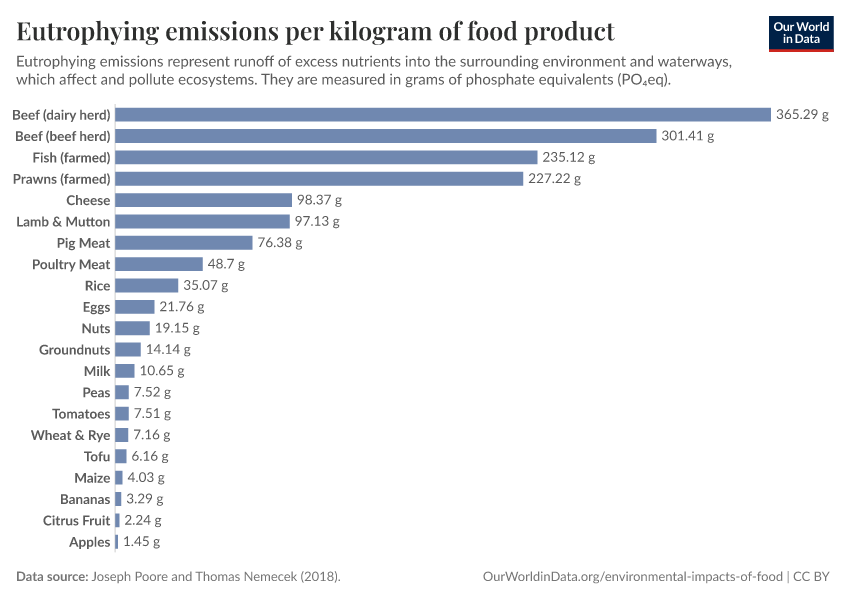
As with other issues, some foods are more reliant on fertilisers than others. When it comes to meat and animal products – which again are at the top end of the table – much of that fertiliser is uses to produce animal fodder).


