Counting on … day 186

7th October 2024

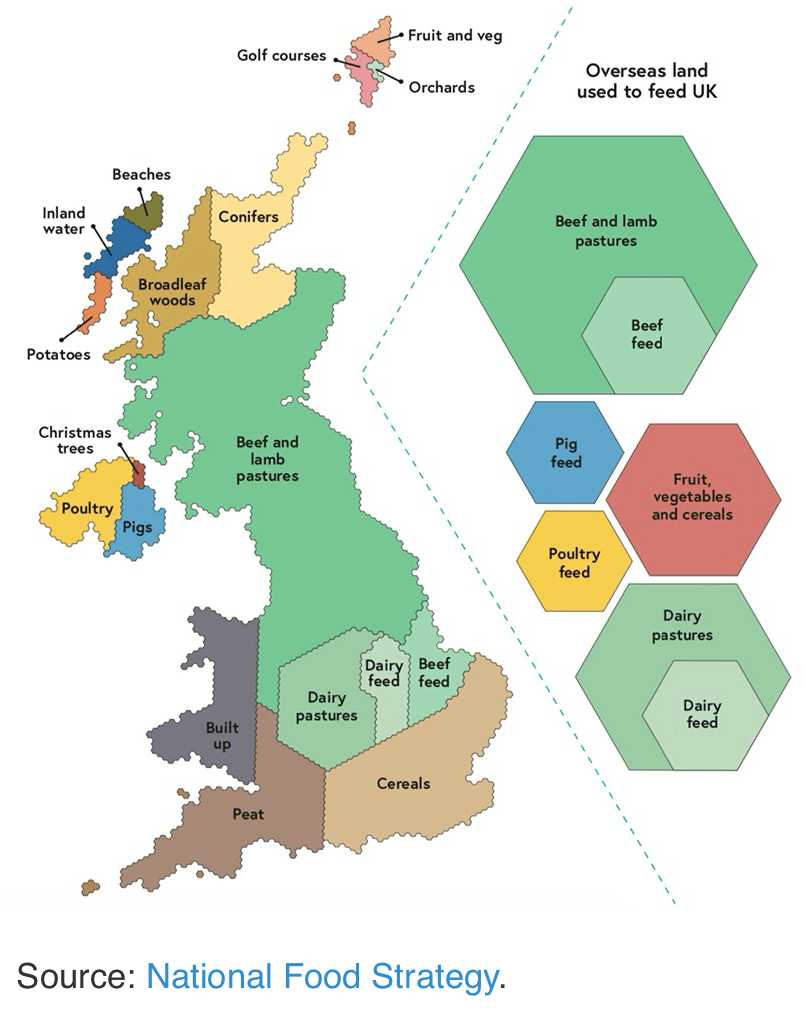
We often think of the Yorkshire moors and the fells of the Lake District as being naturally wild areas. But in fact they are areas shaped by human intervention and in particular by livestock grazing, and sometimes this is depressing localised biodiversity. For example over stocking with sheep can lead to a lack of plant diversity including a lack of tree saplings, with a detrimental impact on insects and birds, and the increased risk of flooding and landslides.

However things could be different as Rewild Britain explains in their web site –

https://www.rewildingbritain.org.uk/why-rewild/what-is-rewilding/an-introduction-to-rewilding/rewilding-the-uplands

And as can be seen in on the ground examples such as the rewilding of Ennerdale – https://www.wildennerdale.co.uk/

Counting on … day 185

4th October 2024

Rewiggling rivers – allowing them to follow their natural winding tendency – and allowing them to spill out into their local floodplain, has the same affect as a rain garden but in a larger scale. This Rewilding benefits biodiversity and reduces unpredictable flood risks. The following is from Thames21:-

“ Reintroducing a more natural system that creates space for increased water flow means less flooding and reduces the pressure on London’s struggling drainage system. Improvements like installing reed beds not only create new habitats for wildlife, but help to trap pollutants before they flow downstream. 

“Removing barriers and concrete channels, and creating beautiful new wetland areas brings rivers back into the heart of communities; makes them more biodiverse and improves the wellbeing levels of people who visit them. Those living near the river restoration projects across London report a better community spirit as the amount of shared space, and opportunities for volunteering and community action, have increased.”(1) 

We should be encouraged that so much work is happening and so be encouraged to press for and support the so much more that could be done!

(1) https://www.thames21.org.uk/joinacampaign/londonriversweek2023/rewilding-londons-rivers/

Counting on … day 184

3rd October 2024

Hard surfaces let the rain runoff rapidly increasing the risk of flooding. Hard surfaces inhibit the good health of underlying soil and preclude plant life. Replacing hard surfaces with something more amenable can boost biodiversity and improve the visual appearance of the landscape. 

In the Netherlands this has become the source of competition – who can make the biggest improvement to nature by ‘Whipping out the paving stones’ and wining a golden tile prize?

Counting on … day 183

2nd October 2024

Church yards and gardens are places where greater biodiversity can be encouraged. Land around churches has often been undisturbed for many years allowing naturally for a high degree of biodiversity. The land can also be welcome green space in the midst of more built up urban environment. And there is more that can be achieved if there is a sustained focus on improving biodiversity.  

“Churchyards can be surprisingly rich in nature, and many of the plants, fungi, and animals found within a churchyard predate the church buildings and help identify the timelessness of these places and the consistent management they have received year after year.” (1) 

In February 2024 the Church of England’s  General Synod has backed a series of measures to promote biodiversity. “The Synod approved further action to increase biodiversity including work towards drawing up environmental policy and land management plans for Dioceses and the recording of biodiversity in church green spaces. The Synod also backed a request for the Church Commissioners to report back to the General Synod within three years on their progress in enhancing and supporting biodiversity across their agricultural and forestry land.

“Introducing the debate at the Synod, the Church of England’s lead Bishop for the Environment, Graham Usher, said there was a need for immediate action to promote biodiversity. He warned that the UK is now one of the most ‘nature-depleted’ countries in the world.” (2)

(1) https://www.churchofengland.org/resources/churchcare/advice-and-guidance-church-buildings/churchyard-wildlife

(2) https://www.churchofengland.org/media/press-releases/general-synod-backs-action-tackle-biodiversity-crisis

Counting on … day 182

1st October 2024

Variations of SUDs and rain gardens can -and are being – used in schools to promote biodiversity (more and varied planting) and creating more exciting play areas to stimulate awareness of the environment. 

“We designed, built, and installed 564 SuDS Rain Planters in 72 of London’s schools most vulnerable to flooding. Through this project, we aimed to create sustainable, climate-resilient environments while educating children on the importance of nature in combatting global warming.” (1)

Playgrounds can be designed to be rain-playgrounds which use rain to add to the diversity of play opportunities. In Gothenburg they have purposely built rain-play grounds that have “been designed to be particularly fun when it’s wet. There are dips in the ground to make the puddles deeper and more satisfyingly splashy, and water gushes down channels from lilypad-shaped rain shelters into a sandpit where children can make pools, rivers and dams. “The kids love to go on their bicycles through the puddles, and my son likes to dig the sands, so some parts of the playground are really nice when it rains,”” (2)

(1) https://www.meristemdesign.co.uk/blog/rain-gardens-vs-suds-planters-differences

(2) https://www.theguardian.com/world/2021/may/06/wetter-the-better-gothenburgs-bold-plan-to-be-worlds-best-rainy-city?CMP=Share_iOSApp_Other

Counting on … day 181

30th September 2024

Householders can reduce the peak pressure on storm drains by making use of the SUDs principles. 

Eg Gravel and setts rather than solid concrete drive ways, water butts (although these will need emptying before heavy storms), rain gardens and ponds etc. 

The RHS explains that “a rain garden is a shallow area of ground or dip which receives run-off from roofs and other hard surfaces. It is planted with plants that can stand waterlogging for up to 48 hours at a time. More drought-tolerant plants are used towards the edges. Storm water fills the depression and then drains. A rill or channel of some kind will connect the roof downpipe to the dip. You can include other linking elements such as a water butt, rain chain, stormwater planter, or pond.” (1)  

The Wetlands and Wildfowl Trust has also useful information about creating rain gardens – https://www.wwt.org.uk/discover-wetlands/gardening-for-wetlands/how-to-make-a-rain-garden/

(1) https://www.rhs.org.uk/garden-features/rain-gardens

Counting on … day 180

27th September 2024

Sustainable urban drainage systems (SUDS) rather than using drainage pipes as the immediate means of collecting rainwater, use natural features to slow and temporarily collect rainwater. This reduces the peak demands placed on drainage systems – peaks which often overwhelm the system.

SUDS may include planting flowerbeds or other green verges alongside roads and pavements, replacing hard surfaces with softer surfaces – eg concrete with gravel – and creating rain gardens, ponds and streams or rills. Rain in this way can be used to create attractive features, new habitats, and increased biodiversity.

For more information see https://www.susdrain.org/delivering-suds/using-suds/background/sustainable-drainage.html

Counting on … day 179

26th September 2024

Increasing biodiversity can reduce the risk or extent of flooding. A range of trees and shrubs, grasses and other plants will improve the capacity of the soil to absorb water and slow the rate at which falling water reaches the ground. A diverse range of plants – and therefore of root systems – helps stabilise the soil, limiting how much is washed away and securing banks. 

https://www.wildlifetrusts.org/nature-can-help-prevent-flooding

https://www.woodlandtrust.org.uk/trees-woods-and-wildlife/british-trees/flooding/

Counting on … day 178

25th September 2024

What about edible playgrounds in our schools?

“Edible Playgrounds offer a lively, engaging, multi-sensory way to teach children about growing and eating healthy food. Aside from the physical health benefits that eating well brings, learning in an outdoor environment combats Nature Deficit Disorder and has been shown to increase mental health by boosting mood, confidence and self-esteem. Furthermore, allowing the children to connect with nature develops attentiveness and self-reliance in the pupils, leading to more sustainable behaviours in the long term.” (1)

Equally what about a school orchard?

“With a little maintenance and planning, trees give back so much more than we put into them. But they do need to be cared for, especially in the tender early years of their growth”. (2)

(1) https://www.treesforcities.org/our-work/schools-programme/edible-playgrounds

(2) https://treecouncil.org.uk/grants-and-guidance/our-grants/orchards-for-schools/

Counting on … day 177

24th September 2024

Community gardens can not only boost biodiversity but also the supply of locally grown food. 

“Pam Warhurst … the founder of Incredible Edible, a food-focused guerrilla gardening movement, wants the state to get out of people’s way. “The biggest obstacle is the inability of people in elected positions to cede power to the grassroots,” she says… Her big idea is guerrilla gardening – with a twist. Where guerrilla gardeners subvert urban spaces by reintroducing nature, Incredible Edible’s growers go one step further: planting food on public land and then inviting all-comers to take it and eat. “I used food because it seemed to me that we needed to act fast,” Warhurst says. “We needed to get experience as soon as we could, and probably food was the thing that we could demonstrate an alternative way of living around, in a really simple way.”” (1)

Here in London the Edible Bus Stop in Lambeth grows a range of flowering plants, herbs, vegetables and fruit trees. https://theediblebusstop.com/the-kerb-garden/

  1. https://www.theguardian.com/environment/2024/sep/13/radical-food-group-incredible-edible-guerrilla-gardening?