Counting on … day 1.132

19th July 2023 

Today I signed a petition organised by Friends of the Earth calling on the government to plant more trees to help us adapt our environment to cope with increasing summer temperatures. Not only will these trees provide shade, they will also help the local ecosystem cope with extremes of rainfall absorbing excess rainfall in the soil against times of drought and slowing the flow of waters in times of potential flooding. 

This may be a good prompt to plan to plant another tree in our own garden (if we have the space), or maybe to sponsor a tree via organisations  such as the Woodlands Trust, the National Trust, Trees for Life, and even  via the NHS which is planting a nationwide NHS forest.

Counting on … day 1.131

18th July 2023

What should the fossil fuel industries be doing? 

Christina Figueres, former Executive Secretary of the UN Framework Convention on Climate Change, diplomat and renowned climate leader, says “Let’s remember what the industry could and should be doing with those trillions of dollars: stepping away from any new oil and gas exploration, investing heavily into renewable energies and accelerating carbon capture and storage technologies to clean up existing fossil fuel use. Also, cutting methane emissions from the entire production line, abating emissions along their value chain and facilitating access to renewable energy for those still without electricity who number in their millions.”

Counting on … day 1.130

17th July 2023

Earlier I wrote about the bee hotel in our garden and its high level of occupancy (https://greentau.org/2023/05/21/counting-on-day-1-117-2/)

I have since read in the RSPB magazine that the bee larvae won’t hatch out until next spring and that to protect them against the cold, it is a good idea to put the bee hotel in a shed or porch over the winter, before returning the hotel to its outside location in the spring. 

Counting on … day 1.129

16th July 2023

We can be part of the solution too creating wetland areas in our gardens, on a balcony, at church or school. Wetland areas help absorb carbon dioxide. They slow the flow of water into drains and rivers  helping to prevent flooding. They provide for greater biodiversity.

The WET has a guide for creating domestic wetlands from a pond in a pot to a bog garden. 

Counting on …. Day 1.128

15th July 2023

 Becky Speight comments in the current. RSPB magazine that we may think we are at a crossroads where we can either address the climate crisis or the biodiversity crisis, but in fact we can have both and! She writes that this future “is one where we work far more closely with nature, to mitigate and adapt to the worst effects of global warming; to help species adapt to the changes already locked into the system; and to recreate and reimagine our lives and homes as vibrant , lush, functioning and joyous places. The future could be better than today”! And chiming in with the WWT, there is much emphasis on the importance of using water to create climate resilient, biodiverse rich habitats. 

Counting on …. Day 1.127

14th July 2023

Having yesterday talked about tipping points and a succession of divestment announcements, it now appears that approvals for the Rosebank oil field may be delayed.

“Rosebank, the UK’s largest undeveloped oil and gas field, is highly unlikely to be approved in time for parliamentary recess, amid growing concerns from regulators over electrification and net zero compatibility across the industry.

City A.M. understands the site, which has to be green-lit by the Offshore Petroleum Regulator for Environment and Decommissioning (OPRED) and the North Sea Transition Authority (NSTA), is now not expected to be sanctioned until August at the earliest….

“When completed, Rosebank is expected to produce up to 500m barrels of oil and gas equivalent over its operating lifetime – which could begin as soon as 2027.  This has made the project the subject of intense controversy, with climate groups and energy transition advocates calling for the project to be rejected amid fears it would jeopardise the country’s climate ambitions. 

City A.M. has learned that the NSTA has written directly to oil and gas companies operating in the North Sea, warning them of the importance of electrification for new offshore platforms across future projects…

“Regulators are determined for new developments, including oil and gas fields, to have a clear pathway for the green energy transition – as the UK races to reach net zero over the next three decades and decarbonise its electricity grid by 2035.” https://www.cityam.com/rosebank-faces-fresh-delay-amid-regulator-concerns-over-industry-net-zero-goals/

Counting on … day 1.125

13th July 2023

Sometimes change happens at speed. A tipping point is reached and everything accelerates. On Monday I reported on being at York where General Synod has received a report from their national investment body explaining their decision to divest from fossil fuels. Over the weekend the Diocese of York announced that it too had decided to divest from fossil fuels. Yesterday the Diocese of Southwark decided to follow the same course of action.

Can we ensure this rapid and increasing desire to take action to safeguard the environment from the worsening effects of the climate crisis will continue?
We can pray. We can talk about the issue and continue to raise awareness about the extent and urgency of the crisis. We can be motivated to make changes in our own lifestyles.

Counting on … day 1.124

12th July 2023

A post of thank yous that shows we can count on the kindness of others.

I was sat outside the Shell offices this morning as part of the Perpetual Shell Picket when a young woman thanked me for being there and asked if I needed a drink. I replied thank you, but I have a flask in my bag.

Later by chance we met again and she gave me a slice of banana cake she had bought for me. I said thank you, not knowing that I needed it. Later I stopped for a break, took out the cake and found I had lost my phone. The cake now not only satisfied my hunger but assuaged my anxiety too. I retraced my steps but couldn’t find the phone. I shared my feelings of stupidity with my colleagues at the Earth Vigil outside Parliament – there wasn’t much else I could do.
I met my husband for lunch and he had my phone! Some kind soul had handed it in to the staff at Foyles Bookshop who somehow managed to contact my daughter ….
So thank you to the young woman for the cake, the kind soul who found my phone and my husband who collected it!


Counting on … day 1.123

11th July 2023

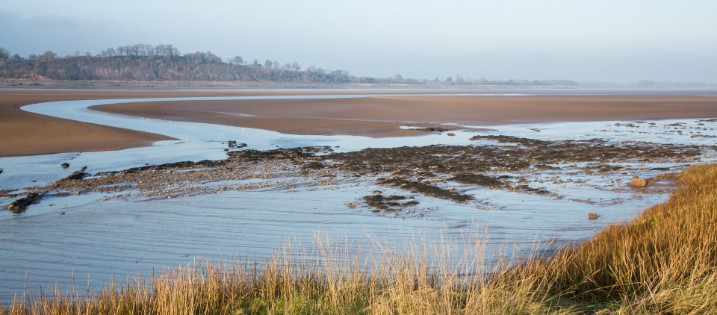
Wildfowl and Wetlands Trust has been award £21 million by Aviva to restore saltmarsh habitats as part of Aviva’s net zero plans – investments in projects such as this will be used to offset residual emissions from their business.   

Saltmarsh, a nature-rich habitat historically in serious decline, is a mix of coastal land and water that helps to combat the causes and effects of climate change. Saltmarshes are brilliant carbon sinks, accumulating carbon forty times faster than forests, and offer natural flood protection; they also teem with wildlife that often cannot survive elsewhere, help improve water quality and make us feel better. A natural solution to some of our world’s most pressing problems.’ https://www.wwt.org.uk/news-and-stories/news/wwt-awarded-21-million-to-restore-coastal-saltmarsh-in-uk?utm_source=Supporter+newsletter+(11+July+2023)&utm_campaign=8cb9840a7e-EMAIL_CAMPAIGN_2023_07_10_07_21&utm_medium=email&utm_term=0_-8cb9840a7e-%5BLIST_EMAIL_ID%5D

Counting on … day 1.122

10th July 2023

Over the weekend I was with Christian Climate Action, raising awareness, through prayer and actions, about the urgency of the climate crisis amongst members of the Church of England who were attending the General Synod held in York. On the Saturday the Synod received a report from their National Investment Boards, outlining the strategy by which they make investments in relation to the climate crisis – a strategy created at the request of the General Synod in 2018. The NIBs response has included working with others to create  the Transition Pathway Initiative which examines – and rates – leading companies across all sectors to establish the degree to which they have a business plan compatible with the 2050 net zero emissions target. This year’s report to Synod was particularly focused on their decision to divest from major fossil fuel companies because their business plans are not so aligned – especially in the critical short term of the next few years.

Will NIBs and more importantly the Church of England as a whole now use its voice to urge other investors to follow suit? Will the remaining 6 C of E dioceses (including Southwark) now also divest themselves of  fossil fuel holdings? Will the Government pay attention and review its decision to license new oil and gas exploration and production?