Counting on … day 1.135

9th June 2023

Next Friday, 16th June, is World Refill Day – ‘a global day of action to prevent plastic pollution and help people live with less waste. Together with our partners and supporters around the world, we’re building a global movement, inspiring action and demonstrating that the world is ready for a refill and reuse revolution.’

There are simple ways we can all get involved.

Use a refillable water bottle. The trick is to remember to take it with you!

Why pay for water? Tap water in the UK is safe to drink and largely free – there are water refill points at all mainline railway stations, there are refill points in the streets provided by local authorities (eg Bath, London), and most cafes will happily refill your bottle.
Why pay for a plastic bottle that will be used once and may not be recycled? (About 40% of these bottles are not recycled).
Counting on … day 1.134

8th June 2023

How well is the United Kingdom doing vis a vis climate action? 

The Climate Action Tracker prepares reports on just this thing, nation by nation. With reference to the UK their report (in summary) says: “The UK’s climate action is not consistent with the Paris Agreement. While the UK’s NDC and long-term targets are broadly aligned with cost-effective domestic pathways, they do not represent a fair share of the global effort to address climate change. The UK’s current approach is therefore incompatible with the principles of equity and common but differentiated responsibilities which are central to the Paris Agreement.

“In addition, while the UK government has adopted many new policies in the past two years, critical policy gaps remain in a range of areas such as energy efficiency in buildings, heat pump uptake and agricultural decarbonisation. Without increasing the ambition of the UK’s domestic climate targets, implementing policy to achieve these goals, and providing sufficient climate finance to support emissions reductions in less wealthy countries, the UK cannot be seen as compliant with the Paris Agreement. At the moment, under 40% of the emissions reductions required to meet the UK’s NDC are supported by policies with proven delivery mechanisms and sufficient funding.”

To read more see – https://climateactiontracker.org/countries/uk/ 

Counting on … day 1.133

7th June 2023

A paper published in the journal Proceedings of the Royal Society B, Invertebrate Biodiversity Continues to Decline in Cropland, reported that insect numbers are still in decline. In particular this is most noticeable in areas of arable farming where pesticides are still widely used.
Is this a reminder to us of the importance of opting for organic produce where we have the choice, as well as campaigning for stricter controls on the use of pesticides.

Counting on … day 1.131

5th June 2023

World Environment Day.
The UK is one of the most nature-depleted places in the world. Many plant and animal species are in decline and threatened with extinction. Not only is that a real loss in its own right, it is also a threat to our food and climate security systems. The campaign group Zero Hour is therefore petitioning the Prime Minister to halt and reverse nature loss by 2030, asking for government support for the Climate & Ecology Bill.

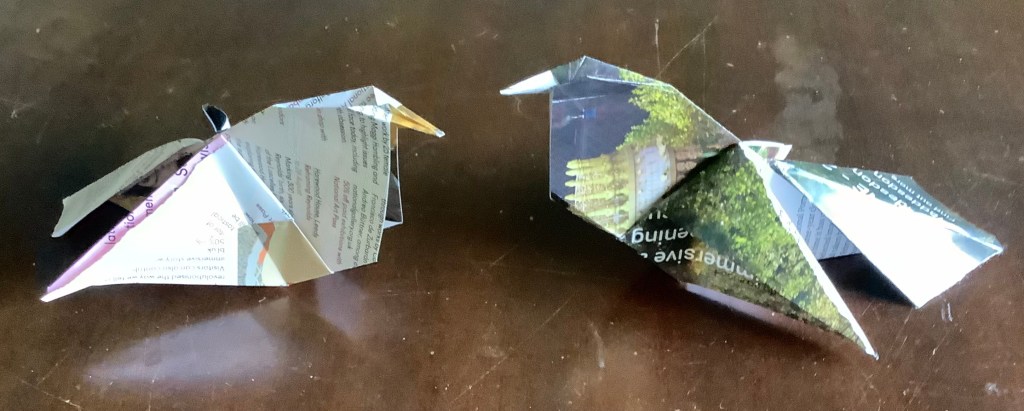
As part of this campaign, Zero Hour is inviting people to get crafty and to make an origami model of an endangered species which they can send to their MP.

For further details visit https://www.zerohour.uk/origamiaction/

and here are two nightingales I had a go at making!

Counting on … day 1.124

28th May 2023

When a seed bank saved the ‘day-sy’!

A recent article on the Guardian reported on the rescue of the York groundsel, Senecio eboracensis, from extinction.

https://www.theguardian.com/environment/2023/may/27/york-groundsel-bloom-again-britain-first-ever-de-extinction-event-natural-england


https://www.rarebritishplants.com/projects

Counting on … day 1.129

3rd June 2023

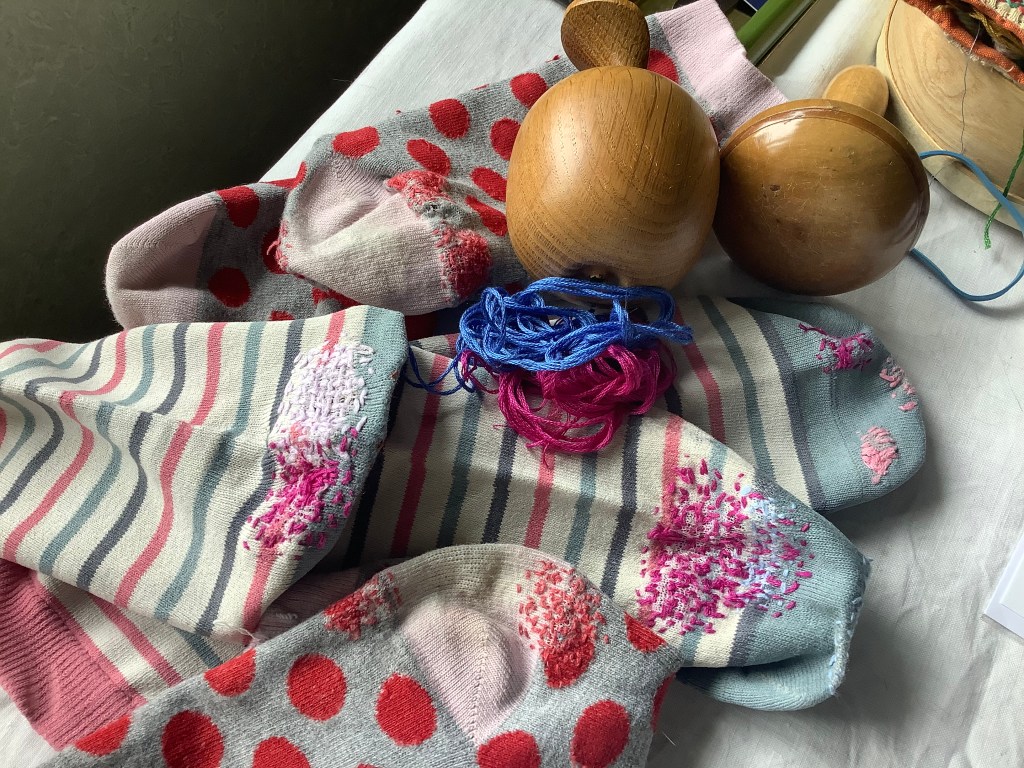
Darning – and redarning – socks adds years to their life span. Having a darning mushroom – or other round wooded object is useful and stops you sewing two sides of the sock together. I use embroidery silks rather than darning wool (few socks nowadays are made of wool – and work a weaving stitch in both directions to either fill in a hole, or more often to reinforce an area of the sock that is wearing thin.
With an attractive colour, the darning can add to the character of the sock!

Counting on … day 1.128

2nd June 2023

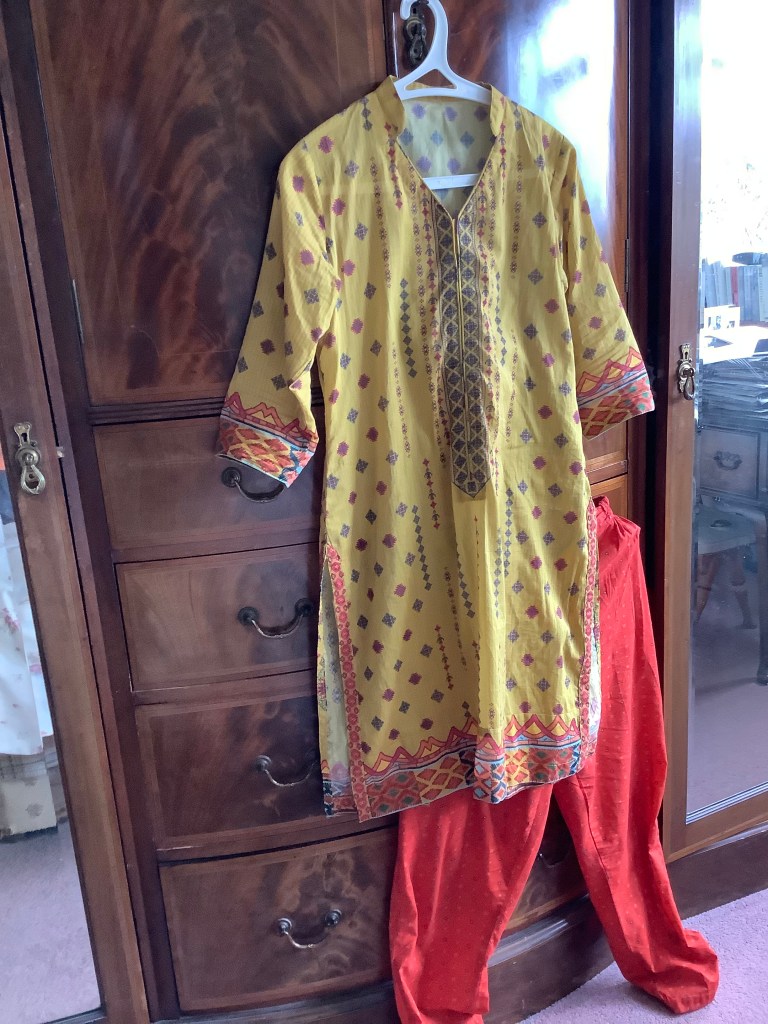
Buying second hand gives partially worn item a further length of life, so preventing unnecessary waste of resources in disposing of partially used items and in making more brand new items. I regularly drop in at the local charity shops looking for a book to read, a jigsaw for distraction or maybe something to wear. Yesterday I was feeling the lack of summer trousers – usually I expect to wear shorts at this time of year but the cold wind is making that less than comfortable – and I was particularly lucky in finding a pair of thin cotton trousers and a loose top both in bright colours that make one feel happy.

Counting on … day 1.127

1st June 2023

What are good ideas for bit to be shared?

Here is one from Cafod for writing a prayer for the Big Green Week. As well as posting it on line, why not write it out and post it on you church notice board too?

Counting on … day 1.126

31st May 2023

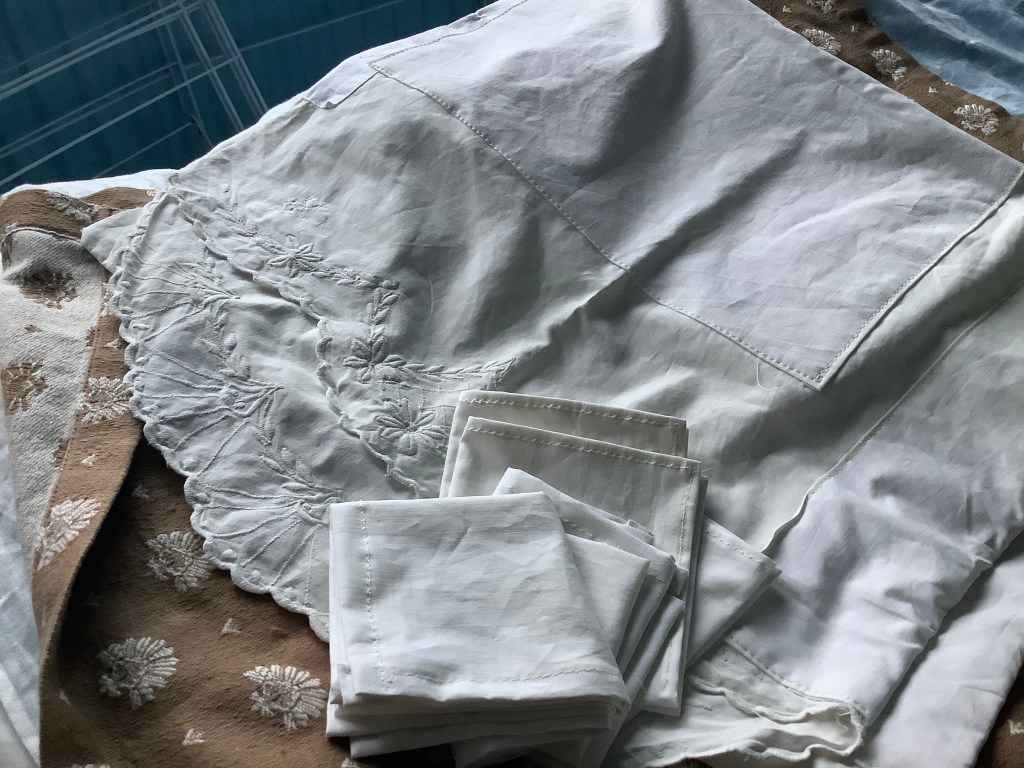
Having both a number of sheets and pillowcases that are wearing thin (even after turning the outsides into the middle) I have combined the two to make/ mend some new pillowcases, and used the left overs to make handkerchiefs. Possibly a bit excessive but it does give the cotton an extended life.

For more on making repairs and mending – https://greentau.org/tag/repairs/

and https://greentau.org/tag/up-cycling/

Counting on … day 1.125

30th May 2023

This is a noisy time of year – the young starlings can now fly but have not yet learnt to feed themselves. They fly off with their parents and perch in easy reach of food and then squawk loudly to ensure that their parents keep on putting food into their ever open beaks! The juniors are a delicate shade of grey compared with the shiny sparkly back that they will sport when they reach adulthood.

It is good to see – and hear – them as their number have declined by 66% since the mid-1970s, placing them on the red list. According to the RSPB only 15% survive the first year to make it to adulthood. I hope that keeping our feeders full of fatty insect based nibbles will give them a helping hand.