Counting on … day 50

3rd January 2022

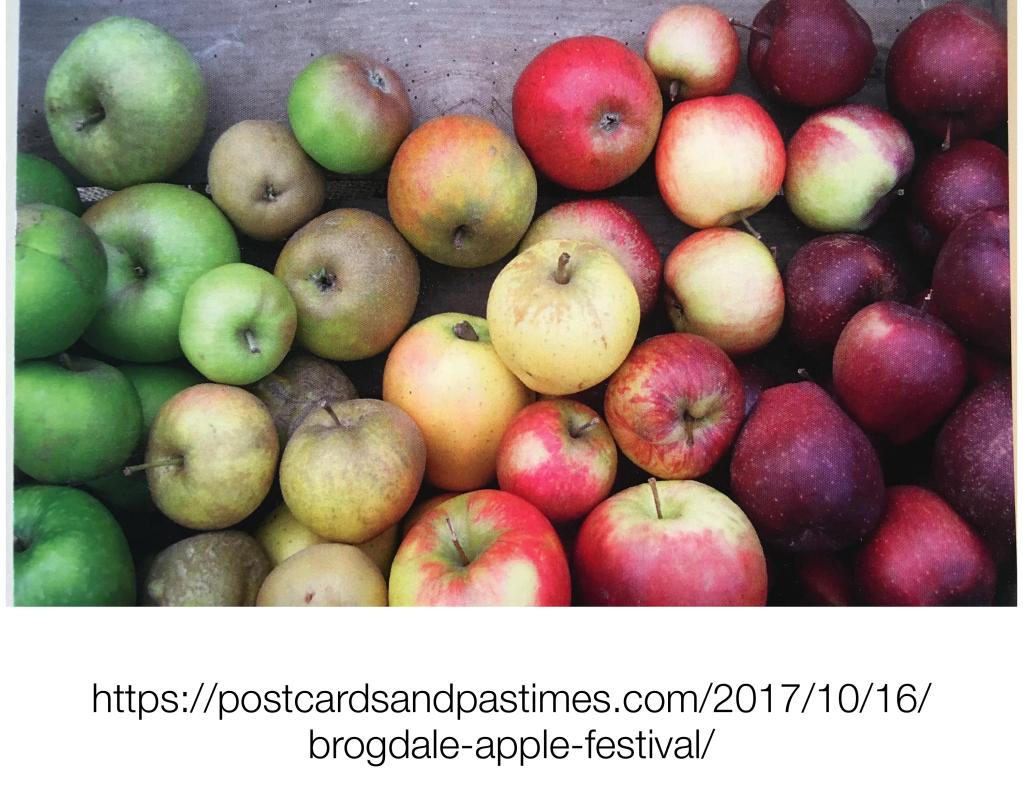
The National Fruit Collection is held at Brogdale in Kent. Of all their collections, the apple is the largest  – 2131 varieties that come from across the UK and from across the world too. There is here a rich diversity in size, taste, texture, colour and use. Diversity is good both for the pleasure it gives us as eaters of apples but also as a means of protecting apple trees against viruses and other calamities. 

Why not contact your local supermarket and ask them to stock a greater range of varieties of British grown apples? (And ideally not in plastic packaging!!)

Counting on … day 48

1st January 2022 

A day to give thanks for the charities and activist movements that we are counting on to make our lives more sustainable and the earth a happier place. 

For Friends of the Earth, the WWF, the National Trust, the Woodlands Trust, A Rocha, the RSPB , Green Christians, Practical Action, the UN, Traid Craft, the Climate Coalition, the Wildlife Trust, Christian Climate Action, Cafod, Christian Aid, the Wetlands Trust,  Extinction Rebellion and more.

Counting on … update

We can count on our corporate efforts as individuals to bring about change!

Green Peace reported: “28 December 2021: Today the Grahamstown High Court in Makhanda ordered Shell to immediately cease its seismic blasting along South Africa’s Wild Coast, while ordering Shell and the Minister of Mineral Resources and Energy to pay the costs of the application for the interim interdict.”

This is good news for the local people and for the whales and other marine life. And it demonstrates that people can work together against international businesses for the common good.

Counting on … day 43 

27th December 2021

The January sales: retailers and manufacturers may wish to count on our appetite to buy more things to clear back stock or just simply to sell more things, but the well-being of the world may be counting on us consuming less so that we do not deplete limited resources nor take more than our fair share.  Green Christians have coined the apt phrase “Joy in Enough”. The season of Christmas lasts 12 days, may they be days of joy not depletion. 

Counting on … day 40 

24th December 2021 

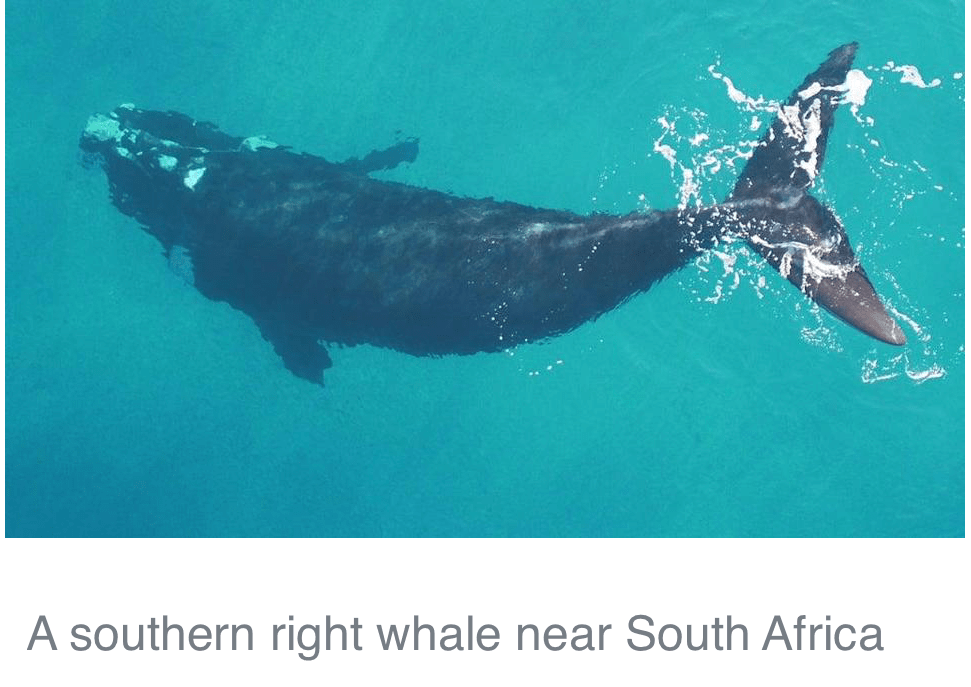
A word for whales. Whales are important as tiller of the oceans. They circulate nutrients that are essential parts of the food chain and in particular nutrients needed by phytoplankton. These serve the same function as leaves, absorbing carbon dioxide and sunlight to create oxygen. As we count on whales doing their bit to maintain the global ecosystem, so they should be able to count on us not to harm them. 

However as has been widely reported, various groups are launching a last-chance bid to stop Shell using shockwaves in the Wild Coast of South Africa – a fragile ecosystem that is a vital whale breeding ground. The applicants, which included Greenpeace Africa and fishing groups, had been seeking to stop the survey on the basis it could cause “irreparable harm” to the marine environment, especially to migrating humpback whales in the area. (Yahoo News)

Do check out this Green Peace petition:  https://pages.greenpeaceafrica.org/shell-wild-coast?_ga=2.165965239.820789156.1640103673-781902025.1640103673

Green Tau: Sugar sweet?

22nd December 2021

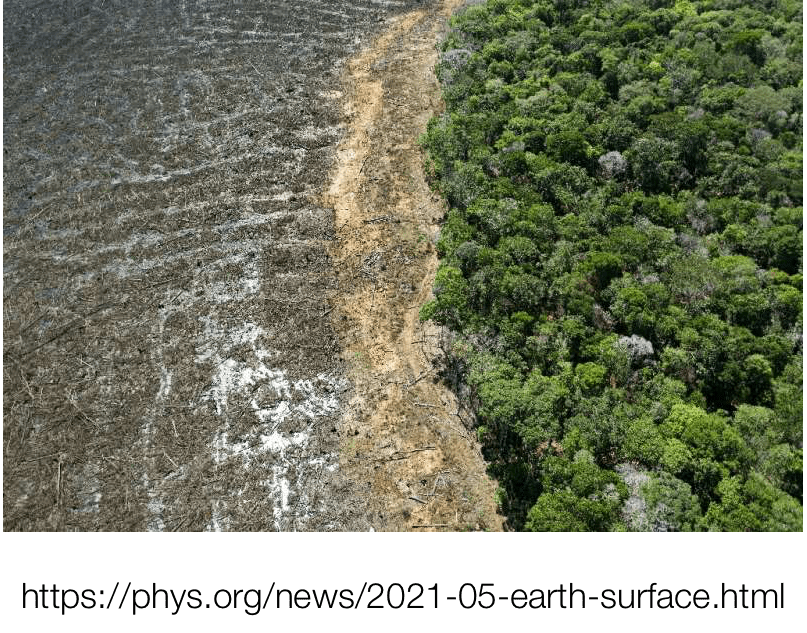
Sugar cane is the source of about 80% of the sugar consumed across the world. It is a plantation crop that goes back centuries and has a history linked with exploitation and slavery. As a plantation crop it has been responsible for the deforestation of tropical landscapes and as demand for sugar continues to increase this is still on going – especially in Brazil where sugar cane is also grown to produce the fuel ethanol: ‘The Atlantic Forest, or Mata Atlântica in Portuguese, is found on the Atlantic coast of Brazil. It should be full of life, supporting thousands of species of plants and animals, many of which are found nowhere else. It’s different from the Amazon rainforest but equally important. Around 500 years ago it would have covered an area of more than 1.5 million square kilometres. Now, more than 90% of it is gone, cleared mostly for timber, pasture and sugar.’ (https://www.nhm.ac.uk/discover/sugar-a-killer-crop.html)

 Sugar cane occupies approximately 2.4 million hectare world wide. 70% of production is for domestic use (which for example would include the production of ethanol in Brazil) but for some countries the production of sugar for export constitutes a significant part of their national income eg Cuba and Belize. Volatile global prices makes for great uncertainty for local growers/ plantation workers who can do little to control their incomes. Whilst the premium paid through the Fair Trade scheme undoubtedly helps, the production of fair trade sugar – 528,000 tonnes – is a fraction of the 200 million tonnes of sugar  produced globally (2019). 

Sugar cane as a crop, aside from the issue of deforestation, has unwanted adverse affects on people and the environment.

  • it requires large amounts of water, often taking the water away from other crops and  natural vegetation 
  • It requires large amounts of pesticides and fertilisers which flow into the water system damaging other ecosystems 
  • Before harvesting, old leaves are burnt off to assist the harvesting process. This kills wildlife, important natural organisms and pollutes the air. As nutrients in the leaves are burnt rather than being returned to the soil, the fertility of the soil is reduced requiring additional fertilisers to be used
  • It is an annual crop requiring the land to be cleared each year and the exposed soil is then susceptible to loss during the rainy season and with not roots to absorb moister, flooding too increases.
  • It is a labour intensive crop where child labour still happens.

Alternative sugar crops are grown, of which the main one is sugar beet – accounting for about 20% of world production – which is grown mainly in Europe. It too can be reliant on pesticides and fertilisers: organic sugar beet is grown in Europe but not as yet in Britain. Other sugar crops include coconut palms and oil palms where the sap is harvested. 

There is a further downside to all sugars: sugar damages our health, causing major problems such as heart disease, type 2 diabetes and tooth decay. The WHO urges that sugar consumer should be reduced to between 5 and 10% of a person’s daily calorie intake. The NHS advises sugar consumption be limited to less than 30g per day: https://www.nhs.uk/live-well/eat-well/how-does-sugar-in-our-diet-affect-our-health/ Yet sugar consumption globally is still rising. The USA tops the charts with an average consumption of 126.4g per person per day. Britain comes in at number 7 with 93.2g per day (2019).

As well as being concerned about the damage sugar growing causes to the environment and it’s work force, should we be acting to reduce the demand for this commodity?

“Too often, divisions in civil society can be exploited by powerful commercial interests. ‘Don’t go too hard on health, as it will threaten jobs’ or ‘Don’t raise pollution standards, as they’ll be undercut by another country somewhere’ or ‘Don’t mention labour pay rates, or we’ll drop the preferred status.’ Or ‘Don’t stop sugar beet as it’ll affect tourism brought by geese feeding on sugar beet tops in winter’. Such horse-trading happens in realpolitik, of course, but we think now is the time to take the sugar debate back to ecological public health basics: land, labour, capital, health and culture…We see this future food world as one where less not more sugar is produced and consumed, and land use and labour are liberated from the folly of sugar production. This is hardly a vital product. It has been injected into culinary culture on a scale it does not deserve. Nor should a sugar reduction strategy be compensated for by a growth in use of artificial sweeteners which industry constantly seeks. Artificials, whether relatively ‘old’ such as aspartame or ‘new’ such as stevia, merely normalise the sweetening of diet as well as maintain the processing industries’ option to sweeten a product to sell it.”  https://foodresearch.org.uk/wp-content/uploads/sites/8/2015/06/Does-Sugar-Pass-the-Environmental-and-Social-Test-23-june.pdf

The whale that keeps on giving

The wide vast oceans, 

tropical balm and arctic chill,

teem with living things 

great and small 

And  here dwells the whale – 

God’s tiller of the sea –

formed to frolic in its deeps 

and traverse its lengths. 

From an infinitesimal nil 

to 200 tonnes of mammalian flesh, 

its life spans a century full.  

A life of daily gorging and expurgating 10, 

nay, 20 tonnes of krill 

replenishes the seas with iron,

and spins once more 

the phytoplankton’s oxygen giving, 

carbon absorbing wheel.

From the depths the whale

redistributes food, 

sustaining small fry 

that dare not dive so deep.

Migrating between distant poles 

and warmer summer seas, 

the whale spreads the bounty 

of each mouthful it digests

and spins once more

the global food chain’s thread. 

Under the whale’s ocean watch, 

krill and plankton multiply, 

and so God’s worker feeds 

5000 mouths and more.

Its leviathan frame

 a maritime conveyor belt

of sequestered carbon 

that gracefully sweeps the seas 

till finally at whale fall

 it sinks to rest –

a carbon store 

for evermore 

upon the ocean bed.

Sunday Reflection

21st November 2021: Feast of Christ the King

Daniel 7:9-10, 13-14

As I watched,

thrones were set in place,
and an Ancient One took his throne,

his clothing was white as snow,
and the hair of his head like pure wool;

his throne was fiery flames,
and its wheels were burning fire.

A stream of fire issued
and flowed out from his presence.

A thousand thousands served him,
and ten thousand times ten thousand stood attending him.

The court sat in judgment,
and the books were opened.

As I watched in the night visions,

I saw one like a human being
coming with the clouds of heaven.

And he came to the Ancient One
and was presented before him.

To him was given dominion
and glory and kingship,

that all peoples, nations, and languages
should serve him.

His dominion is an everlasting dominion
that shall not pass away,

and his kingship is one
that shall never be destroyed.

Psalm 93

1 The Lord is King;
he has put on splendid apparel; *
the Lord has put on his apparel
and girded himself with strength.

2 He has made the whole world so sure *
that it cannot be moved;

3 Ever since the world began, your throne has been established; *
you are from everlasting.

4 The waters have lifted up, O Lord,
the waters have lifted up their voice; *
the waters have lifted up their pounding waves.

5 Mightier than the sound of many waters,
mightier than the breakers of the sea, *
mightier is the Lord who dwells on high.

6 Your testimonies are very sure, *
and holiness adorns your house, O Lord,
for ever and for evermore.

Revelation 1:4b-8

Grace to you and peace from him who is and who was and who is to come, and from the seven spirits who are before his throne, and from Jesus Christ, the faithful witness, the firstborn of the dead, and the ruler of the kings of the earth.

To him who loves us and freed us from our sins by his blood, and made us to be a kingdom, priests serving his God and Father, to him be glory and dominion forever and ever. Amen.

Look! He is coming with the clouds;
every eye will see him,

even those who pierced him;
and on his account all the tribes of the earth will wail.

So it is to be. Amen.

“I am the Alpha and the Omega,” says the Lord God, who is and who was and who is to come, the Almighty.

John 18:33-37

Pilate entered the headquarters again, summoned Jesus, and asked him, “Are you the King of the Jews?” Jesus answered, “Do you ask this on your own, or did others tell you about me?” Pilate replied, “I am not a Jew, am I? Your own nation and the chief priests have handed you over to me. What have you done?” Jesus answered, “My kingdom is not from this world. If my kingdom were from this world, my followers would be fighting to keep me from being handed over to the Jews. But as it is, my kingdom is not from here.” Pilate asked him, “So you are a king?” Jesus answered, “You say that I am a king. For this I was born, and for this I came into the world, to testify to the truth. Everyone who belongs to the truth listens to my voice.”

Reflection 

Today is the feast of Christ the King, and our readings have the theme of dominion and kingdom. 

In science the world of living organisms is divided into five kingdoms using a system devised by Carl Linnaeus. These are the  kingdoms of animals (all multicellular creatures), plants, fungi, protists (Amoeba, Chlorella and Plasmodium) and prokaryotes (bacteria, blue-green algae). The classification system then recognises that each kingdom can be further subdivided. The kingdom of animals subdivides into phylum one of which – Chordata – includes all creatures with back bones. Phylum can then be subdivided into classes. Chordata for example has the subdivision of mammals. And so on. 

This plurality of Kingdoms and subdivisions overlap and co-exist and are dependent on each other for survival. In today’s readings we hear of the kingdoms of heaven and of earth, and it would seem that they too incorporate differences and interdependencies. Earth is not separate from heaven, but through the presence and involvement of God are interdependent – this seems to me to be what John is grappling with as he records this speech between Pilate and Jesus. 

In the Psalm we hear how the Lord – God – is king. God’s kingdom is what God has created and the strength of  God’s dominion, power, rule, comes from the firmness, the immovability of the earth – and yet even the strength God has created there cannot over come God. God is more than strength. Divine dominion comes from the excellence of God’s truth and holiness. The  response of the earth (here it is specifically the waves) is to lift up its voice – presumably in joy and praise and admiration  and honour. 

From the reading from the Book of Daniel we learn that the difference between God’s dominion and that of earthly dominions, is that whilst the latter may pass away, the former will not. This is echoed at the end of the passage from Revelation: for God is the beginning and the end, the alpha and omega. 

The Book of Daniel presents the kingdom, the realm of God as a place of hierarchy. There are many – lesser – thrones and the one throne of God. This heavenly throne is at the centre from which flows fire  – a divine emanation  – and around the oneness of God are thousands upon thousands of those who serve, and even more thousands of thousands who attend/ worship God. These thousands are dwellers of the heavenly realm. It is in this place, this court that we see the one, like a human, to whom all power and dominion in earth – the place of peoples, nations and languages – is given. For us as Christian readers, this is Jesus, the anointed one, who is bringing together the dominions of earth and heaven. This relationship between the kingdoms and heaven and earth and the intertwining role of Jesus is also being explored in today’s reading from Revelation. 

It is good for us to be reminded that we are not the rulers of any of the kingdoms whether of earth or heaven. Rather we need to be ones who serve and and worship God.

Bug Hotel

Caring for our future is about caring for all different sorts of creatures. We are continually learning how important so many large and small creatures are for keeping the environment healthy – be that worms who keep the soil fertile, ladybirds that keep aphids under control, ants that eat parasites, geese that stop lakes silting up, pigs that loosen and fertiliser soil under trees.

Today’s project is making a bug hotel. It is a place where small beetles and insects can overwinter ready to resume their activities in the spring. For this you will need a tin.

Using a skewer make two holds at top and bottom on one side of the tin. You might like adult help. 

Thread a paper clip through each of the holes.  

Collect from your garden bits of dead twigs and plant stalks. Choose ones of different thicknesses. Cut these into equal lengths, just  long enough to stand upright in the tin.

Dear Dear

Fill the tin with these twigs and stalks. Ensure they are well packed so that none can fall out. The little gaps will provide the hiding places that insects seek.  

Take a piece of string and thread it through the paper clips and tie the ends together. Hang the bug hotel outside in your garden. Find somewhere sheltered from the wind and rain so that your bug hotel won’t become flooded or blown away in a storm.