Holy is God’s name

27th September 2025

The heavens declare the glory of God; the skies proclaim the work of her hands. Psalm 19:1

You Lord, are the source of all good things: 

We praise you.

You call us to tend and care for your creation: 

May we strive to do your will.

You have made us as brothers and sisters with all that lives: 

May we live together in peace.

A reading from Genesis: 1:29-31

 : God said, ‘See, I have given you every plant yielding seed that is upon the face of all the earth, and every tree with seed in its fruit; you shall have them for food. And to every beast of the earth, and to every bird of the air, and to everything that creeps on the earth, everything that has the breath of life, I have given every green plant for food.’ And it was so. God saw everything that he had made, and indeed, it was very good. And there was evening and there was morning, the sixth day. 

Prayers of praise –

Holy is your name and 

Holy is the sky above, 

shades of blue – 

azure, periwinkle, powder – 

with clouds billowing and piled high, 

little puffs and wispy streaks; 

glowing white or deepest dark greys, 

fair weather or storm bearers:

Holy is the sky!

Holy is your name and 

Holy is the earth below, 

shades of brown – 

umber, ochre, taupe – 

stones and grit, dust and hummus, 

teeming with life – 

worms and beetles, 

microfauna and fungi:

Holy is the earth!

Holy is your name and 

Holy are the waters far and wide, 

more shades of blue – 

aquamarine, cobalt, sea green – 

sparkling spring and dancing stream, 

majestic river and languid lake,

and voluminous ocean – 

each overflowing with the gift of life:

Holy are the waters! 

Holy is your name and

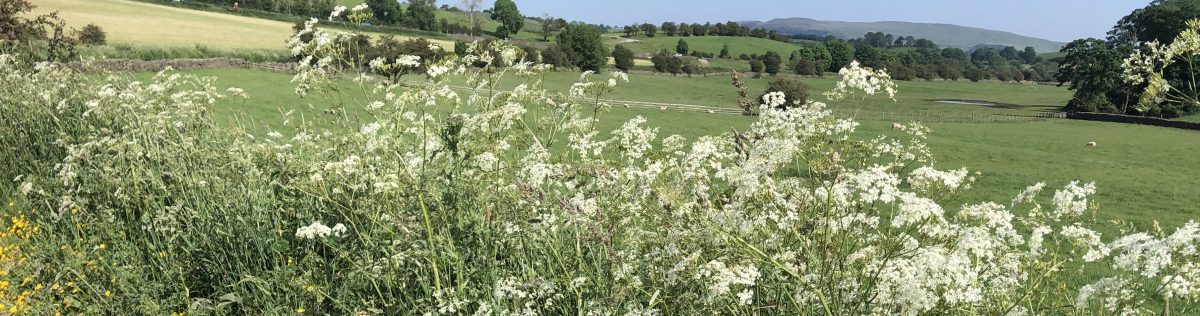
Holy are the weeds that toil and spin, 

shades of green – 

lime, moss, emerald – 

rooted in the earth, clinging onto rocks, 

colonising the desert, reaching for the sky, 

brimming with fruits in season,

breathing life into the air

Holy are the weeds!

Amen.

Prayers of sorrow- 

Heavenly Parent,

We have erred against you and your world.

We have polluted the air and the water, 

the seas and the soil. 

We ask for forgiveness and healing.

We have squandered the earth’s resources, 

and consumed more than our fair share.

We ask for forgiveness and healing.

We have decimated plants and animals, 

we have destroyed habitats and poisoned food chains.

We ask for forgiveness and healing.

We have abused our kin and ignored their humanity,

grinding them down into lives of misery.

We ask for forgiveness and healing.

From a place of sorrow, revive us.

From a place of penitence, quicken us. 

From a place of humility, rebuild us.

Amen.

The Grace

Proper 20 14th Sunday after Trinity

21st September 2025

Reflection with readings below

This passages from Jeremiah seems to express both the grief and frustration of God and of Jeremiah – and it is not always clear to the listener which of the two is speaking. But that shouldn’t be surprising as a prophet is someone who is tuned into what God feels and desires, and what God is saying. The closeness of the relationship is both a joy and a stress: joy from sharing in God’s presence; stress from knowing God’s grief over the waywardness of humans. For both God and prophet it is not black and white. It is not as simple as God hating and dispensing with the one who sins, nor as God loving and rewarding the one who is righteous.

In last week’s gospel we noticed that the sinner rescued by God was no different from the ones who didn’t need rescuing. They were all sheep of which one had gone astray. They were all coins of which one had been lost. Nor is either sheep or coin discarded: both are retrieved and loved with an overriding passion. We should not then be surprised to read in Letter to Timothy that Jesus ‘gave himself a ransom for all’. Salvation is salvation for all – not just a few, not just most – but for all.

Knowing that salvation – healing – for all has always been God’s desire. Again from the Letter to Timothy ‘God our Saviour … desires everyone to be saved and to come to the knowledge of the truth.’

All and everyone is more than just humankind, but envelopes all that God has created. We should not imagine that salvation in just for humans and that other creatures, other living beings – and even ecosystems – are not part of God’s vision of healing and restoration. Indeed if only humans were rescued, life would be very bleak. What delights would we have to eat? What fresh waters would be there for us to drink? What flowers and trees would be there to delight our eyes? What sounds of bird song would enchant our ear?

And yet we humans often live as though all the other parts of creation were of no value and can be ignored, wasted and discarded with no repercussions. We seek to consume ever increasing amounts of the Earth’s resources as if there were no limits to supply. We seek to discard what we don’t want as if  the Earth could endlessly absorb our waste and are surprised when that waste returns to pollute our rivers and coasts! We seek to take more and more land away from wildlife and still expect our fields, hedgerows and gardens to be abounding with wildlife. We seek to fill the atmosphere with more and more carbon dioxide and yet are surprised when this upsets the Earth’s natural balance, triggering rising temperatures and extreme weather events.

Not only that, we also seek to live as if we were the only ones that mattered. That our actions will not affect the lives of others. Bizarrely we seem to believe that if those who are rich get richer, that growing wealth will not make others poorer. Bizarrely we seem to believe that if the rich get to buy more and bigger houses, more and bigger cars, that that will not mean fewer and smaller houses, and  fewer transport options for those who are poorer. Bizarrely we seem to believe that if larger companies take bigger and bigger profits, that smaller companies will not struggle to earn a fair share. Bizarrely we seem to think that if the rich can pay to lobby governments and authorities to shape the world to suit their wants, that those of us who can’t afford to pay lobbyists, will not find their needs excluded from decision making processes.

Yet everything could be so different. 

This week saw the CEO of Barclays calling on the government to curb public sector pay and resist calls to increase taxes in banking profits – this the same Venkatakrishnan, who can ‘earn’ a maximum annual package worth £14.3m, up from £9.8m previously. The average UK income was, in 2024, £37,430 although research suggests that a comfortable income for a family of two adults and one child is around £60,000. 

Would it not be more equitable for everyone to have a sufficiently generous income? 

A report by the Guardian last week revealed that through the privatisation of publication services – such as water, buses, mail, rail and energy – around £200bn has been paid to shareholders, diverting wealth from the common society to a private elite. In effect privatisation has cost £250 per household per year.

Would it not be better for public services to be owned by and run for the benefit of society as a whole? 

We need to use wisdom and discernment, honesty and compassion, if we are to live equally good lives one with another. Truly it is because of God’s wisdom that we are told to love our neighbours as ourselves. Unless we can act with generosity towards one other – both human and non human beings, unless we can work cooperatively with one another, unless we can live within the limits of the Earth’s resources, we are not to find salvation. To live in this way is to truly love God.

This past week the daily reflections from the Centre for Action and Contemplation have been on the theme of love: https://cac.org/daily-meditations/the-work-of-grief-and-love/

Jeremiah 8:18-9:1

My joy is gone, grief is upon me,
my heart is sick. 

Hark, the cry of my poor people
from far and wide in the land: 

“Is the Lord not in Zion?
Is her King not in her?” 

(“Why have they provoked me to anger with their images,
with their foreign idols?”) 

“The harvest is past, the summer is ended,
and we are not saved.” 

For the hurt of my poor people I am hurt,
I mourn, and dismay has taken hold of me. 

Is there no balm in Gilead?
Is there no physician there? 

Why then has the health of my poor people
not been restored? 

O that my head were a spring of water,
and my eyes a fountain of tears, 

so that I might weep day and night
for the slain of my poor people!

Psalm 79:1-9

1 O God, the heathen have come into your inheritance;
they have profaned your holy temple; *
they have made Jerusalem a heap of rubble.

2 They have given the bodies of your servants as food for the birds of the air, *
and the flesh of your faithful ones to the beasts of the field.

3 They have shed their blood like water on every side of Jerusalem, *
and there was no one to bury them.

4 We have become a reproach to our neighbours, *
an object of scorn and derision to those around us.

5 How long will you be angry, O Lord? *
will your fury blaze like fire for ever?

6 Pour out your wrath upon the heathen who have not known you *
and upon the kingdoms that have not called upon your Name.

7 For they have devoured Jacob *
and made his dwelling a ruin.

8 Remember not our past sins;
let your compassion be swift to meet us; *
for we have been brought very low.

9 Help us, O God our Saviour, for the glory of your Name; *
deliver us and forgive us our sins, for your Name’s sake.

1 Timothy 2:1-7

First of all, I urge that supplications, prayers, intercessions, and thanksgivings be made for everyone, for kings and all who are in high positions, so that we may lead a quiet and peaceable life in all godliness and dignity. This is right and is acceptable in the sight of God our Saviour, who desires everyone to be saved and to come to the knowledge of the truth. For

there is one God;
there is also one mediator between God and humankind, 

Christ Jesus, himself human,
who gave himself a ransom for all

— this was attested at the right time. For this I was appointed a herald and an apostle (I am telling the truth, I am not lying), a teacher of the Gentiles in faith and truth.

Luke 16:1-13

Jesus said to the disciples, “There was a rich man who had a manager, and charges were brought to him that this man was squandering his property. So he summoned him and said to him, `What is this that I hear about you? Give me an accounting of your management, because you cannot be my manager any longer.’ Then the manager said to himself, `What will I do, now that my master is taking the position away from me? I am not strong enough to dig, and I am ashamed to beg. I have decided what to do so that, when I am dismissed as manager, people may welcome me into their homes.’ So, summoning his master’s debtors one by one, he asked the first, `How much do you owe my master?’ He answered, `A hundred jugs of olive oil.’ He said to him, `Take your bill, sit down quickly, and make it fifty.’ Then he asked another, `And how much do you owe?’ He replied, `A hundred containers of wheat.’ He said to him, `Take your bill and make it eighty.’ And his master commended the dishonest manager because he had acted shrewdly; for the children of this age are more shrewd in dealing with their own generation than are the children of light. And I tell you, make friends for yourselves by means of dishonest wealth so that when it is gone, they may welcome you into the eternal homes.

“Whoever is faithful in a very little is faithful also in much; and whoever is dishonest in a very little is dishonest also in much. If then you have not been faithful with the dishonest wealth, who will entrust to you the true riches? And if you have not been faithful with what belongs to another, who will give you what is your own? No slave can serve two masters; for a slave will either hate the one and love the other, or be devoted to the one and despise the other. You cannot serve God and wealth.”

Counting on … Lent 32

17th April 2025

Let the heavens rejoice, let the earth be glad; let the sea resound, and all that is in it. Let the fields be jubilant, and everything in them; let all the trees of the forest sing for joy. Ps 96: 11-12

The world – God’s unique creation – should be a prompt for praise and celebration. Where we see shortcomings, let us acknowledge our failings, seek forgiveness and reconciliation, and once again rejoice in God’s glory. 

Counting on … Lent 4

10th March 2025

“… when no plant of the field was yet in the earth and no herb of the field had yet sprung up—for the Lord God had not caused it to rain upon the earth, and there was no one to till the ground; but a stream would rise from the earth, and water the whole face of the ground— Out of the ground the Lord God made to grow every tree that is pleasant to the sight and good for food” Genesis 2:5, 6, 9

What can we learn from the way the Earth produces and sustains life?

The story in Genesis understands that it is God who enables the soil to become life sustaining. Today scientists continue to explore and discover how the earth and plant life are interconnected in a symbiotic relationship that begins with the soil. Physiologically active compounds produced by soil organisms and plants work to promote plant development, immunity and growth via reciprocal signal emissions. https://www.sciencedirect.com/science/article/abs/pii/S0929139317311290

Good – successful – outcomes depend upon cooperation and communication. This holds true for both soil organisms and humans.

Counting on … Lent 3

7th March 2025

“Then God said, “Let the earth put forth vegetation: plants yielding seed, and fruit trees of every kind on earth that bear fruit with the seed in it.” And it was so. The earth brought forth vegetation: plants yielding seed of every kind, and trees of every kind bearing fruit with the seed in it. And God saw that it was good.” Genesis 1:11-12

Genesis tells us what science tells us: that the world has the inbuilt capacity to generate life. The world is life giving, life producing. We are part of that created being so we too have the capacity to be life giving. Celebrating and embracing and better appreciating this gift enhances our relationship with God the ultimate creator.

God’s generosity and our greed 

1st March 2025

God hates cheating in the marketplace; rigged scales are an outrage. Proverbs 20:23 (The Message)

You Lord, are the source of all good things: 

We praise you.

You call us to tend and care for your creation: 

May we strive to do your will.

You have made us as brothers and sisters with all that lives: 

May we live together in peace.

A reading from Leviticus 25:3 – 7 

For six years you shall sow your field, and for six years you shall prune your vineyard, and gather in their yield; but in the seventh year there shall be a sabbath of complete rest for the land, a sabbath for the Lord: you shall not sow your field or prune your vineyard. You shall not reap the aftergrowth of your harvest or gather the grapes of your unpruned vine: it shall be a year of complete rest for the land. You may eat what the land yields during its sabbath—you, your male and female slaves, your hired and your bound labourers who live with you; for your livestock also, and for the wild animals in your land all its yield shall be for food.

God, who planted the Garden of Eden 

with good things to eat, and caused the earth to bring forth green shoots:

We praise you.

God, who caused rivers to flow, 

who sent rains in due season,  and filled the seas with life:

We praise you.

God, who modelled Adam to be a gardener, 

who modelled the creatures in diverse kinds, each as helpers and Eve as co- partner:

We praise you. 

God, you created a world 

which can offer all that is needed, and give each being, plant and creature, a place to belong:

We praise you.

And the Lord said to me, ‘Amos, what do you see?’ And I said, ‘A plumb-line.’ Then the Lord said, ‘See, I am setting a plumb-line in the midst of my people Israel”. Amos 7:8

Generous God,

we have overworked the soil and drained it of its nutrients; 

we have covered vast swathes in tarmac, and have covered our gardens with plastic lawns.

We consume more than we give back, we have not measured true to your plumb-line:

Lord have mercy.

Generous God,

we have decimated the forests, and grubbed up hedgerows, 

we have wiped out diversity and favoured monocultures.

We have taken and not put back, we have not measured true to your plumb-line:

Lord have mercy.

Generous God, 

we have poisoned the waterways and flooded  them with sewage, 

we have drained lakes and rivers to water our crops.

We have ignored what happens downstream, we have not measured true to your plumb-line:

Lord have mercy.

Generous God, 

We have dredged the seas and overfished the oceans. 

We have over consumed fossil fuels, melting icecaps and inundating islands.

We have ignored the science, we have not measured true to your plumb-line:

Lord have mercy.

Generous God, 

we hunted some creatures to extinction, and pushed others to the margins;

we have destroyed their homes, and taken away their food.

We have despised them as co-habitants, we have not measured true to your plumb-line:

Lord have mercy.

Generous God, 

we have demonised our fellow humans, and used them as slaves; 

we have taken their wealth and left them to starve.

We have spent more on war than on peace, we have not measured true to your plumb-line:

Lord have mercy. 

Open our eyes to see the error of our ways. 

Open our hearts to overflow with love.

Open our hands to be generous in sharing. 

May we act justly 

and  love mercy 

and  walk humbly with you our God.

Amen

Proper 4, 4th Sunday before Lent

9th February 2025

Reflection with readings below

God has created a world that is continually evolving. It is network of changing ecosystems inhabited by an infinite variety of species. Amongst these humans stand out for their capacity reshape the world. The writers of scriptures have known for millennia that humans have the ability to act for good or for ill. A passage in Deuteronomy tells the people that they can chose to do what is right and enjoy fruitful and joyous lives, or they can chose to do what is wrong and suffer lives of destruction and misery. And the situation hasn’t changed. 

Today’s readings tell how God – aware of human frailties – time and again calls on individuals to proclaim God’s wisdom, God’s gospel of salvation, to the peoples of the world. God’s call to Isaiah

 was dramatic and profound. The message Isaiah was called to speak was at a time of great tension and threat. It was not an easy message to proclaim, nor was it easy to hear. In fact the people chose to close their ears and ignore God’s warnings. Catastrophe followed.

Paul was clearly aware of the importance of the message he had to share, and equally clear that his role as a chosen messenger was not based on any merit on his part but purely on the grace of God. In fact Isaiah had shared the same sense of inadequacy. And Simon Peter too.

But whereas Isaiah’s encounter with God was full of awe and wonder, smoke and angels, Simon Peter’s boarders on the mundane. He was doing nothing more than his usually daily job. The unexpected catch of fish was certainly amazing but not out of this world. Yet the call, his encounter with Jesus, struck him to his core and was absolutely life changing. Now he was to use  his skills for a different task, that of reaching out to and drawing in his fellow humankind, to allow them to encounter Jesus and to take on board a new way of living – the way of the Gospel, the way of God’s wisdom.

Here we are two millennia later. The world is in a vulnerable place and now – as always – people need to hear the word of God, to hear the wisdom that will lead them to choose the way of right living, of fruitfulness and joy. 

And we are the people who must speak! 

What must we say, what must we proclaim as the word of God to the world?

That we face an existential crisis of our own (human) making. 

We have pumped so much carbon dioxide into the atmosphere (as well as other greenhouse gases) principally through burning fossil fuels at ever increasing rates. The warming effect on the atmosphere has already activating  tipping points and feed back loops which are accelerating the impact. We’re seeing year on year increases in temperatures that are exceeding the expectations of the scientists; we’re seeing increasingly frequent and intense adverse weather events – floods, droughts, wildfire, storms, heat domes; we’re seeing melting glaciers and ice caps, rising sea levels and more frequent land and mud slides. We’re seeing the slowing of the Atlantic Meridian Overturning Current. When this current fails to circulate hot and cold waters, we in the UK will find ourselves in a land that has a climate compatible with that in Greenland. At the same time UK’s land area will be shrinking as sea levels rise by 50-70cm. This, on the present trajectory, will happen in the life time of children who have already been born. This is going to be the probably scenario they will face as they enter the job market and – perhaps – choose whether or not to become parents themselves.

We cannot prevent all of the adverse effects of the crisis – many are already baked in. But we can yet limit the worst impacts, we can protect against the most adverse consequences, we can help one another to live as safely and as comfortably as possible, but – and this is a big BUT – only if we act now on the science we have. Only if we act now for the common good – that is for the good of everyone with equality and justice – and not allow the interests of a minority to take precedence. 

We need to engage the attention and the commitment of governments and organisations, of companies and and trade groups, of workers and investors, of social groups and individuals. 

We have to act now. We have to act with urgency. We need to make substantial step changes so that we are more than half way to our goals of global sustainability in the next five years. We should write to our MPs, to Rachel Reeves, the Chancellor, and Ed Miliband,  secretary of state for energy security and net zero. We should seek out campaigns and support them, sign petitions, boycott those companies that are supporting the continued expansion of fossil fuels. We should review our financial arrangements – do our banks, insurers, pension providers etc support fossil fuels industries? We should look at our own lifestyles – are we walking the talk? We should be looking out for groups and communities being marginalised and penalised by the climate crisis and the failure to make a just transition to a sustainable world.

This is the gospel message: we need to love our neighbours as ourselves – not just the neighbour next door, but the neighbours in the next town, across the next boarder, and in the farthest parts of the globe. We need to tend and care for the planet knowing that it is the unique  common home that God created for us. We need to love God with our whole being because it is that love that will motivate us to act.

Isaiah 6:1-8, [9-13]

In the year that King Uzziah died, I saw the Lord sitting on a throne, high and lofty; and the hem of his robe filled the temple. Seraphs were in attendance above him; each had six wings: with two they covered their faces, and with two they covered their feet, and with two they flew. And one called to another and said:

“Holy, holy, holy is the Lord of hosts;
the whole earth is full of his glory.” 

The pivots on the thresholds shook at the voices of those who called, and the house filled with smoke. And I said: “Woe is me! I am lost, for I am a man of unclean lips, and I live among a people of unclean lips; yet my eyes have seen the King, the Lord of hosts!”

Then one of the seraphs flew to me, holding a live coal that had been taken from the altar with a pair of tongs. The seraph touched my mouth with it and said: “Now that this has touched your lips, your guilt has departed and your sin is blotted out.” Then I heard the voice of the Lord saying, “Whom shall I send, and who will go for us?” And I said, “Here am I; send me!” And he said, “Go and say to this people:

`Keep listening, but do not comprehend;

keep looking, but do not understand.’ 

Make the mind of this people dull,
and stop their ears,
and shut their eyes,

so that they may not look with their eyes,
and listen with their ears, 

and comprehend with their minds,
and turn and be healed.” 

Then I said, “How long, O Lord?” And he said:

“Until cities lie waste
without inhabitant, 

and houses without people,
and the land is utterly desolate; 

until the Lord sends everyone far away,
and vast is the emptiness in the midst of the land.

Even if a tenth part remain in it,
it will be burned again, 

like a terebinth or an oak
whose stump remains standing
when it is felled.” 

The holy seed is its stump.

Psalm 138

1 I will give thanks to you, O Lord, with my whole heart; *
before the gods I will sing your praise.

2 I will bow down toward your holy temple
and praise your Name, *
because of your love and faithfulness;

3 For you have glorified your Name *
and your word above all things.

4 When I called, you answered me; *
you increased my strength within me.

5 All the kings of the earth will praise you, O Lord, *
when they have heard the words of your mouth.

6 They will sing of the ways of the Lord, *
that great is the glory of the Lord.

7 Though the Lord be high, he cares for the lowly; *
he perceives the haughty from afar.

8 Though I walk in the midst of trouble, you keep me safe; *
you stretch forth your hand against the fury of my enemies;
your right hand shall save me.

9 The Lord will make good his purpose for me; *
O Lord, your love endures for ever;
do not abandon the works of your hands. 

1 Corinthians 15:1-11

I would remind you, brothers and sisters, of the good news that I proclaimed to you, which you in turn received, in which also you stand, through which also you are being saved, if you hold firmly to the message that I proclaimed to you–unless you have come to believe in vain.

For I handed on to you as of first importance what I in turn had received: that Christ died for our sins in accordance with the scriptures, and that he was buried, and that he was raised on the third day in accordance with the scriptures, and that he appeared to Cephas, then to the twelve. Then he appeared to more than five hundred brothers and sisters at one time, most of whom are still alive, though some have died. Then he appeared to James, then to all the apostles. Last of all, as to one untimely born, he appeared also to me. For I am the least of the apostles, unfit to be called an apostle, because I persecuted the church of God. But by the grace of God I am what I am, and his grace toward me has not been in vain. On the contrary, I worked harder than any of them–though it was not I, but the grace of God that is with me. Whether then it was I or they, so we proclaim and so you have come to believe.

Luke 5:1-11

Once while Jesus was standing beside the lake of Gennesaret, and the crowd was pressing in on him to hear the word of God, he saw two boats there at the shore of the lake; the fishermen had gone out of them and were washing their nets. He got into one of the boats, the one belonging to Simon, and asked him to put out a little way from the shore. Then he sat down and taught the crowds from the boat. When he had finished speaking, he said to Simon, “Put out into the deep water and let down your nets for a catch.” Simon answered, “Master, we have worked all night long but have caught nothing. Yet if you say so, I will let down the nets.” When they had done this, they caught so many fish that their nets were beginning to break. So they signalled their partners in the other boat to come and help them. And they came and filled both boats, so that they began to sink. But when Simon Peter saw it, he fell down at Jesus’ knees, saying, “Go away from me, Lord, for I am a sinful man!” For he and all who were with him were amazed at the catch of fish that they had taken; and so also were James and John, sons of Zebedee, who were partners with Simon. Then Jesus said to Simon, “Do not be afraid; from now on you will be catching people.” When they had brought their boats to shore, they left everything and followed him.
Epiphany – waters of life

11th January 2025

With joy you will draw water from the wells of salvation. Isaiah 12:3

You Lord, are the source of all good things: 

We praise you.

You call us to tend and care for your creation: 

May we strive to do your will.

You have made us as brothers and sisters with all that lives: 

May we live together in peace.

A reading from Mark 1:1-3, 9-11

The beginning of the good news about Jesus the Messiah, the Son of God, as it is written in Isaiah the prophet: “I will send my messenger ahead of you, who will prepare your way”— a voice of one calling in the wilderness, ‘Prepare the way for the Lord, make straight paths for him.’”

At that time Jesus came from Nazareth in Galilee and was baptised by John in the Jordan. Just as Jesus was coming up out of the water, he saw heaven being torn open and the Spirit descending on him like a dove.  And a voice came from heaven: “You are my Son, whom I love; with you I am well pleased.”

As in the beginning the Spirit of God hovered over the waters, 

so were the waters parted and the earth came into being.

Praise to you all encompassing God.

As in the beginning the earth responded to the Word of God,

so land and sea, rivers and mountains and oceans came into being.

Praise to you all encompassing God.

As from the beginning rains and water soaked the earth, 

so herbs and plants and trees came into being.

Praise to you all encompassing God.

As from the beginning all manner of vegetation flourished,

so the fruits in their season provide food for all living beings. 

Praise to you all encompassing God.

As from the beginning the Word of God has been a constant source of wisdom, 

so your people have been guided and inspired.

Praise to you all encompassing God.

As the Spirit of God hovers over the waters of the Jordan, 

so in baptism the Son of God was made manifest.

Praise to you all encompassing God.

As the waters were blessed through the Word of God, 

so all who are baptised are made one in Christ.

Praise to you all encompassing God.

Holy God, Spirit and Word, 

as we seek make sense of our human failings, 

as we seek to heal the damage we have caused, 

and as we seek to love and cherish all that you have created, 

prepare for us a way to follow.

Amen.

Proper 24, 21st Sunday after Trinity

20th October 2024

Reflection with readings below

‘Words without knowledge’

How well do we know – how well do we look at, observe and study – God’s creation? Recently I was watching a swan fly overhead and was struck by the way it stretched out its neck as straight as an arrow, and contrasted that with the way a heron bends its neck into an S shape to fly. Why the difference? It could be differences on the centre of gravity of each bird. Swans are among the heaviest flying birds and need to extend their neck (muscular and therefore heavy) out in front to optimise its centre of gravity vis a vis its wings. As the swan comes into land it begins to curve its neck in so shifting the centre of gravity to prepare it for a landing position.

Nature, the natural world around us, is often referred to as the first Bible – the first reference point for perceiving and understanding God and our relationship with the both the divine and creation. History repeatedly shows us that our knowledge is often partial and and that we need a greater and more sympathetic understanding of the world God is creating.

Currently our lack of understanding – or perhaps as importantly our failure to act sensibly upon what we know – about the human production of carbon emissions and climate change is causing significant harm to both the environment and to our fellow inhabitants of this planet. God might very rightly say to us ‘why do you darken counsel by words without knowledge?’

And similarly so when God looks at the state of biodiversity across the globe. Our human greed has extracted resources from the earth and displaced other beings such that our consumption levels are no longer sustainable – either for us nor for the rest of nature. 

Both the passage from Job and the psalm invite it to look at, to contemplate, to marvel at the beauty of creation and in it to recognise God’s divine presence. How often do we set aside time for such worship? Time to engage with and encounter the divine in nature? 

How often do we give ourselves the time and space to contemplate the natural world, to rest in its presence and so allow God’s Spirit to revive and re-create us?

And how often do we look and listen and learn from nature that divine wisdom which would help us live lives according to God’s way? To live lives which through God’s wisdom, would ensure a good life for everyone – for plants and animals, for fish and birds, for humans in the North and the South, for rivers and oceans, for agriculture and for commerce.

A better – a God-shaped – life is possible. That is what we might otherwise call ‘salvation’. Jesus came to save the world – not just some humans, not even just all humans, but all that has been created – the whole cosmos!

In this context humans cannot demand that they be seen as the most important species. Rather as in today’s gospel story, it is better if we follow the example of Jesus and be willing servants of all – human and non human, creaturely and earthly. This calling to follow Jesus will involve us in speaking up and speaking out about the value and importance of paying attention to and understanding the natural world God has created and in which we find the divine presence.

Jesus is the source of eternal salvation 

Job 38:1-7, 34-41

The Lord answered Job out of the whirlwind:

“Who is this that darkens counsel by words without knowledge?

Gird up your loins like a man,
I will question you, and you shall declare to me.

“Where were you when I laid the foundation of the earth?
Tell me, if you have understanding.

Who determined its measurements—surely you know!
Or who stretched the line upon it?

On what were its bases sunk,
or who laid its cornerstone

when the morning stars sang together
and all the heavenly beings shouted for joy?

“Can you lift up your voice to the clouds,
so that a flood of waters may cover you?

Can you send forth lightnings, so that they may go
and say to you, ‘Here we are’?

Who has put wisdom in the inward parts,
or given understanding to the mind?

Who has the wisdom to number the clouds?
Or who can tilt the waterskins of the heavens,

when the dust runs into a mass
and the clods cling together?

“Can you hunt the prey for the lion,
or satisfy the appetite of the young lions,

when they crouch in their dens,
or lie in wait in their covert?

Who provides for the raven its prey,
when its young ones cry to God,
and wander about for lack of food?”

Psalm 104:1-9, 25, 37b

1 Bless the Lord, O my soul; *
O Lord my God, how excellent is your greatness!
you are clothed with majesty and splendour.

2 You wrap yourself with light as with a cloak *
and spread out the heavens like a curtain.

3 You lay the beams of your chambers in the waters above; *
you make the clouds your chariot;
you ride on the wings of the wind.

4 You make the winds your messengers *
and flames of fire your servants.

5 You have set the earth upon its foundations, *
so that it never shall move at any time.

6 You covered it with the Deep as with a mantle; *
the waters stood higher than the mountains.

7 At your rebuke they fled; *
at the voice of your thunder they hastened away.

8 They went up into the hills and down to the valleys beneath, *
to the places you had appointed for them.

9 You set the limits that they should not pass; *
they shall not again cover the earth.

25 O Lord, how manifold are your works! *
in wisdom you have made them all;
the earth is full of your creatures.

37b Hallelujah!

Hebrews 5:1-10

Every high priest chosen from among mortals is put in charge of things pertaining to God on their behalf, to offer gifts and sacrifices for sins. He is able to deal gently with the ignorant and wayward, since he himself is subject to weakness; and because of this he must offer sacrifice for his own sins as well as for those of the people. And one does not presume to take this honour, but takes it only when called by God, just as Aaron was.

So also Christ did not glorify himself in becoming a high priest, but was appointed by the one who said to him,

“You are my Son,
today I have begotten you”;

as he says also in another place,

“You are a priest forever,
according to the order of Melchizedek.”

In the days of his flesh, Jesus offered up prayers and supplications, with loud cries and tears, to the one who was able to save him from death, and he was heard because of his reverent submission. Although he was a Son, he learned obedience through what he suffered; and having been made perfect, he became the source of eternal salvation for all who obey him, having been designated by God a high priest according to the order of Melchizedek.

Mark 10:35-45

James and John, the sons of Zebedee, came forward to Jesus and said to him, “Teacher, we want you to do for us whatever we ask of you.” And he said to them, “What is it you want me to do for you?” And they said to him, “Grant us to sit, one at your right hand and one at your left, in your glory.” But Jesus said to them, “You do not know what you are asking. Are you able to drink the cup that I drink, or be baptised with the baptism that I am baptised with?” They replied, “We are able.” Then Jesus said to them, “The cup that I drink you will drink; and with the baptism with which I am baptised, you will be baptised; but to sit at my right hand or at my left is not mine to grant, but it is for those for whom it has been prepared.”

When the ten heard this, they began to be angry with James and John. So Jesus called them and said to them, “You know that among the Gentiles those whom they recognise as their rulers lord it over them, and their great ones are tyrants over them. But it is not so among you; but whoever wishes to become great among you must be your servant, and whoever wishes to be first among you must be slave of all. For the Son of Man came not to be served but to serve, and to give his life a ransom for many.”

Proper 22, 19th Sunday after Trinity

6th October 2024

Reflection with readings below

What is the role of humans, of men and women? For what purpose have we been created? What is our role, our calling, towards each other, and towards other creatures? 

The writings of Genesis tell us that all creatures including humans were created to protect and tend the earth – and in particular to protect and tend the Garden of Eden planted by God. In this task we – humans and creatures – have been created to help each other to live and work in harmony, fulfilling the will of God. That is the purpose for which we have been created. 

Humans were created by God as male and female, men and women, to be partners – partners who will love and support each other so closely and intimately that they be comes as two halves of one. 

Psalm 8 looks at the vastness of the cosmos in all its glory and majesty, complexity and beauty, and asks what is a mere human in comparison? And yet says the Psalmist we are most highly, indeed supremely valued and treasured by God! Further the Psalmist describes how God has placed the creatures of the field, of the air and of the seas, under our feet  – but for what purpose? To celebrate the glory and majesty of God’s name! 

So humans have been created both to protect and tend the earth in partnership with all other creatures, and to praise God’s name through our relationship with those creatures. 

The writer of Hebrews also takes note of the glory and majesty that is attached to God – indeed the writer quotes from Psalm 8 – and sees that glory and majesty reflected in Christ. And that the reflection of God’s glory and majesty reveals that creation is sustained through the power of his works.

This leads the writer of Hebrews to suggest that the Psalmist’s words refer not to all humans but to that unique human in whom all things are made perfect. Look around, the state of the world where it is subjected to the dominion of most humans is a not a place of perfection. But where it is subject to the dominion of Jesus Christ, a different story can be told. And indeed when we talk of the salvation of the world – its healing and restoration – we are anticipating that state of being that will exist when the power and glory of Jesus has been fully established here on earth. And that is the salvation that makes us as brothers and sisters of Christ and so thus the Psalmist will not be wrong in describing humans as crowned with God’s glory and honour. 

The final paragraph from today’s gospel tells us what we should be like as humans. Rather than being self important, wanting to be in charge, wanting to be seen as the person with power, we should be child-like – accepting our dependency on God our parent, looking with awe and wonder at the world around us, sharing joy, being open to new ideas. To be child-like is to be as Adam and Eve were in the Garden of Eden – enjoying being part of creation rather than attempting to over-ride it, to live within the earth’s boundaries.

Genesis 2:18-24

The Lord God said, “It is not good that the man should be alone; I will make him a helper as his partner.” So out of the ground the Lord God formed every animal of the field and every bird of the air, and brought them to the man to see what he would call them; and whatever the man called every living creature, that was its name. The man gave names to all cattle, and to the birds of the air, and to every animal of the field; but for the man there was not found a helper as his partner. So the Lord God caused a deep sleep to fall upon the man, and he slept; then he took one of his ribs and closed up its place with flesh. And the rib that the Lord God had taken from the man he made into a woman and brought her to the man. Then the man said,

“This at last is bone of my bones
and flesh of my flesh;

this one shall be called Woman,
for out of Man this one was taken.”

Therefore a man leaves his father and his mother and clings to his wife, and they become one flesh.

Psalm 8

1 

O Lord, our Sovereign,
    how majestic is your name in all the earth!

You have set your glory above the heavens.

2 

    Out of the mouths of babes and infants
you have founded a bulwark because of your foes,
    to silence the enemy and the avenger.

3 

When I look at your heavens, the work of your fingers,
    the moon and the stars that you have established;

4 

what are human beings that you are mindful of them,
    mortals that you care for them?

5 

Yet you have made them a little lower than God,
    and crowned them with glory and honour.

6 

You have given them dominion over the works of your hands;
    you have put all things under their feet,

7 

all sheep and oxen,
    and also the beasts of the field,

8 

the birds of the air, and the fish of the sea,
    whatever passes along the paths of the seas.

9 

O Lord, our Sovereign,
    how majestic is your name in all the earth!

Hebrews 1:1-4; 2:5-12

Long ago God spoke to our ancestors in many and various ways by the prophets, but in these last days he has spoken to us by a Son, whom he appointed heir of all things, through whom he also created the worlds. He is the reflection of God’s glory and the exact imprint of God’s very being, and he sustains all things by his powerful word. When he had made purification for sins, he sat down at the right hand of the Majesty on high, having become as much superior to angels as the name he has inherited is more excellent than theirs.

Now God did not subject the coming world, about which we are speaking, to angels. But someone has testified somewhere,

“What are human beings that you are mindful of them,
or mortals, that you care for them?

You have made them for a little while lower than the angels;
you have crowned them with glory and honour,
subjecting all things under their feet.”

Now in subjecting all things to them, God left nothing outside their control. As it is, we do not yet see everything in subjection to them, but we do see Jesus, who for a little while was made lower than the angels, now crowned with glory and honour because of the suffering of death, so that by the grace of God he might taste death for everyone.

It was fitting that God, for whom and through whom all things exist, in bringing many children to glory, should make the pioneer of their salvation perfect through sufferings. For the one who sanctifies and those who are sanctified all have one Father. For this reason Jesus is not ashamed to call them brothers and sisters, saying,

“I will proclaim your name to my brothers and sisters,
in the midst of the congregation I will praise you.”

Mark 10:2-16

Some Pharisees came, and to test Jesus they asked, “Is it lawful for a man to divorce his wife?” He answered them, “What did Moses command you?” They said, “Moses allowed a man to write a certificate of dismissal and to divorce her.” But Jesus said to them, “Because of your hardness of heart he wrote this commandment for you. But from the beginning of creation, ‘God made them male and female.’ ‘For this reason a man shall leave his father and mother and be joined to his wife, and the two shall become one flesh.’ So they are no longer two, but one flesh. Therefore what God has joined together, let no one separate.”

Then in the house the disciples asked him again about this matter. He said to them, “Whoever divorces his wife and marries another commits adultery against her; and if she divorces her husband and marries another, she commits adultery.”

People were bringing little children to him in order that he might touch them; and the disciples spoke sternly to them. But when Jesus saw this, he was indignant and said to them, “Let the little children come to me; do not stop them; for it is to such as these that the kingdom of God belongs. Truly I tell you, whoever does not receive the kingdom of God as a little child will never enter it.” And he took them up in his arms, laid his hands on them, and blessed them.