Counting on … day 315

21st September 2022

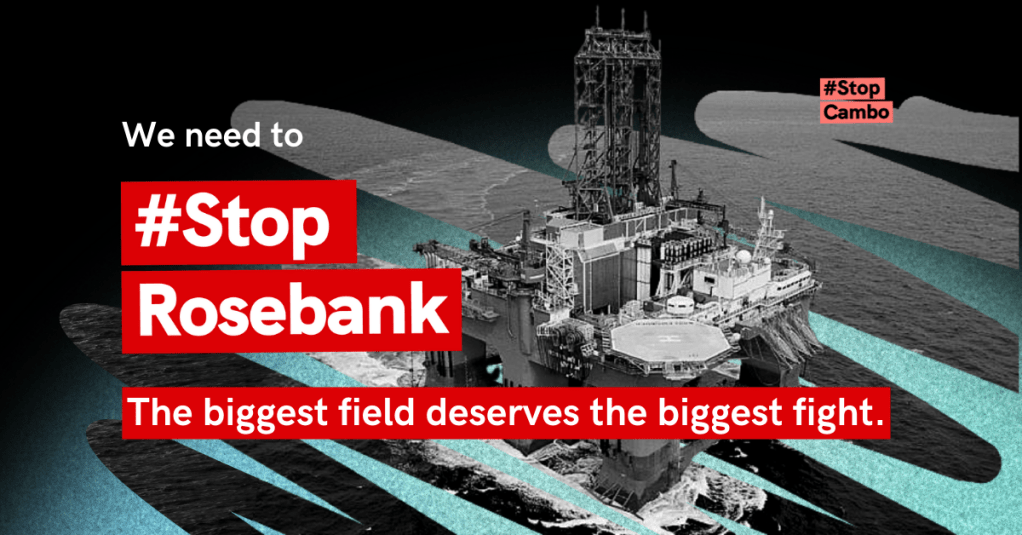
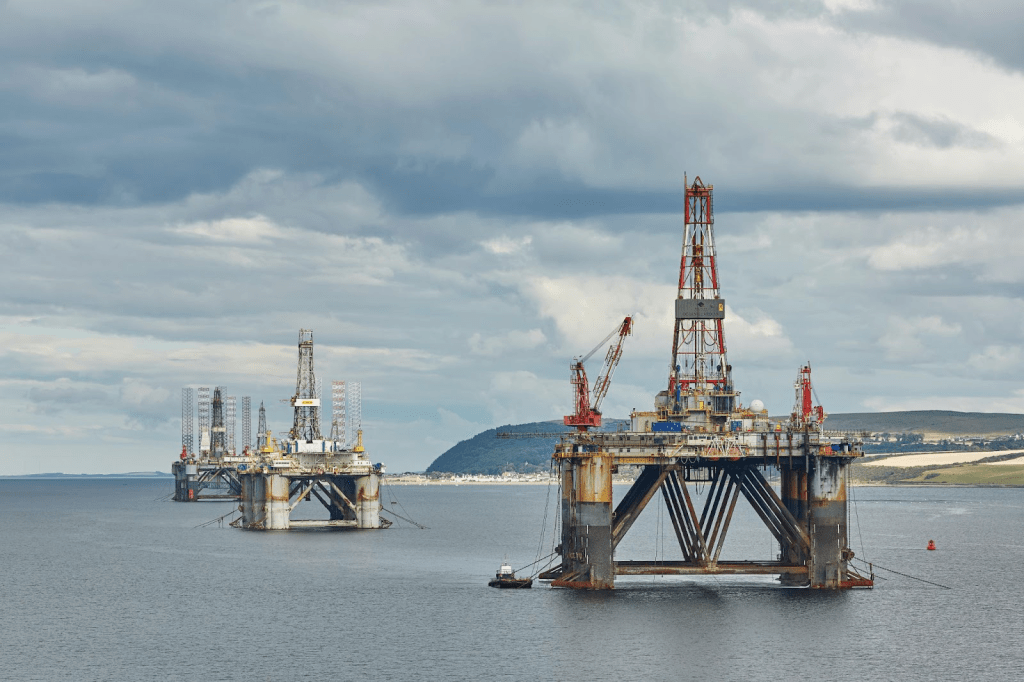
Despite understandings made at last year’s COP26 to reduce the carbon emissions – halving them by 2030 and achieving net zero by 2050 – the UK government is preparing to approve the Rosebank oil field – the biggest undeveloped oil field in the North Sea. If these two seem totally irreconcilable to you, do sign this petition:- https://actionnetwork.org/petitions/stoprosebank/?link_id=11&can_id=a3029987c1ac6171de26390e6aabf63f&source=email-thats-a-wrap-stopjackdaw-week-of-action-2&email_referrer=email_1671196&email_subject=we-have-a-new-fight-on-our-hands-_-stoprosebank

Counting on …day  306 

12th September 2022

Another interesting article relating to the investments strategies of financial institutions focuses on those which are in eating in the development of North Sea oil and gas fields, such as Cambo and Jackdaw – https://www.ethicalconsumer.org/money-finance/what-does-cambo-oil-field-have-do-our-banking-choices

The thought that our money is being used to potentially develop these new oil and gas fields is devastating and suggests that both these institutions and our government are not serious in their commitment to reducing green house gases.

https://www.stopcambo.org.uk/updates/oil-gas-licensing

 Counting on …day 273

11th August 2022

The effects of the climate crisis could be as dire as that of nuclear war which has prompted various parliamentarians, cities, faith groups, academics, scientists, charities and NGOs to call for a Fossil Fuel Non-Proliferation Treaty:- 

Prevent the proliferation of coal, oil and gas by ending all new exploration and production; 

Phase-out existing production of fossil fuels in line with the 1.5C global climate goal; and 

Fast-track real solutions and a just transition for every worker, community and country.

You can endorse this as an individual or as a group, church,  company or business – https://fossilfueltreaty.org/#endorse

Counting on … day 271

9th August 2022

I don’t generally watch much television but have just watched the BBC’s series Big Oil v the world. I  had not realised how little I knew about the power of big oil companies to influence the world’s future. When we talk about about the capacity of humanity to cause climate change, we are shocked and  stunned. It seems we should be doubly shocked at our human capacity to create a deadly future for ourselves.

It is worth watching so as to be more fully informed and hopefully, be more committed to take preventative and mitigating action. If we can count on humans to cause this crisis, we must have the belief that humans have the capacity to reverse it. 

https://www.bbc.co.uk/iplayer/episode/p0cgqlv1/big-oil-v-the-world-series-1-1-denial

Green Tau: System Change?

4th August 2022

Steam Punk is based on the scenario of an alternative history in which steam power, steam engines and hand cranked machines reigned supreme, preventing the development of electrical power and the petrol engine. Might there be scope for Cycle Punk, an alternative history in which peddle power dominates with pedal powered kettles and mobile phones as well as the straightforward two wheel mode of transport?

The way economies and societies work -a product of convenience, economies of scale and inertia – is such that a preferred system will prevail whether that is the energy system, transport system, voting system, or  communications system. The systems or products that are not adopted are not necessarily a worse choice, just different as was the case between VHS and Betamax for video recorders. But once a system is established it is hard to change, because everything is geared to it, business and society have bought into it, lifestyles are built around it, and investment perpetuates it as the safe bet.

In the UK we have favoured a transport system based on private cars over one based on public cars, buses and trains. Our infrastructure favours the former. Our lifestyles have been shaped by the former. Our businesses are geared to the former. Our investment is predicated on its continuation. To change the system would need radical change in all these areas. 

Our energy system is based on the use of cheap fossil fuels. Our agricultural system is based on the production of cheap food, especially cheap animal products. Our manufacturing system is based in the use of cheap labour – as is our hospitality sector. Our investment system on the other hand is based on maximising profits for the few. 

The size and scale of such systems prevent us from seeing or experiencing anything different. Their market share precludes new entrants with alternative ideas. The systems prevent the use of better, more appropriate technologies.

In the UK fuel bills are rising out of all proportion to the cost of production, yet swopping to an alternative system seems nigh impossible. For people struggling financially, there is no spare cash to replace a gas boiler with a heat pump. There is no spare cash to install double glazing and reduce dependency on central heating. There is no comprehensive public transport network to remove reliance on the private car. There is insufficient investment in alternative energy and the odds are increasingly stacked against such investments as the return on fossil fuel investment sky rockets as fuel prices – but not costs – continue to rise.

The Democratic Republic of the Congo drawing on the power of the River Congo has the capacity to generate 100,00MW of hydro electric power compared with its existing capacity of 2792MW (https://www.usaid.gov/powerafrica/democratic-republic-congo). Yet this requires investment. The DRC is a nation struggling to meet the needs of its people, and the government is currently auctioning fossil fuel rights to explore and extract oil from under its rainforests, a move that will generate money now rather than longer term pay back of hydro power.

Africa as a whole has great potential for the generation of solar power, and which if provided via small scale projects can provide electricity to areas far removed from the grid. Yet whilst solar power has still to be developed in countries such as Algeria, Angola, Egypt, Ethiopia, Ghana, Morocco, Namibia, Nigeria and Tanzania (https://commodityinside.com/reports/solar-energy-market-in-africa/) the big oil companies are developing new oil and gas fields in Angola, South Africa, Ghana, Gabon, Egypt, Namibia and Kenya. 

Understanding that we are to a greater or lesser extent trapped in a system lets us be realistic about our situation, our predicament. It also helps us understand what will be needed to bring about change. 

Changes in government policy to favour the new system and tax changes and rules  to discourage the old.

Changes in global policies as advocated by the World Bank, the UN etc.

Changes in investment strategies and business plans.

Developments in new technology.

Changes in public opinion that will support all these. 

This is where we come in. We can, even in small ways, be the trigger or the irritant that initiates and propels change. We can make a difference – by talking with friends and neighbours, by loving as if we were already part of the new system, by campaigning, by pressing businesses and politicians, by voting with our money, by investing and by pestering those institutions investing on our behalf, by supporting charities, by standing up. As Christians we are well suited to this. We have that calling to be different, to be countercultural, to be willing to go the extra mile, to act for the wellbeing of the other.

The global system of slavery did come to an end when public opinion had changed. They did it then. We can do it now. 

Counting on …day 160 

22nd April 2022

We are enmeshed in a economy fuelled by fossil fuel industries that are

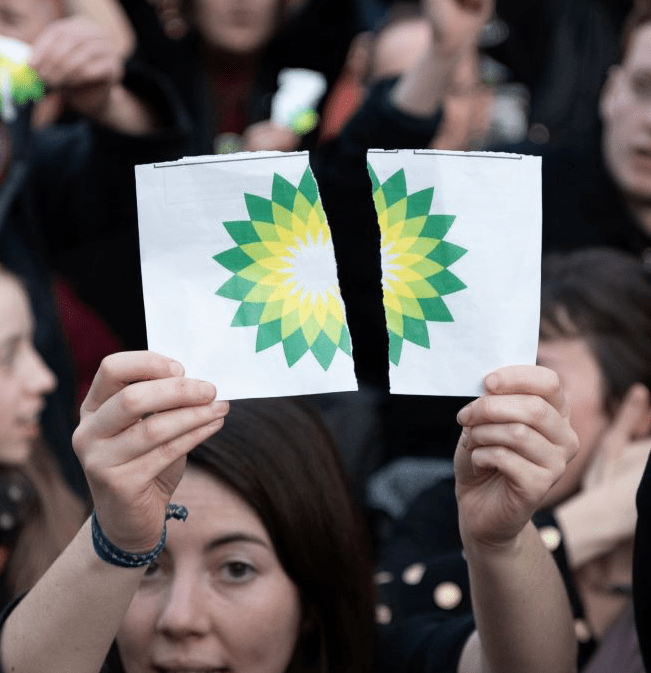
reluctant – indeed highly resistant- to change. If change does not happen, we and the world will suffer increasingly the effects of the climate crisis. BP,  one such fossil fuel company, has been a sponsor of the British Museum for many years. Despite on going public opposition  and despite the move of most of other institutions away from fossil fuel sponsorship, the British Museum is currently negotiating with BP for a further five year deal. This weekend ‘BP or not BP’ will be continuing its campaign to dissuade the British Museum.   Find out more from their web site https://bp-or-not-bp.org/news/ 

or sign their petition https://you.38degrees.org.uk/petitions/the-british-museum-must-not-to-renew-its-sponsorship-deal-with-bp

Here is a piece from their Facebook page: 

“Why is BP sponsorship such a big deal? 

BP doesn’t sponsor cultural institutions out of the goodness of its heart. Its philanthropic image is a carefully curated marketing scheme, designed to distract from its appalling environmental and human rights record, its decades of funding brutal autocrats (including Vladamir Putin) and its huge contribution to climate change.

From covering up oil spills which harm oceans and animals, to dodgy deals with dictators and warmongers, BP has done it all. The company’s history is inseparable from colonial oppression and its endless quest for fossil fuels has wreaked international havoc for more than 80 years.

This sponsorship deal at the British Museum doesn’t just give BP a false veneer of respectability. It allows the company to use this publicly funded space to throw fancy events, schmooze with UK government officials, and cosy up to representatives of fossil-fuelled regimes from Egypt to Azerbaijan to – yes – Russia.”

 Counting on …. Day 119

11th March 2022

The crisis in Ukraine has highlighted our dependency on oil and gas, whilst at the same time the IPCC is again highlighting the urgent need to rapidly reduce our carbon emissions. This is the time to cut back on our use of fuel for heating homes and water, and for driving cars. We can also contribute by cutting back on flights and imported goods, rather aiming to shop locally.