Falling in Love 13


A small lady bird, possibly a five spot ladybird. Ladybirds are welcomed by gardeners as one of their favourite foods is aphids. Ecosystems can be finally balanced between the numbers of predators and the numbers of prey. For ladybirds to thrive, they need an ongoing supply of aphids – ie aphids that have not been killed off by ‘super efficient’ garden sprays!

The world around us is full of curious, beautiful and amazing things. As small children our curiosity and our amazement knew no bounds. Every day would produce novelties- things to see, things to chew or eat, things to grab and hold, things to poke and explore. 

As we have grow older we have often lost that sense of wonder. Things that were new have become mundane. In the rush to be busy, small things flop below the radar. Decorum dictates that we shouldn’t prod or lick things and, unless we’re wine tasters, swirling stuff around our mouth and spitting are frowned upon. Stopping suddenly just to look is discouraged – it interrupts the flow of traffic. Daily routines take over. 

And our love for the world wains and falters. 

The season of creation-tide runs from 1st September till 4th October, the Feast of St Francis. Let’s fall in love again with creation. 
Falling in Love 12

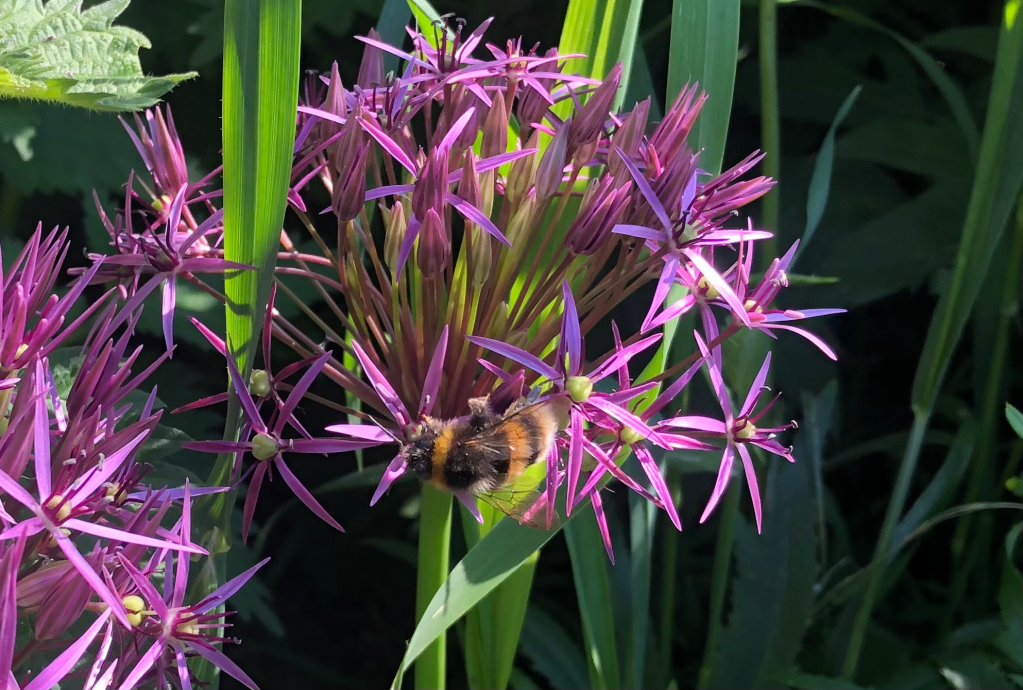
This is probably a buff-tailed bumblebee. These are sociable bees. Each year a new queen is hatched and she alone will sit out the winter. She will be one of the large bumblebees we see seeking out winter flowering plants such as mahonia and crocuses. In the spring she will feed up on pollen and nectar such that she has the renewed strength to begin a new, small, colony. Initially the larvae will develop as female workers but as the summer progresses some will emerge as males. One will successfully mate and so the cycle will begin again. 

Such persistence!

The world around us is full of curious, beautiful and amazing things. As small children our curiosity and our amazement knew no bounds. Every day would produce novelties- things to see, things to chew or eat, things to grab and hold, things to poke and explore. 

As we have grow older we have often lost that sense of wonder. Things that were new have become mundane. In the rush to be busy, small things flop below the radar. Decorum dictates that we shouldn’t prod or lick things and, unless we’re wine tasters, swirling stuff around our mouth and spitting are frowned upon. Stopping suddenly just to look is discouraged – it interrupts the flow of traffic. Daily routines take over. 

And our love for the world wains and falters. 

The season of creation-tide runs from 1st September till 4th October, the Feast of St Francis. Let’s fall in love again with creation. 
Falling in Love 11

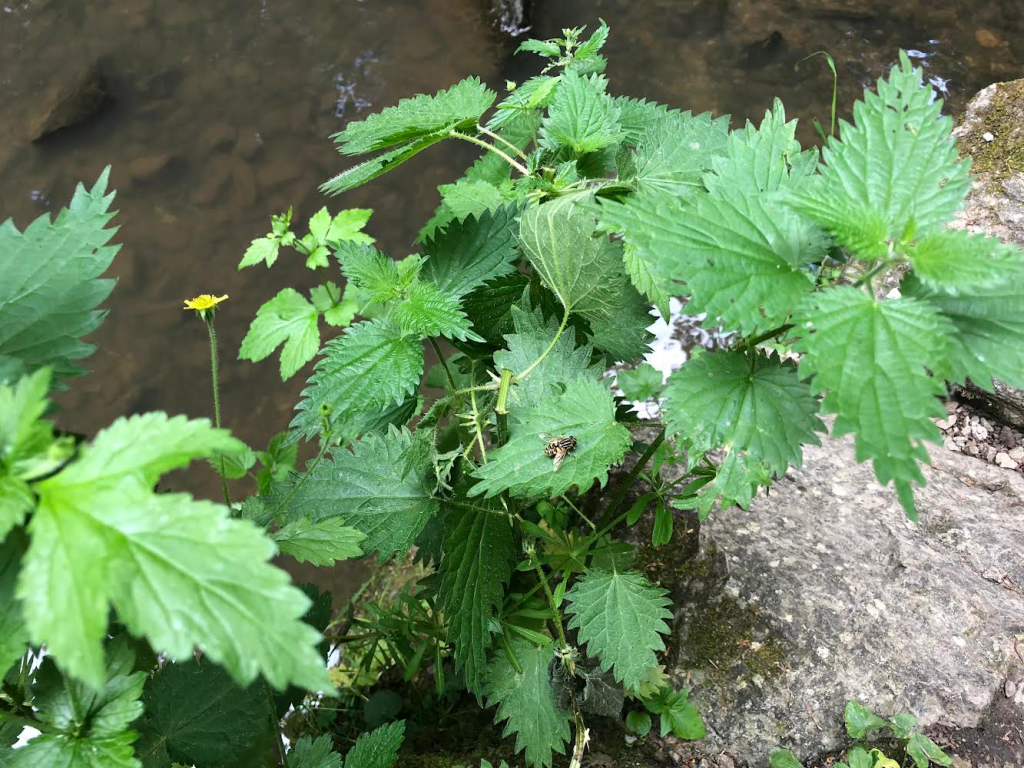
Nettles are often seen with irritation or distaste because they sting – roses of course have sharp thorns! Nettles however are an excellent food source for various insects, especially for caterpillars. Red admiral, peacock, small tortoiseshell and comma caterpillars are all fans of nettles. Young nettles are popular with aphids and therefore with ladybirds too. Nettles can be a key plant in wild life friendly gardens. 

Nettles are also good for humans to eat, especially when the  leaves are young and tender, and are a good source of vitamins A, C and D as well as minerals such as calcium, magnesium and iron. 

The world around us is full of curious, beautiful and amazing things. As small children our curiosity and our amazement knew no bounds. Every day would produce novelties- things to see, things to chew or eat, things to grab and hold, things to poke and explore. 

As we have grow older we have often lost that sense of wonder. Things that were new have become mundane. In the rush to be busy, small things flop below the radar. Decorum dictates that we shouldn’t prod or lick things and, unless we’re wine tasters, swirling stuff around our mouth and spitting are frowned upon. Stopping suddenly just to look is discouraged – it interrupts the flow of traffic. Daily routines take over. 

And our love for the world wains and falters. 

The season of creation-tide runs from 1st September till 4th October, the Feast of St Francis. Let’s fall in love again with creation. 
Falling in Love 10

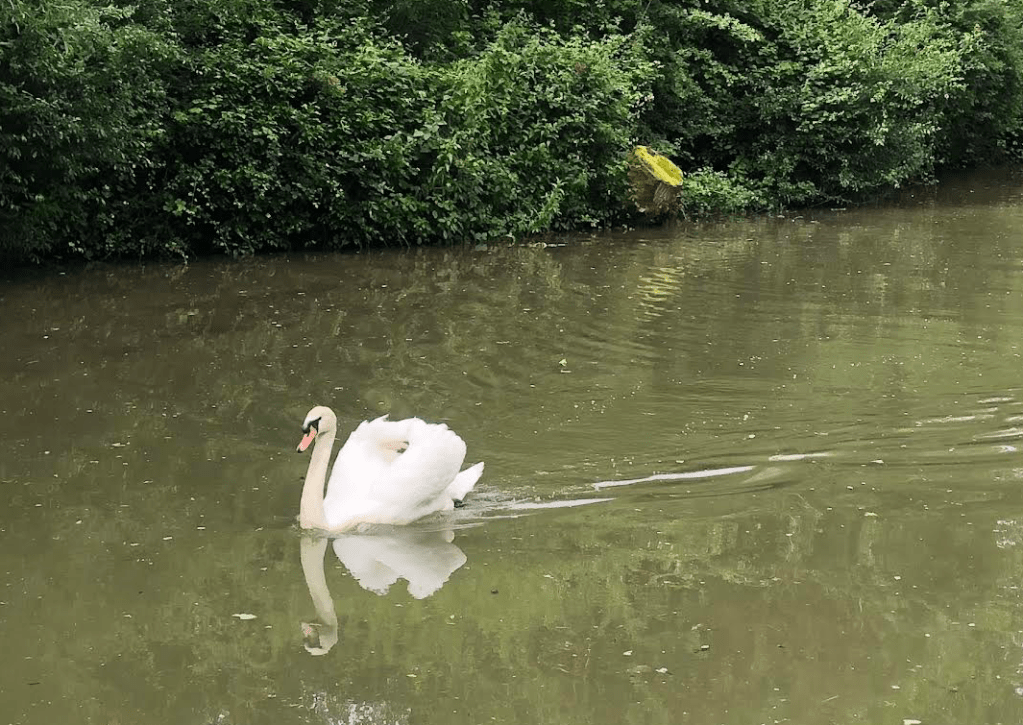
Swan on the Grand Union Canal, leamington

We often see swans as birds of great beauty but we know that both beneath their calm demeanour is a pair of fast paddling feet, and that their initial appearance as cygnet underplays what they will finally be like. 

Things are not always as they first appear.


The world around us is full of curious, beautiful and amazing things. As small children our curiosity and our amazement knew no bounds. Every day would produce novelties- things to see, things to chew or eat, things to grab and hold, things to poke and explore. 

As we have grow older we have often lost that sense of wonder. Things that were new have become mundane. In the rush to be busy, small things flop below the radar. Decorum dictates that we shouldn’t prod or lick things and, unless we’re wine tasters, swirling stuff around our mouth and spitting are frowned upon. Stopping suddenly just to look is discouraged – it interrupts the flow of traffic. Daily routines take over. 

And our love for the world wains and falters. 

The season of creation-tide runs from 1st September till 4th October, the Feast of St Francis. Let’s fall in love again with creation. 
Falling in Love 9

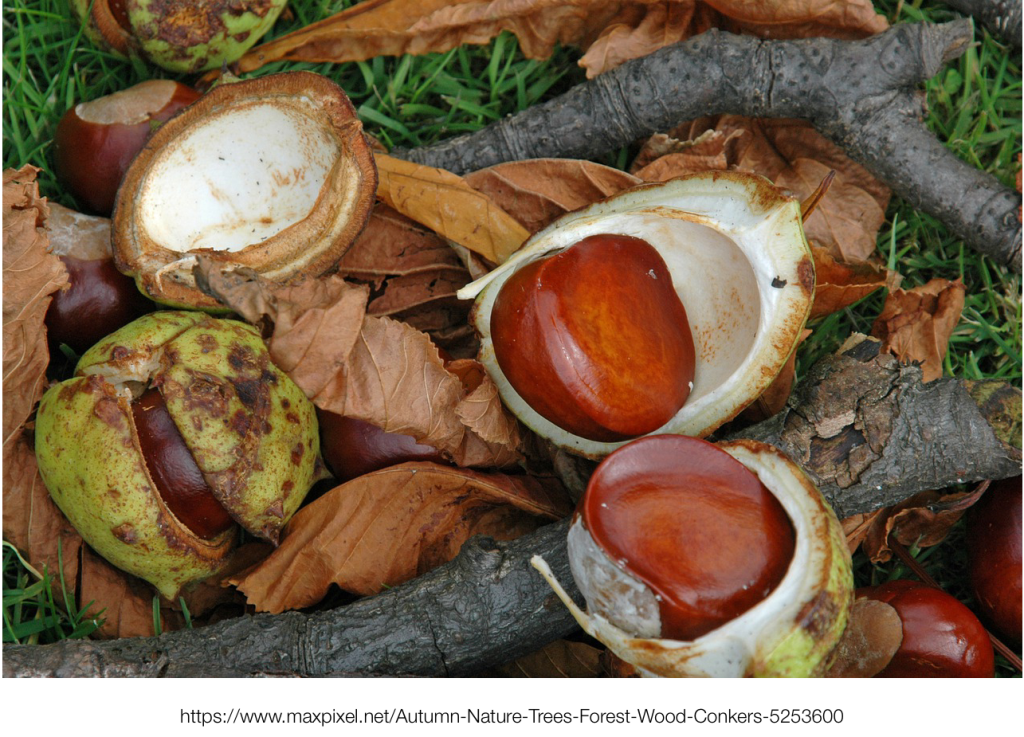
Conkers are a children’s favourite, to be collected and hoarded. Its smooth highly polished skin and round shape is irresistible

Even for adults – aren’t we just grown up children – the appeal remains. The conker comes with an apt lesson: the shiny beauty is short lived – beauty can not be hoarded. 

The world around us is full of curious, beautiful and amazing things. As small children our curiosity and our amazement knew no bounds. Every day would produce novelties- things to see, things to chew or eat, things to grab and hold, things to poke and explore. 

As we have grow older we have often lost that sense of wonder. Things that were new have become mundane. In the rush to be busy, small things flop below the radar. Decorum dictates that we shouldn’t prod or lick things and, unless we’re wine tasters, swirling stuff around our mouth and spitting are frowned upon. Stopping suddenly just to look is discouraged – it interrupts the flow of traffic. Daily routines take over. 

And our love for the world wains and falters. 

The season of creation-tide runs from 1st September till 4th October, the Feast of St Francis. Let’s fall in love again with creation. 
Falling in Love 8

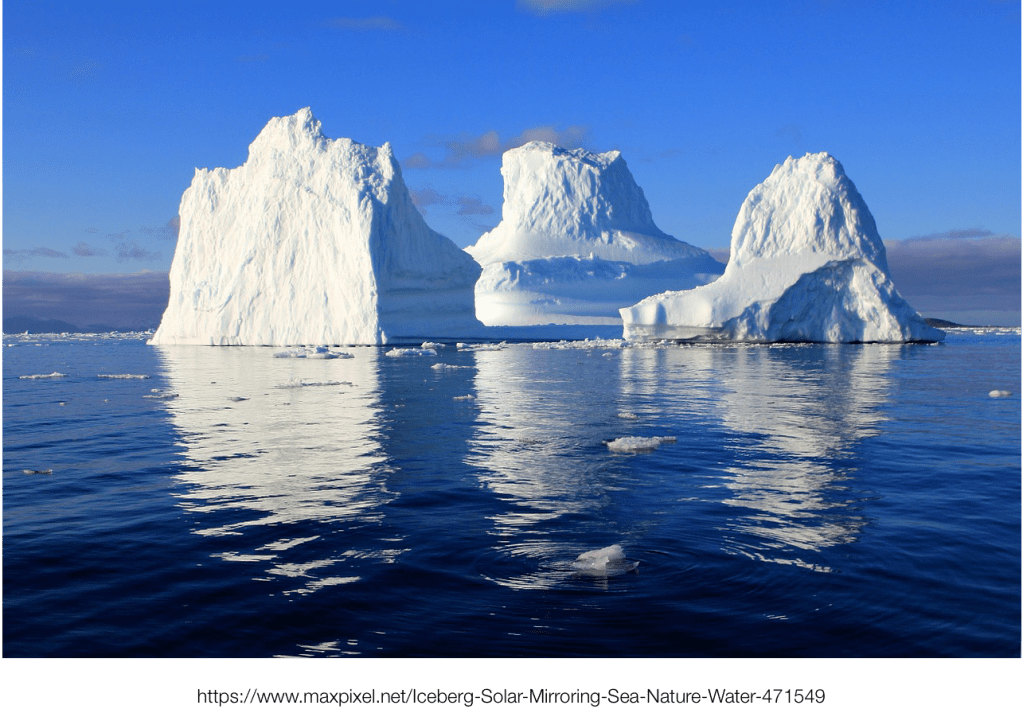
Something we will probably only ever see in a picture or on film, is an iceberg . Icebergs are huge lumps of fresh water ice  that have broken away from an ice shelf or glacier. Icebergs float because frozen fresh water is less dense than sea water. Most of the iceberg will be submerged in a ratio of 1:7. Currently the largest iceberg is A-76 – which is in the Weddell Sea in Antarctica – is 170 km in length and 25 km wide!

Most icebergs are white but can be various shades of blue – or even black – depending on the amount of air and impurities in the ice.


The world around us is full of curious, beautiful and amazing things. As small children our curiosity and our amazement knew no bounds. Every day would produce novelties- things to see, things to chew or eat, things to grab and hold, things to poke and explore. 

As we have grow older we have often lost that sense of wonder. Things that were new have become mundane. In the rush to be busy, small things flop below the radar. Decorum dictates that we shouldn’t prod or lick things and, unless we’re wine tasters, swirling stuff around our mouth and spitting are frowned upon. Stopping suddenly just to look is discouraged – it interrupts the flow of traffic. Daily routines take over. 

And our love for the world wains and falters. 

The season of creation-tide runs from 1st September till 4th October, the Feast of St Francis. Let’s fall in love again with creation. 

If …

Soil Plant Hands Growth Environment Nature Dirt

If we are called us to beat swords into plough shares,  

we are also called to turn military jobs into green ones.

If we seek to establish peace,

we must generously offer both love and practical gifts. 

If we shift from passive to active travel, from cars to cycles,

we shall need cycle paths and secure shelters.

If we replace petrol engines with electric motors, 

we must also turn petrol stations into recharging points.

If we swop meats for a vegan diet, 

we must also turn beef farms into arable farms,

sheep fells into woodlands,

dairies into nut fromageries.

If we switch to green electricity,

our pension funds must invest in renewable energy.

If we green our pensions, 

surely we will green our banks too.

Creator God, help us to see the changes we must make,

Give us the wisdom to support them, 

the energy to achieve them 

and the joy to celebrate them.

Amen.

Falling in Love 7


Acorns are small but have a look of completeness. Their smooth skin and rounded shaped topped with its own little cap. That little cap is such a perfect fit! Once the acorn has fallen, its cap discarded, its skin broken, the journey of growth begins and over the years, that acorn will be transformed  from seed to majestic oak. There are oak trees in Richmond Park that were acorns back in the days of Henry VIII.

The world around us is full of curious, beautiful and amazing things. As small children our curiosity and our amazement knew no bounds. Every day would produce novelties- things to see, things to chew or eat, things to grab and hold, things to poke and explore. 

As we have grow older we have often lost that sense of wonder. Things that were new have become mundane. In the rush to be busy, small things flop below the radar. Decorum dictates that we shouldn’t prod or lick things and, unless we’re wine tasters, swirling stuff around our mouth and spitting are frowned upon. Stopping suddenly just to look is discouraged – it interrupts the flow of traffic. Daily routines take over. 

And our love for the world wains and falters. 

The season of creation-tide runs from 1st September till 4th October, the Feast of St Francis. Let’s fall in love again with creation. 

Falling in Love 5


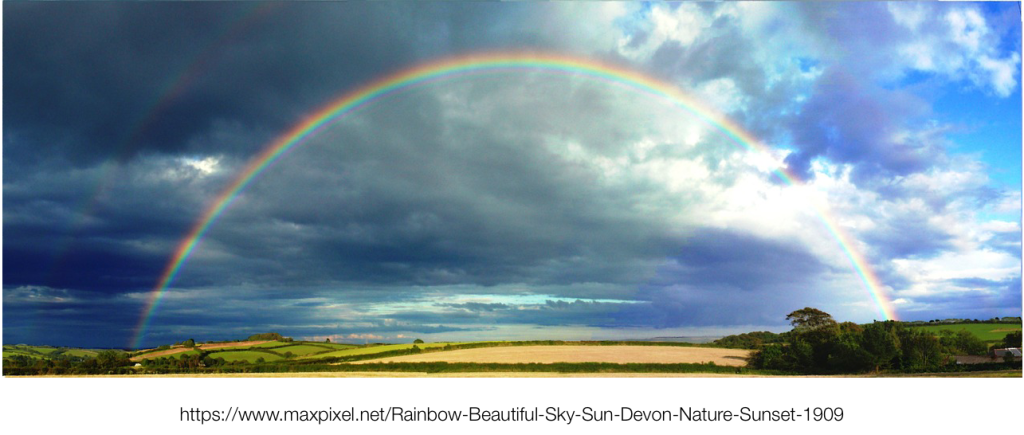
The rainbow is always so fleeting but isn’t that part of its wonder? It’s clearly there in the sky, yet untouchable, visible as an arc but one with no fixed position: as we move it moves. Its beauty promises something that is more than reality.

The world around us is full of curious, beautiful and amazing things. As small children our curiosity and our amazement knew no bounds. Every day would produce novelties- things to see, things to chew or eat, things to grab and hold, things to poke and explore. 

As we have grow older we have often lost that sense of wonder. Things that were new have become mundane. In the rush to be busy, small things flop below the radar. Decorum dictates that we shouldn’t prod or lick things and, unless we’re wine tasters, swirling stuff around our mouth and spitting are frowned upon. Stopping suddenly just to look is discouraged – it interrupts the flow of traffic. Daily routines take over. 

And our love for the world wains and falters. 

The season of creation-tide runs from 1st September till 4th October, the Feast of St Francis. Let’s fall in love again with creation. 
Falling in Love 3

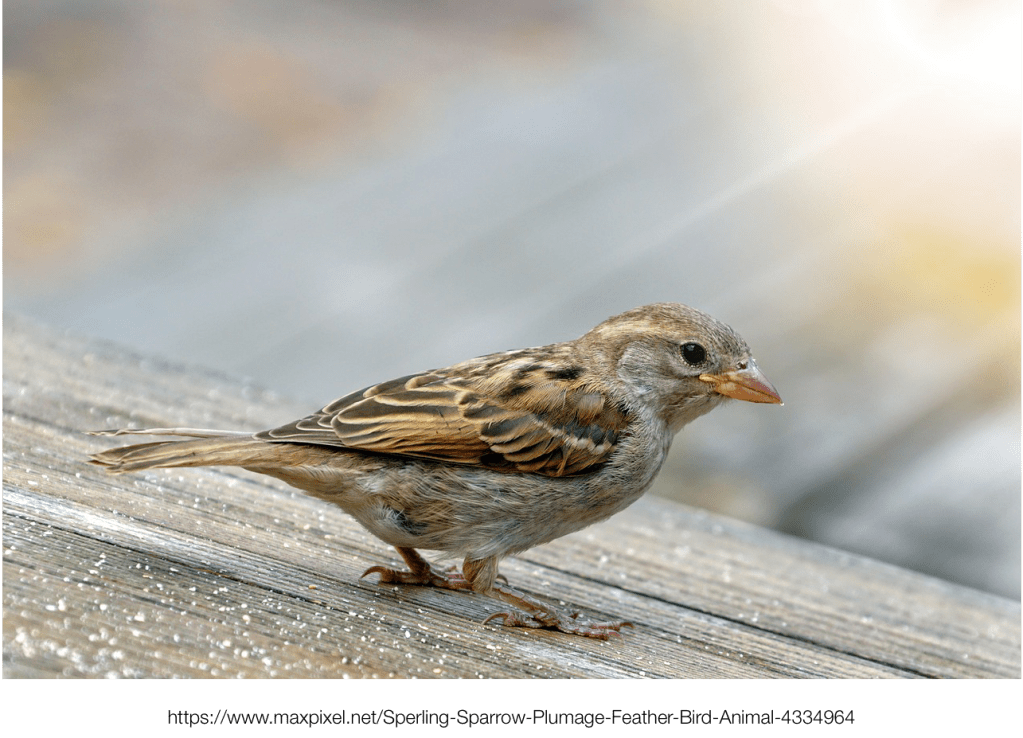
Sparrows are seen as common place birds, birds of the dusty street or the old fashioned gutter. Insignificant birds in drab shades of brown. Their call is a repetitive  banter rather than a melodious song. Whilst still numerous their overall population is worryingly in decline. 

Look more closely. The delicate shades of taupe and bronze, flashes of russet. A beady eye and playful nature. Thronging together they are lovers of communal living. 

The world around us is full of curious, beautiful and amazing things. As small children our curiosity and our amazement knew no bounds. Every day would produce novelties- things to see, things to chew or eat, things to grab and hold, things to poke and explore. 

As we have grow older we have often lost that sense of wonder. Things that were new have become mundane. In the rush to be busy, small things flop below the radar. Decorum dictates that we shouldn’t prod or lick things and, unless we’re wine tasters, swirling stuff around our mouth and spitting are frowned upon. Stopping suddenly just to look is discouraged – it interrupts the flow of traffic. Daily routines take over. 

And our love for the world wains and falters. 

The season of creation-tide runs from 1st September till 4th October, the Feast of St Francis. Let’s fall in love again with creation.