9th November 2026
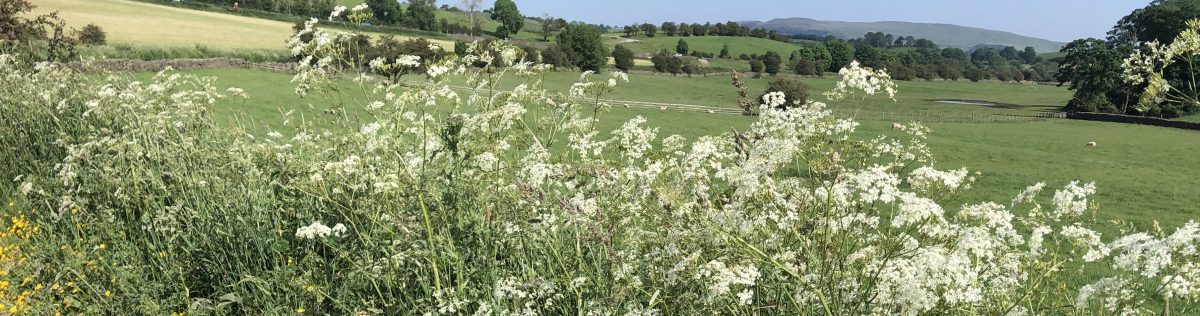
Walking with Christian Climate Action on a pilgrim way to Avebury, we walked through part of the Yatesbury House Farm. The path was lined with newly saplings (sadly some had succumbed to this year’s extreme hot weather). The fields on each side were a mix of plants including, I think, blue flowering flax. Black cattle grazed a wide expanse of the land, whilst we counted six kites – wheeling overhead – a goodly number of corvids, finches and a butterfly!
Yatesbury House Farm has been farming in harmony with nature organically since 1998, and biodynamically since 2004. The farm is closed to all inputs (excepting, pasture seeds, new seeds, new bulls, essential trace minerals for cattle and fuels for tractors and grain drying) – is everything that keeps the soil fertile and its livestock feed (silage etc – all the grain grown is for human consumption), is produced on the farm. Increasingly solar energy is reducing their dependency on imported fuel. The farm practices Agroforestry -including silvopastoral farming where cattle graze both pasture and woodlands, and where copses and hedgerows are planted to benefit both crops and nature. Future crops will include apples, hazelnuts, pears, plums, and walnuts.
Farms like this, help us to imagine what the wider landscape could look like if farming was so clearly focused on working with nature. On the flip side they remind us that if we want that future, we need to give our support by opting for organic produce and as importantly opting to eat less meat and dairy products. Letting cattle graze in harmony with nature, stocking to low density levels and supplementing their feed not with corn and soy but with silage, produces less – but better – meat.
Farming like this also contributes to the Kunming Montreal Biodiversity Framework. (1)
Target 2 calls for a restoration of 30% of all degraded ecosystems -which I’m sure includes farms where the soil’s fertility has been compromised.
Target 7 which calls for the reduction in pollution to levels that are not harmful to biodiversity – organic farming clearly meets this challenge.
Target 8 calls for the minimising of the impacts of climate change on biodiversity and to build up resilience which would include farming practices that increase the ability of the soil to absorb excess flood water, to absorb carbon and that boosts biodiversity.
Target 10 calls for the enhancement of biodiversity and sustainability in agriculture, including the adoption biodiversity friendly practices such as agroecology.
Our walk was the precursor to our attendance at the National Trust’s AGM where a CCA inspired motion called on the NT to align its banking with its environmental credentials, was successfully approved by the members. (2) The two events are welcome signs that a better future is possible if we are willing to press for it.
To find out more about Yatesbury House Farm visit their website – https://www.yatesburyfarm.com/home -or watch this video – https://www.youtube.com/watch?v=24y38h9QvU0
- https://www.cbd.int/gbf/targets
- https://christianclimateaction.org/2026/11/09/cca-campaign-success-national-trust-votes-to-seek-ethical-bank/


