Green Tau: farming for a better future

9th November 2026

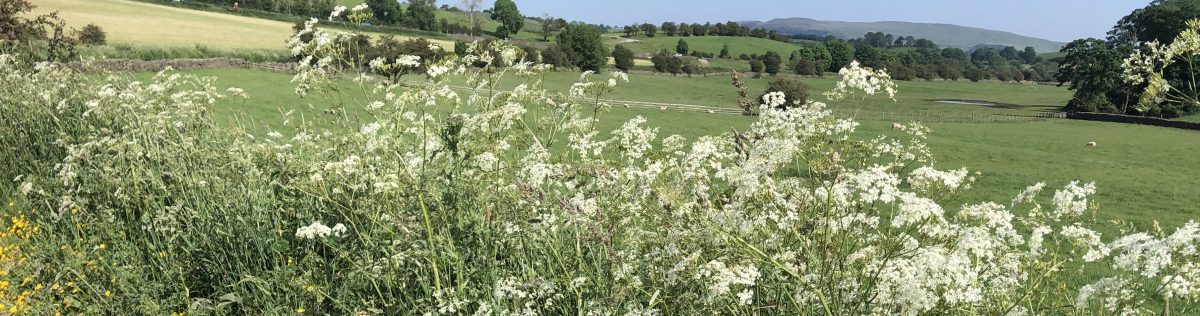
Walking with Christian Climate Action on a pilgrim way to Avebury, we walked through part of  the Yatesbury House Farm. The path was lined with newly saplings (sadly some had succumbed to this year’s extreme hot weather). The fields on each side were a mix of plants including, I think, blue flowering flax. Black cattle grazed a wide expanse of the land, whilst we counted six kites – wheeling  overhead – a goodly number of corvids, finches and a butterfly!

Yatesbury House Farm has been farming in harmony with nature organically since 1998, and biodynamically since 2004. The farm is closed to all inputs (excepting, pasture seeds, new seeds, new bulls, essential trace minerals for cattle and fuels for tractors and grain drying) – is everything that keeps the soil fertile and its livestock feed (silage etc – all the grain grown is for human consumption), is produced on the farm. Increasingly solar energy is reducing their dependency on imported fuel. The farm practices Agroforestry -including silvopastoral farming where cattle graze both pasture and woodlands, and where copses and hedgerows are planted to benefit both crops and nature. Future crops will include apples, hazelnuts, pears, plums, and walnuts.

Farms like this, help us to imagine what the wider landscape could look like if farming was so clearly focused on working with nature. On the flip side they remind us that if we want that future, we need to give our support by opting for organic produce and as importantly opting to eat less meat and dairy products. Letting cattle graze in harmony with nature, stocking to low density levels and supplementing their feed not with corn and soy but with silage, produces less – but better – meat.

Farming like this also contributes to the Kunming Montreal Biodiversity Framework. (1)

Target 2 calls for a restoration of 30% of all degraded ecosystems -which I’m sure includes farms where the soil’s fertility has been compromised.

Target 7 which calls for the reduction in pollution to levels that are not harmful to biodiversity – organic farming clearly meets this challenge.

Target 8  calls for the minimising of the impacts of climate change on biodiversity and to build up resilience which would include farming practices that increase the ability of the soil to absorb excess flood water, to absorb carbon and that boosts biodiversity.

Target 10 calls for the enhancement of biodiversity and sustainability in agriculture, including the adoption  biodiversity friendly practices such as agroecology.

Our walk was the precursor to our attendance at the National Trust’s AGM where a CCA inspired motion called on the NT to align its banking with its environmental credentials, was successfully approved by the members. (2) The two events are welcome signs that a better future is possible if we are willing to press for it.

To find out more about Yatesbury House Farm visit their website  – https://www.yatesburyfarm.com/home -or watch this video – https://www.youtube.com/watch?v=24y38h9QvU0

  1. https://www.cbd.int/gbf/targets
  2. https://christianclimateaction.org/2026/11/09/cca-campaign-success-national-trust-votes-to-seek-ethical-bank/

Counting on … day 119

6th November 2026

Nature friendly farming

Goulson begins this chapter with what is again at the nub of the issue. “As we have explores, there is overwhelming evidence that the industrialisation of farming is a major driver of the loss of wildlife around the globe; ecosystems rich in wildlife have been swept away, and replaced by serried ranks of oil palms, vines or vast fields of arable crops, which are treated multiple times per year with many different pesticides to keep the crop as close to a perfect monoculture as possible. Industrialised farming and nature are mutually exclusive.

“Loss of wildlife from the land is clearly undesirable for many reasons, not least of which is that it undermines the stability of farming itself, which needs bees and pollinators, ladybirds and other natural enemies of crop pests, and the diverse array of small creatures that keep soil healthy and recycle nutrients.” (P168 Eat the Planet Well)

Goulson follows this with an overview of the many ways in which nature-friendly farming provides a positive and productive alternative. He takes the example of hedgerows which were ripped out following the Second World War to make maximise field size and increase productivity. On the ground trials and research shows the contrary to be true. “If every arable farmer …put the least productive 8% of their land into wildlife habitats, there would apparently be no impact on overall crop production but huge benefits for nature; 8 per cent of arable land in the UK would amount to a staggering 320,000 hectares of wildlife habitat.” (P169) Other examples covered include expanded crop rotations, agroforestry, the UK government’s and various EU environmental policies and subsidies, as well as regenerative and organic farming practices, ending with this recap:-

“In short, conventional farming could adopt a suite of measures that would boost biodiversity considerably with little or no impact on overall crop yield or farm profitability, and some of these would help reduce greenhouse gas emissions. We should be encouraging and supporting farmers to deploy as many of these measures as possible, ideally with government funding and incentives. Going organic also boosts biodiversity, but comes at the cost of decreased yield for some crops. The ideal system, from both environmental and human health perspectives, would combine both, but to be viable without increasing food imports this would require a shift in diet.” (P179)

Counting on … day 200

25th October 2024

There are a multitude of other petitions out there calling for the restoration of nature as more and more people realise the desperately depleted state of biodiversity in both the UK and world-wide.

Last month WWF handed in a petition to all the major political parties with 57,685 signatures to prove that the public want real action from the new government, and all political leaders, to stop the destruction of nature. (1) 

Here are a selection of similar live petitions –

Wild Card has a petition calling on the Church Commissioners to rewild 30% of the estates they control  – currently this petition stands at over 100,000 signatures

The RSPB is calling on the government to provide better funding for nature friendly farming 

And Rewilding Britain is calling for the government to rewild 30% of British land and waters by 2030

  1. https://www.wwf.org.uk/success-stories/stop-destruction-nature-petition