Living Sustainably; Protecting the Earth; Loving God
Author: Judith Russenberger
Environmentalist and theologian, with husband and three grown up children plus one cat, living in London SW14.
I enjoy running and drinking coffee - ideally with a friend or a book.
Throughout Lent the psalms seem to have been chosen for their focus on sin and the grief that causes us. In today’s the psalmist acknowledges his sinfulness – a sinfulness which has been a burden from birth. What the psalmist realises is that the effect of sin is to break down the relationship between him (or her) and God, and that it is only God who cleanse the psalmist of sin and restore in her the gifts of truth and wisdom, to renew his heart and reinvigorate him with God’s Holy Spirit, so bring her back again into that right relationship with God that he desires.
Sin separates us from God. It separates us from those gifts that enable us to live in harmony with one another and with all creation. As not-God’s-people we are greedy, hurtful, hateful, mean and jealous. We destroy the natural environment. We persecute others. We perpetuate wars and inflict suffering on the innocent. And this is not what God wants. Jeremiah describes God desire to remake the relationship between God and by writing the law on their hearts, by internalising the law within them – So that “they shall all know me, from the least of them to the greatest, says the Lord; for I will forgive their iniquity, and remember their sin no more.”
Jeremiah writes in the plural, for sin doesn’t just affect the individual, but the community. Sometimes my sin has a worse affect on my neighbour either as an unintended consequence or as a deliberate act on my part. And that happens repeatedly through communities from the family units to international groups. We know on one hand what God wants, and we see on the other hand fighting and cruelty, suffering and aggression. And we feel helpless.
Do we ignore what’s going on and find peace in ignorance? Do we work really hard so that we have no time to worry about anything else? Do we dissolve into a pool of tears? Do we recognise the sin and suffering for what they are, and seek to find a positive way forwards – healing – through God’s faithfulness?
Whilst the psalms during Lent focus on sin, many of the readings have focused more on suffering and how to cope with it. Last week we had the story of Moses’s childhood – a time fraught with risk but which the protagonists reacted to positively – from the persecuted Hebrew mother to the royal princess. Their efforts were rewarded in the short term but I doubt any of them foresaw the long term salvation that will come from their actions. Likewise last week we were reminded that the process of salvation can also be the way cause great pain. We take the best action, accepting pain if necessary, and be confident that in God’s time there will be salvation – knowing that we are being restored or healed in our relationship with God.
The week before we heard Jesus’s words “Take up your cross and follow me”. A reminder that we should not expect life to be easy but be ready to face challenges and undertake hard graft. Where would Moses have been if the princess had said, “I can’t be bothered”? Where would the food banks be if people said, What’s the point? And gave neither food or time. Where would the UN aid organisations be if rich nations said, We’re not that rich. And gave neither money and support?
Clinging on to your own life, your own desires, sustaining your own selfishness, Jesus told his disciples, is self-destructive. We think we are protecting ourselves but we are cutting ourselves off from real growth, from true fullness of life. Letting go so that we are part of a bigger story, allows us to experience life to the full.
In today’s gospel Jesus gives us the image of a seed. The seed is the residue of a living plant. It falls to the ground – as if unwanted – but then in the darkness of the soil is transformed. Its inner heart has the potential for life and, breaking out into new growth, becomes more than it ever was! Jesus sees in all of us that same potential. The potential to change the world around us. This vision is there in so many of his parables – the yeast that swells the bread dough, the salt that flavours the whole meal, the candle flame that lights a room, the seed that grows in the good soil etc.
Sowing and growing. Being willing to let go of self, of self interest, of self importance. Being willing to undergo transformation. The seed grows best in the good soil. Jeremiah tells us that transformation is about not just the individual but the community. Jesus very directly addresses his words in the plural – “Those who love their life lose it, and those who hate their life in this world will keep it for eternal life” – as he talks to both his disciples and those – here some Greeks – who are drawn to meet Jesus. It is the community and the support of others that enables our seeds to flourish as they grow.
It is we as part of a community who must relinquish self interest in the interests of the common good. Indeed it is we as a whole community who must relinquish self interest in the interests of the global good. We cannot go on burning fossil fuels and consuming raw materials without pause. We must be ready to forego some consumer goods in order not to deplete the world to the detriment of the whole world. We must let go our desire to be the most important nation, the strongest nation, in order that all nations be treated with equal value. That will be the resurrection light for the whole world.
So let us be brave. Let us be active. Let us let go of wealth and standing and self importance to allow our lives to enrich the whole world.
How? By standing up and being vocal about the rights of others. In standing up against greed and excess consumption. In standing up and showing love to our neighbour. By drawing strength from Jesus, seeing in him the example to follow, and finding in him the source of the Holy Spirit that will fill us with strength and joy. By being a community of believers that is fed by and empowered by the fellowship of the Holy Spirit.
Jeremiah 31:31-34
The days are surely coming, says the Lord, when I will make a new covenant with the house of Israel and the house of Judah. It will not be like the covenant that I made with their ancestors when I took them by the hand to bring them out of the land of Egypt—a covenant that they broke, though I was their husband, says the Lord. But this is the covenant that I will make with the house of Israel after those days, says the Lord: I will put my law within them, and I will write it on their hearts; and I will be their God, and they shall be my people. No longer shall they teach one another, or say to each other, “Know the Lord,” for they shall all know me, from the least of them to the greatest, says the Lord; for I will forgive their iniquity, and remember their sin no more.
Psalm 51:1-13
1 Have mercy on me, O God, according to your loving-kindness; * in your great compassion blot out my offences.
2 Wash me through and through from my wickedness * and cleanse me from my sin.
3 For I know my transgressions, * and my sin is ever before me.
4 Against you only have I sinned * and done what is evil in your sight.
5 And so you are justified when you speak * and upright in your judgment.
6 Indeed, I have been wicked from my birth, * a sinner from my mother’s womb.
7 For behold, you look for truth deep within me, * and will make me understand wisdom secretly.
8 Purge me from my sin, and I shall be pure; * wash me, and I shall be clean indeed.
9 Make me hear of joy and gladness, * that the body you have broken may rejoice.
10 Hide your face from my sins * and blot out all my iniquities.
11 Create in me a clean heart, O God, * and renew a right spirit within me.
12 Cast me not away from your presence * and take not your holy Spirit from me.
13 Give me the joy of your saving help again * and sustain me with your bountiful Spirit.
Hebrews 5:5-10
Christ did not glorify himself in becoming a high priest, but was appointed by the one who said to him,
“You are my Son, today I have begotten you”;
as he says also in another place,
“You are a priest forever, according to the order of Melchizedek.”
In the days of his flesh, Jesus offered up prayers and supplications, with loud cries and tears, to the one who was able to save him from death, and he was heard because of his reverent submission. Although he was a Son, he learned obedience through what he suffered; and having been made perfect, he became the source of eternal salvation for all who obey him, having been designated by God a high priest according to the order of Melchizedek.
The Gospel
John 12:20-33
Now among those who went up to worship at the festival were some Greeks. They came to Philip, who was from Bethsaida in Galilee, and said to him, “Sir, we wish to see Jesus.” Philip went and told Andrew; then Andrew and Philip went and told Jesus. Jesus answered them, “The hour has come for the Son of Man to be glorified. Very truly, I tell you, unless a grain of wheat falls into the earth and dies, it remains just a single grain; but if it dies, it bears much fruit. Those who love their life lose it, and those who hate their life in this world will keep it for eternal life. Whoever serves me must follow me, and where I am, there will my servant be also. Whoever serves me, the Father will honour.
“Now my soul is troubled. And what should I say—‘Father, save me from this hour’? No, it is for this reason that I have come to this hour. Father, glorify your name.” Then a voice came from heaven, “I have glorified it, and I will glorify it again.” The crowd standing there heard it and said that it was thunder. Others said, “An angel has spoken to him.” Jesus answered, “This voice has come for your sake, not for mine. Now is the judgment of this world; now the ruler of this world will be driven out. And I, when I am lifted up from the earth, will draw all people to myself.” He said this to indicate the kind of death he was to die.
“Hey there! All who are thirsty, come to the water! Are you penniless? Come anyway—buy and eat! Come, buy your drinks, buy wine and milk. Buy without money—everything’s free! Isaiah 55:1
You Lord, are the source of all good things:
We praise you.
You call us to tend and care for your creation:
May we strive to do your will.
You have made us as brothers and sisters with all that lives:
May we live together in peace.
A Reading: Isaiah 55: 6-13 (The Message translation)
Seek God while he’s here to be found, pray to him while he’s close at hand. Let the wicked abandon their way of life and the evil their way of thinking. Let them come back to God, who is merciful, come back to our God, who is lavish with forgiveness.
“I don’t think the way you think. The way you work isn’t the way I work.” God’s Decree. “For as the sky soars high above earth, so the way I work surpasses the way you work, and the way I think is beyond the way you think. Just as rain and snow descend from the skies and don’t go back until they’ve watered the earth, Doing their work of making things grow and blossom, producing seed for farmers and food for the hungry, So will the words that come out of my mouth not come back empty-handed. They’ll do the work I sent them to do, they’ll complete the assignment I gave them.
“So you’ll go out in joy, you’ll be led into a whole and complete life. The mountains and hills will lead the parade, bursting with song. All the trees of the forest will join the procession, exuberant with applause. No more thistles, but giant sequoias, no more thornbushes, but stately pines— Monuments to me, to God, living and lasting evidence of God.”
A response:
God’s vision of the world is one of beauty and harmony –
Yet we do not listen,
We will not hear,
Our eyes are blinkered.
Lord, in your mercy awaken us to your wisdom.
God’s vision of the world is one of generosity and abundance –
Yet we hoard what decays,
We squabble over wealth,
Our hearts are greedy.
Lord, in your mercy awaken us to your wisdom.
God’s vision of the world is one of promise and covenant –
Yet we don’t trust God,
We don’t trust our brethren,
Our ways are deceitful.
Lord, in your mercy awaken us to your wisdom.
God’s vision of the world is one of peace and restoration –
The UK government runs a National Adaptation Programme which assesses the risks arising from climate change and how best we can adapt to reduce of cope with these risks – as well as building on any opportunities where we can gain from change. These plans are reviewed and every five years a new National Adaptation Programme is produced. NAP3 covers the period from 2023 to 2028. It includes items such as:
“protecting the natural environment
supporting business in adapting to climate change
adapting infrastructure (for example, our electricity networks and railways)
protecting buildings and their surroundings (for example, from hotter temperatures)
protecting public health and communities
mitigating international impacts on the UK (for example, on food supplies imported from abroad)”
“Julia King, chair of the adaptation subcommittee of the CCC, said: “The evidence of the damage from climate change has never been clearer, but the UK’s current approach to adaptation is not working. The national adaptation plan published last July, known as Nap3, was the third in a series of five-yearly updates in response to an assessment of climate risks, required under the 2008 Climate Change Act, from the Department for Environment, Food and Rural Affairs.
“But the CCC found that although it was an improvement on previous efforts, the new plan was still inadequate and required improvement before the next scheduled update in 2028.
Advance planning is key in tackling the climate crisis but it also has to be planning that can flex as circumstance change. The Climate Change Committee was preparing the UK’s fifth carbon budget for the period 2028-2032 back in November 2015. It the executive summary the CCC noted that the publishing of the budget was deliberately being timed to come out before COP21 in Paris – the COP where the Paris agreement was drawn up.
Amongst the various budget proposals – which largely focused on reducing the carbon intensity of energy generation, and of transport – featured things such as hydrogen powered buses no hydrogen for domestic heating. We now know that the science and the markets have gone down the line of electric buses, and that hydrogen has similarly not proved a practicable substitute for domestic heating – rather the trend has, if very slowly, been for heat pumps.
What the writers of the budget could not have predicted was the Covid pandemic which has altered working patterns and changed the pressures on the transport system. Nor could they have anticipated the war in Ukraine and the sharp increase in fuel prices which has served to reduce gas consumption.
The CCC is now working on the seventh carbon budget (for the period 2038-2042), having issued the sixth budget in 2020 (for the period 2033-2037). The advance notice of that these budgets give on the shape the economy and infrastructure need to take, should help industry with its investment plans but this does rely on the government both sticking to the plans – eg not changing the proposed date for phasing out new petrol engine cars – and facilitating change when unforeseen circumstances arise such as wars and global energy price hikes.
To monitor progress – ie whether nations are meeting the targets they set for themselves with their NDCs – there is the work of an independent body, the Climate Action Tracker.
“The Climate Action Tracker is an independent scientific project that tracks government climate action and measures it against the globally agreed Paris Agreement aim of “holding warming well below 2°C, and pursuing efforts to limit warming to 1.5°C.” A collaboration of two organisations, Climate Analytics and NewClimate Institute, the CAT has been providing this independent analysis to policymakers since 2009.” https://climateactiontracker.org/
In 2022 the UK updated its NDC, as part of the COP26 agreement, to commit to reducing it economy-wide greenhouse gas emissions by at least 68% by 2030, compared with 1990 levels. (https://unfccc.int/sites/default/files/NDC/2022-06/UK Nationally Determined Contribution.pdf)
The diagram below shows Climate Action Trackers assessment for the UK as of of September 2023. There clearly room for improvement.
Earth is the name we give both to the planet on which we live and to the topmost surface of the planet. As the latter, it is also known as soil, dirt, dust and ground.
Earth as soil is a mix of minerals and organic matter, containing air, water and micro-organisms. The mineral component comes principally from eroded rocks. The organic matter from decaying flora and fauna. Water and air come from the atmosphere that surrounds the planet. Earth really is made from the earth! Earth as soil filters and recycles waste products. The earth is a key vehicle for the nitrogen cycle, the carbon cycle and the water cycle. The earth provides nutrients and water for plants as well as providing structural support. The earth is home to millions of micro-organisms that facilitate the processes by which plants grow and decay. One teaspoon can contain as many as 1 billion bacteria.
These micro-organisms are the means by which chemicals are processed and moved from plant to soil and soil to plant. The health and fertility of the earth is measured by the abundance of these micro populations.
Below is a photo of a magnified view of some earth.
How amazing is earth? Why do we sometimes give it the derogatory name of dirt?
Does this more scientific understanding of earth change you understanding of the story in Genesis of the creation of Adam and Eve?
Do you like this pair of paintings depicting Adam and Eve? (Click on links above) What might the artist been telling us about these two figures? The Hebrew from which Adam’s name is derived has a meaning of red, blood as well as earth. That for Eve’s name has a meaning of breath and life, as well as symbiosis. ‘Adam named his wife Eve because she was the mother of all living.’ (Genesis 3:20)
Adam and Eve were in a sense routed in the earth. As tillers of the soil, they continued to live in a close relationship with the earth. It is often observed that some older cultures still maintain a close affinity with the earth around them and an awareness that they are sustained by that earth. Do you feel that you are rooted in the earth? In your life have or are, there any local traditions, celebrations or observances that link human life and earth? Are we more cut off from the earth by modern shopping, farming and/ or housing arrangements?
The following painting is by Katherine Marshall Nakamarra. Do you like it? How does it make you feel? Does it tell you a story? “Katherine Marshall Nakamarra paints the ceremonial sites and stories that she has inherited through her mother, the famous artist Walangkura Napanangka. They represent a women’s ceremonial site on her own country near Kintore. The colours that she uses are very much the colours of the earth, ranging through reds, oranges, tans and browns. She represents the rocky country where this ceremonial site is located. The area is surrounded by hills. She marks out the ceremonial sites as concentric circles. This is a landscape painting utilising elements of the Western Desert symbolism and using what we would associate as the very earth colours of this open sandy and rocky country.” https://japingkaaboriginalart.com/articles/aboriginal-desert-landscape-colour-palettes/
7. Adam and Eve are followed by Cain and Abel. When Cain, the one who tills the soil, kills Abel it is the ground that channels Abel’s plight: ‘And the Lord said, ‘What have you done? Listen; your brother’s blood is crying out to me from the ground! And now you are cursed from the ground’ (Genesis 4: 10, 11a). Do you think the earth still pleads the cause of the victims of human sinfulness?
8. Read the following poem by John Heath Stubbs:-
Golgotha
In the middle of the world, in the centre
Of the polluted heart of man, a midden;
A stake stemmed in the rubbish.
From lipless jaws, Adam’s skull
Gasped up through the garbage:
“I lie in the discarded dross of history,
Ground down again to the red dust,
The obliterated image. Create me.”
From lips cracked with thirst, the voice
That sounded once over the billows of chaos
When the royal banners advanced,
replied through the smother of dark:
“All is accomplished, all is made new, and look –
All things, once more, are good.”
Then, with a loud cry, exhaled His spirit.
Many Mediaeval pictures of the crucifixion show a skull lying in the ground beneath the cross, partly to reflect Golgotha’s name as meaning the place of the skull, as well as reflecting a tradition it was also the burial place of Adam. Is this a poem about death or resurrection, or indeed both?
In what ways might we think of earth as a vehicle for resurrection?
9. Read this next poem by Malcolm Guite
Good Ground
I love your simple story of the sower,
With all its close attention to the soil,
Its movement from the knowledge to the knower,
Its take on the tenacity of toil.
I feel the fall of seed a sower scatters,
So equally available to all,
Your story takes me straight to all that matters,
Yet understands the reasons why I fall.
Oh deepen me where I am thin and shallow,
Uproot in me the thistle and the thorn,
Keep far from me that swiftly snatching shadow,
That seizes on your seed to mock and scorn.
O break me open, Jesus, set me free,
Then find and keep your own good ground in me.
What does this poem tell us about earth as a medium for growth? And who is it who tills or gardens our ‘ground’?
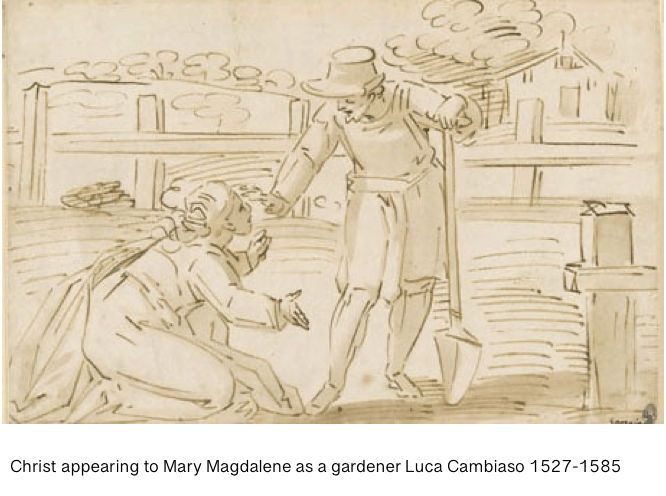
10. In John’s Gospel Mary Magdalene mistakes Jesus for a gardener, and the place where Jesus has been buried is presented as a garden. Does this resurrection story return us to Adam and Eve in the Garden of Eden?
Holy God,
Ground of our being,
You have moulded and shaped us from the earth,
and have planted us in the garden of your creation.
Feed us and prune us that we may fulfil your will
to green this earth-bound world.
Amen.
Part 2: Fire
What Is Fire Made Of?
According to Anne Marie Helmenstine it is “A flame is a mixture of its fuel, light, and the solids and gases that both form the fire and are produced by it. Incomplete combustion produces soot, which is mainly carbon… Fire is the result of a chemical reaction called combustion. At a certain point in the combustion reaction, called the ignition point, flames are produced. Ordinarily, flames consist primarily of carbon dioxide, water vapour, oxygen, and nitrogen… However, incomplete combustion yields a host of other possibilities. Soot is a primary component of incomplete combustion. Soot mainly contains carbon, but various organic molecules may occur… A candle flame consists of vaporised water, carbon dioxide, water, nitrogen, oxygen, soot hot enough that it is incandescent, and light/heat from the chemical reaction.” https://www.thoughtco.com/what-is-fire-made-of-607313
We might think of fire as having three properties: heat, light, and transformation.
Do you like this picture? How does it make you feel? If you had been around, would you have one of the onlookers?
Volcanic activity creates mountains and rift valleys; it produces igneous and metamorphic rocks. The latter are existing rocks, that are transformed into new hard, more dense rocks – shale becomes slate, granite becomes gneiss, limestone becomes marble. Volcanic activity leads to the formation of mineral deposits such as gold silver, lead, copper, and zinc and the creation of gem stones. Volcanoes are also by their nature destructive. How do we reconcile or understand the dual creative and destructive powers of volcanic activity with the belief in a loving God? Does it help to think of volcanic activity as transformative?
Smelting is both destructive and constructive – removing impurities and creating new bonds between molecules to create a new material. As with volcanic activity we can describe the process as transformative. Does this alter our reading of passages such as this one from Ezekiel?
Do you like this poem? Are there any words or phrases that stand out? In what ways is the poem describing the process of formation and how might this reflect on our own formation as individuals/ Christians?
The eruption of Mount Vesuvius conjured up a sense of awe – or maybe fear – and wonder, as does the burning bush in this passage from Exodus. Is there something about fire that creates this feeling? Does fire express something of the untouchableness of God?
What other examples of biblical stories about fire can you recall? (Eg The pillar of fire that leads the Israelites through the wilderness; God descending on Mount Sinai as fire; Elijah’s encounter with fire on the mountain; tongues of flame that appeared on the heads of the disciples on the day of Pentecost etc) What further attributes of God might fire reflect?
How does this poem make you feel? Are there any words or phrases that stand out? What might Elizabeth Browning be saying about the relationship between God and the world around us? Why might it be that only some ‘see’?
Candles are often used in churches – why do you think this is? What is it that candles can represent? How might they aid worship? Maybe these words from the Psalms are relevant: Your word is a lamp for my feet, a light on my path. (Psalm 119:105) The LORD is my light and my salvation— whom shall I fear? The LORD is the stronghold of my life— of whom shall I be afraid? (Psalm 27:1)
Do you warm to this poem? How might this companionable description of fire describe – or not – our relationship with God?
From the hymn by Graham Kendrick
Lord, the light of Your love is shining
In the midst of the darkness, shining
Jesus, light of the world, shine upon us
Set us free by the truth You now bring us
Shine on me, shine on me
[Chorus]
Shine, Jesus, shine, fill this land with the Father’s glory
Blaze, Spirit, blaze, set our hearts on fire
Flow, river, flow, flood the nations with grace and mercy
Send forth Your word, Lord, and let there be light
Part 3: Water
Water – H2O – covers (currently) 71% of the earth’s surface. As we noted previously, the pressure of the earth’s atmosphere keeps it in its liquid state allowing it to form rivers, lakes and oceans. Having said that, it is also one of the few substances that under normal conditions can exist as liquid, gas and solid. It is a solvent of most other substances making it a key part of living organisms – humans comprise 57-60% water – conveying essentials such as oxygen, vitamins and minerals, sugars et around the body. It is known as the ‘solvent of life’. When living things are deprived of water they will die. The oceans were the first place where life evolved – indeed when life first evolved there was no dry land, only water.
In the beginning when God began to create the heavens and the earth, the earth was a formless void and darkness covered the face of the deep, while the Spirit of God hovered over the face of the waters. … And God said, ‘Let the waters under the sky be gathered together into one place, and let the dry land appear.’ And it was so. God called the dry land Earth, and the waters that were gathered together. he called Seas. And God saw that it was good. Genesis 1:1-2, 9-10
Now no shrub had yet appeared on the earth and no plant had yet sprung up, for the Lord God had not sent rain on the earth and there was no one to work the ground, but streams came up from the earth and watered the whole surface of the ground. ..The Lord God made all kinds of trees grow out of the ground—trees that were pleasing to the eye and good for food. Genesis 2:5-6, 9a
Yonder is the sea, great and wide, creeping things innumerable are there, living things both small and great.There go the ships, and Leviathan that you formed to sport in it. Psalm 104:25-26
How well does the Bible capture the wonder of water as a creative medium? What images or experiences for you, characterises water as something creative?
By the first day of the first month of Noah’s six hundred and first year, the water had dried up from the earth. Noah then removed the covering from the ark and saw that the surface of the ground was dry. …Then God said to Noah and to his sons with him:“I now establish my covenant with you and with your descendants after you and with every living creature that was with you—the birds, the livestock and all the wild animals, all those that came out of the ark with you—every living creature on earth.I establish my covenant with you: Never again will all life be destroyed by the waters of a flood; never again will there be a flood to destroy the earth.” And God said, “This is the sign of the covenant I am making between me and you and every living creature with you, a covenant for all generations to come: I have set my rainbow in the clouds, and it will be the sign of the covenant between me and the earth.” Genesis 8:13, 9:9-13
2. In the story of Noah, is water a creative or a destructive force?
Could one view this story as a re-creation story?
3. Do you like this painting? How does it make you feel? What does it say to you about the power or the forcefulness of water?
4. (I don’t know the name of the artist of this second painting). How does this one make you feel? What does it convey about the baptism of Jesus? Do you like it?
In those days Jesus came from Nazareth of Galilee and was baptised by John in the Jordan. And just as he was coming up out of the water, he saw the heavens torn apart and the Spirit descending like a dove on him. And a voice came from heaven, ‘You are my Son, the Beloved; with you I am well pleased.’ Mark 1:9-11
5. The Gospel of Mark doesn’t contain a birth narrative so this brief passage is our first encounter with Jesus. In what ways might this be understood as a ‘birth’ narrative?
6. The following prayer comes from the Anglican baptism service and is said over the water in the font.
We thank you, almighty God, for the gift of water
to sustain, refresh and cleanse all life.
Over water the Holy Spirit moved in the beginning of creation.
Through water you led the children of Israel
from slavery in Egypt to freedom in the Promised Land.
In water your Son Jesus received the baptism of John
and was anointed by the Holy Spirit as the Messiah, the Christ,
to lead us from the death of sin to newness of life.
We thank you, Father, for the water of baptism.
In it we are buried with Christ in his death.
By it we share in his resurrection.
Through it we are reborn by the Holy Spirit.
Therefore, in joyful obedience to your Son,
we baptise into his fellowship those who come to him in faith.
Now sanctify this water that, by the power of your Holy Spirit,
they may be cleansed from sin and born again.
Renewed in your image, may they walk by the light of faith
and continue for ever in the risen life of Jesus Christ our Lord;
to whom with you and the Holy Spirit
be all honour and glory, now and for ever. Amen.
Are there phrases here that particularly catch your attention? How many different roles are given to water in this prayer and what are they?
7. The following poem, Baptism, is by Malcolm Guite.
Baptism
Love’s hidden thread has drawn us to the font, A wide womb floating on the breath of God, Feathered with seraph wings, lit with the swift Lightning of praise, with thunder over-spread, And under-girded with an unheard song, Calling through water, fire, darkness, pain, Calling us to the life for which we long, Yearning to bring us to our birth again. Again the breath of God is on the waters In whose reflecting face our candles shine, Again he draws from death the sons and daughters For whom he bid the elements combine. As living stones around a font today, Rejoice with those who roll the stone away.
Do you like the poem? Are there any phrases that particularly catch your attention?
In what ways does it reflect the previous prayer, and in what ways does it add to the ideas contained in the prayer?
Reading this poem, how does it make you feel about baptism? Does it make you feel that you would like to renew your baptism promises, to renew your connection with your baptism? (The renewal of baptism vows often forms part of the Easter Day liturgy).
8. In the gospel of John, Jesus encounters a Samaritan woman with whom he has the following conversation.
Jesus said to her, ‘Everyone who drinks of this water will be thirsty again, but those who drink of the water that I will give them will never be thirsty. The water that I will give will become in them a spring of water gushing up to eternal life.’ John 4:13-14
What is the water Jesus is offering? Is it the water of baptism? Or is it a metaphor for the new – eternal – life that is our heritage as those who are born again/ born from above?
Does the use of water suggest that there is something universal about the offer or availability of eternal life?
9. Do you like this painting? If you lived in an ice and/or snow bound landscape, how do you think these first signs of spring would make you feel?
Might the freshly running water suggest freedom and newness of life? Perhaps after a period of dormancy?
10. The prophet Ezekiel is shown a vision by an angel of the restored temple in Jerusalem.
Then he brought me back to the entrance of the temple; there, water was flowing from below the threshold of the temple towards the east (for the temple faced east); and the water was flowing down from below the south end of the threshold of the temple, south of the altar. ….Then he led me back along the bank of the river. As I came back, I saw on the bank of the river a great many trees on one side and on the other. He said to me, ‘This water flows towards the eastern region and goes down into the Arabah; and when it enters the sea, the sea of stagnant waters, the water will become fresh. Wherever the river goes, every living creature that swarms will live, and there will be very many fish, once these waters reach there. It will become fresh; and everything will live where the river goes. …On the banks, on both sides of the river, there will grow all kinds of trees for food. Their leaves will not wither nor their fruit fail, but they will bear fresh fruit every month, because the water for them flows from the sanctuary. Their fruit will be for food, and their leaves for healing.’
This passage echoes Genesis 2 where water springs up from within the garden of Eden and then flows, in four branches, to water the whole earth. It also echoes the passage in the Book of Revelation where a river flows out from the throne of God through the streets of the new Jerusalem and along whose banks are trees whose leaves are for the healing of the nations.
Should all our churches have a fountain or stream of water to remind us of God’s enduring gift of life?
SALISBURY CATHEDRAL FONT
Water is the predominant feature of this work, its surface reflecting and extending the surrounding architecture, while four smooth filaments of water pass through spouts at each of the four corners of a bronze vessel and disappear through a bronze grating set into the floor. See video footage here. The base is clad in Purbeck stone. Here two contrasting aspects of water are woven seamlessly together: stillness expressed in the reflecting surface, and the flow and movement though the spouts expressing its essential life giving properties.
The shape was developed from a square footprint. A cruciform shape is created by scooping out radiused sections of the four sides. This immediately accentuates the directional flow of water, channelling it towards the corners which at the same time provide obvious and natural positioning within the embrace of the bronze vessel for priest and candidate for baptism.
The font was consecrated by the Archbishop of Canterbury on 28th September 2008. Until recently, Salisbury Cathedral had no permanently installed font. The move to procure a permanent font for Salisbury was initiated by the then Canon Treasurer June Osborne, who has gone on to become Dean of Salisbury.
During this decade, I installed a series of my own works at the North Porch Crossing which was the chosen location for the font. For the first one in 2001, I made a trapezoidal tray echoed the shape of St Osmond’s tomb. This was a temporary installation, primarily aimed towards demonstrating the immense potential of reflection of the surrounding architecture in still water within the Cathedral.
In the subsequent years, versions of my Brimming Bowl series were installed over the Easter periods, when they became temporary fonts for baptisms. These installations were all aimed towards finding a solution that would be acceptable to all parties involved including the congregation. Not only was I to produce a working font, but also to do something that would become a major attraction to the 90% of visitors entering the Cathedral who are not there to worship, but simply as visitors. A design was finally approved in 2007. https://www.williampye.com/works/salisbury-cathedral-font
Prayer
“With joy you will draw water
from the wells of salvation.
And you will say on that day:
Give thanks to the Lord, call on his name; make known his deeds among the nations; proclaim that his name is exalted.”*
Lord Jesus may the fountain of living water
ever be renewed in our hearts.
Amen.
Isaiah 12: 3-4
Part 4: Air
Air is a colourless, odourless mixture of gases comprising (typically) 78% nitrogen, 21% oxygen, 1% argon, 0.04% carbon dioxide, small amounts of other gases and a varying amount of water vapour – on average about 1% at sea level. Air forms layers around the surface of the earth known as the earth’s atmosphere. With increasing distance from the earth so the concentration of the gases in the atmosphere decreases. This wrap-around atmosphere protects life on earth in several ways:
It creates sufficient pressure to ensure water remains as a liquid on the earth’s surface.
It absorbs ultraviolet solar radiation.
It retains heat (the greenhouse effect) that warms the earth’s surface
and reduces the extremes of temperature between night and day.
How might this idea of a wrap-around atmosphere that protects the earth provide us with an image of God?
Air is essential for life. When we breath in the air fills our lungs and there the oxygen in the air is transferred into the cells of our body keeping them and thus our whole body functioning. This is true for all birds and animals. If we stop breathing, we die. In Genesis 2:7 God breathes life into Adam, and in Job 33:4, Job says “The Spirit of God has made me, and the breath of the Almighty gives me life.”
2. How does it make you feel to consider that the breath in you comes from God? How often do we think of the air as a gift from God?
Breath by Luci Shaw
When, in the cavern darkness, Jesus opened his small, bleating mouth (even before his eyes widened to the supple world his lungs had sighed into being), did he intuit how hungrily the lungs gasp? Did he begin, then, to love the way air sighs as it brushes in and out through the portals of tissue to sustain the tiny heart’s iambic beating? And how, fuelled by air, the dazzling blood tramps the crossroads of the brain like donkey tracks, corpuscles skittering to the earlobes and toenails?
Bottle of the breath of God, speaking in stories, shouting across wild, obedient water, his voice was stoppered only by inquisition, unfaith and anguish. Did he know that he would, in the end, leak all his blood, heave a final groan and throw his breath, oxygen for the world, back to its Source before the next dark cave?
3. Do you like this poem? Do any words or phrases stand out?
What does it tell us about Jesus as human and Jesus as God?
4. John’s Gospel recounts how Jesus breathed on his disciples saying, “Receive the Holy Spirit.” (John 20:22) Do you think this deliberately mirrors the verse from Genesis 2? Is creation an on-going process of salvation?
Air that moves is wind. Winds occur due to differences in temperature across the earth. Warm air rises and as it does reduces the pressure of the air on the earth’s surface. Elsewhere cooling air will sink, increasing air pressure. Areas of low pressure will pull in more air, whilst in areas of high pressure air will be pushed out. This creates wind. Areas of very low pressure creates extreme winds such as typhoons and hurricanes.
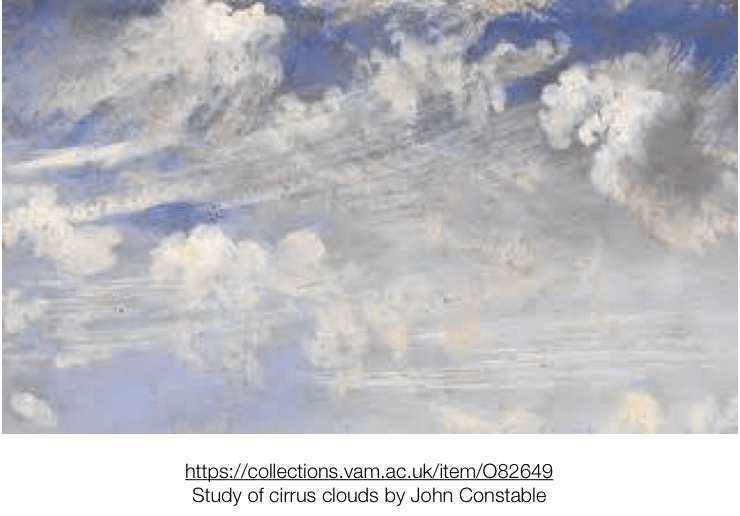
5.. Do you like either or both of these paintings? How do they each convey the presence of the wind? Are the colours they use important?
6. Winds enable us to feel the air. Have you memorable experiences of feeling the wind that you would like to share?
Is our experience of the wind different depending on the time of year – summer or autumn? Or place – urban street or beach?
Can wind change our mood?
7. Interestingly the Greek word used – pneuma – means both breath and spirit and wind. And Hebrew has a similarly multi-talented word – ruach – which again has the meaning of breath and sprit and wind.
How might it change our expectation of God’s presence in our lives, if we were to think of the Spirit within us as a storm or whirlwind? The writer of Genesis taps into this when he describes the presence of God hovering over the void of creation. And Jesus uses the same ambiguity when, in John’s gospel, he talks with Nicodemus.
Can you think of other examples in the Bible where the wind is used to indicate the presence of God?
“Pentecost Villanellette” by Mark Debolt
Not as a dove the Holy Spirit came to the disciples gathered in a room, but as a violent wind and tongues of flame.
A cyclone roared the ineffable name as fire on each blushing brow did bloom. Not as a dove the Holy Spirit came
to give sight to the blind and heal the lame and raise the dead and dispel error’s gloom, but as a violent wind and tongues of flame.
The Breath of God is anything but tame. Who dally with it dally with their doom. Not as a dove the Holy Spirit came, but as a violent wind and tongues of flame.
(villanelle – a pastoral or lyrical poem of nineteen lines, with only two rhymes throughout, and some lines repeated.)
8. Do you like this poem? Are there particular words or phrases that stand out? Do you think that writer feels we have overly ‘tamed’ the Holy Spirit with our use of language?
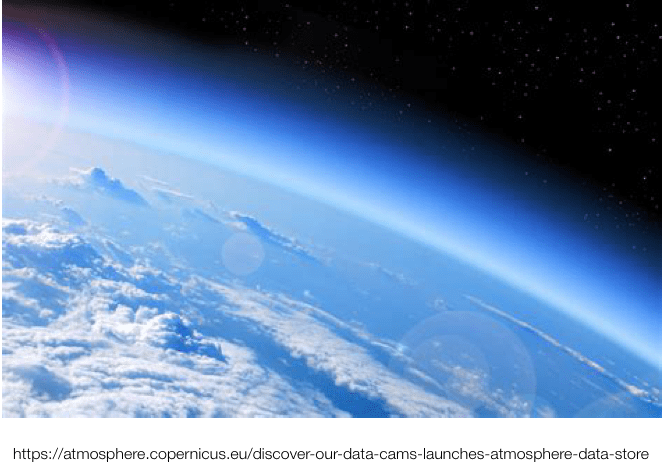
Why is the sky blue? Light that from the sun is a spectrum of colours – as in a rainbow. The different colours have different waves lengths with blue and violet having the shortest. When the sun light reaches the earth’s atmosphere it is scattered or deflected by tiny gas molecules in the air – mostly nitrogen and oxygen. The shorter wave length colours are scattered most and so our eyes (which are also blue sensitive) see the sky as blue. At dawn and dusk the sun light we see has come through a greater depth of the atmosphere and then we see more of the longer wave length colours such as red and yellow.
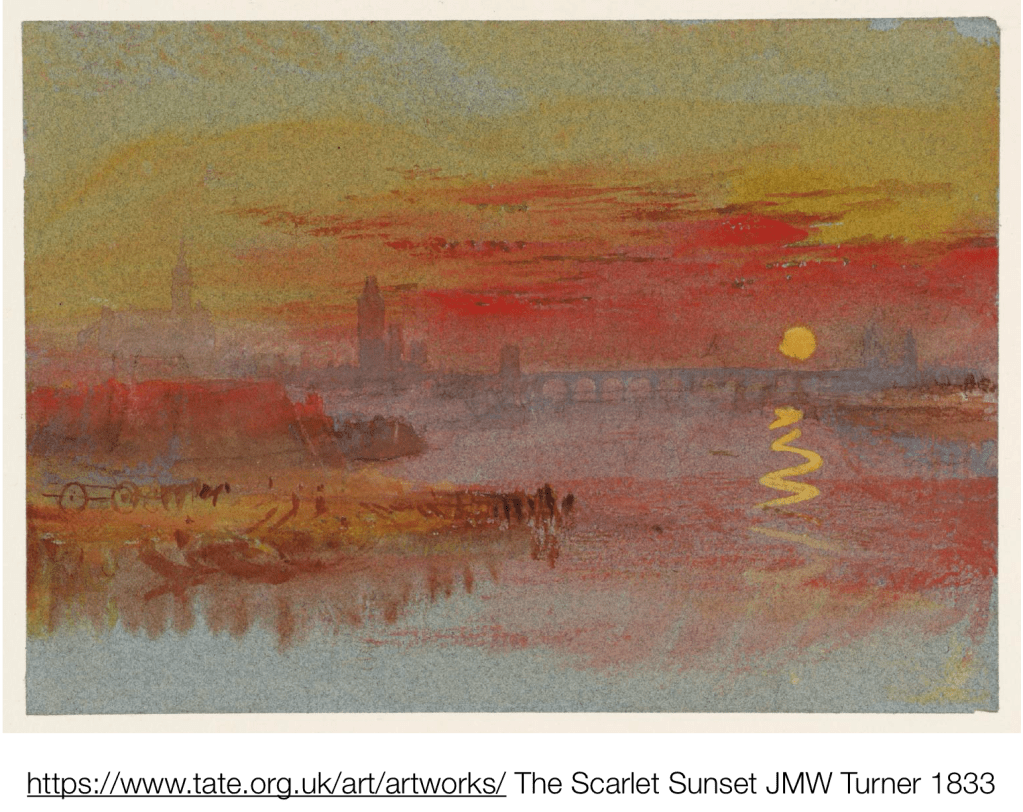
The reds and yellows of sun sets and sun rises are intensified when the air is full of other particles such as are released by smoke and ash. Following the eruption of the Tambora Volcano eruption in 1815, there were several years when sunsets were particularly vivid and these intense colours were picked upon and recreated by J M W Turner.
9. Do you warm to this picture? How does it make you feel?
Are you surprised that the colour of the sky can be affected by a volcano eruption on the other side of the world? (Tambora is in Indonesia.)
This photo was taken in New York at midday in 2020 and shows the effect of smoke from the wild fires in California that were polluting the air.
According to the WHO, ‘Household combustion devices, motor vehicles, industrial facilities and forest fires are common sources of air pollution… [with] almost all of the global population (99%) breathe air that exceeds WHO guideline limits … Air quality is closely linked to the earth’s climate and ecosystems globally. Many of the drivers of air pollution (i.e. combustion of fossil fuels) are also sources of greenhouse gas emissions.’
‘I brought you into a plentiful land to eat its fruits and its good things. But when you entered you polluted the earth, and made my heritage an abomination.’ Jeremiah 2:7
10. If we think of air or breath being God’s gift of life to us, how do we feel about air pollution that results from our current human lifestyle?
Do we need an annual day when we corporately repent of our sins against creation?
Prayer
All-powerful God, you are present in the whole universe and in the smallest of your creatures. You embrace with your tenderness all that exists. Pour out upon us the power of your love, that we may protect life and beauty.
Fill us with peace, that we may live as brothers and sisters, harming no one. O God of the poor, help us to rescue the abandoned and forgotten of this earth, so precious in your eyes. Bring healing to our lives, that we may protect the world and not prey on it, that we may sow beauty, not pollution and destruction. Touch the hearts of those who look only for gain at the expense of the poor and the earth. Teach us to discover the worth of each thing, to be filled with awe and contemplation, to recognise that we are profoundly united with every creature as we journey towards your infinite light. We thank you for being with us each day. Encourage us, we pray, in our struggle for justice, love and peace.
A Nationally Determined Contribution (NDC) is a climate action plan that shows how a nation will cut its emissions and adapt to climate change. (Being nationally determined allows for differentiation between nations according to the current ability to effect change. Wealthier countries should be able to reduce emissions at a faster rate).
Each Party – ie nation or state – to the Paris Agreement is required to establish an NDC. Collectively these NDCs should ensure the world’s greenhouse gas emissions peak and then fall, and so address the climate crisis. Each NDC covers a five year period – being submitted to the UNFCC in 2020, 2025, 2030 etc – but is subject to ongoing review by each nation.
Since 2021 the UNFCC has produced a synthesis report that collects, collates and analyses all the NDCs, to determine whether or not nations are on track to meet the objectives of the Paris Agreement. The most recent, published in November 2023 in the run up to COP28, found that the national climate action plans were still insufficient to limit the global temperature rise to just 1.5C. The hope was that this announcement would spur on the parties at COP28 to take radical action to address this shortcoming.
“The Intergovernmental Panel on Climate Change (IPCC) is an intergovernmental body of the United Nations. Its job is to advance scientific knowledge about climate change caused by human activities… It has 195 member states who govern the IPCC. The member states elect a bureau of scientists to serve through an assessment cycle. A cycle is usually six to seven years… The IPCC informs governments about the state of knowledge of climate change. It does this by examining all the relevant scientific literature on the subject. This includes the natural, economic and social impacts and risks… Thousands of scientists and other experts volunteer to review the publications. They compile key findings into “Assessment Reports” for policymakers and the general public; Experts have described this work as the biggest peer review process in the scientific community. The IPCC is an internationally accepted authority on climate change. Leading climate scientists and all member governments endorse its findings.” https://en.wikipedia.org/wiki/Intergovernmental_Panel_on_Climate_Change
The most significant UNFCCC treaty was The Paris Agreement which was hammered out at COP21 in 2015 and came into force in 2016. Its aims were to limit the rise in global temperature to less than 2ºC above pre-industrial revolution levels, while aiming to hold it at 1.5ºC.
It is surprising how often you can hear the same story and then suddenly hear something new in it.
The story of Moses in the bulrushes has so many themes – persecution, fear, ingenuity, circumstance, rescue, joy, even resurrection. Although it is a reading that appears as an option each year for Mothering Sunday, it is a story that has a particular resonance this year, as we think of the babies that mothers are trying to protect in Gaza.
At Christmas the Lutheran pastor for Bethlehem created a crib scene in which the Christ Child lay surrounded by rubble. That could so easily become the setting for retelling the story of baby Moses. We can, perhaps – but probably with difficulty – imagine how the families of new born babies in Gaza are feeling, the desperation as they try to find amongst the shattered neighbourhoods the wherewithal a baby needs, but above all their fear of not being able to protect their child, to keep their child safe from harm.
What stands out this year in reading the story again, is the idea of teamwork. Looking after, protecting, safeguarding the baby Moses, is an act of teamwork. There is his birth mother, his sister, and the pharaoh’s daughter. Each has a different role to play, and each is essential in the overall success of the story. They all three bring the gifts of compassion, determination and care.
There is an African proverb that says it takes a village to raise a child. Within that village there are different people with different skills, all of which are essential in caring for and nurturing and protecting that community’s children. Within the village will be people who grow food, and those who prepare meals. There will be those who teach with words, and those who teach by example. There will be those who make clothes, craft toys, construct furniture. There will be those skilled in healing. There will those who encourage confidence and creativity. There will be those who console and teach forgiveness and resilience. And they will all give without ceasing the gifts of love and belonging.
Mothering Sunday is not really about little children giving mums a box of chocolates. It is a rather a celebration of communities that mother us. It is a celebration of the teamwork and the heartache, the compassion and the determination, that goes into raising not just one child but a generation of children.
I remember as a child one vicar each year explaining that Mothering Sunday was a celebration of Mother Church. I don’t recall being impressed but on reflection churches – ie those communities drawn together by their faith – should be communities of mothering. Communities characterised by teamwork and heartache, compassion and determination, generosity and love.
The words written to the congregation at Colossae are apt, describing how those chosen by God should live together in harmony as one body shaped by Christ – as both the peace that rules in our hearts and as the word that enriches us. Their newly formed community is mothered by Christ to become a family worthy of God the Father.
Increasingly as we look around and see the failings of our world – people reliant on food banks, the high incidence of mental ill health amongst young people, inadequate housing, long waiting lists for medical treatment, the threat of climate change to our ability to grow food, the loss of biodiversity, our failure to make our lifestyles sustainable – we need to revisit what it is to be a community, what it is to be a team that truly mothers all its children. To reflect again on the command that we should love our neighbour as ourself. To rethink what we mean when we speak of the fellowship of the Holy Spirit – is it just a handy phrase with which to end a service or does it have far more important purpose that describes how we live and work – and mother – together?
Can Christians, can churches, offer a better – maternal – way of being communities in the 21st century?
Exodus 2:1-10
Now a man from the house of Levi went and married a Levite woman. The woman conceived and bore a son; and when she saw that he was a fine baby, she hid him for three months. When she could hide him no longer she got a papyrus basket for him, and plastered it with bitumen and pitch; she put the child in it and placed it among the reeds on the bank of the river. His sister stood at a distance, to see what would happen to him.
The daughter of Pharaoh came down to bathe at the river, while her attendants walked beside the river. She saw the basket among the reeds and sent her maid to bring it. When she opened it, she saw the child. He was crying, and she took pity on him. ‘This must be one of the Hebrews’ children,’ she said. Then his sister said to Pharaoh’s daughter, ‘Shall I go and get you a nurse from the Hebrew women to nurse the child for you?’ Pharaoh’s daughter said to her, ‘Yes.’ So the girl went and called the child’s mother. Pharaoh’s daughter said to her, ‘Take this child and nurse it for me, and I will give you your wages.’ So the woman took the child and nursed it. When the child grew up, she brought him to Pharaoh’s daughter, and she took him as her son. She named him Moses, ‘because’, she said, ‘I drew him out of the water.’
Colossians 3:12-17
As God’s chosen ones, holy and beloved, clothe yourselves with compassion, kindness, humility, meekness, and patience.Bear with one another and, if anyone has a complaint against another, forgive each other; just as the Lord has forgiven you, so you also must forgive. Above all, clothe yourselves with love, which binds everything together in perfect harmony. And let the peace of Christ rule in your hearts, to which indeed you were called in the one body. And be thankful. Let the word of Christ dwell in you richly; teach and admonish one another in all wisdom; and with gratitude in your hearts sing psalms, hymns, and spiritual songs to God. And whatever you do, in word or deed, do everything in the name of the Lord Jesus, giving thanks to God the Father through him.
Luke 2:33-35
And the child’s father and mother were amazed at what was being said about him. Then Simeon blessed them and said to his mother Mary, ‘This child is destined for the falling and the rising of many in Israel, and to be a sign that will be opposedso that the inner thoughts of many will be revealed—and a sword will pierce your own soul too.’
The desert and the parched land will be glad; the wilderness will rejoice and blossom like the crocus Isaiah 35:1
You Lord, are the source of all good things: We praise you.
You call us to tend and care for your creation: May we strive to do your will.
You have made us as brothers and sisters with all that lives: May we live together in peace.
A Reading: Isaiah 42: 5, 10-12
Sing to the Lord a new song, his praise from the end of the earth! Let the sea roar and all that fills it, the coastlands and their inhabitants.
Let the desert and its towns lift up their voice, the villages that Kedar inhabits; let the inhabitants of Sela sing for joy, let them shout from the tops of the mountains.
Let them give glory to the Lord, and declare his praise in the coastlands.
Intercessions
We give thanks for the beauty and diversity of the world you have given us, for its colour and abundance, its richness and vitality.
Generous God, hear our prayer.
With sorrow, we acknowledge our part in damaging what you have created. We acknowledge that our lifestyles have been selfish and careless. We acknowledge that we could and can do more to tend this earth and care for its inhabitants.
Merciful God, hear our prayer.
We pray for these who conserve plant and animal wildlife, birds and insects. We pray for the work of agriculturalist and scientists in developing better, kinder ways of living on this earth. We pray for the resilience of small communities that they may continue to live in harmony with their environment.
Gracious God, hear our prayer.
We pray for government leaders and advisers, farmers and business leaders, that they will hold dear the needs of the environment and seek to avert the risks imposed by the climate crisis.
Enabling God, hear our prayer.
With grief we despair at our human capacity to make war not peace, to seek violence not reconciliation. Renew within us hearts that overflow with compassion and forgiveness that with your grace we may always seek peace.






 The Green Tau

#/media/File:Hunt-light-of-the-world.jpeg)