4th June 2022
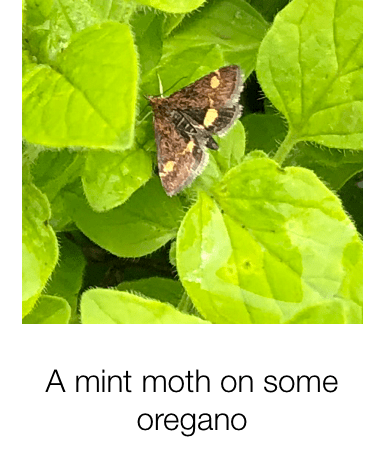
Today we are carrying out a plant and wildlife survey of our church garden as part of the Churches Count On Nature project. Knowing what’s around in our own locality can inspire us to do more to care for the environment.

Reflections and actions during COP26 and going on
4th June 2022
Today we are carrying out a plant and wildlife survey of our church garden as part of the Churches Count On Nature project. Knowing what’s around in our own locality can inspire us to do more to care for the environment.

3rd June 2022
Forest bathing is the Japanese practice of immersing oneself in nature, especially in forests and paying particular attention to how that environment engages the five senses. Kate Bast, writing for Mental Health Today (https://www.mentalhealthtoday.co.uk/blog/awareness/forest-bathing-how-returning-to-the-trees-can-decrease-symptoms-of-anxiety) says forest it is like a “balm” for mental health and that it has the ability to slow down the fight, flight or freeze response, which is so often on high alert for those with anxiety. Forest bathing, Bast said also softens the intensity of symptoms such as ‘rumination’ which is something that often plagues those living with depression.
The Forest Bathing Institute offers guided sessions, including ones at Kew Gardens – https://tfb.institute/. The National Trust also offers a guide for self guided sessions –https://www.nationaltrust.org.uk/lists/a-beginners-guide-to-forest-bathing .
Why not have a gentle walk in your nearest area of woodland?

2nd June 2022
“The Queen’s Green Canopy (QGC) is a unique tree planting initiative created to mark Her Majesty’s Platinum Jubilee in 2022 which invites people from across the United Kingdom to “Plant a Tree for the Jubilee”. With a focus on planting sustainably, the QGC will encourage planting of trees to create a legacy in honour of The Queen’s leadership of the Nation, which will benefit future generations.”
https://queensgreencanopy.org/
If you haven’t a garden or sufficient space for a tree, you can sponsor the planting of a tree via the National Trust –

Or you can sponsor a tree via the NHS where it will form part o the NHS Forest – https://nhsforest.org/get-involved/sponsor-a-tree/
1st June 2022
Walking in woodlands or even just having a tree to look at when you are ill is known to be beneficial – promoting both mental well-being and speeding up recovery from sickness.
A report produced last December by Forest Research and funded by the Forestry Commission, Scottish Forestry and the Welsh Government, recorded that visits to the UK’s woodlands do indeed boost mental health and save an estimated £185 million in treatment costs annually.

30th May 2022
Ancient trees are not only valuable in their own right, they also support a wide and diverse ecosystem – beetles, insects, birds, fungi, small mammals, plants etc – and are key in maintaining biodiversity. The Ancient Tree Forum has a booklet exploring this topic – https://www.ancienttreeforum.org.uk/wp-content/uploads/2015/02/ancient-tree-guide-6-special-wildlife.pdf

Looking after old trees and woodlands matters!
31st May 2022
Much to my surprise I found a crow sat on a plant pot surveying our cat, who stared back with equal bemusement. The crow was a fearless youngster whose wing feathers were not yet fully fledged, rendering the bird flightless. I caught the crow in a box and placed him in the shed overnight away from any passing fox. The vet suggested leaving the bird in a safe place where the parents might find it. As our gardens home to several cats a safe place was not to hand. The RSPB look after birds on the larger scale of providing reserves etc rather than rescuing individuals. I contacted the London Wildlife Protection who quickly offered to collect and care for crow junior. https://www.londonwildlifeprotection.org/
I was highly delighted when crow junior’s rescuer arrived on a bicycle with a specially adapted backpack for transporting birds and other small creatures – highly ecological!

29th May 2022
We can recognise ancient buildings like castles and cathedrals quite easily. We can probably recognise old houses quite easily too – especially those that are large and grand! We expect such buildings to be protected – perhaps under the auspices of the National Trust or English Heritage, or to be a listed building. But what about trees? The oldest tree in the world is probably a 4m wide Patagonia cypress in Chile which could be up to 5,484 years old (https://theguardian.com/environment/2022/may/26/worlds-oldest-tree-cypress-chile). And that is older even than the pyramids in Egypt! According to the Woodland Trust, the oldest tree in the UK is said to be the Fortingall yew in Perthshire. It’s estimated to be between 2,000 and 3,000 years old, although some believe it could be 5,000 years old. Such trees are historic landmarks and deserved to be protected in the same way that we protect historic buildings. The Woodland Trust has instigated just such a campaign!

28th May 2022
Glyphosate and other herbicides are variously used – or not – by local councils to manage weeds in public spaces such as streets, parks, play grounds and pavements. In June 2020 Amanda Tuke asked thirty two London Boroughs (not including City of London) for information about:
The results show that whilst some councils do not use glyphosate at all, others allow its application up to three times a year. https://freelancenaturewriter.com/2020/07/15/london-councils-use-of-weedkiller-policies-and-reduction-initiatives/
Where less herbicides are used, you may well notice a growing number of small plants along the edges of the pavements – a greening of the environment that pollinators may well appreciate!

You might like to ask your local council about their policy.
27th May 2022
“Pesticides are poisons and there should be no place for them on supermarkets shelves. We should not be using these chemicals in our gardens and allotments, where our children and pets play, and where our wildlife should be thriving. In any case there is no need for them – it is easy to garden without pesticides.” Professor Dave Goulson, University of Sussex https://www.pan-uk.org/take-pesticide-products-off-supermarket-shelves/
PAN UK believes that there should be a ban on selling glyphosate to the public and is leading a campaign to press supermarkets to stop selling pesticides in their stores. Both the Co-op and Waitrose no longer stock high risk synthetic pesticides.

safe to use?
For gardeners who wish to avoid using pesticides, PAN UK provides guidance on combating pests without the use of pesticides – https://www.pan-uk.org/gardening-without-pesticides/.
26th May 2022
Chemical residues from pesticides and herbicides can affect human health. When applying these chemicals it important to follow the appropriate protective protocols. Residues can contaminate fruit and vegetables and thus put those who handle and eat the food at risk. Glyphosate for example is now considered as carcinogenic and its use is currently being phased out in Luxemborg, Italy, Austria, the Czech Republic, the Netherlands, France and Germany. The EU (as opposed to individual countries) has, disappointingly, postponed its decision over whether to renew the licence for glyphosate from this December to 2023. Under post-Brexit government policy this could see the weedkiller approved for use in Britain until at least July 2026. https://www.fwi.co.uk/news/farm-policy/eu-delays-glyphosate-renewal-decision-until-2023

PAN (Pesticide Action Network) UK is calling for a rapid phase-out of glyphosate in agriculture and support to help farmers adopt safer approaches to managing weeds. We can add consumer-based weight by asking UK producers – eg producers of oil seed rape who routinely use glyphosate to kill the ripe plants as this makes harvesting easier – why they still use glyphosate.