Counting on … day 18

27th January 2025

Last September the UN Climate Change News reported that “In 2022, a staggering 1.05 billion tons of food were wasted, while 783 million people went hungry and a third of the global population faced food insecurity…Food loss and waste account for 8-10% of annual global greenhouse gas emissions – nearly five times the total emissions from the aviation sector – and contribute to substantial biodiversity loss, using up almost a third of the world’s agricultural land.” (1) 

Reducing food waste is something we can all do that will help address the climate and biodiversity crises and improve global food security. 

Useful advice can be found here – https://www.ethicalconsumer.org/food-drink/climate-action-10-steps-reduce-food-waste

Counting on … day 17

23rd January 2025

Following on from yesterday, another approach would be to buy less. We probably think we have more stuff than we need so rather than buying something new, maybe question whether you actually need it or whether you have something already that would do. I recently needed some flip flops to walk along the path to the outdoor swimming pool – it’s about 50m of cold concrete – and then it occurred to me to use the old pair of sandals whose soles are wearing out. 

Equally we are often tempted by advertising to buy things we don’t need.

Counting on … day 16

22nd January 2025

If not buying things makes for better use of limited resources, then there is real advantage in borrowing and sharing. This can informally, via a street WhatsApp or via a Library of Things – https://www.libraryofthings.co.uk/

And also – https://www.ethicalconsumer.org/home-garden/library-things-directory

Counting on … day 15

21st January 2025

We can avoid waste by making use of second hand shops, charity shops, pre-loved web sites. If we have something we no longer need/ want that is more than likely someone else who would like it. These outlets enable us to pass the thing on rather than discarding it as waste.

 And by the same token, if we need something we can visit these outlets to buy what we need there rather than buying new – and thus avoiding using up more of the Earth’s limited resources.

Counting on … day 14

20th January 2025

One way of reducing waste, is to repair things. Darning a sock saves a pair going into landfill. Stitching up a hem or a seem to get some more wear out of a skirt or shirt. Sewing a patch on the knee or elbow will add more wear to a pair of trousers of jumper. Sewing a sheet sides to middle will do likewise. 

Re-heeling or soleing shoes where that is possible – sadly the design of many pairs of shoes don’t this as an option. 

Repair Cafes and repair shops can mend household items such as kettles and toasters. Do ensure that electrical repairs are done by someone appropriately qualified. 

Other repairs might simply involve glue, ‘Sugru’ a mouldable silicone substance that can mend a hole in a pot, refix a pan handle or strengthen that weak point on a recharging cable. Gaffer tape mends  a hundred things! Be imaginative. Be creative! Give things you use and love an extra lifespan. 

Counting on … day 13

17th January 2025

It is not just businesses that need to change, government also needs to use its power to change the system. “We need the Government to stop tinkering with measures that create tiny insignificant changes and tackle single use waste in the way they finally tackled smoking, helping to make our public spaces litter free as well as smoke free.  That requires putting in place systems which significantly disincentivise single-use and makes reuse a convenient and viable option for both businesses and consumers.” (1)

  1. https://www.refill.org.uk/about/what-is-reuse/

Counting on … day 12

16th January 2025

Changing how we consume, reuse and refill products to ensure a sustainable world requires more than just consumer action. It needs systemic change: “big brands and businesses need to be held responsible for cleaning up their act!  We need an end to corporates buying too much stock and then encouraging us to buy things we don’t need via sales and Black Friday. We need an end to corporates promoting more and more “seasons”, constantly trying to persuade us that things in our home are no longer in vogue, that our clothes and furnishings are out-of-fashion. It’s corporate behaviour that has created the single use system and we need to change that system – so it’s the corporates that need to change.” (1)

  1. https://www.refill.org.uk/about/what-is-reuse/

Counting on … day 11

15th January 2025

Reducing waste and the pressure we put on the Earth, we should also consider how many single use items we are discarding, including those that we put in the recycling bin. 

Plastic yogurt pots can be recycled but that still uses oil to produce the plastic (very little food packaging is made from recycled plastic) and energy to produce it. Could there be a more sustainable way of getting yogurt? One way might be for yogurt to be sold in reusable glass jars – as per milk. Another might be to make one’s own yogurt in reusable pots. 

The same is true of margerine tubs – might solid margerine (vegan butter) that comes wrapped in greaseproof paper be better?

And what about refilling and reusing wine bottles, beer bottles etc? We do it with milk and fruit juices. 

And what about avoiding single use coffee cups and plastic bottles of water? Tap water is free! And coffee tastes better in a proper cup.

Four different types of refull/ reuse consumer practice

Counting on … day 10

14th January 2025

 When I was growing up, households typically had a metal dustbin that that dustmen could lift into their shoulder tipping the contents into the truck. Now domestic dustbins are twice the size with wheels and are designed with handles which the dustbin truck latches onto in order to empty the bin. But not only do we have a much bigger dustbin, each house also has at least two large recycling boxes and a food recycling bin too. In 2022/3, annual waste per household varied from 450kg in the South West of England and 600kg in the North East. (1)

Whilst such waste is only a small portion of the waste we expect the Earth to absorb, domestic waste if something we can control – and curtail. Why not do a survey of what you discard each week? 

Could any of it be reused? 

Did you need to use in the first place?  Might you not need to buy/ acquire it in the first place?

(1) https://www.statista.com/statistics/996467/regional-waste-volumes-england-united-kingdom-uk/

Counting on … day 9

13th January 2025

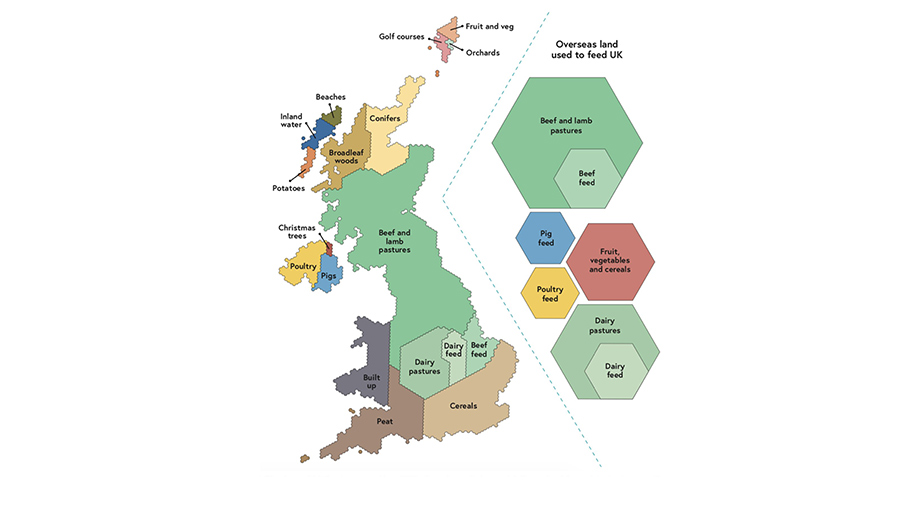
Bio capacity  (the metric used to calculate Earth Overshoot Day) includes both the biological  productive land and sea area that provides the resources we need and the Earth’s capacity to absorb the waste produced including pollution. 

In this context waste includes sewage, greenhouse gas emissions, excess fertilisers that leak into the water system, exhausts and brake dust from vehicles etc. The limits on the capacity of the Earth to absorb waste and to keep the environment healthy, is something we often forget. Producing waste is just as much about consumption as cutting down trees or catching fish. To live within the resource constraints of the Earth, we need not just to consume less but also to produce less waste.