The co author of Promise the Earth: A Safe Climate in Good Faith (1), Andrew Davison, writes the alternate chapters. These draw out the connection between what Allwood writes and the seven virtues – courage, prudence, temperance, justice, faith, hope and love. This is an excellent prompt for Christians – and others – to embrace restraint as part of their spiritual journey.
I’m currently reading Promise the Earth: A Safe Climate in Good Faith by Julian Allwood and Andrew Davison. (1)
The main thrust of Allwood’s argument is that, with less than 14 years until the 2050 deadline that scientists give for protecting us against the worst outcomes climate change, we don’t have time to rely on technological interventions such as carbon capture, hydrogen power or sustainable aviation fuel. Instead we must embrace a programme of restraint. ie we need to reduce substantially what we consume where and whenever that uses fossil fuels or adds to carbon emissions. But as he repeatedly says, this does not mean a life of lack and misery for there is so much to enjoy in life – friends and family, meals, walks in the country side, gardening, cycling, the arts etc etc.
The four key areas for restraint that Allwood highlights, are our use of:
gas for heating air and water at home;
petrol or diesel in cars;
fossil-fuel-powered aeroplanes; and
consumption of beef, lamb, rice and dairy foods. (Page 194)
Another handy format for eating peas and beans is as flour. Dried beans and peas are ground into flour which can be used to make a vegan frittata or quiche filling, to add extra protein to bread and pastry, to thicken soups and sauces etc. Again I buy a selection of such flours from Hodmedod including green pea flour, yellow pea flour, lentil flour and fava bean flour.
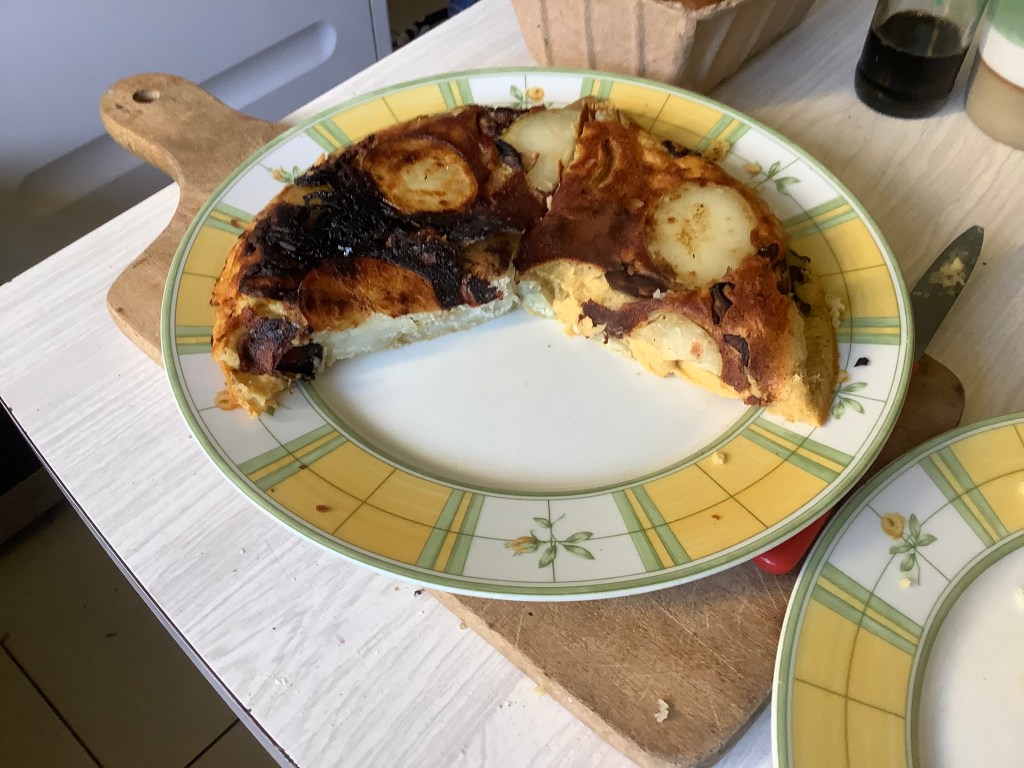
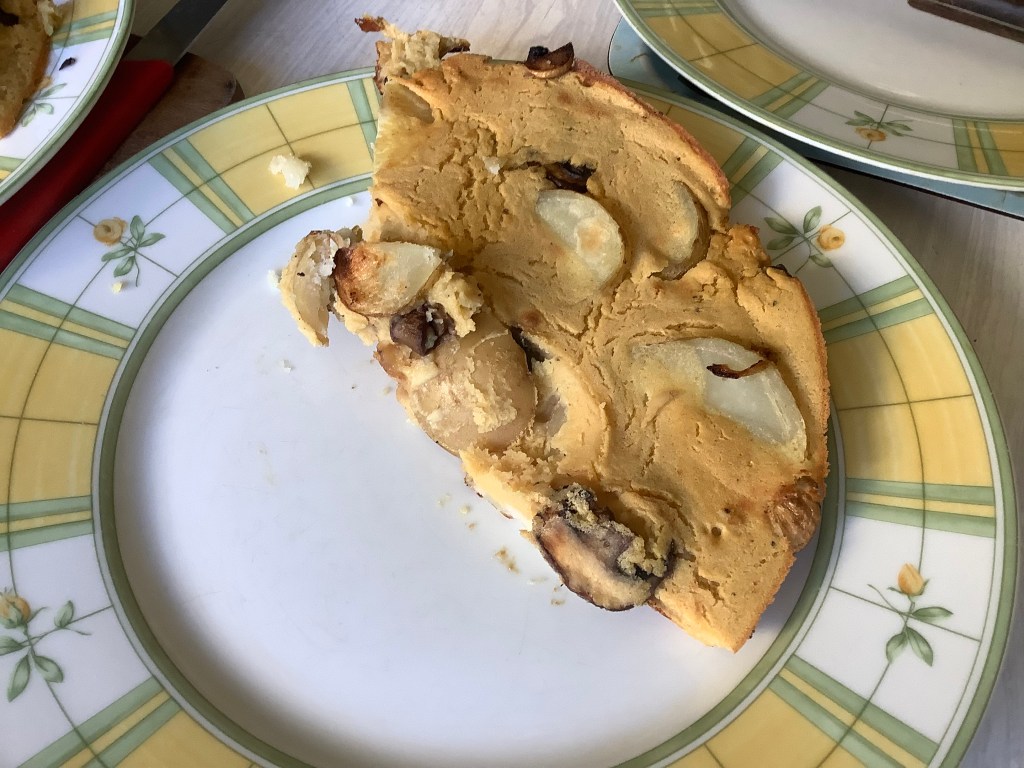
For a frittata I mix 3 tablespoons of pea flour with oat milk or water to make a thick batter. I flavour it with yeast flakes/ black pepper/ paprika/ mustard/ turmeric etc. Whilst that is left to stand, I cook some vegetables – potato slices/ onion/ red pepper/ mushrooms/ broccoli (boiled or sautéd). Then I add the batter and the vegetables to a well oiled frying pan and cook until nearly set and then complete the cooking under the grill.
NB Adding a little baking powdered before cooking can lightened the texture a little.
Ours is a largely vegan household so we eat a lot of beans. We buy a wide variety of dried beans, largely grown in the UK, from Hodmedod’s – this supports an independent business and local UK farmers, has an uncomplicated supply chain, and supports a the plant-based food system that we need to address the climate and biodiversity crises.
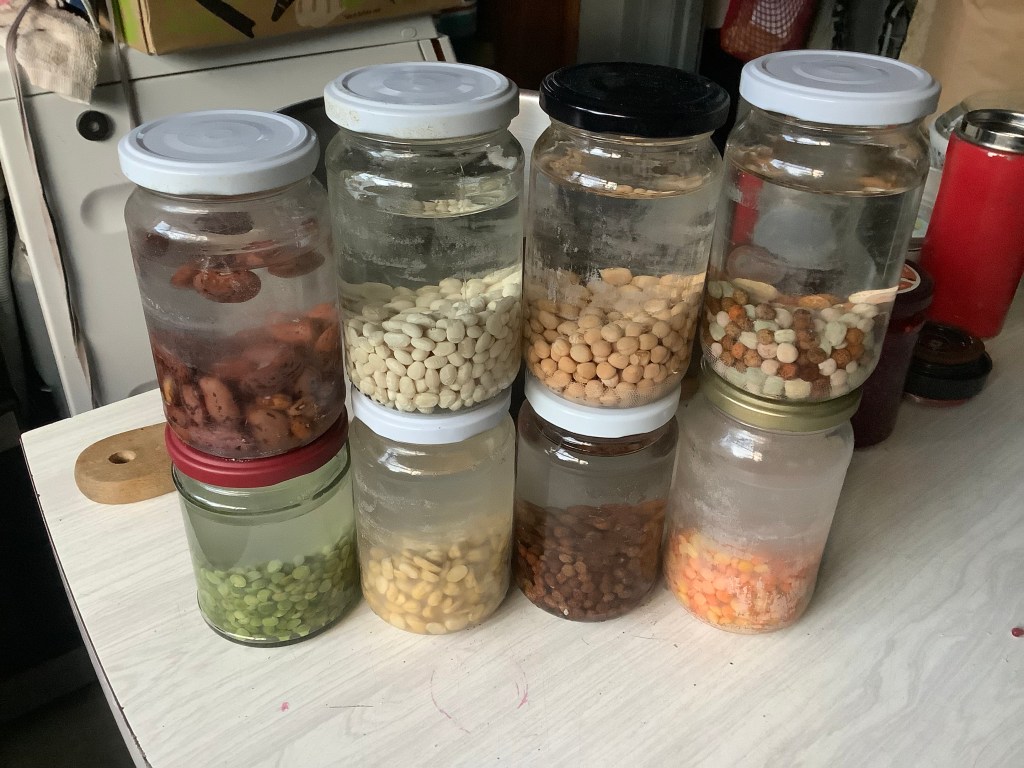
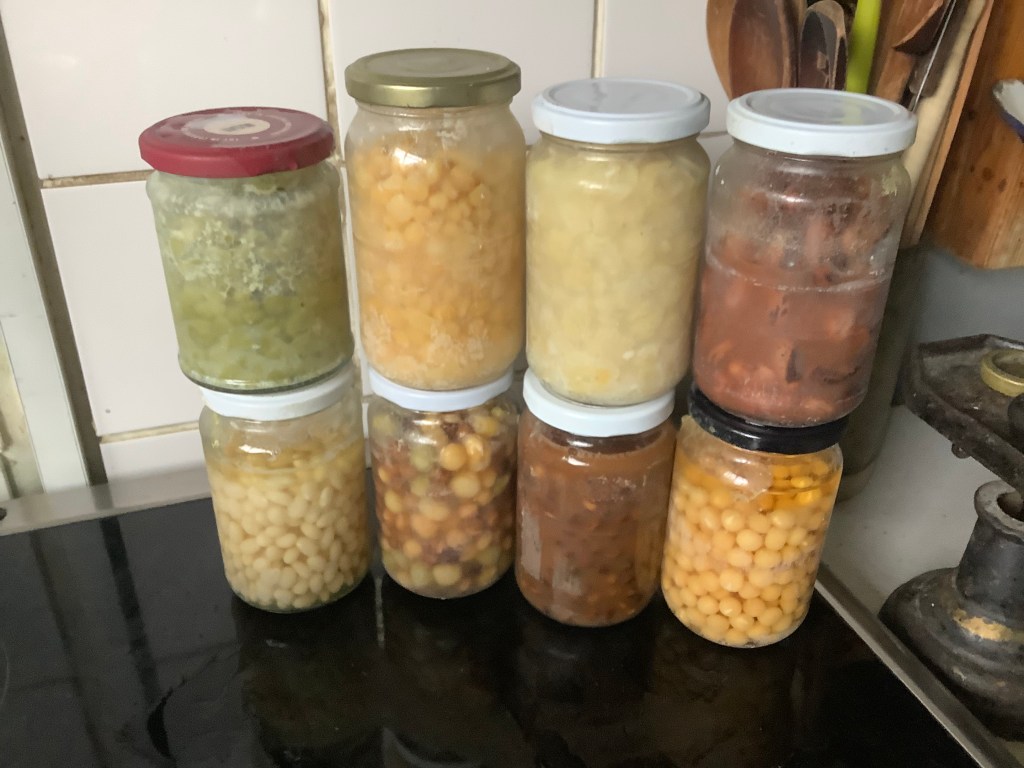
Cooking with the beans is easy. About once a week I weigh out 80g or so of each of 8 different Benin’s (enlighten for one three person meal) putting each into a jam jar. I add water and leave the beans to soak for six hours/ overnight.
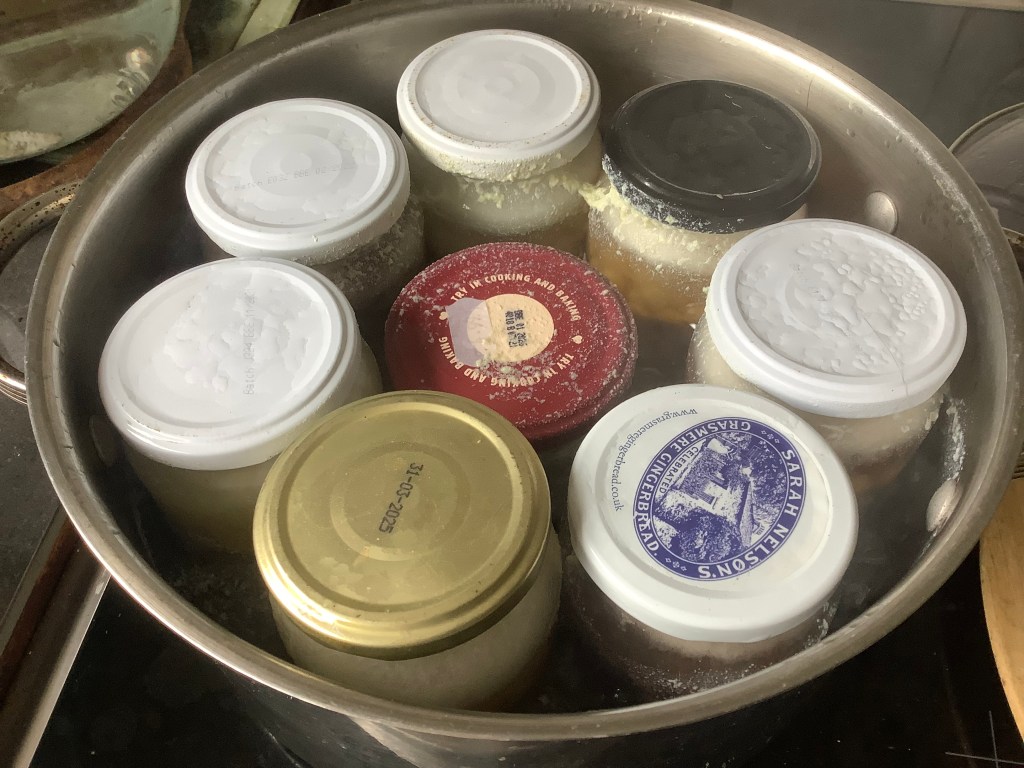
Then the jars go into a pan of water (effectively a Bain Marie) and the beans are cooked – once boiling point is reached they have a good boil for about 15 minutes and then a simmer for about 25 minutes.
Once cooked and removed from the pan, the jars cool and a vacuum is formed between the beans and the lid.
These go in the fridge and the beans are ready to be made into a variety of different dishes.
Lavender is best picked before in the morning before the sun warms the flowers releasing their fragrant oil and best picked before the flowers become to open – again to ensure maximum fragrant oil that you are essentially harvesting. The cut flowers are put in paper bags (or large envelopes) before being put somewhere to dry – eg the airing cupboard.
Later in the year the dried flowers can be put into cotton bags and used to scent drawer and bed linen.
However only cut some of the flowers. Leave plenty of flowers for the insects – especially bees – and then for the birds – such as goldfinches – which in the winter will enjoy pecking out the seeds.
I am lucky enough to have space to grow strawberries and raspberries. I don’t garden with any particular skill but I do enjoy buying a bag of straw each year from the pet shop, explaining that it is for my strawberries!
Now is peak fruiting time and every day I pick a pudding bowl of raspberries and strawberries. Those we don’t eat fresh I turn into jam – and in the winter I shall enjoy that taste of summer!
Growing fruit keeps me in tune with the seasons – I guess one would find the same with a traditional greengrocers too or a seasonally-minded veg box scheme. Growing fruit encourages me to preserve the excess: having grown it, I don’t want any to go to waste.
Eating what is in season and preserving what is in season for later in the year, builds up our resilience. It helps make for a more sustainable lifestyle.
“When communities know how to grow food, cook together, preserve harvests, repair tools and build things with their hands, they rediscover agency. They are no longer only consumers within vast systems. They become participants in shaping the places where they live.
“These practices also nurture imagination. They remind us that the future is not only determined by distant institutions. It grows through the habits and relationships people cultivate together.” (1)
Somehow – and there never seems to be enough time or enough volunteers and participants – we do need to learn these skills. If we learn them as a community we can share the learning responsibilities. We won’t each have to learn each skill, just ensure that enough of us learn some of the skills the skills, so that between us as a community we are properly equipped.
Another quote from the Hazelnut Community: “Develop practical skills (kitchen, carpentry, machine repair, food processing, sewing, etc.) Teach these skills to children and friends, neighbours.” (1)
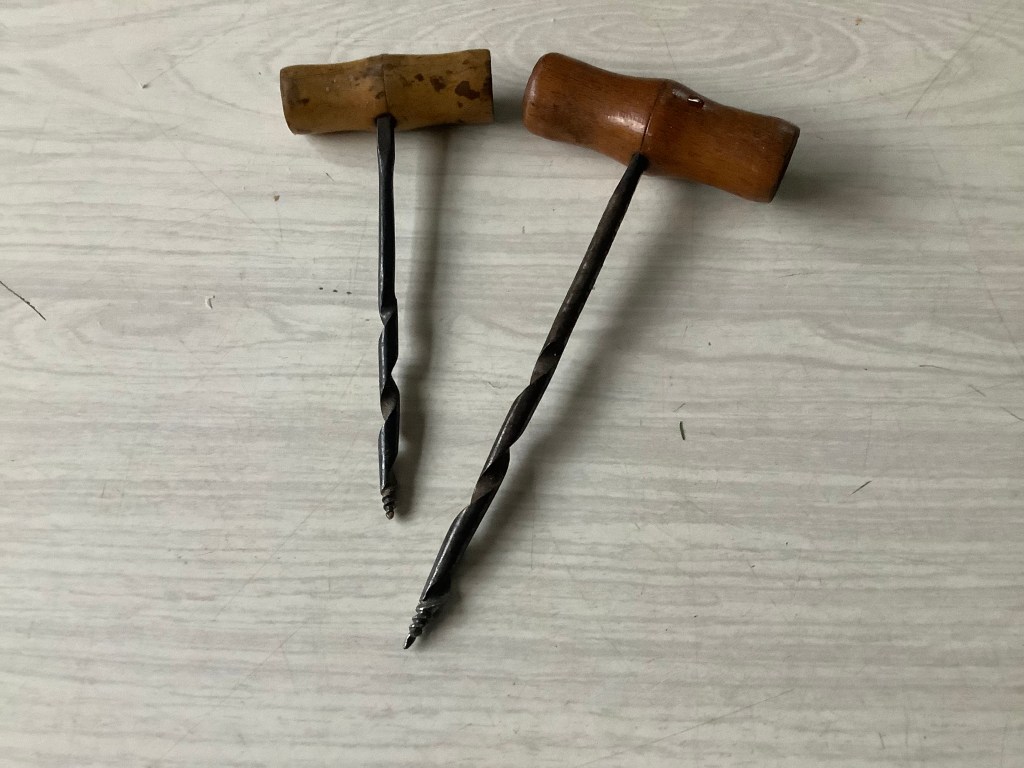
I have recently had a go at mending our shed door – re-securing cross pieces where the factory installed staples had apart, this time using screws. A little auger that had come from a pst generation proved very useful in starting the holes, and an equally vintage screw driver finished the job.
This makes me wonder a) where one would get such tools today and b) are such vintage tools hidden away in the backs of sheds/ drawers/ attics waiting to the be revitalised?
a) they are available and are known as gimlets. b) yes and are available via vintage web sites.
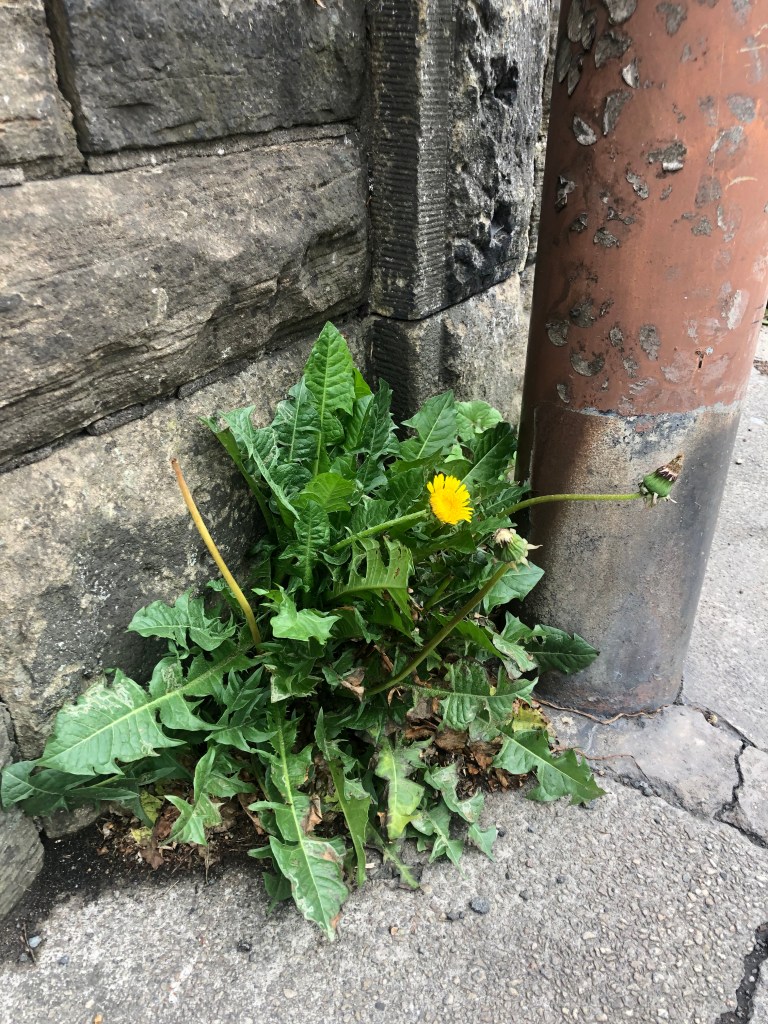
As more local authorities stop routinely spraying weed killer, so more wild plants appear along the edges of pavements. It feels like a sign of resilience on the part of nature.
Weeds are not signs of bad land management but of hope.
One step on from a water butt would be a rainwater harvesting system. This in essence is a large wtwr storage tank that collects and stores all the rainwater from your roof. Unlike a water butt it includes a filtration system to keep the water clean and a pump so that you can use the water for flushing toilets and running the washing machine – as well as watering the garden.
Given the imbalance between winter and summer rainfall, and the increasingly likelihood of droughts and water shortages, such systems will become increasingly common and practical, and will increase our personal resilience and our community resilience.