Counting on …. Day 1.149

15th August 2023

The relationship between urban and rural areas and the protection and enhancement of green landscapes and biodiversity is two way in both directions. Yes those in urban areas need to address their lifestyle and ecological impact to protect both urban and rural environments, but those in rural areas also need to be able to do the same. Yet living ecologically in rural areas can be harder than in urban areas. 

In London, people have access to what is – generally – a good public transport network. This is not a given in rural areas – and not even in some urban areas outside London. 

In London, people have access to milk deliveries, refill stores, markets, charity/ second hand shops – all without the need to drive a car. Indeed in many parts of London people do live within 15 minutes of their local shops, medical centre, post office, schools, cinema, gym, green space, railway station etc.

If we want everyone to be able to live ecologically, protecting and enhancing the environment, then it is important that everyone has access to the necessary services and infrastructure to do so whether they live in rural or urban areas.

Counting on…day 1.148

14th August 2023

People sometimes think of protecting the environment as being about protecting rural landscapes, keeping them remote and unspoilt. But in reality we cannot separate what we do in urban areas from what do in rural areas or what we do in rural areas from what we do in urban areas,  if we wish to care for the environment. Everything is interconnected. The pollution from our urban areas affects the air and soil in rural areas. Pollution from farming affects air and water ways. The carbon emissions from urban areas contributes to the global heating that affects everyone, everywhere. If we want to keep our landscapes green and rich in biodiversity, then we need to cut back on the amount of energy we use to heat our buildings, to cut back our use of  motorised transport, to make more efficient use of water and other resources, to cut back our use of plastics, and ensure that what we recycle forms a closed loop. And do so wherever we live and work.

10th Sunday after Trinity, proper 14

13th August  2023

Reflection (readings are below)

What is faith?

Faith can be assurance, that feeling that despite what is happening around us, we are safe. Faith can be confidence, that feeling of being safe even is we don’t know what the end outcome will be. Young children have an implicit faith that their mother, their father, will keep them safe. They will run to them confident that their parents will scope them into their arms and save them. 

Faith is relying on what we know to be true even if we have not yet have experienced it. Earlier this year I abseiled down from the ArcelorMittal Orbit – the helter-skelter shaped tower in the Olympic Park. I knew that I would be safe, that the equipment was fail safe, that I could trust the knowledge of the instructors. Yet I still had to place my trust in my faith. I still had to act in confidence on what I believed to be true. I had to lean back over the void and let the harness and the ropes support me. I had to step off the edge and let my body dangle freely in that void, before lowering myself hand over hand to the ground. 

Faith is the nature of our relationship with God. We know God through faith. We follow God through faith. We worship God through faith. Faith is not something that we have acquired through prayer or good works or discipline.  Faith is not something that one minute we didn’t have, and the next we do. It is something we are born with. Faith is gifted to us by God as part of what makes us alive. It is a gift within each of us. 

Yet it is like so many gifts, something we can push to one side, something we can ignore, something we can metaphorically lock away in a box and loose the key. I could have pushed aside my faith in what I knew on the Orbit tower and refused to make the descent. Sometimes people say, I have no faith, I have nothing to do with God. Or they may say, I choose not to believe because I place my faith in science. Which begs the question, the two exclusive? Some people  may look around the world, seeing pain and suffering, and say,  there is nothing here that makes  me believe in God. Yet looking round the world a lot of what we see is human-made and much of that does not mirror God’s image. 

So even though, as I suggest, we all have faith, we do not all choose – or are not encouraged – to exercise that faith. And for those of us who have neglected our faith, there can be a need to re-find our faith, to explore its depths and its breadth, to re-engage with God. We all need to practice leaning into our faith, trusting that it will carry us through life, with all its ups and downs. 

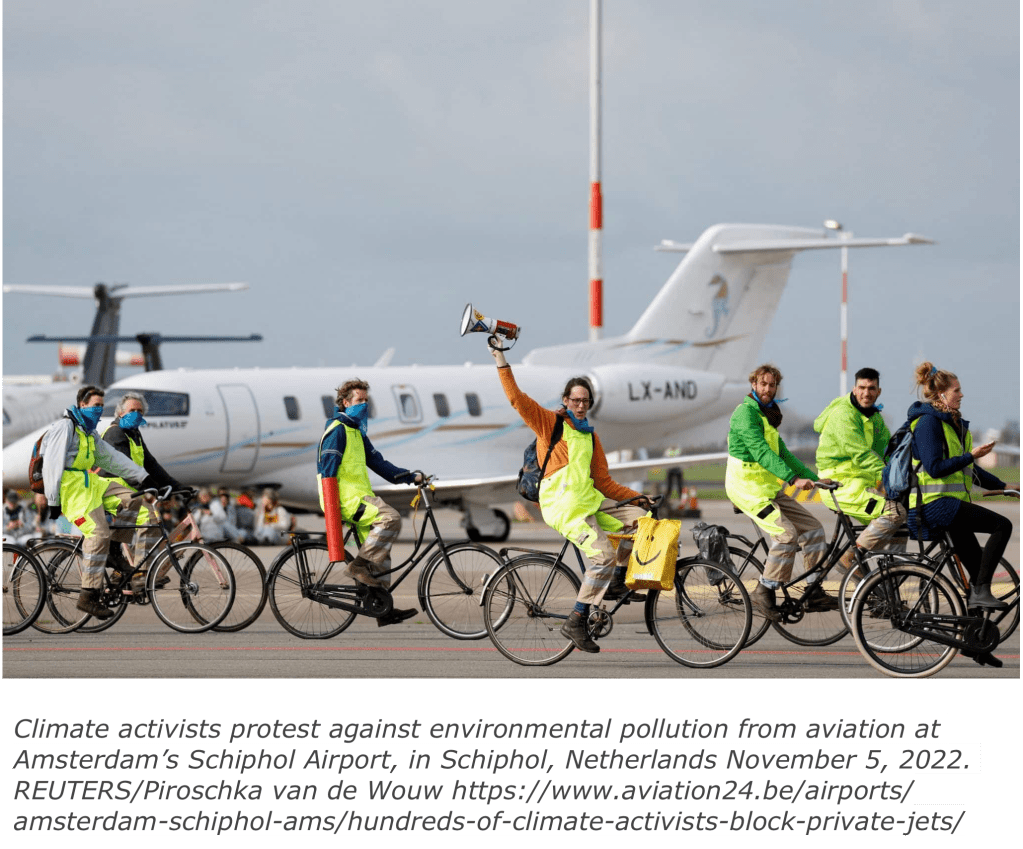
Today’s readings point to different experiences of faith. Joseph, in his story, remains sure in his faith that God has a plan for him even though all the circumstances suggest otherwise. His perhaps is an example of faith being what enables us to carry on doing what we believe to be right even when the outcome seems incredible or impossible. This I often feel is what climate activists have to struggle with. 

In his message to the Romans, Paul is explaining why we need to share the gospel, to make known what God has and is doing, to show people what God’s world can be like if we can all live drawing on the faith in God inherent in us. 

And today’s gospel story reminds us that faith doesn’t take away problems – there will always be storms – but gives us the courage to cope with them. Indeed, the story goes on to suggest we may have greater strengths and skills that we realise or allow ourselves to believe. Is it possible that as Christians, as people of faith, we can do more than we imagine to create a better world, to transform the world in the ways that God desires?

A recent Christian Climate Action chat evening – Brew Time – asked the question “How can we be a transformational power to stop climate collapse?” 

Genesis 37:1-4, 12-28

Jacob settled in the land where his father had lived as an alien, the land of Canaan. This is the story of the family of Jacob.

Joseph, being seventeen years old, was shepherding the flock with his brothers; he was a helper to the sons of Bilhah and Zilpah, his father’s wives; and Joseph brought a bad report of them to their father. Now Israel loved Joseph more than any other of his children, because he was the son of his old age; and he had made him a long robe with sleeves. But when his brothers saw that their father loved him more than all his brothers, they hated him, and could not speak peaceably to him.

Now his brothers went to pasture their father’s flock near Shechem. And Israel said to Joseph, “Are not your brothers pasturing the flock at Shechem? Come, I will send you to them.” He answered, “Here I am.” So he said to him, “Go now, see if it is well with your brothers and with the flock; and bring word back to me.” So he sent him from the valley of Hebron.

He came to Shechem, and a man found him wandering in the fields; the man asked him, “What are you seeking?” “I am seeking my brothers,” he said; “tell me, please, where they are pasturing the flock.” The man said, “They have gone away, for I heard them say, ‘Let us go to Dothan.’” So Joseph went after his brothers, and found them at Dothan. They saw him from a distance, and before he came near to them, they conspired to kill him. They said to one another, “Here comes this dreamer. Come now, let us kill him and throw him into one of the pits; then we shall say that a wild animal has devoured him, and we shall see what will become of his dreams.” But when Reuben heard it, he delivered him out of their hands, saying, “Let us not take his life.” Reuben said to them, “Shed no blood; throw him into this pit here in the wilderness, but lay no hand on him” —that he might rescue him out of their hand and restore him to his father. So when Joseph came to his brothers, they stripped him of his robe, the long robe with sleeves that he wore; and they took him and threw him into a pit. The pit was empty; there was no water in it.

Then they sat down to eat; and looking up they saw a caravan of Ishmaelites coming from Gilead, with their camels carrying gum, balm, and resin, on their way to carry it down to Egypt. Then Judah said to his brothers, “What profit is it if we kill our brother and conceal his blood? Come, let us sell him to the Ishmaelites, and not lay our hands on him, for he is our brother, our own flesh.” And his brothers agreed. When some Midianite traders passed by, they drew Joseph up, lifting him out of the pit, and sold him to the Ishmaelites for twenty pieces of silver. And they took Joseph to Egypt.

Psalm 105, 1-6, 16-22, 45b

1 Give thanks to the Lord and call upon his Name; *
make known his deeds among the peoples.

2 Sing to him, sing praises to him, *
and speak of all his marvellous works.

3 Glory in his holy Name; *
let the hearts of those who seek the Lord rejoice.

4 Search for the Lord and his strength; *
continually seek his face.

5 Remember the marvels he has done, *
his wonders and the judgments of his mouth,

6 O offspring of Abraham his servant, *
O children of Jacob his chosen.

16 Then he called for a famine in the land *
and destroyed the supply of bread.

17 He sent a man before them, *
Joseph, who was sold as a slave.

18 They bruised his feet in fetters; *
his neck they put in an iron collar.

19 Until his prediction came to pass, *
the word of the Lord tested him.

20 The king sent and released him; *
the ruler of the peoples set him free.

21 He set him as a master over his household,
as a ruler over all his possessions,

22 To instruct his princes according to his will
and to teach his elders wisdom.

45 Hallelujah!

Romans 10:5-15

Moses writes concerning the righteousness that comes from the law, that “the person who does these things will live by them.” But the righteousness that comes from faith says, “Do not say in your heart, ‘Who will ascend into heaven?’” (that is, to bring Christ down) “or ‘Who will descend into the abyss?’” (that is, to bring Christ up from the dead). But what does it say?

“The word is near you,
on your lips and in your heart”

(that is, the word of faith that we proclaim); because if you confess with your lips that Jesus is Lord and believe in your heart that God raised him from the dead, you will be saved. For one believes with the heart and so is justified, and one confesses with the mouth and so is saved. The scripture says, “No one who believes in him will be put to shame.” For there is no distinction between Jew and Greek; the same Lord is Lord of all and is generous to all who call on him. For, “Everyone who calls on the name of the Lord shall be saved.”

But how are they to call on one in whom they have not believed? And how are they to believe in one of whom they have never heard? And how are they to hear without someone to proclaim him? And how are they to proclaim him unless they are sent? As it is written, “How beautiful are the feet of those who bring good news!”

Matthew 14:22-33

Jesus made the disciples get into the boat and go on ahead to the other side, while he dismissed the crowds. And after he had dismissed the crowds, he went up the mountain by himself to pray. When evening came, he was there alone, but by this time the boat, battered by the waves, was far from the land, for the wind was against them. And early in the morning he came walking toward them on the sea. But when the disciples saw him walking on the sea, they were terrified, saying, “It is a ghost!” And they cried out in fear. But immediately Jesus spoke to them and said, “Take heart, it is I; do not be afraid.”

Peter answered him, “Lord, if it is you, command me to come to you on the water.” He said, “Come.” So Peter got out of the boat, started walking on the water, and came toward Jesus. But when he noticed the strong wind, he became frightened, and beginning to sink, he cried out, “Lord, save me!” Jesus immediately reached out his hand and caught him, saying to him, “You of little faith, why did you doubt?” When they got into the boat, the wind ceased. And those in the boat worshiped him, saying, “Truly you are the Son of God.”

Counting on .. day 1.147

12th August 2023

following on from yesterday, the other option is to encourage people to carry their own travel cup with them. This needs promoting not just with customers but with baristas too. Twice recently I have handed over my keep cup to find that the barista makes the coffee in a disposable cup before tipping it into the reusable cup! And as you can imagine this somewhat destroys the skill used in making a flat white.

Counting on …. Day 1.146

11th August 2023

A small thing to notice, but in France all take away cups, whether for hot or cold drinks are in paper cups with paper lids. At some point the government must have determined that this was the best thing, drawn up legislation, announced a start date and the enacted it. Clear, straightforward and comprehensive so everyone knows where they are. 

Starting in 2019, France set out a list of dates specifying when the use of certain plastic items would be banned, as well as requirements for the labelling and recycling of plastics, such that by 2040 single use plastic will be completely phased out. https://www.france24.com/en/20191231-france-begins-phasing-out-single-use-plastics

Here in the UK a ban on single use plastic such as cutlery, plates, stirrers, drinking straws (with exemption for health needs), plastic stemmed cotton buds, balloon sticks, expanded and foamed extruded polystyrene fast-food containers, is due to come into effect in October 2023, but not as part of a comprehensive strategy. 

Counting on …. Day 1.145

10th August 2023

This I feel is worth sharing and comes from Public and Commercial Services Union whose members mainly work in government departments and other public bodies.

“Our members are civil servants who are committed to serving the public. This means they will not provide inaccurate or misleading information to the public, and that policy decisions should be grounded in the best available evidence. These values are grounded in the Civil Service Code. 

If the Prime Minister was a civil servant he would stand in gross breach of that Code as his announcement is not routed in evidence and is in fact misleading. It is not possible to ‘max’ out gas and oil exploration in the North Sea and claim you are heading for net zero. 

“In the face of a climate crisis that is destroying crops and killing people worldwide, forcing many to flee their homes as they face floods and wildfires, PCS choses to call out the Prime Minister on this line that continued extraction of fossil fuels is the best decision for the security of the UK, or the world. We will continue to campaign that that this government, and indeed any future ones, stand by international and domestic climate change commitments. Therefore, we ask that the Government reconsider its decision to issue new oil and gas licenses.”

https://www.pcs.org.uk/news-events/news/efra-group-statement-new-oil-gas-licenses

Counting on … day 1.144

9th August 2023

Earlier I reported on the  Ffos-y-Fran open coal mine – https://greentau.org/2023/05/02/counting-on-day-1-108-2/. The mining of the coal – according to the terms of the licence should have stopped last September. Despite their best efforts, the company has not been given any permission to continue beyond that date and yet coal is still be taken out of the ground and away from the site every day. Llyr Gruffydd MS, who is chair of the Senedd’s Climate Change Committee has demanded answers from the Welsh Government over concerns about the extraction of coal at one of Europe’s biggest opencast mines.

Looking on line, this is his email address if you wish to ask what progress is being made to end this continuing extraction of coal:  llyr.Gruffydd@senedd.wales

Green Tau: issue 74

8th August 2023

The importance of transition pathways to net zero: part 1 – local authorities

325 of the UK’s 409 local authorities (including counties, boroughs, districts etc) have, as of 2022, a climate action plan – most with a net zero target date. The  Climate Change Committee comments that the Sixth Carbon Budget can only be met if Government, regional agencies and local authorities work together. Whilst local authorities only have direct control over 2-5% of local emissions, their influence, through regulations, provision of services,  and influence over the activities and lifestyles of residents and local businesses is significantly higher. 

Local authorities “…key power and duties are:

  • An overarching role to support the economic, health and social wellbeing of communities 
  • planning powers over buildings and transport 
  • Enforcement of building regulations 
  • Powers to ensure buildings meet basic energy efficiency standards 
  • Duties to prevent homelessness and prevent hazards in housing
  • Duties to manage risk including climate risks such as flooding
  • Duties and powers to protect the environment, wildlife and heritage 
  • Duties to collect and dispose of waste
  • Borrowing and investment powers” https://www.theccc.org.uk/wp-content/uploads/2020/12/Local-Authorities-and-the-Sixth-Carbon-Budget.pdf

These give local authorities wide scope to control and influence emissions in their area and to achieve their net zero target dates at various levels:-

  1. At the most basic level, local authorities can control the emissions over which they have direct control – ie from their own buildings and infrastructure – insulting council buildings, installing energy efficient lighting, including street lighting, and switching to a renewable electricity supplier, installing solar panels and or heat-pumps, installing water efficient showers, taps etc. And from their operations – eg ensuring successful reuse and recycling programmes; and  from  travel – swopping to an electric vehicle fleet including recycling lorries, street cleaning vehicles etc, as well as through encouraging and enabling staff to walk or cycle or use public transport for their  commuting journeys.

B) local authorities through seeking out and specifying low carbon standards in their procurement processes, and through again specifying low carbon standards when commissioning work, they can reduce the carbon footprint of their operations. This might range from requiring all stationary to come from recycled sources, requiring all laptop and phone batteries to be both recyclable and recycled, to requiring that furniture be repaired rather than replaced as the default option.

C) local authorities can use their powers to ensure that transport infrastructure in their area supports active travel and public transport over private motorised transport. They can control developments in their area ensuring they enhance the sustainability whilst reducing carbon emissions. By so doing they will also enable other local organisations to reduce their emissions as regards customers and consumers travel patterns.

D) if the local authorities are doing all the above successfully, they can showcase how other organisations and groups in their locality can do likewise, sharing experiences and good practice.

E) local authorities can have a role bringing together people and organisations enabling them jointly to better address the issues of climate change and the means by which emissions can be reduced. and the means by which the affects of climate change can be mitigated. 

F) They can inform and encourage local residents to adopt climate friendly lifestyles – for example promoting the reuse, repair and recycling materials; incentivising use of local services; promoting the installation of solar panels. 

For more information visit: https://ashden.org/storage/2020/08/31-Climate-Actions-for-Councils.pdf

“As a trusted source of information, the Council can encourage changes in consumer habits, highlight practical information and advice that people can act on and be supportive of action that residents wish to take on climate change . The role of the community is key in dealing with the Climate Emergency. The wholesale change that is required in the way that the economy and society is organised cannot come simply through the local authority trying to shout loudly; it requires action from people to pressure all levels of government, as well as businesses and corporations big and small to change the way they operate.” https://richmond.gov.uk/media/19300/climate_change_strategy_report_2020.pdf

What actions have local authorities undertaken?

Retrofit homes to make them more energy efficient: “The Manchester Climate Change Framework 2022 estimates that housing makes up circa 30% of the city’s total carbon emissions. Retrofitting the city’s housing stock will also provide essential in lowering resident energy bills during the cost-of-living crisis, improving the health of our residents and improving standards in the city’s existing housing stock…To meet the city’s 2025 zero carbon ambitions, 84000 properties will need to be retrofitted in some way. The average cost of a full property retrofit programme could be between £25,000 and £30,000.…£83m has been spent on energy efficiency improvements to Council properties in north Manchester since 2005 leading to a 49% reduction in CO2 emissions (from 55,000 to 28,000 tonnes of CO2) in the homes that have received investment.…Investment in the Council’s own stock to date includes: external render and insulation for 1600 solid wall properties; ditto 14 high rise blocks of flats; 580 homes fitted with heat pumps; 2350 roofs fitted with solar PV systems;  8 retirement blocks with solar thermal panels; 300 blocks of flats with low energy lighting – high and low rise;11,000 homes with high efficiency condensing boilers; 11,900 homes with double glazing; 5,100 homes with cavity wall insulation; 7,000 homes with loft top-up insulation; £12m has been secured in external grants to help fund energy improvements since 2010.” https://www.manchester.gov.uk/news/article/9102/manchester_to_tackle_low_carbon_housing_retrofit_challenge

Nottingham City Homes has pioneered the Energiesprong approach in the UK, transforming 60 homes into warmer, more desirable places to live. This scheme is designed to unlock zero carbon retrofit at scale, paid for by energy and maintenance savings and delivered by a new high-tech industry with guaranteed actual performance, comfort and costs long term – resulting in warm, affordable, desirable homes for life.  Homes are fully insulated using offsite manufactured wall and roof panels in conjunction with pre-assembled ‘energy pods’ providing low-carbon, high efficiency heating, hot water and renewable energy production. Gravesend Borough Council is exploring this scheme too. (https://www.energiesprong.uk/newspage/energiesprong-uk-supporting-new-kent-based-heat-pump-project-tackling-fuel-poverty-in-hard-to-retrofit-homes

Local heating schemes: Swaffham Prior has led the way in the UK, to be the first village to develop a rural heat network. The mix of air source and ground source heat pumps have capacity to supply 1.7MW of heat to 300 homes located in Swaffham Prior. The Swaffham Prior Heat Network project was started by Swaffham Prior Community Land Trust, to address fuel poverty and local environmental issues caused by the village’s reliance on oil heating… Alongside the significant grant funding provided by Heat Network Investment Project and Heat Network Development Unit, Cambridgeshire County Council have made a strategic investment in the project and owns the energy company and heat network assets

Solar panels for leisure centres: “Work to introduce solar power to three Freedom Leisure sites across South Somerset was completed in 2022… [with] solar panels have been installed at Westlands Sports Centre (Yeovil), Wincanton Sports Centre and Goldenstones Leisure Centre (Yeovil). This work is part of a development plan which will see over £6 million invested across the three sites to improve environmental efficiency, customer experience, accessibility, services and facilities.” (https://www.somerset.gov.uk/environment-and-food-safety/climate-and-ecological-emergency/south-somerset/

Investing in renewable energy projects: Cambridge County Council has installed solar panels on its key office buildings and has invested in a 12MW solar park at Triangle Farm, Soham, both generating clean energy and delivering over £350,000 per annum net revenue to support the delivery of council services. Further plans include developing another site at North Angle Farm with a 30MW capacity solar farm. (https://www.cambridgeshire.gov.uk/residents/climate-change-energy-and-environment/climate-change-action/low-carbon-energy/large-scale-renewable-energy-and-storage/north-angle-solar-park)

Enabling investment possibilities: “West Berkshire Council is the first local authority to issue a bond direct to the public –  Community Municipal Investment (CMI) bond. The CMI allows residents and community groups to invest directly with the Council to fund green projects. Investments can be as little as £5 and investors will earn a return of 1.2% over a five year term, with the capital returned in instalments across the investment term.The scheme is attractive to bondholders because it facilitates their investment in local green projects in a way that involves only a small degree of investment risk, together with the potential to earn a return – which is why the Council is already seeing strong demand for the bonds.The money raised will be used to fund the installation of solar panels on Council owned buildings including at Greenham Common and local schools. These projects are part of West Berkshire Council’s ambitious plans to become carbon neutral by 2030.” (https://www.womblebonddickinson.com/uk/insights/news/wbd-advises-west-berkshire-council-uks-first-community-municipal-investment)

Divesting pension funds from fossil fuels: Waltham Forrest, Southwark, Islington, Lambeth, and Cardiff have all divested.

Reducing car use and traffic congestion: Nottingham City Council operates a Workplace Parking Levy payable by employers that provide 11 or more workplace parking places (ie for work vehicles, staff commuting to work, suppliers, or, for colleges, students). The cost per workplace parking place for 2023 – 2024 is £522. The funds raised (over £90m for the last 11 years) has funded improvements in public transport. (https://www.transportnottingham.com/policies/nottinghams-workplace-parking-levy-10-year-impact-report/)

Funding electric buses: Norwich is to have one of biggest full electric  bus depots in England after Norfolk County Council secured funding for 70 electric buses together with the necessary infrastructure for the bus depot. (https://www.norfolk.gov.uk/news/2023/03/electrifying-funding-will-bring-70-zero-emission-buses-to-norwich) First Bus, the bus operator, is also working closely  with Leicester City Council, City of York Council, the West Yorkshire Combined Authority, Norfolk County Council, Portsmouth City Council and Hampshire County Council.

Electric vehicle charging points: Birmingham City Council is providing an initial 394 fast (22kw) and rapid (50kw) charge points across the city, with a follow up to increase this to around 3,600 in 2022-3,  in collaboration with the private sector charge point deployment on private land such as supermarkets, retail outlets and fuel stations.(https://www.birmingham.gov.uk/info/20013/roads_travel_and_parking/566/electric_vehicles/2)

Divesting pension funds from fossil fuels: Waltham Forrest, Southwark, Islington, Lambeth, and Cardiff have all divested.

Why not check what your local authority is doing? 

If you feel that they are not doing enough, or if you feel that their policy is more about words than actions, or of their targets seem flimsy – “Objective: plant more trees …. Target: more trees planted” – then take the time to ask questions. 

The following is an interesting insight into the power of activism.

“The growing activism of groups such as Extinction Rebellion (XR) and Friends of the Earth in relation to climate emergencies poses a risk to organisations in terms of reputation and litigation. Not aligning statutory strategies and key policies to climate declarations is not only contradictory, but also leaves an organisation open to accusations of green washing. Strategic reviews of how much work it would take to make organisational police ‘climate compliant’ should be done at the earliest opportunity when thinking about carbon neutrality.

Over the coming year Local Planning Authorities will increasingly be challenged on their climate credentials, their decisions and their performance”. https://www.localgov.co.uk/Getting-to-net-zero/50352

Counting on … day 1.143

8th August 2023

The Welsh government in 2016 enacted the Future Well-being Act which sets out to make Wales a better place to live, bearing in mind the challenges of climate change, poverty, and poor health. “In order to make things better, everyone needs to work together. We need to think about what people want now. But also how that will affects people in the future.”

The act respires the 44 public bodies – including Local Health Boards, Local Authorities, National Park Authorities, Natural Resources Wales, National Library of Wales etc – to work together on all 7 prescribed goals, vis

  1. A globally responsible Wales
  2. A prosperous Wales
  3. A resilient Wales
  4. A healthier Wales
  5. A more equal Wales
  6. A Wales of cohesive communities 
  7. A Wales of vibrant culture and thriving Welsh language

For more info on what sounds like an excellent idea – https://www.gov.wales/well-being-of-future-generations-wales

Counting on …. Day 1.142

7th August  2023

One of the partner organisations of Earth Overshoot Day is the New Economics Foundation. Here in the UK they are pushing three campaigns that would help create a level playing field:-

“The Great Homes Upgrade is a campaign for a large-scale, UK-wide programme of upgrading our leaky, inefficient homes. It would be funded by the UK government, but managed mainly through local authorities and other local organisations. This would make sure that everyone can make sure their home is well-insulated and heated by clean, green energy — regardless of whether we rent a flat or own a castle. We want the government to commit to bring every home in the UK up to a good standard by 2030 — that means upgrading 7m homes by 2025 and 19m by 2030.”

https://neweconomics.org/campaigns/great-homes-upgrade

The Living Income campaign calls for the provision of a universal income with  “an ‘income floor’ that is enough to meet life’s essentials, like the weekly shop or an emergency boiler repair, which no one can fall below whether they are in or out of work. The level is based on the independently-assessed Minimum Income Standard, which is also used to determine the real living wage. By setting an ‘income floor’, which is an amount of money no one can fall below whether they are in or out of work, the Living Income provides everyone with peace of mind.”

“We need a plan that ensures that everyone – no matter who and no matter where they are from – has enough to live on, whether they are in or out of work.”

Homes for Us – “A new generation of social homes will help us live, rest and flourish. We all need somewhere to call home – a place to rest, to share with our loved ones, to make a life or watch your kids grow up. But right now many of us can’t afford a decent home. We call on the government to put our interests before those of corporate landlords and developers, and start building the high-quality, genuinely affordable social homes we need.” https://homesforus.org.uk/