
Counting on … day 189

10th October 2024

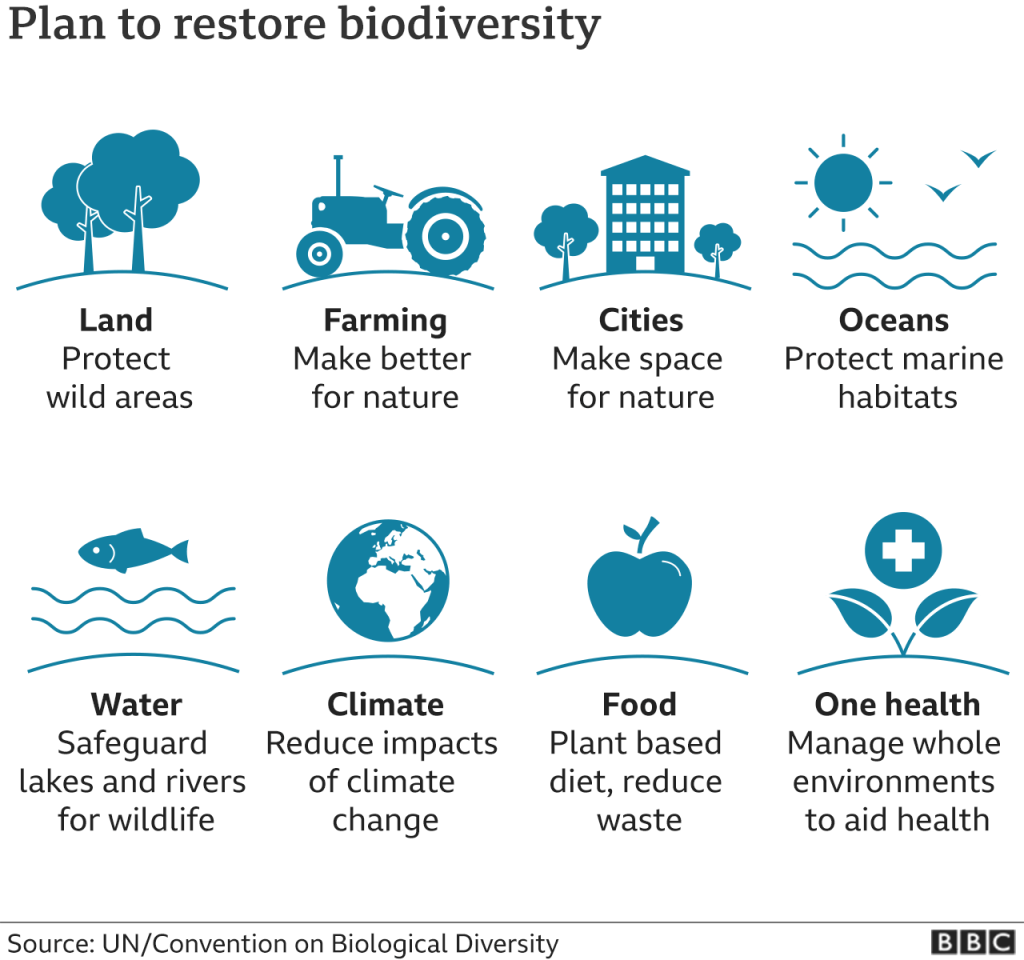
Restoring biodiversity and protecting 30% of the UK is going to need a widespread reworking of farming practices and objectives. This will mean taking some land out of food production – eg to create peat bogs or woodlands – but on the other hand if we view land as the means of supporting not just food production but primarily as the means of supporting life, this makes sense. Should we be paying a life support tax to finance this? 

Restoring biodiversity will also mean reducing the intensity with which the land is farmed for food – widening existing, and planting new, hedges, cultivating the borders of fields as wild flower meadows, creating ponds and rewiggling rivers, reducing stocking levels (and reducing the total number of livestock to a proportionate level given that for every animal more land has to be used to grow feed crops), changing crop planting patterns to reduce the need for fertilisers that then pollute waterways etc. 

All this will mean a change in the way we eat. We need to switch to diets that are largely plant-based and dependent on locally grown crops. Diets that will in fact be both tasty and healthy.
Windows of Opportunity 

7th December 2023

30:30 Biodiversity target

“Biodiversity is essential for the processes that support all life on Earth, including humans. Without a wide range of animals, plants and microorganisms, we cannot have the healthy ecosystems that we rely on to provide us with the air we breathe and the food we eat.” (1) 

Just as importantly biodiverse rich habitats are more resilient in the face of extreme weather events than less biodiverse habitats, and often incorporate their own protective mechanisms. In other words, biodiverse rich habitats provide us with the safest place to be.

The Convention of Biological Diversity at COP15 agreed that globally we should aim to protect at least 30% of land and sea for nature by 2030. The UK is one of more than 100 nations who signed up to this target. 

So far there is considerable scope for improvement. The British Ecological Society’s report, 2020, warned that the UK was on track to miss a pledge to protect 30% of its land and sea by 2030, with some analyses warning just 5% of the nation’s land is effectively protected.  The report recommended that protected habitats under the 30×30 pledge need to put biodiversity first and foremost…To achieve this, a wide range of different habitat types need to be protected, with many existing areas requiring stronger protections than they currently have. National parks and areas of outstanding natural beauty could be included in this, if they are reformed to prioritise biodiversity…Connections between sites which allow wildlife to move are important to link up the relatively disparate network of protected areas in the UK. This could consist of physical corridors, stepping stones between them, or by improvements to non-protected land. (2)

(1) https://royalsociety.org/topics-policy/projects/biodiversity/why-is-biodiversity-important/

(2). https://www.nhm.ac.uk/discover/news/2022/april/uk-set-miss-pledge-protect-30-of-territory-2030.html