Environment Sunday 

17th July 2022

Our church is dedicating this Sunday to the Environment as well as holding baptisms. 

Readings 1 Corinthians 12. 12-27 (The Message)

Each of us is now a part of Christ’s resurrection body, refreshed and sustained at one fountain—his Spirit—where we all come to drink. The old labels we once used to identify ourselves—labels like Jew or Greek, slave or free—are no longer useful. We need something larger, more comprehensive. I want you to think about how all this makes you more significant, not less. A body isn’t just a single part blown up into something huge. It’s all the different-but-similar parts arranged and functioning together. If Foot said, “I’m not elegant like Hand, embellished with rings; I guess I don’t belong to this body,” would that make it so? If Ear said, “I’m not beautiful like Eye, transparent and expressive; I don’t deserve a place on the head,” would you want to remove it from the body? If the body was all eye, how could it hear? If all ear, how could it smell? As it is, we see that God has carefully placed each part of the body right where he wanted it. But I also want you to think about how this keeps your significance from getting blown up into self-importance. For no matter how significant you are, it is only because of what you are a part of. An enormous eye or a gigantic hand wouldn’t be a body, but a monster. What we have is one body with many parts, each its proper size and in its proper place. No part is important on its own. Can you imagine Eye telling Hand, “Get lost; I don’t need you”? Or, Head telling Foot, “You’re fired; your job has been phased out”? As a matter of fact, in practice it works the other way—the “lower” the part, the more basic, and therefore necessary. You can live without an eye, for instance, but not without a stomach. When it’s a part of your own body you are concerned with, it

makes no difference whether the part is visible or clothed, higher or lower. You give it dignity and honour just as it is, without comparisons. If anything, you have more concern for the lower parts than the higher. If you had to choose, wouldn’t you prefer good digestion to full-bodied hair? The way God designed our bodies is a model for understanding our lives together as a church: every part dependent on every other part, the parts we mention and the parts we don’t, the parts we see and the parts we don’t. If one part hurts, every other

part is involved in the hurt, and in the healing. If one part flourishes, every other part enters into the exuberance. You are Christ’s body— that’s who you are! You must never forget this.

Gospel Reading – John 4.13-14

Jesus said to her, ‘Everyone who drinks of this water will be thirsty again, but those who drink of the water that I will give them will never be thirsty. The water that I will give will become in them a spring of water gushing up to eternal life.’

Collect

Loving God, by whose great generosity we are granted the gift of life, so breathe on the spark of your presence within us, that we

 burn with a flame of love that banishes our fear, and lights up the world around us. We ask this in the name of Jesus, Light and life of the World. Amen.

Talk 

Baptism services remind us that we are all one community, one body in Christ. No one can say to someone else you don’t belong here, or go away, we don’t need you. We are all equal and important and necessary just as we are.

Today I want us to think about the world. 

Lots of people and lots of birds and animals, fish and insects and creepy crawlies and the list goes on –  live here.

What can you see?

A polar bear.   A sand martin.   An orang-utan.  A bee.   And a whale.

Orang-utans live in great tropical forests. They depend upon the forests for food and shelter, as a well as a  place to live and to play. But the forests where they live are being chopped down and cleared away to make space for acres and acres of palm oil plantations to make lipsticks and margerine, shampoo and pet food, sunscreen and bio diesel. When the forests go, the orang-utans have no where else to live. It seems as if we are saying to the orang-utans ‘Go away you don’t belong here’.

Polar bears live in the Arctic where they go hunting across the ice. They dive into cracks and holes in the ice to catch fish and seals. But climate change is making the world hotter and the ice is melting. Without the ice the polar bears cannot hung fish and seals. Instead they and their cubs starve. It seems as if we are saying to the polar bears, ‘If you can’t cope with climate change and melting ice caps, then we don’t need you.’

Sand martins spend the winters in Africa and the summers in Europe. In the spring they fly thousands of miles across the Sahara to Britain and in the autumn they fly the same thousands of miles back. But climate change is making the world hotter and when they fly over the Sahara Desert, the air is so hot that many martins simply cannot cope and they fall to the ground. It seems as if we are saying to the sand martin ‘If you can’t cope with climate change, then there’s no place here for you any more.’

Around the world in different oceans live whales. Whales get caught up in fishing tackle and crashed into by shipping. They are disoriented by noise from oil exploration. Every year fewer and fewer whales are born. It is as if we are saying to the whales, ‘Go away, we don’t need you’.  

But we do need whales! They are amazing creatures. In the oceans there tiny tiny things called phytoplankton that, like leaves on trees, convert carbon dioxide and sunlight into oxygen and energy. And phytoplankton provide food for slightly bigger plankton and the plankton provides food for all manner of other sea creatures – including whales. But there is one thing that phytoplankton needs and that is iron. And do you know where that iron comes from? Whale poo! If oceans are to remain healthy with phytoplankton providing oxygen and energy for plankton and seaweed, and  fish and other sea animals, then we need  whales.

What about bees? Bees live in lots of different parts of the world feeding on nectar from plants. But we have been getting rid of wild plants and hedgerows, and spraying fields with herbicides so that there is not enough food for the bees. And we have been spraying crops with pesticides that kill not just the ‘pests’ but the bees too. Every year there are fewer and fewer bees. It is as if we are saying to the bee, ‘Go away, we don’t need you.’ 

But we do need bees. Without bees to fertilise crops we won’t have apples and pears, or strawberries and cherries, or figs and kiwi fruits, or almonds, avocados, mangos …. the list goes on and on. 

If we are not going to say to bees and whales, to orang-utans and polar bears, to sand martins and to so many other amazing creatures – we don’t need you, you’re not part of our world, then we have to change the way we live. We are one body, we are one world.

Prayers

Take a look at your left foot. Think about people who cannot move freely, perhaps because of illness or disability; perhaps because of imprisonment; perhaps because they are women. Think too of animals that cannot move freely. May they be treated with compassion. May we be agents of change.

Lord in your loving kindness:

Hear our prayer. 

Now look at your other foot. Think about people who are having to flee from danger: from war and fighting,  from oppression and prejudice, from poverty, from floods , from wild fires, and from hunger. Think too of wildlife that is being forced out of its natural habitat. May they be protected and welcomed. May we be agents of change.

Lord in your loving kindness:

Hear our prayer. 

Now look at your hands. Think about people who use their hands to stack supermarket shelves, sew clothes, pick fruit and vegetables – especially those in poor working conditions. Think about people who use their hands to care for others:  cleaners, nurses, care workers. Think of those who use their hands to care for the environment. May they all be treated fairly, may they be valued and supported. May we be agents of change.

Lord in your loving kindness:

Hear our prayer. 

Now think of your bottom. Think of times when it is easier to sit back and do nothing, times when it is easier not to stand up for those in need: people in our own country who have to rely on food banks; people  in North Africa facing hunger as wheat prices rise; seabird colonies facing extinction because of bird flu, the world as it struggles with the climate crisis. Give us courage to act for we are all body. May we be agents of change.

Lord in your loving kindness:

Hear our prayer. 

Now think of your heart: think of all those you love and all who love you. We pray for those in need of healing and comfort: Angela Robinson, Jeane Dunsford, Alban Clarke, Joy Clarke, Lawrence Bell-Wright

We remember those who died recently: Pat West, Iris Lofting, Isabel Howlett, Hazel Acus, Anne Lawry, Peter Rivett.

and those who have died in past years: David Brown, Derek Marshall

Unite us all in your love.

Lord in your loving kindness:

Hear our prayer. 

Lastly try and look at the end of your nose. Think of those things which are hard to see, those things we would rather not see, those situations we would rather overlook: poverty, injustice, homelessness, hate, prejudice. Give us wisdom to understand ourselves and the world in which we live and to tend to its needs. May we be agents of change.

Lord in your loving kindness:

Hear our prayer. 

Merciful creator and Father

 accept these prayers for the sake of your son, our saviour Jesus Christ. Amen. 

 Counting on … day 247

16th July 2022

Also on the nature front, Friends of the Earth are asking us to ‘notice nature in the everyday’.

Whilst at the gym I spotted a dozen (each) sparrows, starlings and jackdaws, 3 parakeets, a goldfinch, a blue tit, a magpie and a kestrel!

Counting on …day 232 

3rd July 2022

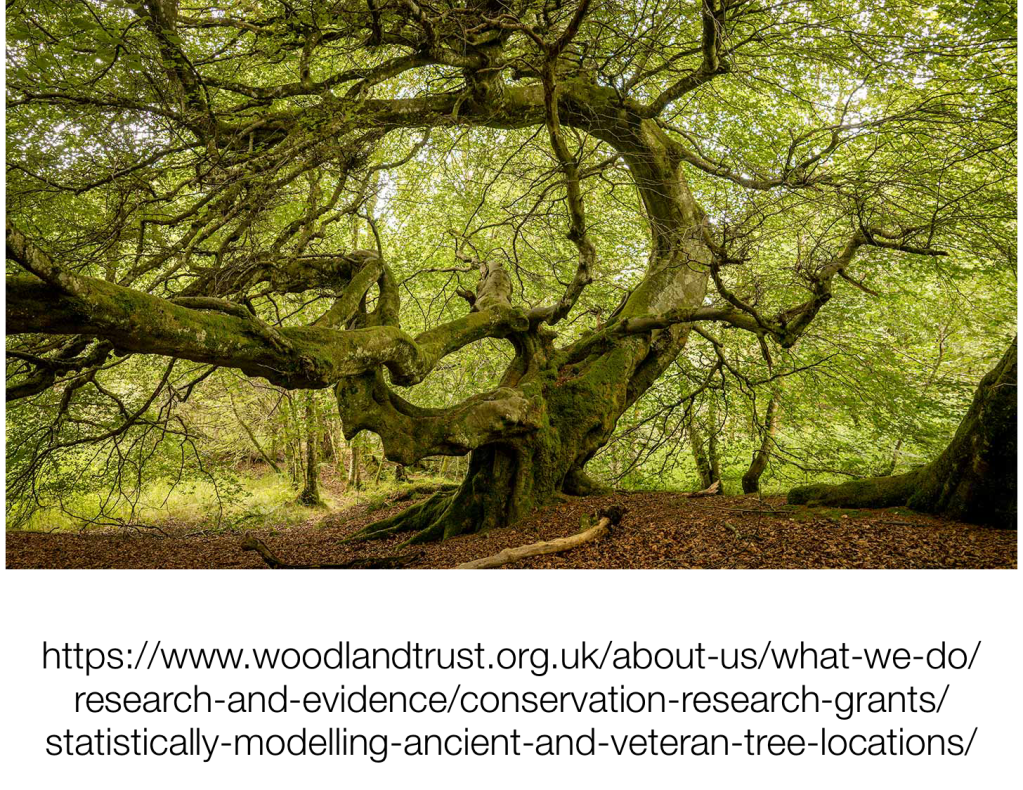
The Woodland Trust is petitioning governments across the UK to protect ancient trees. Do sign! Increasing biodiversity is as much about maintaining what we have as it is about rewilding. Ancient trees support a huge number of different animals, birds, insects, and micro-organisms. They are also historic landmarks that are just as important as historic buildings. 

Counting on day 230 

1st July 2022

According to the UN’s Global Climate Action newsletter, declining biodiversity is an increasingly acute problem. “The faster we degrade and lose biodiversity, the worst climate change, and the food crisis, will grow. The sooner we act to protect, conserve, sustainably use and regenerate nature within the 2020s, the stronger our chances of reaching net zero emissions before 2050 and becoming resilient to impacts we can’t hold back.” 

Reducing our consumption of meat will alleviate declining biodiversity by reducing the pressure on the amount of farm land needed to produce the food we eat and freeing up land that can be re-wilded.

Green Tau: Sustainable living

“MAKING SUSTAINABLE LIVING THE DEFAULT OPTION”

– strap line for the UN’s Earth Day. 


What is sustainable living? And how do we go about it? Something that is sustainable is something that can keep on going for a lengthy period of time without diminishment. We might look at household budget and apply the Micawber principle: 

“Annual income twenty pounds, annual expenditure nineteen, nineteen and six, result happiness.  Annual income twenty pounds, annual expenditure twenty pounds ought and six, result misery.”

As long as the required input is equal or less than output, the budget is sustainable. When what is consumed exceeds what is coming in, the budget is no longer sustainable. Sustainable living is the same: our lifestyle is sustainable if what we consume is equal to or less than resources we use. 

Let’s us taking heating for our homes as an example. 

If say we were to heat our homes with a wood burning stove, for that to be sustainable, we would need sufficient mature woodland to produce each year the wood we would burn. (This is not taking into account the cost to society of the pollution to the air). 

What if we hear our homes with oil and gas? That is ‘sustainable’ only in the short term as both these fossil fuels are non renewable. Once they are gone, they are gone. They cannot be replaced. Aside from air pollution, the major problem with soil fuels is the amount of carbon dioxide that they release into the atmosphere. It is a rate that far exceeds the rate at which it can be absorbed by the planet. This is why heating our homes with fossil fuels is not sustainable in either the short or long term. 

The most sustainable way of heating our homes is not to use any fuel but rather to build/ refurbish them with insulation levels that make extra heat (over and above our own body heat) unnecessary. Houses equipped to this standard are known as a “passivhaus” – https://www.passivhaustrust.org.uk/

Retrofitting is not without its financial cost which puts it out of reach for many people. (Sadly our government doesn’t understand that the whole nation would all benefit if insulating homes was state funded). Nevertheless any improvement we can make to the insulation of our homes will reduce our carbon footprint and energy bills and therefore makes heating our homes more sustainable: https://energysavingtrust.org.uk/insulating-your-home-back-to-the-basics/

A related area to that of heating, is electricity. What determines the sustainability of electricity?

Electrical production can be divided into two categories, renewable and non-renewable. Non-renewable electricity comes from power stations powered by coal/ gas/ oil. These fossil fuels are finite and cannot be replaced. Because of the scale of their carbon emissions, using them is highly destructive due to the adverse effects they cause of climate change and air pollution. Electricity produced by a fossil fuel driven generator is similarly non-renewable. 

Renewable electricity is produced using wind, solar, tidal or geothermal energy. These sources of energy are not diminished through use; they are available on an ongoing basis. In other words, they are sustainable.

Less easy to define is electricity produced using nuclear energy and that produced using biofuels such as wood chips, sugar cane etc. The amount of nuclear fuel needed in proportion to the energy generated is minuscule which is why nuclear power is often included along side renewables, but there are huge problem surrounding the safety of nuclear power stations and the disposal of nuclear waste that raises questions about its sustainability. 

Wood chips and sugar cane are both renewable resources but using them as an energy source is questionable. In a world where many go hungry and where more and more of the world’s natural or wild landscape is being lost, is it sustainable to use scarce land resources to grow crops for fuel rather than food?  

Questions around the sustainability of energy sources also apply to the sustainability of different forms of transport. The most sustainable means of transport is walking. It’s what we are designed for and uses no more energy than that required to feed us. The same is true of cycling, although according to Mike Berners Lee in his book, How Bad are Bananas, suggests that, depending on whether our diet is made up of beef burgers or bananas, a battery powered bicycle may have a lower carbon footprint! As above any transport reliant on fossil fuels – whether that is a petrol car, a diesel train or a plane – is not sustainable. Electric powered transport where the source of electricity is renewable is more sustainable but there are downsides to consider. Electric vehicles rely on batteries which are made from non renewable minerals such as lithium and cobalt – and cobalt in particularly comes predominantly from mines where employee welfare is minimal.

In sparsely populated areas, transport systems that rely on buses or trains may need to develop on-demand rather than time-tabled services, in order to make their use of limited resources sustainable. 

Plants are a naturally renewable resource but that doesn’t make all food equally sustainable. Factors to take into account include water, fertilisers, transport to markets, food waste, and whether the plants are feeding us directly or indirectly. Some crops such as rice, strawberries, blue berries and almonds,  require large amounts of water. In water sensitive regions irrigating such crops may divert water away from supplies used by local people for growing staple foods, as well as for drinking. It may also divert water away from aquifers and wetlands regions thus damaging local flora and fauna. In such circumstances, these crops cannot be classified as sustainable.

Fertilisers, especially artificial ones, use up limited non-renewable mineral resources, as well as contributing large amounts of carbon dioxide to the atmosphere. In addition the run off from fertilisers damages water courses and kills plants and creatures, compounding existing biodiversity losses. 

Where foods are imported over longer distances – and especially so when the mode of transport includes airfreight -will consume more resources and in particular will increase the food’s carbon footprint. Imported Spanish  strawberries, out of season avocados and air freighted asparagus are a few examples of unsustainable foods. In some instances the sustainability of a product becomes questionable when it takes over land used to grow staple foods for the local population or where it involves the clearance of indigenous wild vegetation such as the clearance of tropical rainforest to grow sugar cane. 

The majority of farm land globally is used not to feed people directly but to grow food for animals intended for human consumption.  It takes 100 x more land to produce 1kg of beef than to produce the equivalent in plant based food. In terms of feeding the global population a diet with high levels of meat consumption is not sustainable.

Plants as a renewable resource are also used for making things – clothes and fabrics, paper and furniture, rubber, paints etc. As with plants brown for food, similar questions about sustainability arise. Cotton for example is a heavy user of water – water abstracted for cotton growing was the major factor causing the disappearance of the Aral Sea. The growth in demand for palm oil used in products as diverse as lipstick and margerine, has led to the clearance of vast areas of natural habitat including mangroves. Demand for paper has seen naturally biodiverse forests replaced with monoculture pine plantations. 

The sustainability of every product we use needs to be measured in terms of renewability, carbon footprint, water footprint, impact on biodiversity, impact on local populations, the working conditions for those who grow, produce or sell, transport footprint, and the ease with which at the end of its life it can be recycled or disposed. Sustainability may begin as a question about individual lifestyle but quickly becomes a question about global sustainability. 

Counting on ….day 211 

12th June 2022

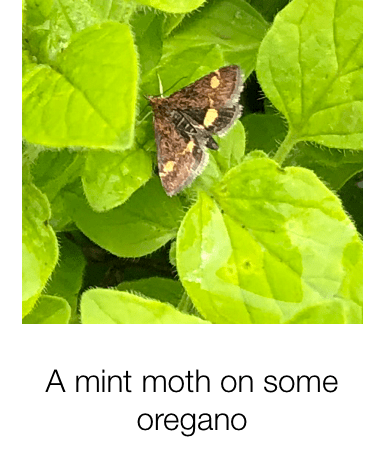
Last Saturday I attempted a nature survey of the church garden which was impeded by wet weather. Once the sun came out, so did the insects and with the gentle back ground buzz that reminds us how the summer should sound. I saw three different types of bee, several hover flies, a shiny emerald rosemary beetle and some tiny mint moths. It is worth spending half an hour just observing a few plants to see what’s there. 

Pentecost

5th June 2022

Reflection

The account of Pentecost from Acts is full of visual and auditory images, amongst which language is prominent. The word translated as tongues – as in tongues of fire – has in Greek, as in English, the dual meaning of both the physical tongue in our mouth and the language spoken by people. The effect of this anointing with the Holy Spirit is that the disciples can speak in many and various languages. The writer of Acts suggests a goodly selection from various localities – Parthia and Media, Pontus and Egypt, Libya and Crete. It is not always different localities that produce different languages. Different fields of employment, social classes,  age groups and generations can all have their own language, which may be unintelligible to those outside the group. Such groups may have not just their own verbal language but also their own body language. Here in the passage from Acts it is not just verbal languages that the disciples express but body language too – a body language that some mistake as drunkenness. 

I know I would struggle to communicate both verbally and bodily the language of a night club, and my lack of fluency would stand out a mile! I am equally sure that to someone unused to staid  middle class Anglicanism might struggle to hear the good news in our Sunday Holy Communion. It is hard to learn someone else’s language if it’s not something you usually encounter. Maybe the Holy Spirit is inviting us to get out and about more, to learn new languages and to share our own more widely.

I am sure that environmentalists also have their own niche verbal and body language – which is great for talking with one another but maybe is not so good for talking to those outside that community. If we are to be effective evangelists -whether for the gospel or for the environment – we need to learn the language of those we wish to communicate with. What is the language – the words, the actions – that I need to use if I want business leaders and financiers to understand the urgent message about the climate crisis, about the loss of bio-diversity, about the need for climate reparations?

Today’s psalm celebrates the joy and diversity of creation, of God’s handiwork. Have we yet developed a modern day language that can fully describe how amazing creation is? Have we found the right languages that can enable others to see creation as such a unique and special gift – one that none of us should want to damage? We have seen that David Attenborough has a real gift with words and images that inspire awe and wonder – do we need more people fluent in such bio-awesome language to create a world in which no one would dream of carelessly or pointlessly damaging the environment? Do our churches, does our liturgy, speak with awe and love for God’s creation?

When we cry ‘Abba, Father’ do we understand that as children of God, that all of humanity are as brother and sister to us? That the Iranian struggling to breath because climate-change induced sand storms is our brother? That the Malian farmer struggling to irrigate her crops is our sister? That the children of Kiribati whose island is being invaded by the sea, are our siblings too? Jesus’s command is that we love one another: for what Jesus says and does, is what the Father says and does. Both Father and Son speak the same language. It is a language that is both so complex and so simple, that everyone who listens out for it can understand it. It is a language that we have not fully learnt to speak but which the Holy Spirit is ever ready to teach.

May we with humility and eagerness invite the Holy Spirit to overfill and inspire us this Pentecost.

Acts 2:1-21

When the day of Pentecost had come, the disciples were all together in one place. And suddenly from heaven there came a sound like the rush of a violent wind, and it filled the entire house where they were sitting. Divided tongues, as of fire, appeared among them, and a tongue rested on each of them. All of them were filled with the Holy Spirit and began to speak in other languages, as the Spirit gave them ability.

Now there were devout Jews from every nation under heaven living in Jerusalem. And at this sound the crowd gathered and was bewildered, because each one heard them speaking in the native language of each. Amazed and astonished, they asked, “Are not all these who are speaking Galileans? And how is it that we hear, each of us, in our own native language? Parthians, Medes, Elamites, and residents of Mesopotamia, Judea and Cappadocia, Pontus and Asia, Phrygia and Pamphylia, Egypt and the parts of Libya belonging to Cyrene, and visitors from Rome, both Jews and proselytes, Cretans and Arabs– in our own languages we hear them speaking about God’s deeds of power.” All were amazed and perplexed, saying to one another, “What does this mean?” But others sneered and said, “They are filled with new wine.”

But Peter, standing with the eleven, raised his voice and addressed them, “Men of Judea and all who live in Jerusalem, let this be known to you, and listen to what I say. Indeed, these are not drunk, as you suppose, for it is only nine o’clock in the morning. No, this is what was spoken through the prophet Joel:

`In the last days it will be, God declares,

that I will pour out my Spirit upon all flesh,
and your sons and your daughters shall prophesy,

and your young men shall see visions,
and your old men shall dream dreams.

Even upon my slaves, both men and women,
in those days I will pour out my Spirit;
and they shall prophesy.

And I will show portents in the heaven above
and signs on the earth below,
blood, and fire, and smoky mist.

The sun shall be turned to darkness
and the moon to blood,
before the coming of the Lord’s great and glorious day.

Then everyone who calls on the name of the Lord shall be saved.’ “

Psalm 104:25-35, 37

25 O Lord, how manifold are your works! *
in wisdom you have made them all;
the earth is full of your creatures.

26 Yonder is the great and wide sea
with its living things too many to number, *
creatures both small and great.

27 There move the ships,
and there is that Leviathan, *
which you have made for the sport of it.

28 All of them look to you *
to give them their food in due season.

29 You give it to them; they gather it; *
you open your hand, and they are filled with good things.

30 You hide your face, and they are terrified; *
you take away their breath,
and they die and return to their dust.

31 You send forth your Spirit, and they are created; *
and so you renew the face of the earth.

32 May the glory of the Lord endure for ever; *
may the Lord rejoice in all his works.

33 He looks at the earth and it trembles; *
he touches the mountains and they smoke.

34 I will sing to the Lord as long as I live; *
I will praise my God while I have my being.

35 May these words of mine please him; *
I will rejoice in the Lord.

37 Bless the Lord, O my soul. *
Hallelujah!

Romans 8:14-17

All who are led by the Spirit of God are children of God. For you did not receive a spirit of slavery to fall back into fear, but you have received a spirit of adoption. When we cry, “Abba! Father!” it is that very Spirit bearing witness with our spirit that we are children of God, and if children, then heirs, heirs of God and joint heirs with Christ– if, in fact, we suffer with him so that we may also be glorified with him.

John 14:8-27

Philip said to Jesus, “Lord, show us the Father, and we will be satisfied.” Jesus said to him, “Have I been with you all this time, Philip, and you still do not know me? Whoever has seen me has seen the Father. How can you say, `Show us the Father’? Do you not believe that I am in the Father and the Father is in me? The words that I say to you I do not speak on my own; but the Father who dwells in me does his works. Believe me that I am in the Father and the Father is in me; but if you do not, then believe me because of the works themselves. Very truly, I tell you, the one who believes in me will also do the works that I do and, in fact, will do greater works than these, because I am going to the Father. I will do whatever you ask in my name, so that the Father may be glorified in the Son. If in my name you ask me for anything, I will do it.

“If you love me, you will keep my commandments. And I will ask the Father, and he will give you another Advocate, to be with you forever. This is the Spirit of truth, whom the world cannot receive, because it neither sees him nor knows him. You know him, because he abides with you, and he will be in you.”

“I have said these things to you while I am still with you. But the Advocate, the Holy Spirit, whom the Father will send in my name, will teach you everything, and remind you of all that I have said to you. Peace I leave with you; my peace I give to you. I do not give to you as the world gives. Do not let your hearts be troubled, and do not let them be afraid.”