Action 89: Make a yellow canary to sen to your MP reminding them and us of the critical state of our world. https://craftivist-collective.com/blog/2021/08/canarycraftivists/


Action 89: Make a yellow canary to sen to your MP reminding them and us of the critical state of our world. https://craftivist-collective.com/blog/2021/08/canarycraftivists/


Listen; attune your ears – what do you hear?
The excited chatter of children,
and the chatter of jackdaws,
wind rustling the leaves,
and feet tapping the road.
Or the drone of cars – too much!
Or the whine of planes – too many!
Look; focus your vision – what do you see?
a lacework of branches against the sky,
and curvaceous clouds,
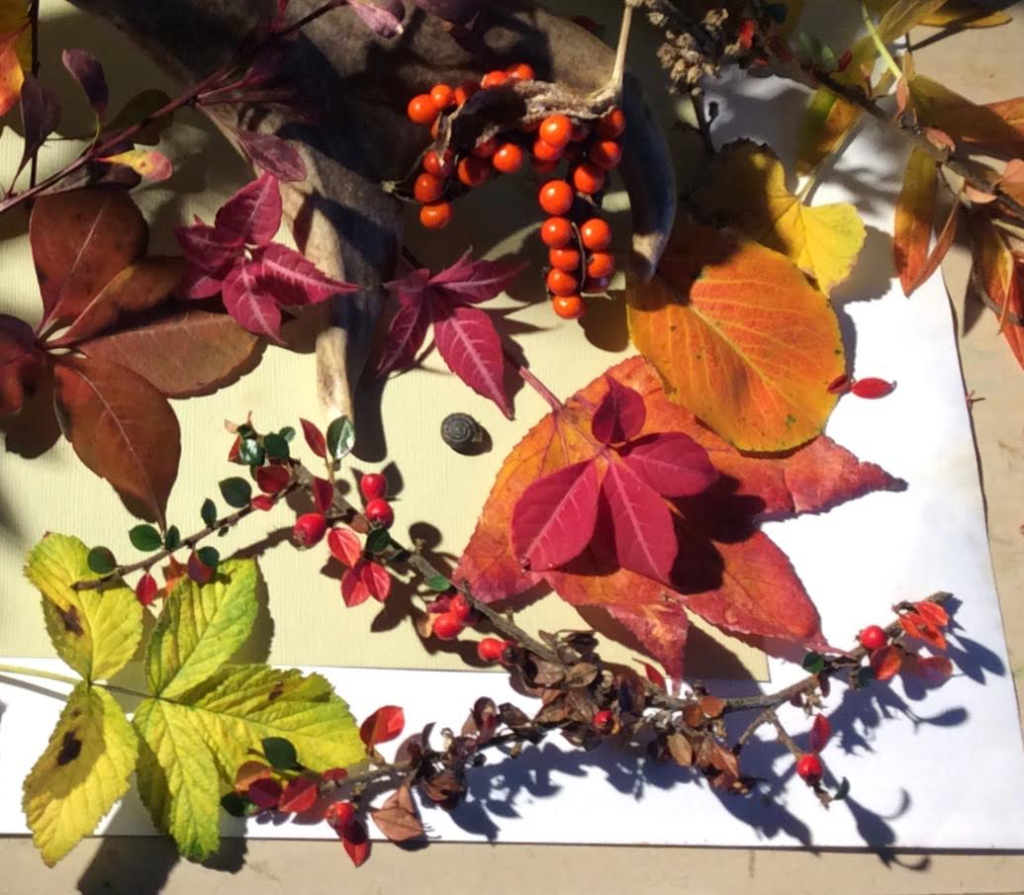
tawny shades of fallen leaves,
and the tight curl of a snail shell.
Or traffic crawling bumper to bumper – too much
Or discarded tatters of plastic – too many!
Stretch; bare your skin – what do you feel?
The warm caress of the sun,
the chilly nip of the breeze,
the prickle of grass,
the textured bark of a tree
Or the rasp of exhaust in your throat – too much!
Or the scratch of particulates in your eyes – too many!
Sniff; breathe deeply – what do you smell?
The aroma of fresh coffee,
and the zest of orange juice,
the fragrance of the last rose,
and the warmth of ground spices.
Or the reek of petrol – too much!
Or the sting of pesticides – too many!
Savour; let it linger on your tongue – what do you taste?
The fresh acidity of an apple,
and the earthy satisfaction of bread,
the squashy sweetness of banana,
and the melting delight of chocolate.
Or the fake sweetness of green wash – too much!
Or the gall of climate injustice- too many !
Merciful God,
bring us to our senses.
Help us rebuild a world
of right experiences.
Amen.

Action 88: you can also re-purpose prunings to create a dead hedge. A dead hedge is of benefit to small birds and animals as a place of shelter and safety. Use some strong sticks pushed into the soil vertically to hold the hedge in place: place them in two rows as wide as your hedge will be. Fill the space in between with branches, prunings etc (bend and fold long flimsy cuttings) laying them horizontally. Bend some of these to hold others in place. You can include sticks with leaves on. Over time the mass of dead plants will rot down, but in the interim they will provide a habitat for small creatures, beetles, insects etc.


Action 87: Re-use garden prunings. If you are cutting back long bendy shoots, such as from wisteria or vines, bend them into U-shapes and use them to create basket shaped supports for next years floppy plants or the ones that will spill over onto the path.


Action 86 : Plan now for a less materialistic Christmas. Shortages in the shops might be a blessing in disguise encouraging us to plan for a celebration focused on people rather than lots of food and presents. Think about what you most enjoy about celebrating Christmas.

17th October 2021, proper 24
Isaiah 53:4-12 https://bible.oremus.org/?ql=501459221
Psalm 91:9-16 https://bible.oremus.org/?ql=501459312
Hebrews 5:1-10 https://bible.oremus.org/?ql=501459357
Mark 10:35-45 https://bible.oremus.org/?ql=501459405
Reflection
At the heart of today’s readings are two themes: suffering and service.
‘He bore our infirmities, our diseases and was wounded because of our transgressions’, to paraphrase Isaiah. This passage from Isaiah, reveals the prophet’s understanding of how society can behave, how it deals with the little people when the rich and wicked hold sway.
Today we can look around the world and see a myriad of little people, of plants and creatures that bear the infirmities, diseases and wounds caused by our transgressions. Our failure to care for the planet, our failure to curb carbon emissions, our over-consumption of finite resources, our inability to share the earth’s bounty, our failure to protect habitats and ecosystems, our greed and hardness of heart that leads to conflict. Suffering is invariably caused by human failings, human greed, human ignorance and disinterest – now, back then in the days of the Jewish Exile, back in first century Palestine and in all the years since.
Yet Isaiah’s insight also reveals God’s commitment to the world, the suffering and injustice that God is willing to endure to bring about healing and redemption. No matter how much suffering human sinfulness causes, God does not give up on us but bears with us. This is a prophecy that is relived in the life of Jesus – and thereafter in the lives of his followers: for Jesus, the living word, is there alongside each person in their pain and suffering. He is with us in our darkest places and it is he who can bring us hope and consolation.
“The righteous one, my servant, shall make many righteous” says the passage from Isaiah. And the passage from today’s gospel concludes “For the Son of Man came not to be served but to serve, and to give his life a ransom for many”. To serve is the vocation of the Son of Man. The word in Greek is ‘diakaneo’ and it is a word used frequently in the gospels. When Jesus heals Peter’s mother in law, she gets up and ‘diakaneo’ or serves them, or as I have always imagined, cooks them a meal for I am sure that at the end of a sabbath spent healing and teaching, they were both hungry.
It is what the angels do for Jesus when the devil has finished tempting him in the wilderness, which again I am sure involved food and drink as well perhaps attending to his tired feet.
In the parable of the sheep and goats, in Matthew’s gospel, it is what the goats failed to do, when they do not see Jesus in the one who was hungry and thirsty, who was the stranger, who was naked, sick or in prison.
It is what the women disciples did for Jesus when they provided financial support. It is what Martha complained about when left to do it by herself while Mary just sat and listened.
To serve – to diakaneo – is putting oneself at the disposal of another, to minister to their needs. This suggests that to serve is also about being aware and sensitive to what people might be in need of – something Jesus was good at. He was able to intuit what someone needed and sometimes knowing what they needed, even though they themselves didn’t know: forgiving the sins of the paralysed man, knowing that Zacchaeus needed to be wanted, or persuading Martha that there were times when preparing a meal wasn’t the most important thing.
What serving is not, is lording it over others, nor is it pulling rank, nor basking in glory. That is the way of tyrants – and sadly, it is nowadays often the way of politicians (not all) or of rich business leaders (again not all). Just for a moment imagine what the world would be like if all politicians and all business leaders saw their role as one of service, serving not just their nearest and dearest, but serving all. And what if we all equally saw our role as one of service too, serving both are fellow human beings and our fellow creatures, from earth worms to orang-utans. Would this not begin to look like heaven in earth? A world where each is served by and serves the needs of, others.
Jesus is realistic with his followers. He sees the mismatch between those who wish to lord it over others and those who wish to serve the common good. He knows the likelihood of pain and suffering to which the latter will be subject. For most of us who would wish to see service as the basis of life, such suffering will be the stress and anguished felt when we look at what is happening around the world: people stranded in the wrong side of the Afghan border, people caught in the cross fire in Lebanon, people stabbed to death for being of the wrong colour or creed, the continued investment in fossil fuels instead of renewables, people facing hunger for lack of money in a world of billionaires. Cor others the pain and suffering will be physical and sometimes fatal.
When we are baptised, we are baptised into the death of Jesus; in baptism we are buried with him; and in baptism we are raised to newness of life (Romans 6:3,4). In baptism we take on the calling both to serve and to suffer, but we do so knowing that in all we do we share with Jesus, and that we are ceaselessly loved by God. In the words of today’s psalm, slightly adjusted,
“They are bound to me in love,
therefore will I deliver them;
I will protect them, because they know my Name.
They shall call upon me, and I will answer them;
I am with them in trouble;
I will rescue them and bring them to honour.”

Action 85: Take part in the Global Day of Action on Saturday 6th November (midway through COP26). Locations of marches in different UK cities can be found here:-
You can also opt to join in with one of the many charities that will be taking part – eg The Woodland Trust, CAFOD, TearFund, the RSPB etc – who will organise meeting points, banners and placards etc.
Taking part is a way of voting with our feet and showing the leaders how important the wellbeing of the climate and planet is.
15th October 2021
Biodiversity and regenerative agriculture

Last week we looked at the tendency for agriculture to a) expand into virgin territory at the expense of flora and fauna biodiversity, and b) to be concentrated around a narrow number of crops and animal species. Agricultural practices are the source of further challenges.
In a drive to be more productive and more economic, many agricultural businesses have gone for the large scale – large farms, large fields, large machinery – creating landscapes that devoid of trees and hedges and instead are vast tracts of identical crops. Monoculture does not support biodiversity. Fields of rape may provide near endless quantities of flowers that are attractive to pollinators, but once they have flowered there is a dearth of food sources for those pollinators. With their demise, comes the demise of other birds and animals that rely on them as part of the food chain.
Monoculture also provides a good environment for the spread of plant diseases and the proliferation of weeds – the latter might be suppressed by a diversity of plants, some overshadowing the weeds, or by insects and larvae that might feed on them. The net result is that to sustain monoculture, crops must be sprayed with pesticides and herbicides, neither of which is good for biodiversity. For the soil this can be a particular problem. Soils rely on insects, beetles, and many micro-organisms to keep the soil rich with nutrients and to maintain a good soil structure. Soils that become damaged or depleted of nutrients become reliant on the addition of chemical fertilisers to maintain their productivity. However these can be damaging to biodiversity, especially when nitrates are washed through the soil into local water ways where they form algae blooms and damage both flora and fauna.
Whilst agriculture can be part of the biodiversity problem, it can also be part of the solution.
Regenerative Agriculture
Whilst the term ‘regenerative agriculture’ was first used in the early 1980s as concept that aimed to make agriculture not just sustainable, but positively beneficial for the environment. However it has only more recently gained popularity.
There is as yet to fixed definition of what regenerative agriculture is, nor how it is to be practiced. Terra Genesis International working in Thailand has determined its principles as:-
What I think is interesting here is the inclusion of the people involved in farming and their communities.
The UK’s Regenerative Food and Farming (https://regenerativefoodandfarming.co.uk/) recommends the following farming practices:-

Such agricultural practices not only benefits biodiversity, they also improved get capacity of the soil to sequester carbon, reduce the carbon emissions of the farming industry, assist with flood prevention and reduce the water needed by farms.
If you are interested in regeneratively farmed produce, google to see what’s available locally. On a larger scale companies such as Ben and Jerry, Nestle and McDonalds are seeking to source their ingredients from regenerative farmers.

Action 84 : Make 2022 a flight-free year. Inspired by Sweden’s ‘Flygfritt‘, Flight Free’s mission is “to inform people of the climate impact of aviation and inspire them to travel by other means. We ask people to take a year off flying to reduce emissions and shift the norm away from aviation.”