Fairtrade helps ensure fair working conditions for workers which for many consumers is an issue of social justice that means they are willing to pay a higher price for the product. Ensuring workers have a fair wage and good living conditions is also about the sustainable use of resources. People are resources that we need to value and to treat with respect.
Food systems here in the UK and in Europe, are highly dependant on the use of part time cheap labour. In these situations workers are not paid fair wages nor are they provided with continuous year round work, holiday and sick pay etc.
Producers of products such as cocoa, coffee and bananas also face problems due to fluctuations in prices triggered by speculators. Fairtrade can help, by guaranteeing a minimum price but also be developing direct, long term relationships between producers and buyers.
“Many initiatives in the cocoa, tea, banana and flower sectors aim to improve the social, environmental and economic performance of producers. They typically focus directly on achieving change at producer and worker level ….[However] trading relationships can have an important influence on a producer’s economic viability and capacity to invest in sustainable practices. In the banana sector in Ecuador, for example, more secure contracted volumes enable banana plantations to provide more stable year-round employment to their workers. Without these guarantees plantations are often confronted with cancellations in buying orders, making it too risky to provide job security to workers.” (1)
Sustainable food systems need to protect producers and workers, and this does ultimately protect consumers by better ensuring a steady supply of food.
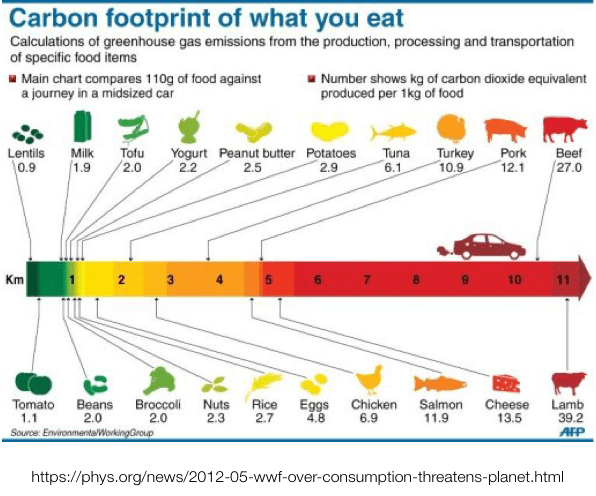
Particularly relating to food, you might choose to reduce – or cut out completely – animal products from your diet. You might choose to only what is in season to avoid importing food over long distances. https://greentau.org/2021/08/14/green-tau-issue-12/
You might support charities such as Practical Action that help poorer farmers change their practices to adapt to the new and more extreme climates – https://practicalaction.org/
3. Paying a fair price for the food we eat. You might buy direct from a farm or a group of farms, or via a local vegetable box scheme. You might support a local farmers’ market. You might buy from a local independent green grocer. Similarly you might buy milk etc from a milk round where the price reflects the cost to the farmer. For cheeses, look to buy from small scale producers via a local cheese shop. And again buying fair trade options for imported foods can help ensure a fair price for the producer. Alternatively look out for products – coffee beans and chocolate in particularly – that have been sourced directly from the grower. These are often available through local independent shops and cafés.
Another option would be to subscribe to the OddBox fruit and veg scheme which buys food stuffs that would otherwise go to waste because they are misshapen, because the supermarket doesn’t want the crop, or because the crop has been too large or too small for the supermarket buyer – https://www.oddbox.co.uk/
4. Buying from local producers and local retailers helps to improve local supply chains.
5. Again the best approach to improving global food security and ensuring there is enough food for everyone is to reduce – or cut out completely – animal products.


 The Green Tau