Counting on … day 103


7th July 2025

Making good use of ‘waste’ food. Food waste is a sizeable problem in terms of food that could be eaten by people who struggle to afford food, in terms of the ‘waste’ of water and other resources used in producing wasted food, and in the unnecessary contribution to greenhouse gas emissions.  

In our household situations we can avoid wasting food by not buying more than we need /can store; not cooking more than we will eat – portion control; reusing left over food such as making bread pudding with stale bread, making salads with left over potatoes; making jams and pickles with excess fruits and vegetables; making compost using teabags, outer leaves of cabbages etc; making vinegar with apple cores.

Vegan bread pudding – https://www.wandercooks.com/chester-squares-gur-cake/#recipe

Jam, chutney and pickles – https://greentau.org/2021/08/23/preserving-fruit-and-vegetables/

Cider vinegar – https://greentau.org/2021/10/07/count-down-75/

https://www.nationaltrust.org.uk/discover/gardening-tips/how-to-make-your-own-compost

Counting on … day 82

11th June 2025

Biogas is a mixture of methane, CO2 and other gases produced from plant and/or animal material via anaerobic digestion. It comprises between 45-75% methane by volume. Biogas can be used for cooking, heating and for electricity in biogas adapted power stations. Biogas can not as a direct substitute for natural gas. Biomethane on the other hand is nearly 100% methane and can be used to replace natural gas without changing the means of transmission or the end-user’s equipment.(1)

Biomethane is produced by upgrading biogas (ie removing the other gases by various means). Carbon dioxide produced as a byproduct can be used for industrial processes or combined with hydrogen to create more methane. At present biomethane represents about 0.1% of natural gas demand. (1)

The biomaterial used to produce both biogas and biomethane comes from the same sources as for SAF – ie waste material from farms and forestry work, solid municipal/ household waste (including food waste and packaging), recycled cooking fat ( I think MacDonald’s trucks advertise this), animal fat, virgin corn/soy/rapeseed/palm oil, sugar cane and beet,  aide and other grains, grasses such as miscanthus, algae etc – and therefore has the same issues around the sufficiency of supply. 

Should agricultural land be used to grow crops for provide biofuels or to provide food?

National Grid notes that “UK households, hospitality and food service, food manufacture, retail and wholesale sectors produce around 10 million tonnes of food waste per year. If this was all treated through anaerobic digestion, the industry could generate 11 TWh of biogas – enough to heat 830,000 homes – and cut emissions by 8.8 million tonnes of CO2 equivalent, or 2% of the UK’s annual emissions.” (2) On the other hand, as 70% of that food waste was edible, would it have been better used feeding people? Equally given that it represents £22billion (3) would it not be better if the waste been avoided in the first place and the money used for home insulation or public transport?

  1. https://www.iea.org/reports/outlook-for-biogas-and-biomethane-prospects-for-organic-growth/an-introduction-to-biogas-and-biomethane

(2) https://www.nationalgrid.com/stories/energy-explained/what-is-biogas

(3) https://www.wrap.ngo/taking-action/food-drink/actions/action-on-food-waste

Counting on … day 27

7th February 2025

One way of reducing food waste is to preserve excess food. At the end of the week if I have vegetables and fruit left over from the week’s vegetable box, I will often make it into sauerkraut. In the summer if there is a glut of fruit in the garden, I will turn into jams and chutneys or bottle it to use in the winter. This past autumn I experimented with slicing and drying apples and now they are a lovely semi sweet snack. When UK peppers and tomatoes are at a peak in the shops, I will buy and bottle or pickle them for the winter when they will add colour and variety to the range of winter vegetables. 

The winter months conversely are a good time to take advantage of seasonal citrus fruits, especially Seville oranges, and use them to make Marmalade.

Counting on … day 26

6th February 2025

70% (6.6 million tonnes) of food waste comes from our own kitchens, of which most (6.4 million tonnes) was edible. (1) This is clearly an issue we can all address as individuals.

Here are some tips compiled four years ago when annual domestic food waste was only 4.5 million tonnes! https://greentau.org/2021/08/09/eco-tips-4/

One of the most commonly discarded food items is bread – so here is a different way of using up bread that might otherwise be thrown away, Chester Cake. It is a variation of bread pudding without the eggs, and baked as a pie. This recipe comes from https://www.wandercooks.com/chester-squares-gur-cake/

  1. https://lordslibrary.parliament.uk/food-waste-in-the-uk/

Counting on … day 20

29th January 2025

Food waste occurs at all stages between field and the fork. 

At the field end, waste may occur because the crop has not grown to a saleable quality which could because of drought or excess water, frosts or excess heat, infestation by bugs or diseases. Food waste may occur  because of delays in harvesting (due to adverse weather) or a lack of workers or equipment. 

The increasing occurrence of adverse weather events caused by the climate crisis is going to be an issue for decades to come. Even if we can curtail carbon emissions, it will be  many decades before global temperatures will reduce to a level such that weather patterns will revert to what we would consider normal.

As regards harvesting, much of the work is done by people on short term insecure contracts earning minimal  wages. This is not good for them nor is it good for our food system. Maybe as consumers we should be willing to pay a fairer price for our food. But equally it maybe others in the supply chain need to be taking a smaller profit. The following Guardian article is interesting. But it is not just a UK issue. Similar problems happen in Spain where ‘cheap’  seasonal labour  is brought in from North Africa – https://www.ethicalconsumer.org/ethicalcampaigns/agricultural-workers-rights-almeria

“Employment tribunal hearings are due to begin this week to decide their claims for unlawful ­deduction of wages, unfair dismissal, discrimination and harassment against Haygrove, a business which runs five farms in the UK growing ­strawberries, cherries and other berries.

“It employs more than 1,000 ­people to pick fruit and uses the seasonal worker scheme, a visa programme introduced after Brexit when fruit was left rotting in the fields because there was no one to pick it. Haygrove disputes the claims.

“McAndrew said there was substantial evidence of “widespread exploitation” of people on the seasonal worker visa. Part of the reason is that growers are under extreme pressure from supermarkets to drive down prices, and seasonal workers are usually employed through third-party agencies.

“Research by the Landworkers’ Alliance into the fruit supply chain found that for a £2.30 punnet of strawberries, the farm received 50p, of which just 5p was profit, while workers received just 18p after deductions for tax, visa and accommodation.” (1)

(1) https://www.theguardian.com/global/2025/jan/26/protests-by-fruit-pickers-and-farmers-put-spotlight-on-price-of-cheap-food-in-uk?CMP=Share_iOSApp_Other

Counting on … day 19

28th January 2025

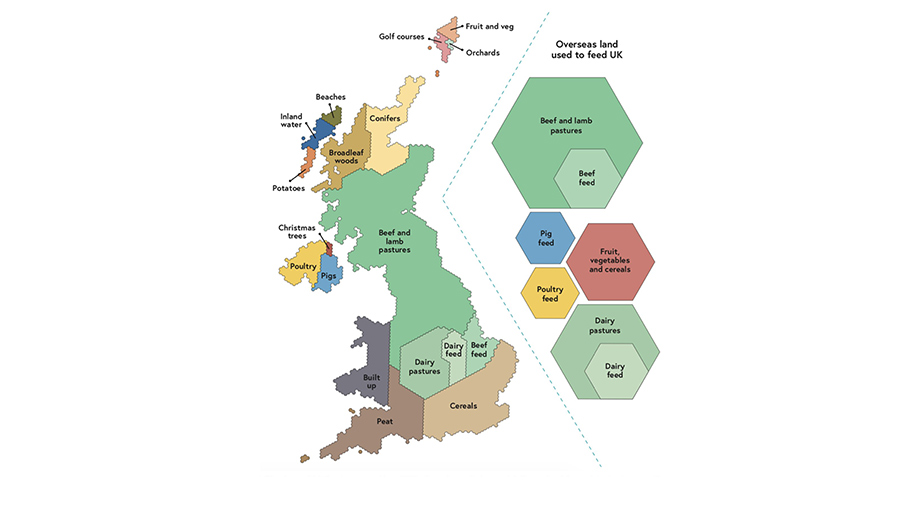
When we are thinking of food waste in terms of ensuring we use the Earth’s resources in a sustainable way, we might also want to consider how we use the limited amount of land we all share. Globally 77%of farm land is used to raise animals for meat and dairy products, yet this supplies only 18% of the world’s (human population) calories and 37% of their protein.

Here in the UK more than half our land is used to rear livestock for meat and dairy products. 

National Food Strategy landuse map

Counting on … day 18

27th January 2025

Last September the UN Climate Change News reported that “In 2022, a staggering 1.05 billion tons of food were wasted, while 783 million people went hungry and a third of the global population faced food insecurity…Food loss and waste account for 8-10% of annual global greenhouse gas emissions – nearly five times the total emissions from the aviation sector – and contribute to substantial biodiversity loss, using up almost a third of the world’s agricultural land.” (1) 

Reducing food waste is something we can all do that will help address the climate and biodiversity crises and improve global food security. 

Useful advice can be found here – https://www.ethicalconsumer.org/food-drink/climate-action-10-steps-reduce-food-waste

Counting on … day 203

30th October 2024

Whilst the Ethical Consumer’s report ‘Closing the Gap 2024’ shows that meat and dairy consumption is declining in the UK, food waste is not. 

Typically food loss is food that is grown and processed but not eaten – ie food that does not even pass from the farm or factory to the  retailer or consumer. Food waste is food that has reached the retailer or consumer but is them not eaten. This could be food that has not been sold by the retailer because it has become damaged or because more has been ordered than has been bought. 30% of food waste is attributable to the retailers, but 70% of food waste derives from households. 

This can include those parts of the food we typically do not eat such as banana and onion skins, apple cores etc but the majority is food we buy and chose not eat. The most frequently wasted foods include bread, milk, potatoes and chicken. (1) We can reduce this waste by not buying nor cooking more than we will eat, eating up leftovers, and by storing food more carefully. 

For  tips about reducing food waste – 

  1. https://www.wrap.ngo/resources/report/uk-household-food-waste-tracking-survey-2022-behaviours-attitudes-and-awareness

For more information on what is food loss and food waste – https://www.sciencedirect.com/science/article/pii/S2352550920314202

Counting on … day 99

3rd May 2024

Food waste is an issue in homes too. We aim to minimise such waste by not buying more perishable food items than we need. Getting used to how much a person eats, and how much makes a serving, helps. As does a shopping list. Additionally as most of our meals are cooked from scratch it is is easy to prepare only as much food as is going to be eaten. If there are leftovers they are refrigerated and become the next day’s lunch. 

Tea bags, coffee grounds, the outer leaves of a cabbage or onion skins all go in the compost heap. Being vegan there are no bones or skins to be disposed. Root vegetables are washed and used, peel on. Apple cores become cider vinegar, and lemon rinds become preserved lemon. Excess amounts of root and cabbage-like vegetables become sauerkraut, and surplus fruit from the garden is bottled, or made into jam or chutney. During the summer the excessive growth of nasturtium leaves and rocket are made into pesto and bottled for use in the winter. 

And it is surprising how many different fruits and vegetables you can use to make a delicious soup!

Further reading – https://wrap.org.uk/resources/report/household-food-and-drink-waste-united-kingdom-2021-22

https://www.lovefoodhatewaste.com

Counting on … day 98

2nd May 2024

I would like to say that we grow all our own fruit and vegetables – but the snails have a different view on this! We get the bulk of our fruit and vegetables from OddBox which specialises in filling its boxes with foods that would otherwise go to waste – either because of a glut in the fields or a downturn in demand at the supermarket, or items being too big/ too small/ too wonky. The produce comes from the UK, Europe and other parts of the globe (but only if it has come by land or sea – not air).

OddBox reports “Every box makes a difference – by rescuing a Medium Fruit & Veg box every week for three months, you’d save a whopping 85kg of fruit and veg. Roughly 200 meals’ worth.”

This is topped up with some from the garden – salad leaves, nettles and chard, and summer fruits and berries – and from a local deli cum greengrocer.

Ideally all the produce we buy would be organic which we could do by swooping an organic fruit and veg box – but on balance we have gone for the reducing food waste option. Food waste accounts for 10% of greenhouse gas emissions. Food wasted is also water wasted and a poor utilisation of arable land. 

https://www.oddbox.co.uk/why

Further reading on the issues around food waste – https://www.sofea.uk.com/blog/the-environmental-impact-of-food-waste/