Recently I was listening to an episode from Farming Today about a biodiversity restoration project in Norfolk which joined together the work of multiple farmers to create a long nature corridor. The work sounded amazing but what really caught my attention was how, in participating and seeing the restoration of natural ecosystems with all their biodiversity, it was helping with the farmers own mental well being. Farming is not an easy profession especially when faced with droughts and floods where crops and livestock re diminished, as well facing the financial crises of rising costs for fuel and fertilisers. It is can also, I think, be quite a lonely occupation.
“According to the Natural History Museum’s Biodiversity Intactness Index, the UK ranks 189th out of 240 countries and territories for how intact its nature and biodiversity remain. Just 53% of the UK’s original nature is left intact – far below the Index’s safe limit of 90% and the global average of 79%. Each of the four UK nations sits near the bottom of this ranking, with England at 47%, Northern Ireland at 50%, Wales at 51%, and Scotland at 56%.” (1)
Worryingly the government’s State of Nature Report suggests this decline is still ongoing: “…more indicators are deteriorating or showing no change than improving, over both the long and short term.” And: “No indicators which are deteriorating in the long term, are showing improvement in the short term.” (2)
19% Across the UK species studied have declined on average by 19% since 1970.
16% Nearly one in six species are threatened with extinction from Great Britain
151 of 10,008 species assessed have already become extinct since 1500 (3)
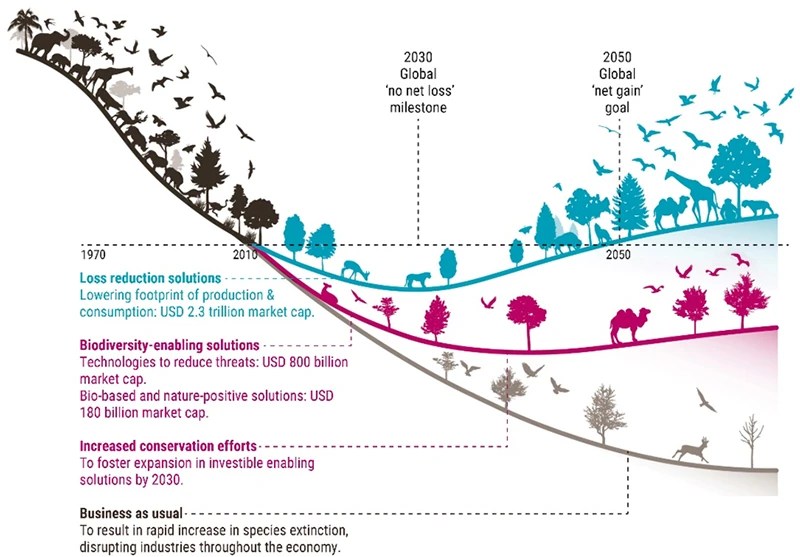
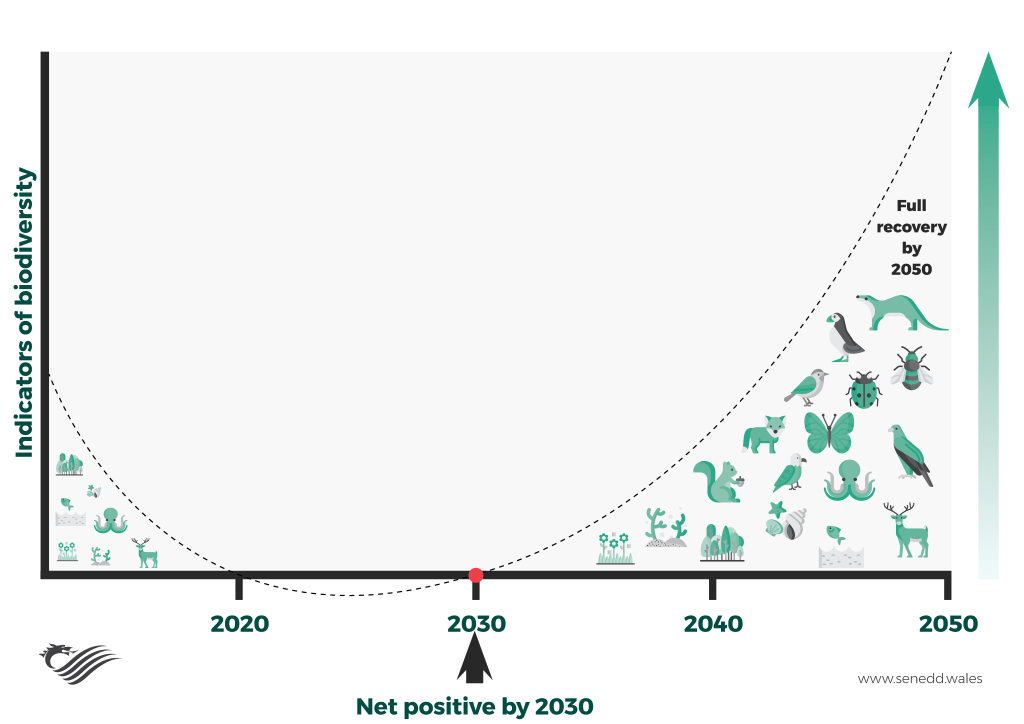
Scientists warn that if we don’t reverse this decline imminently – the Kunming Montreal framework target is protect 30% 2030 – it will become near impossible to reverse.
Conversely if we don’t manage to turn the tide by 2030, the prospects for improving biodiversity are good.
To make a bit of a leap, I’m going to interpret increasing biodiversity as meaning restoring nature. But this too may not be clear cut. To restore nature could mean:
“In simple terms, restoration means bringing more nature and biodiversity back across different ecosystems, from forests, peatlands and agricultural land, to freshwater, marine and urban ecosystems.
Restoration is a process of assisting the recovery of an ecosystem that has been degraded, damaged, or destroyed. This could be through rewetting wetlands and peatlands, improving degraded soil and agricultural land by adding natural features such as hedgerows and trees, recreating lost natural forests, removing invasive species, planting native vegetation, removing obsolete barriers from rivers, increasing tree coverage in cities, and much more.” (4)
It could mean restoring landscapes to their wild, pre-human state:-
“At Rewilding Britain, we define rewilding as the large-scale restoration of ecosystems to the point where nature is allowed to take care of itself. Rewilding seeks to reinstate natural processes and, where appropriate, missing species – allowing them to shape the landscape and the habitats within. It’s focused firmly on the future although we can learn from the past.
“Rewilding encourages a balance between people and the rest of nature so that we thrive together. It can provide opportunities for communities to diversify and create nature-based economies; for living systems to provide the ecological functions on which we all depend; and for people to reconnect with wild nature.
“Our vision is at least 5% of Britain rewilding, with 25% returned to broader mosaics of nature-friendly land and marine uses — including farming, forestry and fishing. We see this expansion reversing biodiversity loss and enabling nature to bounce back, helping us adapt to climate change as our complex ecosystems find their own answers.” (5)
Or it could be a pragmatic approach:-
Restore nature now– the Government must honour its commitment to manage 30% of land for nature by 2030. That means designating more space for nature and paying our farmers properly to help nature thrive.
Defend nature and wildlife – stop weakening the laws that protect them. Introduce a strong Water Reform Bill to clean up our rivers, streams and seas, and make polluters pay.
Build places to be proud of – demand that neighbourhoods are rich in nature and end unfair access to green space, starting by publishing the Government’s long-promised action plan by the end of the year. (6)
However what I want to suggest is that however we set about restoring nature and reversing biodiversity loss, we cannot address this issue in isolation. If we consider why biodiversity has been in such sharp decline, why it is that we have lost to so much of our natural environments, we will see that these losses are linked to:-
Expansion of the built environment where buildings, roads and other transport links, mines and quarries, have encroached on land where nature previously existed. Many species are in decline because their habitats are disappearing.
Pollution from smoke (causing acid rain), from vehicles exhaust pipes, from industrial processes, and the run off from farms of slurry, fertilisers etc.
From intensive farming where large fields have resulted in the loss of trees and hedgerows that once provided essential habitats for many species, and the proliferation of monocultures which do not support a diversity of other life forms.
Replacing mixed broadleaf woodlands with monocultures of coniferous plantations.
Overgrazing of uplands and the replacement of meadows with grass monocultures suited purely for grazing cattle – again reducing habitats for other species.
Increasing use of pesticides and herbicides that do what it says in the tin – kills insects and plants.
Intensive cultivation of the soil destroying its natural structures and resident populations of insects, grubs, fungi and micro-organisms – and requiring their substitution with fertilisers to maintain the fertility of the soil.
Climate change which is human-induced and which has depleted native species who have been unable to adapt or to adapt fast enough to the increasing heat/ floods/ droughts and wildfires.
Unless we can address these issues to, no amount of planting native trees, or sowing wildflower meadows, or reintroducing lost species, is going to work. Restoring nature and improving biodiversity has to involve us in reviewing and reforming our whole way of living.
For example, we need to review the way we farm and therefore what we eat. Our current agricultural system is designed to produce increasing amounts of meat and dairy, with the parallel need to produce – or import – more animal feed, which necessitates the intensive farming methods that are widespread. If we wish to reduce that scale and intensity of livestock production we need to eat less meat and dairy products and instead adopt diets that are rich in tasty, diverse UK grown fruits, vegetables, nuts and beans.
We may want to look at how land is farmed. Would it be better for nature – and for us as communities – if we had more smaller farm units, employing more people and less heavy equipment? Would it be better to have more hedgerows, more ponds and pockets of woodland? Would it be better to have more publicly accessible green spaces?
Yes there would be a cost – food prices would go up – and that might mean reducing the lower rates of taxation, but that cost would surely be less than the costs of the continued loss of biodiversity and the resulting negative impact on climate change, on floods and droughts, on the fertility of the soil, on clean air and clean waterways, and of the loss of essential pollinators leading to depleted harvests.
These are all serious issues that we need to consider as a society and which we need to address collectively.