Counting on … day 100

2nd July 2025

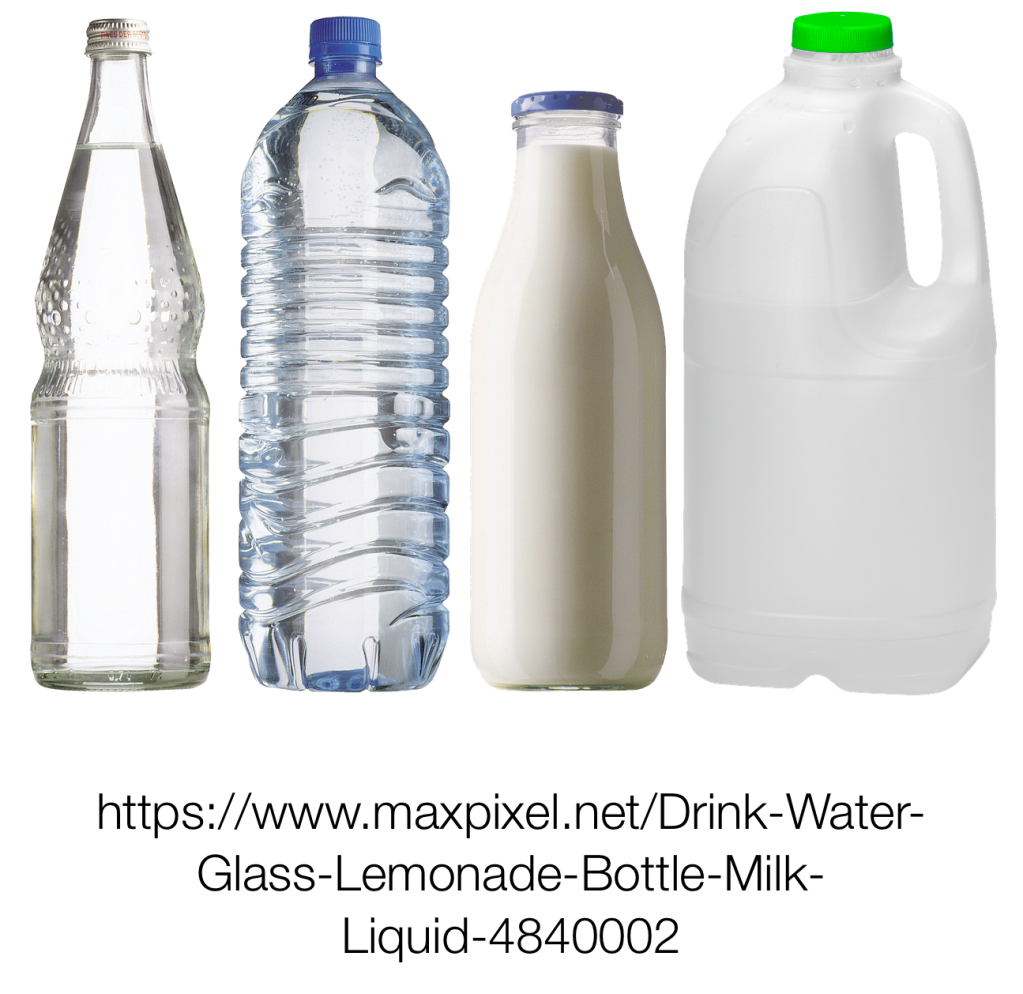
Plastic recycling is now much more common place, with local authorities making collections of certain frequently used items such as plastic bottles, margerine and other food tubs, shampoo bottles etc. Soft plastics can be recycled if they are kept separate from more rigid plastics – and some supermarkets have collection points for these. However there is, apparently, no guarantee that plastics going into a recycling bin will be recycled (sometimes it is cheaper and easier to incinerate the waste which causes air pollution). Nor are there many effective closed loop recycling programmes – each a system where a plastic bottle, for example, is recycled and returns as a ready to use plastic bottle. It is often cheaper to make a plastic bottle from virgin oil based polymers than from recycled plastic. 

These problems are a further incentive for us to reduce the plastic we use so rescuing the problem at source. If we don’t buy things that come in  plastic bottles, plastic tubs and tubes, in plastic wrappers etc then we reduce the amount of plastic that is in circulation before it becomes a problem. 

Further reading –

Counting on … day 100

2nd July 2025

Plastic recycling is now much more common place, with local authorities making collections of certain frequently used items such as plastic bottles, margerine and other food tubs, shampoo bottles etc. Soft plastics can be recycled if they are kept separate from more rigid plastics – and some supermarkets have collection points for these. However there is, apparently, no guarantee that plastics going into a recycling bin will be recycled (sometimes it is cheaper and easier to incinerate the waste which causes air pollution). Nor are there many effective closed loop recycling programmes – each a system where a plastic bottle, for example, is recycled and returns as a ready to use plastic bottle. It is often cheaper to make a plastic bottle from virgin oil based polymers than from recycled plastic. 

These problems are a further incentive for us to reduce the plastic we use so rescuing the problem at source. If we don’t buy things that come in  plastic bottles, plastic tubs and tubes, in plastic wrappers etc then we reduce the amount of plastic that is in circulation before it becomes a problem. 

Further reading –

Counting on … day 97

1st May 2024

As well as seeking a sustainable supplier for beans and pulses, we have also sought out sustainably motivated suppliers for other food stuffs. 

Our flour comes from Priors Flour and is made from locally grown organic grains which are milled in a windmill! Its small scale business model maintains good human relations – a person who answers questions, and a company which can shut down to allow staff a holiday – and preserves an old but still highly functional building. And the flour is full of good feel and flavour. 

 Our oats – for porridge and oatcakes – comes from Pimhill which grows, mill and sells organic oats, and which come compactly packed in paper packaging. (Waste and plastic free is another feature we support). 

Counting on … day 1.224

27th November 2023

As responsible consumers, we may want to think not just about what we are buying but about the packaging too. Most packaging in single use – the plastic container, the cardboard box, the plastic wrap, the paper cup. Sometimes it is essential if we are to be able to take the product home, but more often it is a decorative feature that makes the product more attractive. And giving pleasure is not a bad thing. But maybe there are times when we should be saying ‘no thank you’ when something has an excess  of packaging. Or times when we should be writing to the manufacturer asking for less packaging or at least packaging that can – and will be – recycled. Or times when we should look for a refill option using reusable packaging. 

I often feel it is a pity that cardboard boxes can’t be reused more often before they are recycled: they are often so strong and sturdy and there must be a a carbon footprint involved in recycling them. 

Counting on …. day 1.140

15th June 2023

Refill stores offer more than just refills of detergents. At the Source I regularly take jars and bottles to fill up with peanut butter, tahini, maple syrup, soy sauce, and olive oil. (I’m still hoping that this will extend to yeast extract!) And as previously mentioned, I can now buy coffee beans from a refill point at the local Artisan café.

Refilling reduces the cost – financial and ecological – of packaging. It is interesting to reflect in why we need packaging.

Refuse or avoid excess packaging. Producing things we don’t need is clearly a waste of resources. 

Saying no to the plastic bag, or looking for the least packaged items is a good starting point. If you feel a product has too much packaging or has non-recyclable packaging you could post the problematic packaging back to the manufacturer with a letter of explanation – it might nudge them to respond. For a lot of food items you can shop at the increasing number of refill shops where you can take in your own containers or use paper bags or make use of a milk delivery service. Milk and More for example delivers not just dairy milk in refill bottles but also oat milk, laundry and washing liquids, fruit juices etc.

For more information- https://greentau.org/2022/01/24/the-green-tau-issue-31/

Eco Tips: Packaging

Become savvy.
Give packaging a long, hard look.
Is it necessary? Is it recyclable? Is there an alternative? Can you take your own packaging – be that a shopping basket, cloth bag or box?

There is little  – if anything – that we consume that does not have a carbon footprint which is why when we seek to reduce our carbon footprint, we should be reviewing everything that we consume. And that includes the packaging. Whether what you buy comes in a plastic bag or a paper one, whether it comes in a plastic tray or a cardboard punnet, whether it comes in a plastic bottle or a glass jar, whether it is wrapped in tissue paper or bubble wrap – that packaging will have a carbon footprint. If the packaging is excessive or simply unnecessary,  then we increase our carbon footprint with no gain or merit. Our aim should be to avoid unnecessary packaging and where packing is needed, to seek out packing that can  – and will be – recycled. 

Packaging Scenarios 

1. Some packaging is necessary: imagine taking home a pint of milk with no packaging! Milk is usually sold in plastic or glass or tetra-pacs containers – and in fact all these can be recycled (although the loop for tetra-pacs is not yet fully closed), whilst glass milk bottles can be reused some 60 to 70 times before being recycled. 

2. But some packaging is not. Do apples need to come in plastic bags (even if they are a compostable plastic substitute)? Loose fruit and vegetables can simply be picked up, weighed and popped into you own shopping bag/ basket.  

3. For some items such as strawberries and raspberries,  the packing prevents the items becoming damaged and potentially inedible . The carbon footprint of the packing may outweigh the carbon footprint of wasted food. Punnets are often made of PET plastic which can be fully recycled into a new punnet but the film on top is not so readily recycled –  the Co op has just introduced a recycling scheme which accepts all scrunchable plastics. 

4. Some packaging is excessive! Biscuits that come in a plastic tray inside a plastic sleeve, inside a cardboard box …. Refusing to buy such items  is the best response – and can feeling very satisfying. You might instead make you own ‘up-market’ biscuits with zero packaging

5. Some packaging cannot be recycled such as polystyrene or, in the case of black plastic, is routinely incinerated/ sent to landfill because the recycling machinery finds black hard to detect! 

6. But if fruit and vegetables can be bought packaging free, what about other things such as pasta or dried fruit? Soap or washing up liquid? There is a growing number of refill stores where customers can buy loose goods, decanting what they want into either their own reusable jar or  container, or into a paper bag.