
Counting on … day 182

1st October 2024

Variations of SUDs and rain gardens can -and are being – used in schools to promote biodiversity (more and varied planting) and creating more exciting play areas to stimulate awareness of the environment. 

“We designed, built, and installed 564 SuDS Rain Planters in 72 of London’s schools most vulnerable to flooding. Through this project, we aimed to create sustainable, climate-resilient environments while educating children on the importance of nature in combatting global warming.” (1)

Playgrounds can be designed to be rain-playgrounds which use rain to add to the diversity of play opportunities. In Gothenburg they have purposely built rain-play grounds that have “been designed to be particularly fun when it’s wet. There are dips in the ground to make the puddles deeper and more satisfyingly splashy, and water gushes down channels from lilypad-shaped rain shelters into a sandpit where children can make pools, rivers and dams. “The kids love to go on their bicycles through the puddles, and my son likes to dig the sands, so some parts of the playground are really nice when it rains,”” (2)

(1) https://www.meristemdesign.co.uk/blog/rain-gardens-vs-suds-planters-differences
(2) https://www.theguardian.com/world/2021/may/06/wetter-the-better-gothenburgs-bold-plan-to-be-worlds-best-rainy-city?CMP=Share_iOSApp_Other

Counting on …. Day 1.062

4th March 2023

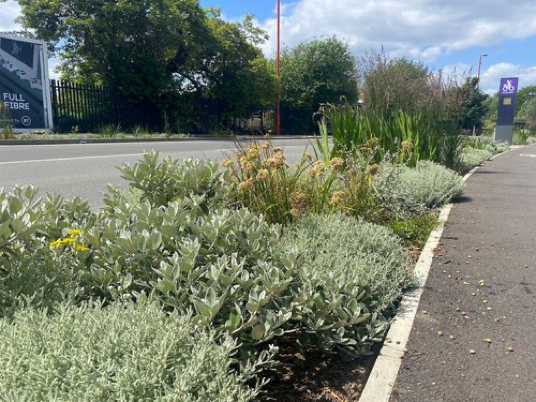
Streets can be places of plants, trees and biodiversity when they include planters and green verges, trees and parklets. Such streets are cooler in the summer and help absorb heavy rainfall. Meristem Design who design street features such as parklets and rain gardens, comments ‘In urban areas, we use many non-permeable materials (such as our roads). This means that water cannot drain naturally through the ground. In order to manage this, we have developed drainage systems that use pipes and sewers to redirect water. Sustainable drainage systems (SuDS) modify surface water flow at more natural rates, reducing the impact of urbanisation flooding by allowing vegetation and plants to absorb the majority of the rainwater. Too much surface rainwater in our cities often leads to a rising water table, causing our riverbanks to overflow and leads to devastating floods and damage to nearby properties.  With climate change creating wetter winters and more frequent rainfalls, the level of surface water available will only increase, making the traditional drainage methods less and less effective. Creating rain gardens across our cities and towns is one part of the solution to this problem:https://www.meristemdesign.co.uk/suds-planters-rain-gardens