Counting on … day 107

11th July 2025

Once the jam – or peanut butter/ marmite/ olives etc – has been eat, is that the end of the road for the empty jar? 

If nothing else it can be recycled. Glass is readily recycled time and time again – but there is an energy cost involved in melting and reforming the glass. Reusing the jar is a better outcome. In our kitchen jam jars are filled and emptied in a rotating cycle as jam/ marmalade/ peanut butter/ bottled fruit/ chutney/ pickles are eaten and refilled. Peanut butter comes from the refill shop; marmalade is made in January when Seville oranges are in the shops; jams, chutneys etc are made as fruits are picked in the garden or bought when gluts appear in the shops. 

In an ideal world jam jars like milk bottles would be collected and reused – a better use of a  ‘waste’ item. 

Counting on … day 13

17th January 2025

It is not just businesses that need to change, government also needs to use its power to change the system. “We need the Government to stop tinkering with measures that create tiny insignificant changes and tackle single use waste in the way they finally tackled smoking, helping to make our public spaces litter free as well as smoke free.  That requires putting in place systems which significantly disincentivise single-use and makes reuse a convenient and viable option for both businesses and consumers.” (1)

  1. https://www.refill.org.uk/about/what-is-reuse/

Counting on … day 12

16th January 2025

Changing how we consume, reuse and refill products to ensure a sustainable world requires more than just consumer action. It needs systemic change: “big brands and businesses need to be held responsible for cleaning up their act!  We need an end to corporates buying too much stock and then encouraging us to buy things we don’t need via sales and Black Friday. We need an end to corporates promoting more and more “seasons”, constantly trying to persuade us that things in our home are no longer in vogue, that our clothes and furnishings are out-of-fashion. It’s corporate behaviour that has created the single use system and we need to change that system – so it’s the corporates that need to change.” (1)

  1. https://www.refill.org.uk/about/what-is-reuse/

Counting on … day 11

15th January 2025

Reducing waste and the pressure we put on the Earth, we should also consider how many single use items we are discarding, including those that we put in the recycling bin. 

Plastic yogurt pots can be recycled but that still uses oil to produce the plastic (very little food packaging is made from recycled plastic) and energy to produce it. Could there be a more sustainable way of getting yogurt? One way might be for yogurt to be sold in reusable glass jars – as per milk. Another might be to make one’s own yogurt in reusable pots. 

The same is true of margerine tubs – might solid margerine (vegan butter) that comes wrapped in greaseproof paper be better?

And what about refilling and reusing wine bottles, beer bottles etc? We do it with milk and fruit juices. 

And what about avoiding single use coffee cups and plastic bottles of water? Tap water is free! And coffee tastes better in a proper cup.

Four different types of refull/ reuse consumer practice

Counting on … day 208

6th November 2024

As well as refillable water bottles and reusable cups, there are shops and providers (eg milk delivery services) where you can get packaging free refills for laundry and washing liquids, sugar, raisins and other groceries, and for edible liquids such as olive oil, wine and vinegar. You can even get refills of peanut butter! (I have yet to find a refill source for yeast extract). 

Our local refill shops include Apple and Bees, Culver and Nelson (both in East Sheen) and The Source in Richmond. Refill shops are often small independent outlets or small chains. It is worth checking on the web to see what is available in your area.

Counting on … day 131

22nd July 2024

Waste free

Waste implies something not wanted, not needed. Ideally we any to buy and use things waste free – eg apples that come loose and not in a plastic bag, a pen that doesn’t come in a cardboard box inside another plastic box. Such excess packaging unnecessarily uses materials and energy and may result in a residue that cannot even be recycled. 

Some packaging is necessary – butter without a wrapper would be hard to take home! – but even then there may be alternative solutions. There are an increasing number of refill shops for groceries, loose fruits and vegetables in supermarkets, and milk delivery services that often deliver more than just milk in refillable containers. 

At other times we may be able to make a conscious choices to not buy things in unnecessary and wasteful packaging.

Counting on … day 103

9th May 2024

One of the main ways we minimise waste is through using refill services. Our milk, including oat milk, is delivered to the door in refilled glass bottles. Apple and Bees – a local health food shop – has a refill service for laundry and washing up liquids – whilst from The Source store in Richmond we buy most of our groceries – sugar, dried fruit, grains, yeast flakes, salt and spices, as well as items such as nut butters (ground/ processed direct into your jar) olive oil, tahini and tamari – all into the refillable jars/ bottles and bags that we bring from home. And our local cafe and coffee roastery has a refill service for coffee beans. This means that there is very little that we need to buy that comes with additional packaging – typically items such as vegan butter and margerine, tin tomatoes, tofu, miso and yeast extract.  

Counting on … day 5

5th January 2024

Refills for groceries and other household items

Following on from the principle that reducing waste is good, the growing market for refill shopping enables us to avoid single use plastic bottles and other packaging. One of the oldest schemes must be the refillable milk bottle – and this has been making  a  comeback over recent years, boosted by Covid.

Many milk delivery services offer more than just milk in refillable bottles with, for example, fruits juices, yogurts, washing up liquid, shampoo and even Coca Cola available in returnable, refillable bottles. (https://www.milkandmore.co.uk/)

There are also high street shops offering refill options for goods as diverse as sultanas , peanut butter, tahini and basimati rice. Locally in south west London I use the Source Bulk Food store – https://thesourcebulkfoods.co.uk/ . Whilst for coffee beans, our local Artisan Café, has its own refill scheme. 

Refill schemes are also being trialed by various supermarkets, coordinated  by the Refill Coalition group – https://www.refillcoalition.com/

Counting on … Day 4

4th January 2024

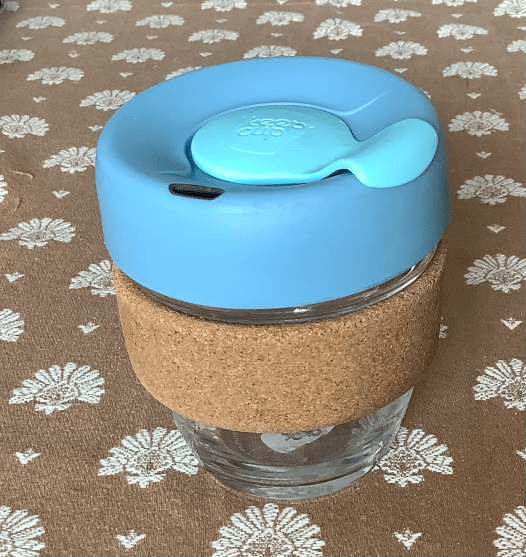
Keep a keep-cup handy

Reducing waste is good for a planet where we currently consume resources faster than they can be replaced. At current rates of consumption, the UK would need 2 and 1/2 planets’ worth of resources. (https://overshoot.footprintnetwork.org/how-many-earths-or-countries-do-we-need/

Using valuable paper and plastic to make a cup that will be in use for maybe 10 minutes whilst the beverage is drunk, and will then require further resources to recycle it, doesn’t make sense – especially as a few as 1 in 400 are actually recycled. Surely it is better to either sit in and have your coffee in a proper ceramic cup, or to use a portable, reusable cup.

“A single-use plastic cup has an impact ranging from 10g CO2e to 30g CO2e, this large range is due to differences in waste management and material selection.  …Over the lifetime of a reusable cup 10.3kg of CO2e could be saved compared to using single-use cups instead (assuming 500 uses / cups of coffee).” https://www.zerowastescotland.org.uk/resources/environmental-benefits-reusable-plastic

Carrying a keep-cup with you when out and about is an easy habit to form. You might equally develop the habit of carrying a reusable water bottle. You might opt for a refillable lunch box, spoon or fork combo if you like buying take out salads, cakes etc. The refill app lists places where you can readily get  refills for water bottles, sandwich boxes etc – https://www.refill.org.uk/

Further reading – https://www.wired.com/story/paper-cups-toxic/

https://www.theguardian.com/business/2023/oct/21/warnings-over-eco-coffee-cups-that-pose-risks-to-health-with-toxic-resin?CMP=Share_iOSApp_Other

Counting on … day 1.149

24th June 2023

Strawberries are giving way to Tay berries and raspberries – and by next week gooseberries too. To extend the enjoyment of eating them into the winter months, I bottle the fruit as well as making jam. 

This seems sensible too as I can reuse the jam jar a from previous years rather than putting used jars from the shops into the recycling bin – this must save on energy and glass. 

I have written about jam making and preserving previously –

https://greentau.org/tag/jam/