Counting on … day 61

7th March 2024

“The International Energy Agency Agency (IEA) is a Paris-based autonomous intergovernmental organisation, established in 1974, that provides policy recommendations, analysis and data on the global energy sector. The 31 member countries and 13[1] association countries of the IEA represent 75% of global energy demand… The core activity of the IEA is providing policy advice to its member states and Associated countries to support their energy security and advance their transition to clean energy.[3] Recently, it has focused in particular on supporting global efforts to accelerate clean energy transition, mitigate climate change, reach net zero emissions, and prevent global temperatures from rising above 1.5 °C.” (https://en.wikipedia.org/wiki/International_Energy_Agency)

It seems strange that the membership does not include any of the oil states from the Middle East, and very few African nations who surely have an equally vested interest in energy security. 

Back in 2021, the IEA declared that the exploitation and development of new oil and gas fields must stop if the world was to stay within safe limits of global heating and meet the goal of net zero emissions by 2050. It is thus worrying that so many countries and so many companies have since then continued to grant licences and develop new oil and gas fields. The UK’s current government is even proposing to increase the frequency with which it issues new licenses!

This message was reinforce in 2023 when, having noted the strong growth in clean energy provision, the IEA reported that whilst there was no longer a need to maintain current investment levels in fossil fuels, investment in oil and gas was in fact twice what would be necessary to achieve net zero emissions targets. (https://origin.iea.org/reports/world-energy-outlook-2023)

On the plus side, the IEA’s report of March this year on clean energy, notes: “The deployment of solar PV, wind power, nuclear power, electric cars, and heat pumps from 2019 to 2023 avoids around 2.2 billion tonnes (Gt) of emissions annually. Without them, the increase in CO2 emissions globally over the same period would have been more than three times larger.” (https://www.iea.org/reports/clean-energy-market-monitor-march-2024

Green Tau: issue 87

8th February 2024

What is the purpose of running a business?

A business is an enterprise that sells something it makes or sells a service it provides. It can be a one person operation or a multinational employing thousands. 

The business operation will incur costs and will remain viable provided it covers those costs. The business may need capital to get started or to expand it operation, and it may need loans to balance out peaks and troughs in its cash flow. Usually the business will over time earn more from what it sells than its costs and so makes a profit. Such profits are usually kept by the people owning the business. In some cases that might be some or all of the people who work in the business, in some cases it might be both employees and customers (eg a cooperative), and in some cases it might be external shareholders.

The success of a business is usually equated with its ability to make a profit. A successful business makes large profits, less successful businesses make smaller profits, and those that make no profit close down. 

But is profit the only way of measuring success? What about customer satisfaction? What about being a good employer? What about the business’s contribution to the stability and wellbeing of the local community? 

Thames Water makes high profits and has the worst for receiving complaints from customers. Might a more successful water company be one that best provides what customer need – clean, reliable drinking water?

Amazon is highly profitable company but many of its employees are both poorly paid and subject to stressful working conditions. Employees feel they are being constantly monitored and that even taking time to go to the toilet is counted against them. Might a  successful company be one that provides long term secure employment that gives job satisfaction, wages that support comfortable living standards, and credible pension? It could be us or our neighbour or our children who are looking for gainful employment.

Small rural communities – and increasingly deprived urban communities – are finding that they have no local bank, fresh food shops, dental surgery etc as the pressure to maintain profits pushes business to leave an area or to downsize. This is not good for the local community and can become a spiral where the more businesses leave, the more quickly the area becomes depressed and the more other businesses leave. With the businesses go local jobs. The heart of the community is quickly lost. Might a successful business be one that adds vitality to its community, is valued by local people and keeps jobs and money circulating with the community?

Actually in all three of these scenarios one might feel that the customer’s wishes were not be valued by the businesses. What has happened to the understanding that ‘the customer is always right’? How often have you been held on a phone call to have the oft repeated – but barely credible – ‘Your call is important to us’ automatically relayed to you? 

It does seem that the idea that the main purpose of a business is to make a profit does not benefit the consumer nor the community. Further what we are now increasingly seeing, is that the primacy of profit is also detrimental to the environment. 

In Herefordshire the large number of industrial scale chicken farms has led to high levels of effluent running into the River Wye, polluting it with phosphorus and killing its wildlife. 

In Spain strawberry growers have been abstracting so much water for their crops, that the Doñana national park – a renowned wetland area – is being depleted of water threatening the survival of many plants and creatures including flamingos, spoonbills and the glossy ibis. 

Globally the burning of fossil fuel products has triggered an escalating climate crisis threatening all forms of life, whilst the fossil fuel companies have continued to make recording breaking profits. 

One approach to this problem is to replace the traditional bottom line of ‘loss or profit’ with a ‘triple bottom line’ which measures the business’s impact over three area: economic, environmental and  social – or the 3Ps: people, planet and profit. It is however harder to find ways of measuring the loss and profit aspects of people and planet, and of doing so in a way that allows for comparison across businesses. How do we put a price on community stability or clean air?

Suffolk Libraries commissioned a research company to assess the value of their libraries. Using surveys, focus groups and modelling, the researchers found ways of measuring the social impact of the services the libraries offered that translated into monetary values. They concluded that for every £1 spent, the social value gained was £6.07.

The environmental impact of a business might be measured in terms of carbon emissions, or in terms of the cost of making good damage to the environment. If the chicken farms in Herefordshire has to pay the cost of cleaning and revitalising the River Wye, it would make a significant impact on the bottom line of their businesses. In 2021 local MPs wrote to the government asking for £15 million to clean up the river.

One  organisation that has developed a way of measuring  better business

practices is B Lab. This not-for-profit international organisation has developed a certification system that “measures a company’s entire social and environmental performance. From supply chain and input materials to charitable giving and employee benefits, B Corp Certification verifies that a business is meeting high standards of social and environmental performance, transparency, and accountability.” Successful businesses become certified as B Corps. (For more info – https://bcorporation.uk/)

The campaign for better business practices is ongoing and seeks to include not just those businesses with a conscience, but to extend the expectation of good practice in all the 3Ps, to all businesses. B Lab UK and a coalition of more than 2400 businesses, is campaigning to amend Section 172 of the Companies Act. At present this section directs  businesses should prioritise the success – ie the profitability – of the company for the benefit of its members – ie shareholders. The proposed amendment would direct that businesses should prioritise the purposes – ie the social, economic and environmental impacts – of the company. (For more info – https://betterbusinessact.org/   and https://thehumanbusiness.co.uk/better-business-act/)

 Change in the way businesses operate is both possible and achievable.

Counting on … day 5

5th January 2024

Refills for groceries and other household items

Following on from the principle that reducing waste is good, the growing market for refill shopping enables us to avoid single use plastic bottles and other packaging. One of the oldest schemes must be the refillable milk bottle – and this has been making  a  comeback over recent years, boosted by Covid.

Many milk delivery services offer more than just milk in refillable bottles with, for example, fruits juices, yogurts, washing up liquid, shampoo and even Coca Cola available in returnable, refillable bottles. (https://www.milkandmore.co.uk/)

There are also high street shops offering refill options for goods as diverse as sultanas , peanut butter, tahini and basimati rice. Locally in south west London I use the Source Bulk Food store – https://thesourcebulkfoods.co.uk/ . Whilst for coffee beans, our local Artisan Café, has its own refill scheme. 

Refill schemes are also being trialed by various supermarkets, coordinated  by the Refill Coalition group – https://www.refillcoalition.com/

Counting on…. Day 1.157

23rd August 2023

If we need to slow down agricultural expansion, do we know what caused its expansion?  There is I’m sure no one answer but a multiplicity of interconnecting reasons. 

  • Population growth. Globally we now need to feed over 8 billion people, up from 6 billion in 1999, and 3 billion in 1960. Yet researchers tell us that we could feed 10 billion people without exceeding the planet’s environmental boundaries  (https://www.nature.com/articles/s41893-019-0465-1)
  • Income growth – as people become richer they choose to eat more expensive foods which are often  more resource expensive too – eg imported tropical fruits, sugar based foods, and especially meat
  • Developments in agriculture that allow more intensive production such as pig breeds that can reach a slaughter weight in 4 months; high protein feed made from soy beans that rapidly fatten chickens; high yielding grains that combine with fertilisers and pesticides to increase harvests. 
  • Financial rewards that encourage rain forests to be cleared to make way for sugar plantations, soy crops and cattle ranching. 
  • Irrigation and airfreight that allow crops such as asparagus, avocados and blueberries to be grown in the southern hemisphere and imported as out of season alternatives for the northern hemisphere. 
  • Social changes that have made chicken a staple rather than a special treat, that have reduced the popularity of foods – in the UK – such as cabbage and runner beans, replacing them with courgettes and peppers. 
  • Social changes that mean less food is home produced, that less food is preserved at home (eg jam/ chutney/ sauerkraut),  that less food is home grown.
  • Increasing quantities of food going to waste – caused by social changes and increasingly long supply chains.

Counting on …. Day 1.153

19th August 2023

Balancing the needs of the planet, the needs of indigenous peoples for sustainable livelihoods, and the pressures of developing countries who see industrialisation as the way forwards, how can places like the Amazon rain forest survive? The Amazon is “home to an estimated 400 billion trees belonging to 16,000 different species, more than 1,300 species of birds, tens of thousands of species of plant, and 20% of the world’s freshwater resources. It is also estimated to contain more than 120bn tonnes of carbon, making it a vital carbon sink. But over the past half-century, the advance of cattle ranching, logging, mining, soy farming and oil exploration has devastated huge swathes of the region, pushing it towards what scientists fear could be an irreversible tipping point that would cause the forest to die off.” 

The recent Amazon summit at Belém tried to address some of these issues, including how the rainforest can be protected whilst providing for the indigenous people so that there wellbeing  and living standards can be improved. “The rainforest is neither a void that needs occupying nor a treasure trove to be looted. It is a flowerbed of possibilities that must be cultivated,” said Lula da Silva, the Brazilian President. 

https://www.theguardian.com/environment/2023/aug/08/brazilian-president-lula-pledges-new-amazon-dream-at-rainforest-summit?CMP=Share_iOSApp_Other

Counting on …day 1.118

22nd May 2023

Sustainable living means not consuming more than can be replaced or replenished.
Helium is a light gas that once released escapes beyond the limits of earth’s atmosphere – and thus from our viewpoint becomes irreplaceable. Helium forms naturally through the radioactive decomposition and decay of certain elements such as uranium and thorium. The gas has thus formed either escapes directly into – and out of – our atmosphere, or else becomes trapped with in rock pockets. This latter is the gas that is extracted for commercial use – but the supply is limited. The gas cannot be artificially manufactured.

Long term or excessive use of helium is not sustainable. However helium gas is currently a critical part of the operation of MRI scanners. These two factors are good reasons why we should not waste helium to fill party balloons. An additional reason for avoiding party balloons is the damage to the environment caused by the remnants of balloons – even biodegradable ones can block drains, choke or poison birds and animals.

Are there alternatives to helium balloons? In terms of party declarations, bunting (paper or fabric) which can be reused and finally recycled, paper chains, paper balloons, banners – Google these and you’ll find a wealth of ideas.

Counting on … day 397 

4th December 2022

What does your money do? 

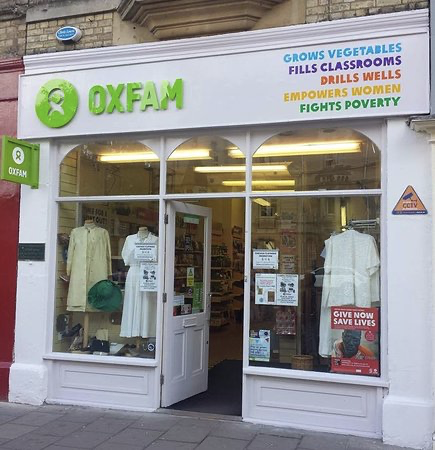
I love the advertising over the  Oxfam shop’s front. Here is a shop where your money will grow vegetables, fill classrooms, drill wells, empowers women and fights poverty – wow! With a little thought money can do some amazingly positive things. 

Counting on … day 359

25th October 2022

Professor Kate Fletcher of the Centre for Sustainable Fashion, London College of Fashion recommends caution when clothing companies claim green credentials for their garments. “The most powerful thing we can do “ she told Positive News, “is not to run out to the shops,  but just to really want what we’ve already got..”  

This sentiment applies not just to clothes but all the things we surround ourselves with.

 Counting on … day 345

10th October 2022

Green Christian advocates ‘Joy in Enough’. Enough is about what is sustainable for the planet ; joy is about pleasure and fun and contentment. Christmas is a couple of months away but now may be a good time to plan for a joyously sustainable Christmas. Talk to family and friends what this might look like for Christmas is a time of coming together. 

Counting on … day 292 

28th August 2022

For vegans – and others – choose sustainable seaweed! 

Seaweed can be eaten as a food in its own right and as an additive in food and non-products (such as toothpaste). It can also be used in making fertilisers, plastic alternatives and in animal food. 98% of seaweed thus consumed is grown commercially – and it is an expanding sector. Japan is the largest producer of seaweed. Here in the UK most seaweed is harvested from the wild – albeit commercially. If you want to give seaweed a try, check out companies such as the Cornish Seaweed Company https://www.cornishseaweed.co.uk/ or Mara Seaweed https://maraseaweed.com/