Green Tau issue 125

Defence or security?

16th June 2026

A recent article in the Church Times reported on 

The director of Trinity Centre for Post-Conflict Justice, at Trinity College, Dublin, Dr Jude Lal FernandoI, was among the participants, alongside Anglican church leaders, theologians, church partners, and USPG support. He warned that security concerns were increasingly being prioritised over communities’ basic needs, while hundreds of millions were still living in extreme poverty. “When space for peace and dialogue decreases, the space for violence and oppression increases, especially for women and children,” he said.

This led me to ponder what is the difference between security and defence?

Defence typically refers to the armed services and all their equipment and resources that can be used to repel enemy invasion either of our territory (here in the UK or elsewhere, eg the Falklands) or to support our allies where they are similarly threatened. Such defence would also include defence against cyber attack. 

Security I think is a wider issue that encompasses not just protection from enemy attack or aggression, but is about safeguarding the wellbeing of society as a whole. Thus security issues would include:

  • Food security: can we feed our population? Can we do so largely independent of imports? Do we keep enough in store to weather emergencies and/or supply disruption? Do we pay enough for farmers to survive financially? Do we ensure sufficient incomes so that everyone can afford healthy food? Do we grow the right range of crops (inc livestock) that allows us also to ensure the security of biodiversity and the environment?
  • Health security: are we doing enough to ensure the population is in good health? Do we have enough medical staff, hospital beds, drugs etc? Do we ensure everyone has access to a healthy diet? Do we ensure everyone has access to secure, safe housing – ie accommodation that does not damage their health? Do we ensure everyone has access to dental care? To mental health care? To social care? Do we ensure everyone has access to green spaces essential for mental wellbeing and to sports/ exercise facilities etc essential for physical health?
  • Community security: do we ensure everyone has access to education? That everyone can read, write, calculate and interpret information such that they are not likely to be deceived by false information. Do we ensure enough community spaces that are essential for developing and maintaining good social bonds and networks? Do we do enough to tackle discrimination essential for ensuring equality and harmony within communities?
  • Job security: do we ensure that everyone has access to an appropriate and fulfilling job? Do we ensure everyone has suitable skills and qualifications to enable them to contribute to the economy? Do we ensure sufficient investment in businesses to ensure that they contribute to our wellbeing and do not damage our environment? Do we ensure sufficient investment in our businesses that we can be self-reliant for all essentials? Do we ensure that all stakeholders in a business – staff, customers, nature etc – have a fair share of power and influence in determining the shape and future of the business? Do we ensure that everyone derives a fair benefit from the economy? 
  • Economic security: do we ensure that the economy that supports us financially does so in a way that is fair for everyone, that allows everyone to afford a healthy lifestyle, that protects the environment, that is sustainable over the long term?
  • Energy security: do we ensure we can produce enough energy ourselves to be self sufficient? Do we ensure that we do so at price that is affordable? Do we ensure all buildings, equipment and infrastructure is energy efficient? Do we have measures to ration water if necessary?
  • Water security: do we ensure that everyone has access to sufficient water for a healthy lifestyle? Do we ensure water efficiency at every level to ensure we do not consume more than we extract from our water resources? Do balance the need to maintain water resources against competing demands – whether from industry, agriculture, data centres, domestic users – and do we have measures to ration water if necessary?
  • Environmental security: do we look after the wellbeing of the natural environment to ensure that it can continue to support our wellbeing? Do we see it an essential life support system ensuring clean water supplies, for flood prevention, for clean air, plants to absorb carbon dioxide and provide protection from heat and winds, biodiversity to ensure fertile soils for food and insects for pollination, biodiversity to enrich life and safeguard against future unknowns?
  • Political security: do we ensure fair and democratic forms of government? Do we ensure truthfulness from political parties in both what they say and what they do? Do we ensure fair access to politicians such that those with money and power do not override the views of others? Do we ensure freedom of speech and nonviolent protest? Do we ensure a society where everyone feels valued and everyone feels their voice can be heard?
  • Judicial security: do we ensure a judicial system that provides access to justice to everyone and which is not influenced or used by those with money and power? Do we ensure fair policing? Do we ensure appropriate sentencing that will benefit the whole of society including both those who are victims and those who are offenders? Do we ensure a well designed and resourced custodial system that protects society and ensures the wellbeing of those imprisoned? 
  • Internet etc security: do we ensure that our internet and other communications systems are secure, that they cannot be compromised by error or deliberate intent? Do we ensure there are other systems in place such that if primary systems fail, essential services will be maintained?  Do we ensure that social media etc enhances rather than detracts from our wellbeing?
  • National security: do we ensure all the above which are essential for national security? Do we ensure good diplomatic, trade and welfare relations with other nations such that we work together to ensure peace? Do we ensure through good diplomatic, trade and welfare relations the wellbeing of other nations? – for unless they are at peace and thriving there will always be the risk of conflict and war that will impact us as part of a shred global economy.  Do we with care for the consequences of war, ensure  our nation has appropriately trained personnel and equipment that we can defend ourselves attack?

It seems to me that this bigger vision that the need for security rather than just focusing on defence, is essential if we are to be a happy secure nation. Indeed I’m not sure we gain much from defence if what is being defended doesn’t ensure happiness and well being for everyone.

Counting on 2026 …. Day 29

24th April

Yesterday I spotted the first new small leaves on our grape vine. A sign of hope – what looks like a dead branch is alive and in due course will produce the fruit that we and the birds and insects will enjoy this autumn.

Like walking in green spaces, so there is a growing mass of research that says that growing plants, whether that is flowers, wild plants or vegetables, is good for our wellbeing, the wellbeing of nature – and may even produce something tasty to eat. 

Ours is semi wild garden with uncut lawns and wild plants growing alongside fruit trees, herbs and salad crops. The vine provides shelter for al fresco meals in the summer, fruit in the autumn, and a habitat for various small creatures.

Today’s CAAC reflection is very apt: https://cac.org/daily-meditations/hospitality-on-our-earth-home/

Counting on … day 172

17th September 2024

There are about 250,000 allotments in the UK (the most common plot size is 10 rods, an ancient measurement equivalent 253 square metres). Allotments have many values such as enabling people to grow their own food, to get in touch with the natural world, to escape the confines of a flat or small house, to improve their physical and mental health through the manual work of gardening, and through sociability of being with others. (1) Some allotments owners have commented on the spiritual benefits they receive, which is wonderful link back to the story of the original garden created by God in Eden.

Allotments too could be the means of improving local biodiversity, and can help form green corridors. Green corridors enable wildlife to move easily over long or short distances without having to leave the safety of their natural environment. 

If you have an allotment or a garden, here are some suggested ways by which you can improve local biodiversity: https://www.gardenorganic.org.uk/news/four-ways-to-boost-allotment-biodiversity

  1. https://database.nsalg.org.uk/benefits-of-allotments

Green Tau: issue 38

29th March 2022

Am I Wealthy?

When we think of wealth our first thoughts are probably of piles of money – and if not actual notes and coins, them lots of zeros on one’s bank balance. When we talk about someone’s wealth, we do so in terms of pounds. According to The Times Rich List the wealthiest person in the UK for 2021 was Sir Leonard Blavatnik, with a wealth of £23 billion. The wealth of nations is also typically measured in pounds/ dollars etc. The wealthiest nation in the world is the United States with a gross domestic product of  $18.62 trillion. The UK stands in 5th position with $2.65 trillion. 

Although we talk in terms of pounds and dollars, these examples of wealth are not piles of money (whether as cash or bank balances). Rather they are investments in stocks and shares, investments in property, luxury yachts, art works etc – all of which can be expressed in monetary terms and could in theory be sold/ liquidated to provide cash. 

But are there other forms of wealth? 

Wealth has in the past had the meaning of happiness as well as financial riches, and the word developed from the Middle English ‘wele’ or ‘weal’ meaning well-being. 

As a resident of Richmond in south west London, many things have and do contribute to my well-being. They are a wealth that I have inherited through being a citizen of the UK.

  • I was born into stable middle class family. My childhood was happy with no traumatic events. My parents were supportive and encouraging. I had a happy extended family of grandparents, aunts and uncles. 
  • I spent my childhood in a rural part of the country where I learnt to appreciate the natural world.
  • Growing up I had the benefits of free health care (including dental care) and free education right through to my graduation from university. 
  • I continue to benefit from free healthcare – and can afford to access dental and other therapeutic treatments.
  • I am free to follow my chosen religion.
  • Even though I am a woman I can vote, I am free to work outside the home, and I can expect my husband to assist with domestic tasks and childcare.
  • I live in a country with reliable mains water, electricity and gas; with well maintained roads and a public transport network; with regular refuse collections; with dedicated emergency services and with a welfare and benefits system. I will in due course benefit from a state pension.
  • I live in a country with a respected police service and judicial system. 
  • I live in a country where bribery and corruption is not an every day occurrences.
  • I live in a country with well endowed schools, universities, museums and libraries. 
  • I live in a country with a free press. 
  • I live in a country where green spaces are protected, where there are rigorous standards for food quality and animal welfare. 

I am not saying that all the provision of all these in the UK is perfect and that there isn’t considerable scope for improvement, but compared to what is available for the average member of our global community, they are a significant source of wealth and wellbeing.

This wealth, from which I have and do benefit, arises from investments made by earlier generations and, to a lesser extent, from the current spending of tax revenues by the government and local authorities. It is a wealth that derives from the UK’s early investment in the Industrial Revolution, and from its exploitation of resources from other countries – either those which it colonised or those with which it arranged beneficial trading relationships. It is a wealth that has developed through the widespread use of, initially coal, and subsequently oil and gas, which has contributed significantly to the global climate crisis that we all now face. 

Is this wealth that I have something I can redistribute? I benefit from it but I don’t own it. I can’t realise its cash value and redistribute it. I can’t divide up or share my education or my good health, but I can use them to change the world. I can inform and campaign; I can recognise the injustices and inequalities that exist between people and across the world; I can volunteer and protest; I can influence by example; and I can effect change through my financial spending and donations.

Lent Reflection

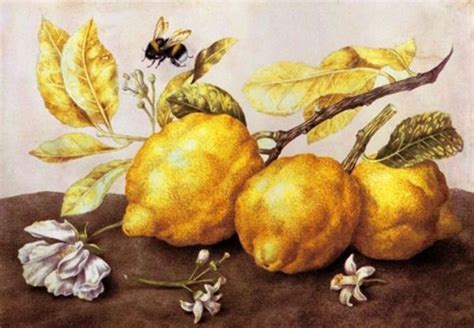
Still life with lemons and a bee, Giovanna Garzoni, 1600-1670

The lemon tree – citrus limon – is an evergreen native to Asia. Its fruit is widely used in cooking and has cleansing and healing properties. An ‘etrog’ or citron (the fruit of the wild lemon) is one of the four fruits used in the Jewish New Year celebration of Succoth – the fruit of one of ‘the goodly trees’ (Leviticus 23:40)

Roses and violets from summer gardens, sun-drenched Sicilian lemons squeezed of their juice and mingled with juniper from the frozen north. Saffron threads and gold leaf from the Indies waited to be turned into something magical. And contained deep within all this was a smile that flooded him with warmth … Laura MadeLevine, The Confectioner’s Take

A cheerful hearts is a good medicine, but a downcast spirit dries up the bones. Proverbs 17:22