Counting on … day 1.084

28th March 2023

The Ethical Consumer magazine notes that ‘Cutting down on meat and dairy is one of the biggest ways you can reduce your personal carbon footprint. It can also help you avoid issues associated with factory farming, like the routine mutilation of animals or the cramped conditions they’re very often kept in.

If you have time, the cheapest and healthiest way of reducing meat and dairy is to cook from scratch using ingredients like beans, tofu and lentils, rather than relying on processed vegan foods. Processed foods also have a higher carbon footprint than cooking a meal from scratch.’

Counting on … day 1.083

27th March 2023

Transform Trade is calling in the Government to set up a fashion watch dog that would stamp out poor practices in the fashion industry that are both unfair to the workers and damaging to the environment. Transform Trade’ campaign has invited supporters to make a little dog (wearing a fashionable item) and send it with a letter to their MP – https://www.transform-trade.org/1000-dogs

5th Sunday of Lent

26th March 2023

Reflection (readings follow on below)

The valley full of bones conjures up an image of cowboy western with a vast expanse of bare sand and the  scattered  bones of long-dead cattle. Except that here it is not animal but human bones – the bones of a whole community, the people of Israel. What has caused this mass death? Ezekiel tells us they had lost hope, they had felt cut off from God – and therefore from life – and their bones had dried up. Whilst Psalm 22 famously begins, ‘My God, my God, why have you forsaken me?’ here it is the people who have forsaken God. Their bones now lie dry and lifeless. 

God  tells Ezekiel to speak to the bones, to command them to hear the word of God, to hear the message of salvation: that they will be restored to life. Not only will their bones be covered with flesh but God will breathe into them, filling them with his life giving spirit.

This passage has many echoes of the creation story in Genesis 2. There the first Adam is brought to life by God’s breath. And it is from one of Adam’s bones that Eve is created. God settled the two new humans in the land – the Garden of Eden – so that they and the land might flourish. And likewise Ezekiel records  God saying,  I will put my spirit within you, and you shall live, and I will place you on your own soil – your own ground – then you shall know that I, the Lord, have spoken and will act.” 

Renewal, beginning again, starting over, resurrection is always possible in God’s story. 

But why have the people lost hope, why had they felt so far from God that their very bones had dried up? Psalm 130 acknowledges that if God judged us as we deserve, we would not survive. It seems as if we humans all too easily fall into such a state of sin, that really we should be beyond the pale. But the Psalmist reminds us, God’s nature is forgiveness, God will redeem us! We should therefore always have hope. 

What would redemption look like for us in view of the most recent IPCC Report? 

It seems as if we, God’s people, have gone so far away from God that not only our bones but our whole ecosystem is threatened. Vast tracts of land at present are fated to becoming scorched and dried up and unable to support life. Scientists suggest that on our current trajectory, all the land south of a line of latitude running through the Normandy Peninsula across the whole of Europe and Asia and on through the Great Lakes in North America will be uninhabitable. Only the tip of South America, parts of Australia, and New Zealand, would join with the northern parts of Europe, Asia and America, as being habitable. In this future world would there be enough food to eat, water to drink, space to inhabit? In this world would there be enough plants to refresh the air, enough insects to pollinate crops, enough sea life to maintain oxygen levels in the oceans? 

UN Secretary-General António Guterres said in this week’s IPCC report, “our world needs climate action on all fronts — everything, everywhere, all at once.” Redemption might look like the scene depicted by Ezekiel. A renewing of the desiccated human population such that filled with God’s Spirit, we have a new zest for live, are willing to make radical changes to our lifestyles, are ready to cooperate with one another, are ready to be generous in helping others. This regenerated, resurrected, people of God would  have hope, knowing, that filled with God’s Spirit, we can be true to God’s calling we should love God with all being, love our neighbour as ourself, and thus tend and protect the earth. 

The hope of resurrection is also the underlying theme of today’s gospel. Both Mary and Martha assert their belief in the  resurrection but cannot imagine it happening. And I am sure that it wasn’t something that Lazarus could imagine either. Often we are trapped in a world view view that does not let us see clearly God’s will, God’s way. Instead we only understand things from a ‘worldly’ perspective convinced that the way things are – social norms, economic patterns, human habits – are set in stone and cannot change. It is as if we are imprisoned by this world view, shut in a dark tomb from which we can find no way of escape. 

Jesus breaks that prison apart, his voice penetrates into the darkness, and he enables both Lazarus and us to live once more as God wills. Let us pray earnestly that in this climate crisis, as the opportunity of reform becomes an ever narrowing window, Jesus will calls us all – individuals, nations, governments and institutions- to come out from the tomb. For it seems as if we are trapped in a dark place where we can’t find our way out of the systems that trap us – the economic systems that make public transport more expensive than driving, that push up,the cost of energy even when the cost of production is static, that a customise us to a meat based diet, that allows us to charge countries for the aid we give them – in a system that says that the more you have the happier you will be. Yet there are other ways of living , of sorting our our priorities and furnishing our needs. It is to find that  newness of life to which Jesus called Lazarus, and to which Jesus calls us too. 

Jesus says, “I am the resurrection and the life. Those who believe in me, even though they die, will live, and everyone who lives and believes in me will never die.”

Ezekiel 37:1-14

The hand of the Lord came upon me, and he brought me out by the spirit of the Lord and set me down in the middle of a valley; it was full of bones. He led me all around them; there were very many lying in the valley, and they were very dry. He said to me, “Mortal, can these bones live?” I answered, “O Lord God, you know.” Then he said to me, “Prophesy to these bones, and say to them: O dry bones, hear the word of the Lord. Thus says the Lord God to these bones: I will cause breath to enter you, and you shall live. I will lay sinews on you, and will cause flesh to come upon you, and cover you with skin, and put breath in you, and you shall live; and you shall know that I am the Lord.”

So I prophesied as I had been commanded; and as I prophesied, suddenly there was a noise, a rattling, and the bones came together, bone to its bone. I looked, and there were sinews on them, and flesh had come upon them, and skin had covered them; but there was no breath in them. Then he said to me, “Prophesy to the breath, prophesy, mortal, and say to the breath: Thus says the Lord God: Come from the four winds, O breath, and breathe upon these slain, that they may live.” I prophesied as he commanded me, and the breath came into them, and they lived, and stood on their feet, a vast multitude.

Then he said to me, “Mortal, these bones are the whole house of Israel. They say, ‘Our bones are dried up, and our hope is lost; we are cut off completely.’ Therefore prophesy, and say to them, Thus says the Lord God: I am going to open your graves, and bring you up from your graves, O my people; and I will bring you back to the land of Israel. And you shall know that I am the Lord, when I open your graves, and bring you up from your graves, O my people. I will put my spirit within you, and you shall live, and I will place you on your own soil; then you shall know that I, the Lord, have spoken and will act,” says the Lord.

Psalm 130

De profundis

1 Out of the depths have I called to you, O Lord;
Lord, hear my voice; *
let your ears consider well the voice of my supplication.

2 If you, Lord, were to note what is done amiss, *
O Lord, who could stand?

3 For there is forgiveness with you; *
therefore you shall be feared.

4 I wait for the Lord; my soul waits for him; *
in his word is my hope.

5 My soul waits for the Lord,
more than watchmen for the morning, *
more than watchmen for the morning.

6 O Israel, wait for the Lord, *
for with the Lord there is mercy;

7 With him there is plenteous redemption, *
and he shall redeem Israel from all their sins.

Romans 8:6-11

To set the mind on the flesh is death, but to set the mind on the Spirit is life and peace. For this reason the mind that is set on the flesh is hostile to God; it does not submit to God’s law– indeed it cannot, and those who are in the flesh cannot please God.

But you are not in the flesh; you are in the Spirit, since the Spirit of God dwells in you. Anyone who does not have the Spirit of Christ does not belong to him. But if Christ is in you, though the body is dead because of sin, the Spirit is life because of righteousness. If the Spirit of him who raised Jesus from the dead dwells in you, he who raised Christ from the dead will give life to your mortal bodies also through his Spirit that dwells in you.

John 11:1-45

Now a certain man was ill, Lazarus of Bethany, the village of Mary and her sister Martha. Mary was the one who anointed the Lord with perfume and wiped his feet with her hair; her brother Lazarus was ill. So the sisters sent a message to Jesus, “Lord, he whom you love is ill.” But when Jesus heard it, he said, “This illness does not lead to death; rather it is for God’s glory, so that the Son of God may be glorified through it.” Accordingly, though Jesus loved Martha and her sister and Lazarus, after having heard that Lazarus was ill, he stayed two days longer in the place where he was.

Then after this he said to the disciples, “Let us go to Judea again.” The disciples said to him, “Rabbi, the Jews were just now trying to stone you, and are you going there again?” Jesus answered, “Are there not twelve hours of daylight? Those who walk during the day do not stumble, because they see the light of this world. But those who walk at night stumble, because the light is not in them.” After saying this, he told them, “Our friend Lazarus has fallen asleep, but I am going there to awaken him.” The disciples said to him, “Lord, if he has fallen asleep, he will be all right.” Jesus, however, had been speaking about his death, but they thought that he was referring merely to sleep. Then Jesus told them plainly, “Lazarus is dead. For your sake I am glad I was not there, so that you may believe. But let us go to him.” Thomas, who was called the Twin, said to his fellow disciples, “Let us also go, that we may die with him.”

When Jesus arrived, he found that Lazarus had already been in the tomb four days. Now Bethany was near Jerusalem, some two miles away, and many of the Jews had come to Martha and Mary to console them about their brother. When Martha heard that Jesus was coming, she went and met him, while Mary stayed at home. Martha said to Jesus, “Lord, if you had been here, my brother would not have died. But even now I know that God will give you whatever you ask of him.” Jesus said to her, “Your brother will rise again.” Martha said to him, “I know that he will rise again in the resurrection on the last day.” Jesus said to her, “I am the resurrection and the life. Those who believe in me, even though they die, will live, and everyone who lives and believes in me will never die. Do you believe this?” She said to him, “Yes, Lord, I believe that you are the Messiah, the Son of God, the one coming into the world.”

When she had said this, she went back and called her sister Mary, and told her privately, “The Teacher is here and is calling for you.” And when she heard it, she got up quickly and went to him. Now Jesus had not yet come to the village, but was still at the place where Martha had met him. The Jews who were with her in the house, consoling her, saw Mary get up quickly and go out. They followed her because they thought that she was going to the tomb to weep there. When Mary came where Jesus was and saw him, she knelt at his feet and said to him, “Lord, if you had been here, my brother would not have died.” When Jesus saw her weeping, and the Jews who came with her also weeping, he was greatly disturbed in spirit and deeply moved. He said, “Where have you laid him?” They said to him, “Lord, come and see.” Jesus began to weep. So the Jews said, “See how he loved him!” But some of them said, “Could not he who opened the eyes of the blind man have kept this man from dying?”

Then Jesus, again greatly disturbed, came to the tomb. It was a cave, and a stone was lying against it. Jesus said, “Take away the stone.” Martha, the sister of the dead man, said to him, “Lord, already there is a stench because he has been dead four days.” Jesus said to her, “Did I not tell you that if you believed, you would see the glory of God?” So they took away the stone. And Jesus looked upward and said, “Father, I thank you for having heard me. I knew that you always hear me, but I have said this for the sake of the crowd standing here, so that they may believe that you sent me.” When he had said this, he cried with a loud voice, “Lazarus, come out!” The dead man came out, his hands and feet bound with strips of cloth, and his face wrapped in a cloth. Jesus said to them, “Unbind him, and let him go.”

Many of the Jews therefore, who had come with Mary and had seen what Jesus did, believed in him.

Counting on … day 1.081

24th March 2023

The climate crisis and its effects on people and nations needs a redistribution of resources to ensure justice as well as being an expression of loving our neighbour. We often rely on governments as the largest holders of wealth to address this but the response can be patchy.

“Last month, Nick Hepworth, executive director of Water Witness International, criticised the British government for slashing its contribution to the £90m Building Resilience and Adaptation to Climate Extremes and Disasters programme, known as BRACC in Malawi, as part of the UK’s 2021 cut to the aid budget from 0.7% to 0.5% of GDP.” Guardian 

“In April, the UN had received only 3% of funds for its $6bn appeal for Ethiopia, Somalia and South Sudan. Danny Sriskandarajah, chief executive of Oxfam GB, said the current crisis was partly due to the British government’s “compassion failure” and decision to slash the overseas aid budget by £4.6bn last year (2022) According to the [last year’s] IPC assessment for Somalia, an estimated 1.5 million under-fives face acute malnutrition by the end of the year, including 386,400 who are likely to be severely malnourished. Those numbers are only expected to go up.” Guardian https://www.theguardian.com/global-development/2022/jun/22/somalia-the-worst-humanitarian-crisis-weve-ever-seen?CMP=Share_iOSApp_Other

Counting on … day 1.081

24th March 2023

“Hidden underground in rural Sussex is the world’s largest collection of seeds from wild plants. The Millennium Seed Bank (MSB) is home to over 2.4 billion seeds, representing over 39,000 different species of the world’s storable seeds.  This is the most diverse wild plant species genetic resource on Earth – a global insurance policy to store and conserve seeds from common, rare or endangered useful plants.  Seeds are largely collected by global partners as part of the Millennium Seed Bank Partnership, as well as during field work led by Kew scientists”. https://www.kew.org/science/collections-and-resources/research-facilities/millennium-seed-bank

Counting on … day 1.080

23rd March 2023

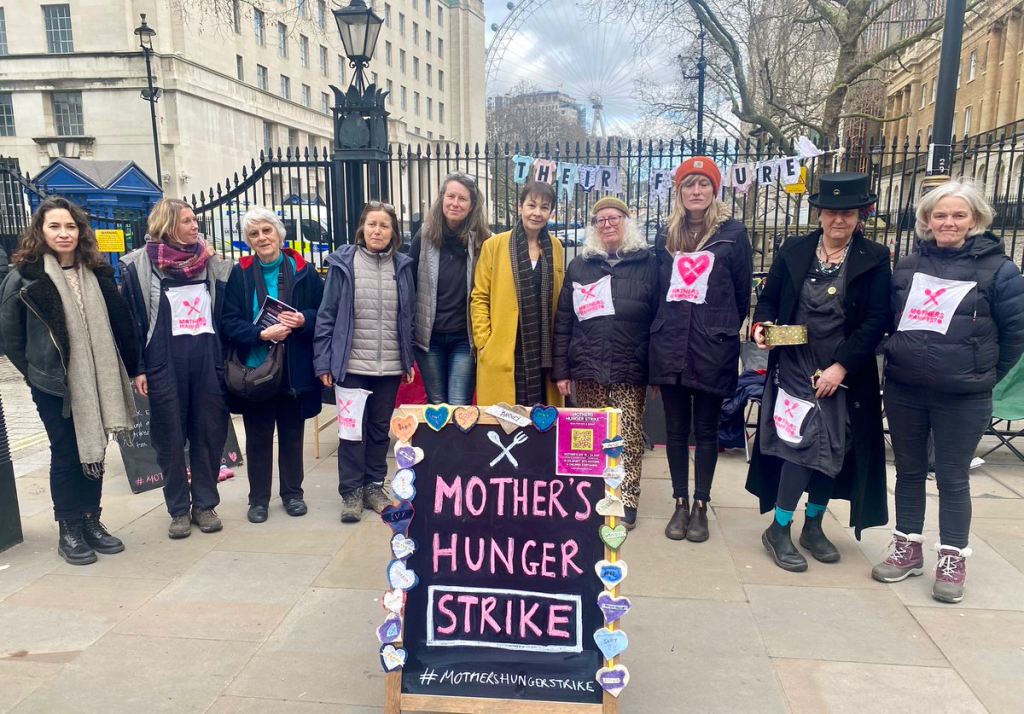
On Wednesdays I join the Earth Vigil sat outside the House of Parliament,  praying for the well being of the world in this time of crises. As Wednesday features Prime Minister’s Questions and thus the arrival of the Prime Minister in his cavalcade, at Carriage Gate, many groups congregate to highlight their concerns. 

Yesterday we shared our space with a new group,  Mothers Manifesto, which is raising awareness of child hunger. The mothers themselves what’d begun on Mothering Sunday, a 6 day hunger strike. The day before, protesting outside Downing Street thy had met with Caroline Lucas. 

For more info – https://www.mothermanifesto.com/home

Green Tau: issue 66

23rd March 2023

Food security

Having enough food to eat is a necessity for life, and a human right. 

The right to adequate food is realised when every man, woman and child, alone or in community with others, has the physical and economic access at all times to adequate food or means for its procurement. – General Comment 12 (Committee on Economic, Social and Cultural Rights, CESCR, 1999).

Yet looking around the world this is not the case. For many people food security is not a reality. Why?

1. Food insecurity can arise because a person cannot afford to buy sufficient food – this might be in absolute terms of calories or in the equally important terms of sufficiently healthy food needed to avoid malnutrition. The issue is not a lack of food, but the lack of money to buy it. 

Sadly this scenario is true even in countries such as the UK. “The UK’s food poverty rate is among the highest in Europe. In 2020-21 Government statistics record that 4.2 million people (6 per cent) were living in food poverty. (https://www.bigissue.com/news/social-justice/food-poverty-in-the-uk-the-causes-figures-and-solutions/)

The pay and/ or benefits that people receive is insufficient to pay for a healthy diet.  This is compounded by the fact that food inflation is running higher than the average rate of inflation. That people  with less money are affected more significantly  has been highlighted by Jack Monroe (https://www.theguardian.com/business/2022/jan/26/cost-of-living-crisis-ons-inflation-jack-monroe?CMP=Share_iOSApp_Other)

It is an even more widespread problem across the world where 40% of people cannot afford a healthy diet.  

Pay-related food insecurity can be a particular problem in urban areas. In rural areas it is possible that people will have access to land such that they can grow their own food. This is often referred to as subsistence farming as it does not necessarily produce additional income to spend on other things. 

“The world’s smallholder farmers produce about a third of the world’s food according to detailed new research [June 2021] by the Food and Agriculture Organisation of the United Nations (FAO). Five of every six farms in the world consist of less than two hectares, operate only around 12 percent of all agricultural land, and produce roughly 35 percent of the world’s food” – https://www.fao.org/news/story/en/item/1395127/icode/

Whilst for many people, subsistence farming does ensure they have food to eat, it can be a precarious existence.  In Kenya smallholder farmers are being forced to buy commercial seed which then needs both fertilisers and pesticides to ensure a good harvest. Previously these farmers would collect and swop seeds from their own crops, but this has been made illegal  as the Kenyan Government tries to ensure that all seeds are certified.

2. Food insecurity can arise because of a failure of one or more harvests. This particularly affects poor countries who struggle to pay the cost of importing food to make up local losses, and subsistence farmers who may not have the capacity to grow and store food to cover more than one year’s needs. 

Food security is particularly sensitive to climate change. Climate change is increasing the frequency of both droughts and heavy – destructive – rainfall, raising temperatures and increasing the frequency and intensity of winds, all of which are potentially damaging for crops and for livestock. 

Somalia, Ethiopia and Kenya are now facing the sixth consecutive year of drought conditions. Hunger is widespread: an estimated 43,000 people died last year in Somalia as a consequence of an inadequate diet. The affects of failed harvests has been accentuated by the rising cost of food that could potentially be imported.

On a far smaller scale, shoppers in the UK have been faced with shortages of cauliflowers, tomatoes and salad ingredients. In part this has been because farmers in the UK and the Netherlands have cut back on the amount of crops grown under glass because of rising energy costs, plus sharp frosts which damaged brassica crops, and in part because of unseasonal cold weather in southern Europe and North Africa damaging crops grown there. Last summer’s drought across Europe led to many harvests being reduced by 30% and which has been felt by consumers in the form of higher prices for risotto rice, olive oil durum wheat pasta. 

3. Food insecurity may arise because the farmers cannot afford to grow the usual amounts of food. Whilst consumers need enough money to buy food, producers need to earn enough to cover there expenses. The last 18 months have seen soaring costs for energy (baby chicks for example need to be kept at a temperature of 30C), fertilisers, and for basic labour. Many farmers in the UK are tied into contracts with supermarkets with fixed prices, making it hard for them to over their costs. Equally as rising costs are not always reflected in rising prices because of supermarket competition, many farmers are reducing the amount of crops their will grow for the coming season. It is better financially not to grow the crop than to grow it and then sell at a loss. 

4.  Distribution systems can also affect food security. We have seen this recently with exports from Ukraine. Without access to the Black Sea ports, there was no effective way of shipping grain from the Ukraine to countries such as Egypt, where it was most needed. Delays in the distribution system may mean that food perished before it reaches its market. Partly due to distribution issues, but also  mismatches in the supply chain between what the supermarkets order and what the consumers buy, as much as 17% of the world’s food production goes to waste.

An average block of cheese or loaf of bread produces less than a penny for farmers, and fruit producers do not fare much better, making just 3p from each kilo of apples.” https://www.theguardian.com/environment/2022/dec/02/uk-farmers-making-tiny-profits-as-supermarkets-boast-record-takings?CMP=Share_iOSApp_Other

5. Global food security would be greatly enhanced if meat production was reduced. 

Livestock takes up nearly 80% of global agricultural land, yet produces less than 20% of the world’s supply of calories … This means that what we eat is more important than how much we eat in determining the amount of land required to produce our food.” https://ourworldindata.org/agricultural-land-by-global-diets

 Eating less meat and using the land instead to grow food for direct human consumption would provide the food needed for the world’s growing population (subject to affordability and distribution issues).

6. Food production is ultimately reliant on healthy soils. Yet it is reported that ‘more than a third of the world’s soil is already degraded, and the IPCC estimates that could rise to 90% by 2050 if nothing is done. Even moderately degraded soil produces 30% less food and stores around half the water of healthy soil.’ https://www.weforum.org/agenda/2020/12/a-tangible-plan-to-restore-soil-health-in-the-next-ten-years/

“The UK is 30 to 40 years away from “the fundamental eradication of soil fertility” in parts of the country, the environment secretary Michael Gove has warned.“We have encouraged a type of farming which has damaged the earth …. If you have heavy machines churning the soil and impacting it, if you drench it in chemicals that improve yields but in the long term undercut the future fertility of that soil, you can increase yields year on year but ultimately you really are cutting the ground away from beneath your own feet. Farmers know that.” https://www.theguardian.com/environment/2017/oct/24/uk-30-40-years-away-eradication-soil-fertility-warns-michael-gove?CMP=Share_iOSApp_Other

7. Food security can be potentially threatened by diseases – whether diseases that affect crops or diseases that affect livestock. Recently in the UK we have seen the impact of avian flu on supplies of chicken and egg. Whilst in the Mediterranean the Xylella pathogens is infecting olive trees across the region – it can also infect similar plants such as  cherry, almond and plum trees. It was first discovered in  olives trees in Puglia in 2013. The spread of the disease have been devastating, with an estimated 60% decline in crop yields in Italy since the first discovery in 2013. The world food supply is particularly vulnerable to the affects of disease because our food supply is dominated by a very limited number of species.  Of the 6,000 different plant species used as food, only nine (sugarcane, wheat, rice, maize, potatoes, sugar beet, cassava, oil palm and soybean) contribute 66% of total crop production. Increasing the diversity of plants we grow and eat as food is essential. It is also equally essential that we safeguard our food security by improving biodiversity as a whole for the ecosystem is highly interconnected.

“Biodiversity for food and agriculture is all the plants and animals – wild and domesticated – that provide food, feed, fuel and fibre. It is also the myriad of organisms that support food production through ecosystem services – called “associated biodiversity”. This includes all the plants, animals and micro-organisms (such as insects, bats, birds, mangroves, corals, seagrasses, earthworms, soil-dwelling fungi and bacteria) that keep soils fertile, pollinate plants, purify water and air, keep fish and trees healthy, and fight crop and livestock pests and diseases…Less biodiversity means that plants and animals are more vulnerable to pests and diseases. Compounded by our reliance on fewer and fewer species to feed ourselves, the increasing loss of biodiversity for food and agriculture puts food security and nutrition at risk,” added Graziano da Silva.” https://www.fao.org/news/story/en/item/1180463/icode/

What can we do? See the next Eco Tips

Counting on … day 1.079

22nd  March 2023 

“The Heritage Grain Trust … [is] developing a new approach to growing grain for human consumption, one that encourages resilience in the face of climate change and reduces the loss of biodiversity that occurs with intensive grain production. We believe that a genuine grain revolution is required in arable farming based on the growing of genetically-diverse populations of heritage cereals using agro-ecological methods. We believe that British farmers can produce all the grain needed to feed the UK by growing heritage grains in ways that improve soil health, increase biodiversity, and sequester climate-destroying greenhouse gasses.” https://www.heritagegraintrust.org/about-us

Seek out heritage grains and flour to add variety to your diet and to promote biodiversity. Try https://hodmedods.co.uk/

Counting on … day 1.078

21st March 2023 

According to the United Nations, 75% of crop diversity has been lost over the past century as farmers abandoned numerous local varieties of crops for high yield monocultures that are often shoehorned into environments they are poorly adapted to.

“On the edges of the field are giant heirloom sunflowers – used to attract pollinators – and rows of amaranth. “By companion cropping, you’re replicating those systems you see in nature,” said Lowden, describing the traditional Indigenous practice of interplanting crops to deter weeds and pests, maintain moisture and enrich the soil. “This is thousands of years of knowledge passed down,” he added.mFor the past decade, Lowden, 34, has worked to restore traditional crops and farming practices in Acoma. As program director for Ancestral Lands, a non-profit that supports land stewardship in Indigenous communities, he reintroduced traditional Acoma crops into the community and created a bank of 57 arid-adapted seeds native to the region. His work is part of a broader movement to build food and seed sovereignty on tribal lands amidst staggering global biodiversity losses created by the modern agricultural system and growing food insecurities caused by climate crisis.” https://www.theguardian.com/environment/2022/apr/18/seed-keeper-indigenous-farming-acoma?CMP=Share_iOSApp_Other

A better world is possible.