
April 2022
Author: Judith Russenberger
Environmentalist and theologian, with husband and three grown up children plus one cat, living in London SW14.
I enjoy running and drinking coffee - ideally with a friend or a book.
Lent Reflection
8th April 2022

The date palm – phoenix dactylifera – has been cultivated since ancient times, possibly originated in what is now Iraq. They were and are grown for their fruit which are eaten fresh and dried or made into syrup, wine or vinegar. The date palm needs about 8 years before fruiting but once mature can produce 70kg of fruit or more. Date palms can live for up to 150 years.
The date palm has been used as a symbol of prosperity and triumph. Palm leaves were carried in the triumphal victory processions in Rome, by followers of Jesus when he entered Jerusalem, and are in art works are symbolically carried by martyrs.
For the Lord takes pleasure in his people, he adorns the humble with victory. Psalm 149:4
It is the nature of the strong heart, that like the palm tree it strives ever upwards when it is most burdened. Philip Sidney
Counting on … day 145
8th April 2022
Tomorrow Extinction Rebellion will be standing up for action to halt the climate crisis. Be brave and show your support, if not with for XR, then with other climate action groups or even just as one individual showing solidarity with all the other individuals who are equally passionate about saving our world.
Counting on …day 144
7th April 2022
Hope is a great gift. It gives us the confidence to smile and keep going, even
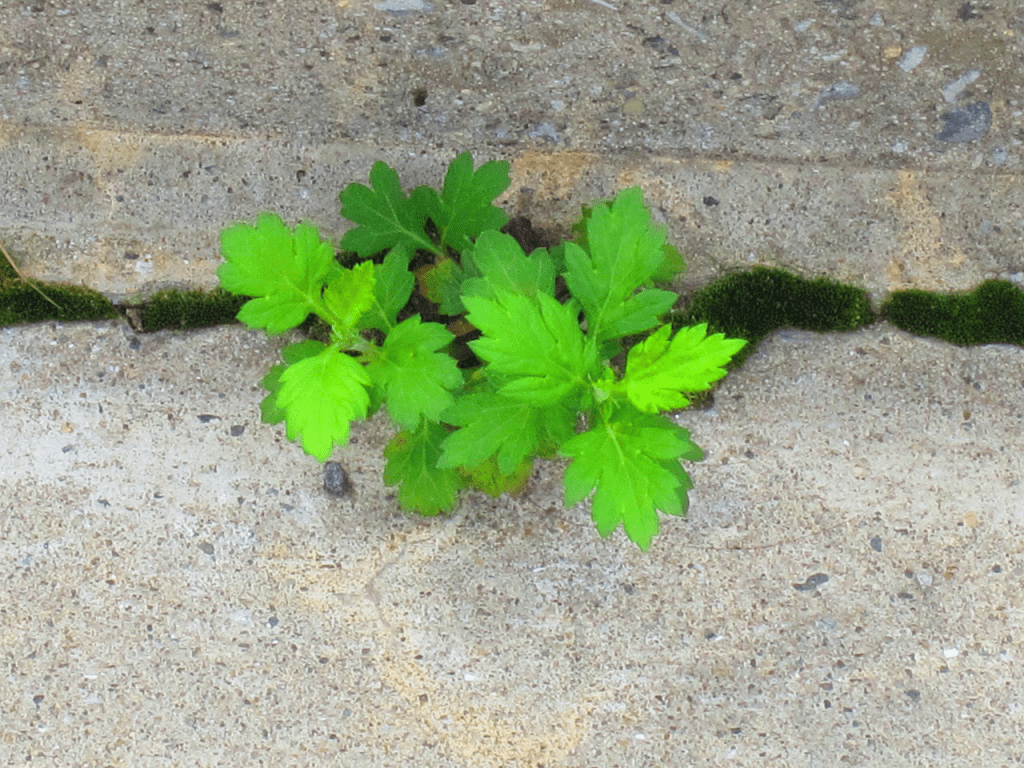
when the odds seem stacked against us. Hope is often to be found in small things. A weed, against the odds, pushing up between the paving stones. Spotting a first ladybird. Taking time to enjoy the aroma of a fresh cup of coffee.
Lent Reflection
7th April 2022
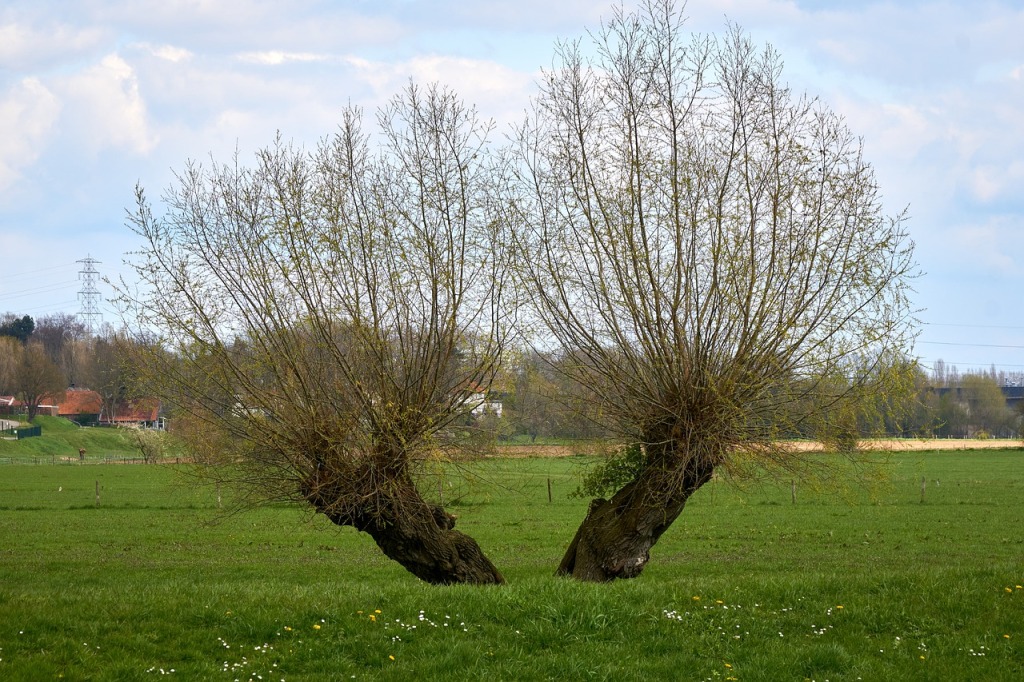
The willow – salix – is commonly found growing near water. The flexible branches, particularly of the osier willow, are used for weaving all manner of baskets from cribs to coffins. Willow can be woven into living sculptures, tunnels and play houses. It is used in encasements to protect river banks. Its flexibility is also out to use in the making of cricket bats.
The goat and green willows both have silky grey flowers that look like a cat’s paw and are commonly known as pussy willow. Across Europe willow branches are often carried in lieu of palms on Palm Sunday. Being one of the first to produce blooms in early spring, pussy willow is seen as a symbol of new life.
Willows are associated with both grief and joy.
By the rivers of Babylon, there we sat down and wept, when we remembered Zion. Upon the willows in the midst of it we hung our harps. Psalm 137:1-2
Remember to weave a bit of joy into your life each day. Joni T Ross
The Green Tau: issue 41
6th April 2022

On Monday the IPCC produced the third and final part its reports assessing where we are as world vis a vis the climate crisis. The news is not good. “It’s now or never, if we want to limit global warming to 1.5C,” said Prof Jim Skea, a co-chair of the report. “Without immediate and deep emissions reductions across all sectors, it will be impossible.”
Clearly what is needed is system change. As previously discussed (https://greentau.org/2022/04/05/the-green-tau-issue-40/) governments are seldom willing – outside of emergencies such as war – to make system changes unless they feel that is the direction in which the voters have already moved. System change needs social change – and that means a change of heart at the level of the individual, ie the average person on the street. Is the average person on the street ready to accept the changes in lifestyle that ‘immediate and deep emissions reductions across all sectors’ will entail? And if not how can we bring about a change of heart?
Issue 40 looked at civil action which, whilst making demands of government, seeks also to stimulate a pro-active response from the public. The action of groups such as XR and Just Stop Oil may raise awareness of the immediacy and scale of the crisis. Their action may embolden others to join in – reassuring them that they are not lone voices crying out in the wilderness. Certainly previous XR protests have seen support for the movement grow. But is it enough? Has it brought about the widespread change of heart needed? Are there other ways?

- ‘Be the change you wish to see in the world’ – to paraphrase Gandhi. If we live our lives as would be necessary to achieve net zero, making the cuts and changes that makes our life sustainable, then we are a living example of how a life could look – and others may follow.
- Walk the talk – a phrase used by John Gummer, the chair of the UK’s Climate Change Committee, reflecting in the aftermath of COP26. We can only be credible in asking others to respond actively to the crisis, if we are already doing so.
- Climate anxiety, which notably is growing amongst children and young people, can only be genuinely assuaged by us if we are walking the talk. If we are not, then we are effectively deriding their concerns.
- Bucking the trend – be proud, be confident that you are doing the right thing and more people will be interested in what you are doing. Don’t hide your light under a bushel but be upfront about the changes you are making to your lifestyle and why.
- Have a dream – think, imagine, envisage what the ideal world world look if those ‘deep emissions reductions across all sectors’ had taken place. What would be the highlights, the sources of pleasure, the things of beauty?
- Take strength from knowing that, even if not else is, at least you are doing the right thing. Living a counter-cultural life does need strength and confidence. For many it is where their Christian faith brings its own courage.
- If no one changed, change would never happen. There has to be the first one to take the first step, to set out on a new path – if it’s you, congratulations, you’re a star! You are the beacon for others to follow.
- Strength in numbers – find others who are changing their lifestyle, maybe informally or through an existing climate/ creation care organisation. Support and encourage one another, gain strength from being part of a group, part of a community, part of a movement.
Who can we make what we are doing attractive to others? How can we engage others in the conversation? How can we enthuse and encourage others?
Talking about it – with friends and family, with neighbours and colleagues, with shop staff and sales people, with teachers and parents at the school gate, with people in church, at the gym, in clubs and pubs – any time we might engage in conversation. Be a story teller. Write about it, share it on social media. Post photos. Wear it as a badge on your sleeve, lapel, bag, hat.
Flaunt it!
Frequently we will find our efforts stymied by the system. When we are, we need to needle those who can effect change. Ask for the change needed when shopping. Contact the managers, the suppliers, the producers. Even if they can’t effect change immediately, the constant reminder that change is needed will spur them on. And when change does happen, acknowledge it gratefully and make sure others also know. Write to your MP and your local councillors. The more an issue is raised, the greater will be the incentive for them to take note and push for the system change we need.
Is it enough? I know I often feel that what I do is ineffectual, that it is energy expended for no positive outcome. Should I give up and just look after the plants and creatures that live in our garden while I can, and simply wait for the disaster that is coming?
Counting on … day 143
6th April 2022
Yesterday the IPCC produced the third and final part its reports assessing where we are as world vis a vis the climate crisis. The news is not good. “It’s now or never, if we want to limit global warming to 1.5C,” said Prof Jim Skea, a co-chair of the report. “Without immediate and deep emissions reductions across all sectors, it will be impossible.”
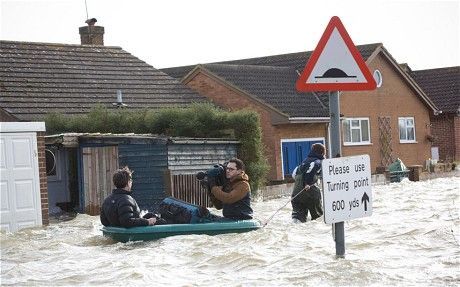
Write to your MP and to your local Council – how are they going to respond? What immediate and deep emissions reductions will they make possible? Ask the same question of businesses. And we must ask the same question of ourselves.
Lent Reflection
6th April 2022

The sycamore – acer pseudoplananus – is a naturalised tree in Britain, introduced in the Middle Ages. Its Latin name, meaning like a plane, comes from the shape of it leaves which resemble those of a true plane tree. It grows to a height of 35m and has a life span of up to 400 years. Its leaves are attractive to aphids making the tree attractive to aphid predators such as ladybirds. Its single seeded seed pods – samara – are colloquially known as helicopter seeds because they have a spinning action like that of helicopter blades. The sycamore is tolerant of both wind and pollution. Its wood is used to make taint free kitchen utensils as well as furniture, and in Wales is carved to make love spoons.
In Luke’s Gospel, Zacchaeus the tax collector, being a short person, climbs a sycamore tree so as to gain a view of Jesus.
When Jesus came to the place, he looked up and said to him, ‘Zacchaeus, hurry and come down; for I must stay at your house today.’ Then Jesus said to him, ‘Today salvation has come to this house, because he too is a son of Abraham. For the Son of Man came to seek out and to save the lost.’ Luke 19: 5, 9-10
When you forgive, you in no way change the past – but you sure do change the future. Bernard Meltzer
The Green Tau: issue 40
5th April 2022

‘Just Stop Oil’?
A limited amount of press coverage has been given to the Just Stop Oil movement which is currently blockading various oil refineries and terminals around the UK. Just Stop Oil are using the tactics of civil disobedience rather than civil resistance to push the government to stop permitting any new oil production. Explaining what this shift would look like, one supporter told the Guardian last month that it would mean “stopping pointing out what the government should or shouldn’t be doing [and instead] actively stopping government doing what they shouldn’t be”. The campaign, which has involved protesters being glued to roads, suspended on bamboo tripods, and locked on to oil drums and each other, is taking place in defiance of a temporary high court injunction banning protests outside oil terminals. Just Stop Oil has vowed to continue “civil resistance” protests until the government agrees a moratorium on all new fossil fuel projects and claims it has more than 1,000 supporters willing to be arrested for taking part. “We need the government to stop funding new oil projects and we need it now! Our only means of highlighting this issue is mass civil resistance,” they said in a post on Instagram. https://www.theguardian.com/environment/2022/apr/04/protesters-block-oil-depot-near-heathrow-as-action-enters-fourth-day , https://www.theguardian.com/environment/2022/apr/01/environmental-protesters-block-oil-terminals-across-england
Why is Just Stop Oil so committed to and adamant about, their demand?
In August last year, the first part of the IPCC’s latest assessment (each assessment is the product of five to seven years by three different working groups) was published. This part of the assessment focused on the physical science aspects of climate change, and concluded that the world had on,h a narrow chance of limiting global heating to 1.5C (We are already at 1.1C). This limited window of opportunity needs everyone – governments, businesses, industries, farming etc – to stick to what their agreed 2030 targets.
The second part of the assessment focused on the effects of climate change, such as extreme weather, droughts, floods and temperature rises, and how humanity can adapt to these. This was published in February when it was sadly overshadowed by the invasion of Ukraine. It reported that 3.5 billion people are highly vulnerable to climate impacts and half the world’s population will suffer severe water shortages at some point each year. One in three people are exposed to deadly heat stress, and this is projected to increase to 50% to 75% by the end of the century. Half a million more people are at risk of serious flooding every year, and a billion living on coasts will be exposed by 2050. Rising temperatures and rainfall are increasing the spread of diseases in people, such as dengue fever, and in crops, livestock and wildlife. If global heating continues and little adaptation is put in place, 183 million more people are projected to go hungry by 2050.
Nikki Reisch, the director of the energy and climate programme at the Center for International Environmental Law, said governments should be clear: “There is no room for more oil and gas full stop. [Some businesses] want to perpetuate the myth that we can carry on using fossil fuels. But we need a just transition away from fossil fuels, not techno-fixes.” https://www.theguardian.com/environment/2022/apr/03/scientists-urge-end-to-fossil-fuel-use-as-landmark-ippc-report-readied
The climate crisis is an imminent and highly dangerous. The task of averting this catastrophe relies on us all achieving net zero carbon emissions by 2050 and at least halving them by 2030. Just Stop Oil is not demanding that the government stop all consumption of oil overnight. They are demanding that the government stops our increasing use of oil, and takes action to cut back our use of oil so that we meet our 2030 and our 2050 net zero targets.
The war in Ukraine has highlighted our unhappy dependency on fossil fuels, especially those we import from other parts of the world whose regimes are corrupt and un-humanitarian. The solution to this short term problem should be increasing renewable energy capacity – through investment in wind, tidal and solar energy – combined with a comprehensive programme to insulate homes and other properties. Yet there is a risk that the government will opt to escape this problem by allowing more oil exploration in the North Sea. To do so would make meeting our 2030 net zero targets an impossibility, consigning us to trauma of accelerating climate change.
For Just Stop Oil what is needed is system change. A change from the current oil based system where the government (through taxation and policies) and businesses ( through investment and practices) perpetuate the use of oil as the main source of energy and the mainstay of production. Consumers find themselves trapped in the system. Gas heating is cheaper than any other form of heating, flying is cheaper than travelling by train, driving is cheaper than public transport, imported food is cheaper than domestically grown, virgin plastic is cheaper than recycled etc etc. It is a system stacked against the environmentally concerned individual.
Is it surprising then that for many environmentally concerned individuals the only option is civil disobedience? And where does that leave the more fainted hearted environmentalist?
Governments are seldom willing to make system changes unless they feel that is the direction in which the voters have already moved – in recent history one might include the over turning of the poll tax, reining back on nuclear weapons development, and gay weddings. Outside times of severe crisis such as war, system change also needs social change – and that means a change of heart at the individual, ie the average person on the street. Is the average person on the street ready to accept the changes in lifestyle that reducing our dependency on oil and achieving the halfway 2030 net zero targets demands?
To be continued in issue 41
Lent Reflection
5th April 2022

The Mediterranean cypress – cupressus sempervirens – is an evergreen coniferous tree that grows to a height of 35m and can live for 1000 years and more. It is well adapted to the Mediterranean climate of hot dry summers and cool winters, and grows across a wide altitude range from sea level to around 2000m. The wood is fragrant and durable and is used for making harpsichords, coffins and furniture. It was also used to make the doors of St Peter’s basilica in Rome. In classic antiquity the cypress was associated with mourning and death. However when Van Gogh painted cypresses he saw them as trees that linked earth and heaven.
And Jacob dreamed that there was a ladder set up on earth, the top of it reaching to heaven; and the angles of God were ascending and descending on it. Genesis 28:12
My soul can find no staircase to heaven unless it be through earth’s loveliness. Michelangelo
 The Green Tau