Counting on ….day 128

20th March 2022

Next Sunday is Mothering Sunday which has become a popular day for giving mums bunches of flowers, cards, breakfast in bed or a meal out. Originally the feast celebrated the role of Mother Church and gave everyone a break in the middle of the Lenten fast. With the global concern for the climate and the wellbeing of life on earth, it is also important to have care for Mother Earth. The Guardian has  reviewed some of the environmental questions around buying and sending bunches of flowers, emphasising in particular the merits of seasonal, locally grown, and locally delivered flowers. https://www.theguardian.com/money/2022/mar/19/how-to-buy-flowers-mothers-day-good-deals

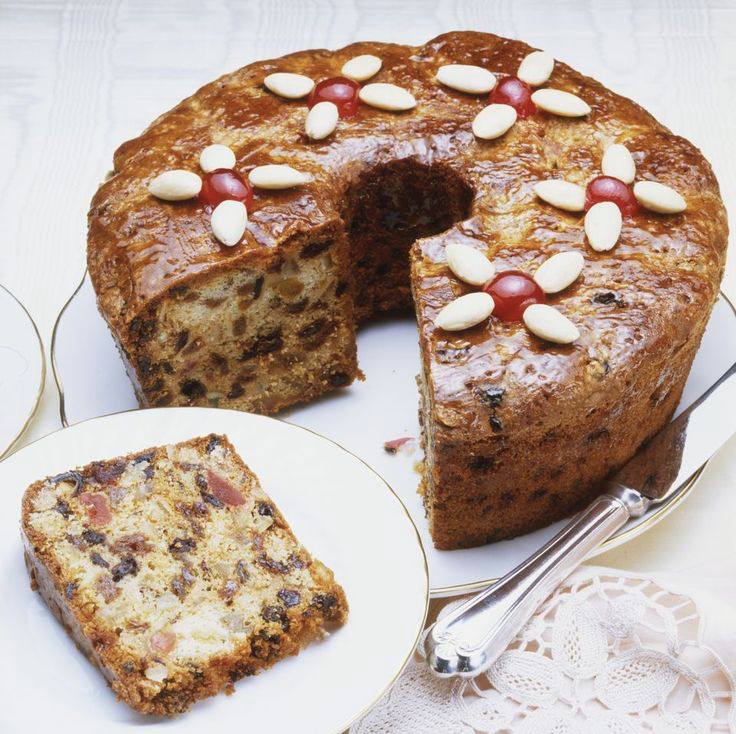
The traditional Mothering Sunday gift was a cake.

Third Sunday in Lent

20th March 2022

Exodus 3:1-15

Moses was keeping the flock of his father-in-law Jethro, the priest of Midian; he led his flock beyond the wilderness, and came to Horeb, the mountain of God. There the angel of the Lord appeared to him in a flame of fire out of a bush; he looked, and the bush was blazing, yet it was not consumed. Then Moses said, “I must turn aside and look at this great sight, and see why the bush is not burned up.” When the Lord saw that he had turned aside to see, God called to him out of the bush, “Moses, Moses!” And he said, “Here I am.” Then he said, “Come no closer! Remove the sandals from your feet, for the place on which you are standing is holy ground.” He said further, “I am the God of your father, the God of Abraham, the God of Isaac, and the God of Jacob.” And Moses hid his face, for he was afraid to look at God.

Then the Lord said, “I have observed the misery of my people who are in Egypt; I have heard their cry on account of their taskmasters. Indeed, I know their sufferings, and I have come down to deliver them from the Egyptians, and to bring them up out of that land to a good and broad land, a land flowing with milk and honey, to the country of the Canaanites, the Hittites, the Amorites, the Perizzites, the Hivites, and the Jebusites. The cry of the Israelites has now come to me; I have also seen how the Egyptians oppress them. So come, I will send you to Pharaoh to bring my people, the Israelites, out of Egypt.” But Moses said to God, “Who am I that I should go to Pharaoh, and bring the Israelites out of Egypt?” He said, “I will be with you; and this shall be the sign for you that it is I who sent you: when you have brought the people out of Egypt, you shall worship God on this mountain.”

But Moses said to God, “If I come to the Israelites and say to them, ‘The God of your ancestors has sent me to you,’ and they ask me, ‘What is his name?’ what shall I say to them?” God said to Moses, “I am who I am.” He said further, “Thus you shall say to the Israelites, ‘I am has sent me to you.’” God also said to Moses, “Thus you shall say to the Israelites, ‘The Lord, the God of your ancestors, the God of Abraham, the God of Isaac, and the God of Jacob, has sent me to you’:

This is my name forever,
and this my title for all generations.”

Psalm 63:1-8

1 O God, you are my God; eagerly I seek you; *
my soul thirsts for you, my flesh faints for you,
as in a barren and dry land where there is no water.

2 Therefore I have gazed upon you in your holy place, *
that I might behold your power and your glory.

3 For your loving-kindness is better than life itself; *
my lips shall give you praise.

4 So will I bless you as long as I live *
and lift up my hands in your Name.

5 My soul is content, as with marrow and fatness, *
and my mouth praises you with joyful lips,

6 When I remember you upon my bed, *
and meditate on you in the night watches.

7 For you have been my helper, *
and under the shadow of your wings I will rejoice.

8 My soul clings to you; *
your right hand holds me fast.

1 Corinthians 10:1-13

I do not want you to be unaware, brothers and sisters, that our ancestors were all under the cloud, and all passed through the sea, and all were baptised into Moses in the cloud and in the sea, and all ate the same spiritual food, and all drank the same spiritual drink. For they drank from the spiritual rock that followed them, and the rock was Christ. Nevertheless, God was not pleased with most of them, and they were struck down in the wilderness.

Now these things occurred as examples for us, so that we might not desire evil as they did. Do not become idolaters as some of them did; as it is written, “The people sat down to eat and drink, and they rose up to play.” We must not indulge in sexual immorality as some of them did, and twenty-three thousand fell in a single day. We must not put Christ to the test, as some of them did, and were destroyed by serpents. And do not complain as some of them did, and were destroyed by the destroyer. These things happened to them to serve as an example, and they were written down to instruct us, on whom the ends of the ages have come. So if you think you are standing, watch out that you do not fall. No testing has overtaken you that is not common to everyone. God is faithful, and he will not let you be tested beyond your strength, but with the testing he will also provide the way out so that you may be able to endure it.

The Gospel

Luke 13:1-9

At that very time there were some present who told Jesus about the Galileans whose blood Pilate had mingled with their sacrifices. He asked them, “Do you think that because these Galileans suffered in this way they were worse sinners than all other Galileans? No, I tell you; but unless you repent, you will all perish as they did. Or those eighteen who were killed when the tower of Siloam fell on them–do you think that they were worse offenders than all the others living in Jerusalem? No, I tell you; but unless you repent, you will all perish just as they did.”

Then he told this parable: “A man had a fig tree planted in his vineyard; and he came looking for fruit on it and found none. So he said to the gardener, ‘See here! For three years I have come looking for fruit on this fig tree, and still I find none. Cut it down! Why should it be wasting the soil?’ He replied, ‘Sir, let it alone for one more year, until I dig around it and put manure on it. If it bears fruit next year, well and good; but if not, you can cut it down.'”

Reflection

Moses, is shepherding his Father-in-law’s flock on the far side of the wilderness, when he sees a burning bush. When we are out in the natural world, away from habitation, we can become much more observant of the present moment and of the world around us. Like Moses, these can be times when we are more acutely aware of God’s presence. God has certainly piqued Moses curiosity and got his attention. For God sees, senses, knows what is happening in the world. God knew the suffering of the Israelites captive in Egypt; God knows the suffering of the Ukrainians, of the Ethiopians caught up in civil war, of asylum seekers, of people forced to use food-banks, of people thrown out of work. God is the God of past, present and future generations. When Moses asks God’s name, he is given a wonderfully poetic reply: I am …. because  I am!  

Today’s Psalm explores what it is to know God – the seeking and the gazing, the finding and the experiencing. To know God is to know joy and contentment, to experience loving kindness and shelter. To know God is to seek God, to spend time in meditation, to lift up our hands, to act and to praise. The psalmist also calls on us to ‘cling fast’ to God: the Hebrew also translates as ‘adhere’ or ‘catch by pursuit’. Perhaps this is a call to stay close to God, to stick by God, to adhere to/ follow God’s ways, to move alongside God. Maybe it is to be like ducklings that swim close to their mother to avoid getting lost, or like lambs that learn the pathways up and down the fells by sticking close to their mums. 

Just as lambs can go astray and get lost, so too do we humans. We can be wayward, foolish, negligent, even wilfully disobedient. We fail to follow in God’s ways, to live according to God’s desires. As a consequence we often end up being hurt, becoming angry, feeling disorientated. Paul, in his letter, warns the community at Corinth of the dangers of going against God’s will, of being disobedient, of doing what is wrong. 

When we do things wrong, we may get hurt, but it is equally possible that other people will also get hurt. Our wrongful actions may cause others – who may well be quite blameless – to suffer. This is seems to the case of those killed by the collapse of the tower of Siloam. It is the case of the many victims of the invasion of Ukraine. It is the case of the 186 people who lost their lives in Petropolis, Brazil in flash floods and mudslides caused by the climate crisis. 

Jesus calls on us all to repent. However good or bad we think we may be, we are all sinners and all need to repent. Jesus follows this reprove with a parable about a fig tree. The fig tree then represented Israel, but now it might represent all our communities. The fig refuses to produce any fruit. It produces nothing good. The owner determines therefore to get rid of it – and why not? And yet the gardener, asks for one last chance. The gardener, who clearly loves the fig tree  undertakes to tends and nurture it, to give it everything that might help it ‘repent’ and be transformed into a flourishing fruitful tree. God is always willing to give us a second chance. God is willing to do all that is possible to enable us to repent and be reformed. 

Let us repent, set behind us all that takes us in the wrong direction, that makes our lives fruitless. Instead let us come along side God, let us stick close to God, following the way of Christ. 

Counting on … day 127

19th March 2022

One individual cannot keep track of all the ecological and social issues and developments around the world, or even in our home country. We count on local organisations, charities, and researchers to keep us informed. They may focus on particular issues and have detailed insights into them, such that they can pinpoint action that is needed etc. Such groups count on us the public for support – whether through volunteering, signing petitions, joining demonstrations or with financial contributions. 

Lent Reflection

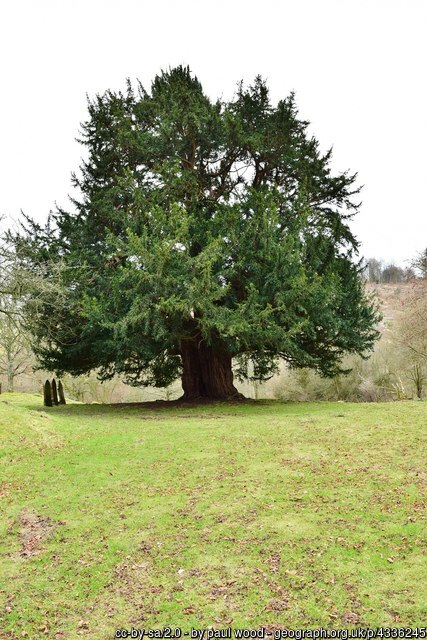
The yew tree – taxis baccata – is native to Britain. The yew is the most long-lived of all European trees and many are more than 1000 years old. Its evergreen leaves and seeds are highly poisonous- although not the red flesh surrounding the seed. The latter is popular with birds and squirrels. Its longevity and toxicity have made it symbolic of both immortality and doom. Its strong wood has favoured its use for making long bows. More recently yew leaves have been found to contain compounds that can be used to treat cancers. 

“The yew tree is the most important of all healing trees, it said. It lives for thousands of years. Its berries, its bark, its leaves, its sap, its pulp, its wood, they all thrum and burn and twist with life. It can cure almost any ailment man suffers from, mixed and treated by the right apothecary.” Patrick Ness, A Monster Calls

My flesh and my heart fail, but God is the strength of my heart and my portion for ever. Psalm 73:26

Counting on…day 126 

18th March 2022

Russia and Belarus have both been major exporters of fertilisers, but sanctions have cut off this supply. Ukraine too has banned the export of fertilisers in order to ensure supplies for their own farmers. Despite the best endeavours of Ukrainian farmers, exports of wheat on which many other nations depend will be severely reduced. Wheat shortages and rising wheat prices will affect many nations.  Egypt for example imports half its wheat from Ukraine for bread which is the staple diet of its citizens. Previously bread shortwaves have led to riots. 

The conflict in Ukraine highlights our global interdependency. We really are one family, one body where harm to one part affects all.

Lent Reflection

Still life with lemons and a bee, Giovanna Garzoni, 1600-1670

The lemon tree – citrus limon – is an evergreen native to Asia. Its fruit is widely used in cooking and has cleansing and healing properties. An ‘etrog’ or citron (the fruit of the wild lemon) is one of the four fruits used in the Jewish New Year celebration of Succoth – the fruit of one of ‘the goodly trees’ (Leviticus 23:40)

Roses and violets from summer gardens, sun-drenched Sicilian lemons squeezed of their juice and mingled with juniper from the frozen north. Saffron threads and gold leaf from the Indies waited to be turned into something magical. And contained deep within all this was a smile that flooded him with warmth … Laura MadeLevine, The Confectioner’s Take

A cheerful hearts is a good medicine, but a downcast spirit dries up the bones. Proverbs 17:22

The Green Tau: issue 37 

17th March 2022

Natural Wealth

We usually think of wealth in terms of money. Maybe we have an image of a vault full of coins and precious jewels like that of Harry Potter’s at Gringotts Bank.  Today I want to focus on natural wealth by which I mean the stock of natural resources that the earth provides for us. These natural resources range from water, air and soil,  plants and animals, to rocks and minerals.  The World Bank describes these things as being ‘natural capital’   which points to their use as means of generating something more. This is not an inappropriate concept. It fits with the repeated phrase used in Genesis chapter 1, ‘Be fruitful and multiply’. In creating the world, God was creating a thing that would grow and reproduce, diversify and abound, prosper and flourish.

What the two terms, natural wealth and natural capital, may point to is that natural resources can be misused  diminishing wealth and productivity. Let’s look at a couple of examples.

Soil

Soil is a natural resource to be found in all parts of the world. It should be valued as a key part of the world’s natural wealth. Soil enables plants to grow. Without plants we would starve and so too would all other creatures. Without plants, our atmosphere would suffer: carbon dioxide would cease to be absorbed and oxygen produced. Soil absorbs water preventing flash floods. Soil is home to wealth of biodiversity – moles, worms, ants, mites, fungus, bacteria etc. it is the nesting place for puffins and shearwaters, for rabbits and foxes.

Soil was not created ready formed. Soil is the result of the erosion of rocks creating small mineral particles; the decaying  of plant and animal remains; the addition by water of further chemicals; and the digging, mixing, tilling action of creatures as diverse as ants and worms, birds and badgers. When soil is being newly formed such as on lava outcrops or newly exposed rock surfaces, or where shores have been exposed, pioneer species of plants will begin the soil making process, to be replaced overtime by other plants, insects and animals as the soil’s fertility increases. 

However the wealth of the soil can be lost. If it looses its protective plant covering, it can be blown or washed away. If its goodness is used to grow successive generations of plants without that goodness being replaced, it becomes a non-fertile dust. If is infused with poisons (pesticides, herbicides etc) the biodiversity within the soil will lost and with it the ability of the soil to process and absorb decaying plant and animal material that gives the soil its fertility.  If it is overridden by heavy equipment, its structure is crushed, spaces for air and water are lost and with it, the soil’s ability to support life forms. Across the world, as self destructive as it may seem, humans misuse the soil: deforestation; monoculture; use of increasingly large and heavy farm equipment; use of insecticides, herbicides and overuse of artificial fertilisers; destruction of the infrastructure for biodiversity (hedgerows, verges, copses); over grazing etc. All these contribute to the destruction of the soil. 

All soil, cultivated or not, needs to be protected. Where it is cultivated it needs to be carefully tended and fed, and its structure and maintained. 

Forests

Forests are another key part of the natural wealth of the planet. Forests stabilise and protect soils. They are home to a great variety of different plants (more than just trees!), animals, birds, insects and many other living things. They provide humans with timber for building (homes, railway tracks,  bridges etc), for furniture, tools boxes. Timber for making paper and card, for making fabrics (eg viscose). Fruit, nuts and saps for food, as well as saps that are used to make rubber and resins. Many forest plants have medicinal uses. Forests provide shade which can be used to protect vulnerable crops (eg shade grown coffee). Tree cover can protect the soil for either drying out or being washed away, and sylvan farming techniques utilise this value of forests. Forests slow the flow of water so reducing the risks or scale of flooding. Forests absorb carbon and contribute considerably counterbalancing the excesses of carbon dioxide generated by human lifestyles.

And yet the wealth of our forests is being diminished. 

‘Forests cover 31 percent of the global land area – 4.06 billion hectares… Between  2015 and 2020, the rate of deforestation was estimated at 10 million hectares per year, down from 16 million hectares per year in the 1990s.  Agricultural expansion continues to be the main driver of deforestation and forest degradation and the associated loss of forest biodiversity… Large-scale commercial agriculture (primarily cattle ranching and cultivation of soya bean and oil palm) accounted for 40 percent of tropical deforestation between 2000 and 2010, and local subsistence agriculture for another 33 percent.’  https://www.fao.org/state-of-forests/en/

Oil

Oil, like coal and gas, is a substance formed over many millennia in very precise circumstances that coincided hundreds of millennia ago. It is a highly adaptable material that can be used not just as an energy source, but also to make products as diverse as lipstick and fertilisers, and of course, plastic. Plastic has proved a very useful material being cheap, light, non perishable, highly mouldable etc. However oil was formed by locking away carbon deposits over hundreds of thousands of year but which we are now released into the atmosphere in just three centuries. This rate of release is far more greater than the ability of the atmosphere to safely contain it. Oil has become the biggest human pollutant. Oil extraction, through oil leaks etc is also a cause of  localised pollution. And in addition we are now aware of the polluting effects of the plastics we have produced – micro particles of plastic have been found in all parts of the planet as well as in animals, fish, birds and human beings. Oil whilst appearing to offer many benefits, has and continues to damage the earth.

Unlike soils, which can be rescued and regenerated, and forests that can be replanted and restored, oil – and other minerals that we extract from the earth – is a non renewable resource. For those those things for which oil-based products are beneficial, we should make every effort to recycle and reuse all that we do have.

Natural wealth is a gift from God, a gift of creation. We should not squander or degrade it. Rather we should cherish and nurture it. This should determine how we use that wealth, how we care for the soils and the forests, how we use – or rather don’t use oil -and how we recycle and reuse plastic items.

Whilst the level of care given to our natural wealth may vary between nations (and this could be for any number of reasons such as economic policies, poverty, heritage), the distribution of natural wealth across the planet is independent of  national boundaries and its distribution could be viewed as inequitable. Some countries have large areas of fertile soil conducive to growing wheat, corn or rice. Others have soils and climates conducive to the growth of forests. Some countries have large reserves of minerals such as iron ore, lithium and gold. Some countries have large reserves of fossil fuels. Some have tides, rivers and reservoirs suitable for producing hydro electricity, or climates suitable for wind and solar power. More recently we have realised that some countries have reserves of natural wealth that excel as carbon sinks: forests, peat bogs, mangroves, kelp forests. What we have not perhaps resolved is how we share this global wealth fairly – other than through economic markets – or how we share the responsibility of caring for this wealth, and ensuring that we pass it on us diminished to future generations.  

Whilst wealth and money are not, per se, the same thing, putting a monetary value on natural wealth helps countries and people to recognise the value of natural wealth and to shape their actions accordingly. The World Bank has been working on an Ecosystem Accounting framework that allows countries to assess the services contributed by natural wealth and give them a monetary value. By having a standardised system countries can  calculate how the natural wealth contributes to their GDP. “This is a huge step towards seeing nature as an economic asset that needs to be managed and preserved to ensure sustainable growth. For example, the Government of Cambodia asked the World Bank to provide the economic rationale behind preserving 65% of the country’s forests as protected land. While some benefits were  obvious, it did not have the economic analysis to fully justify such a  wide-ranging decision. Using ecosystem accounting, the World Bank team supported the Government of Cambodia in quantifying a suite of services that forests offer  –  water, agriculture and hydropower, ecotourism and carbon storage – for the Pursat River Basin in the Cardamom Mountains in Cambodia. The analysis revealed that economic gains from preserving the forests was five times higher than cutting them down for charcoal production or agriculture. It also found that the benefits to other economic sectors derived from forest ecosystems are 20 times higher than the cost of maintaining them”. https://blogs.worldbank.org/voices/giant-leap-towards-measuring-natures-contributions-economy

The British Government, too, is developing the use of ecosystem accounting. ‘The Office for National Statistics estimate that England’s woods and forests deliver a value of services estimated at £2.3 billion annually. Of this figure, only a small proportion – 10% – is in timber values. The rest of the value derives from other more ‘hidden’ benefits to society, such as human recreation and air pollution removal, which improve health, and carbon sequestration which can help combat climate change’. https://www.gov.uk/government/news/natural-capital-tool-launched-to-help-protect-the-environment If followed through, this should ensure that we – as a nation, as a society, as landowners and as business enterprises –  do actually value and safeguard our forests and woodlands. 

As individuals we can speak out for and protect our world’s natural wealth –

  • Be an ethical consumer 
  • Be an ethical investor whether that is with direct investments or via investments made on your behalf by your pension fund provider, insurers, bank etc.
  • Support nature conservation schemes, nature friendly farming research, alternative energy etc
  • Be a campaigner, make your voice heard 
  • Visit and enjoy local nature reserves and green or blue spaces. 

Visit https://greentau.org/2022/02/24/eco-tips/ for more  tips on being a sustainable consumer.

Lent Reflection

https://www.pinterest.co.uk/pin/582160689307976534/

The mustard seed tree? One of Jesus’s famous parables concerns a mustard seed which he likens to the kingdom of heaven. A person plants a single mustard seed – the smallest of all seeds – which then grows into the largest of all trees. It is so large that within its branches all the birds of the air find a place to nest. In The Great Storm by Nick Butterworth, Percy the Park Keeper finds places in a single oak tree for all the animals whose homes were lost in the storm. His final action is to plant an acorn to become the oak tree for the future. 

The tree grew great and strong, its top reached to heaven, and it was visible to the ends of the whole earth.Its foliage was beautiful, its fruit abundant, and it provided food for all. The animals of the field found shade under it, the birds of the air nested in its branches, and from it all living beings were fed. Daniel 4: 10-12

Someone is sitting in the shade today because someone planted a tree a long time ago. Warren Buffett

Counting on ….day 125

17th March 2022

Following on from the Green Tau, issue  about fossil fuel divestment, various companies and institutions are divesting from Russian investments. This includes the Church of England’s Church Commissioners and Pension Board.  Divesting is a positive way of demonstrating and establishing one’s ethical principles. https://www.churchtimes.co.uk/articles/2022/4-march/news/uk/church-of-england-ditches-shares-in-russian-firms

Lent Reflection

Flowers Wesel Wild Cherry Plant Auesee Spring http://www.maxpixel

The wild or bird cherry – prunus avium – is a British native. Its name refers to the roles birds play in its propagation: birds that eat the fruit whole often deposit its stone (seed) further afield. The tree grows to a height of 30m and can live for about 60 years. Its wood is strong, hard and honey coloured. Traditionally the wood was sued for casks and vine poles.

Cherry blossoms is highly valued in Japan where its brief flowering is a reminder of joy and the transience of life. Yet as the flower holds that which becomes the cherry, it is also a reminder of new life to come.

So of anyone is in Christ, there is a new creation: everything old has passed away; see, everything has become new! 2 Corinthians 5:17

In the cherry blossom’s shade there’s no such thing as a stranger. Kobayashi Issa