Counting on …day 106 

26th February 2022

Slowly we are seeing more products being made of recycled materials. Brabantia is one such producer. Their StepUp Pedal Bins are made from 91% recycled plastic consumer waste from Dutch households. The bins are also 99% recyclable. The Cradle-to-Cradle Products Innovation Institute assesses products on material quality, material reuse, the use of renewable energy and CO2 management, water management and fairness, and has awarded these bins a silver accreditation. 

They are on sale in our local hardware shop – however only buy one if you need it. It is more ecological to stick with the bin you have. 

 Counting on…day 105

25th February 2022

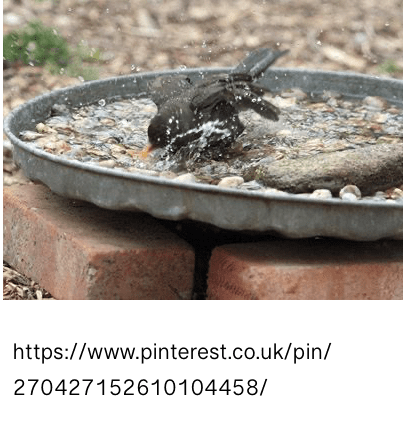
This winter I have noticed more birds using the bird bath both for drinking and for washing. I make a point of changing the water frequently – and replacing ice with water! It’s new popularity maybe because I have resisted it so that it is in the middle of the lawn well away from plants and bushes where predators could hide.

https://www.rspb.org.uk/birds-and-wildlife/advice/how-you-can-help-birds/how-to-make-a-bird-bath/

Fairly traded

24th February 2022

This week is the first half of Fairtrade fortnight when the Fairtrade Foundation draws our attention to the their work in protecting and supporting farmers, farm workers and small businesses in developing countries. For products to gain the Fairtrade mark a thorough investigation of trading practices is made, standards attained and goals established. Products with the Fairtrade mark often command a higher price which consumers are willing to pay knowing that the extra supports the wellbeing of those involved in its production and of the environment.  

These principles are clearly ones one would wish to apply in every circumstance. As consumers we can make the effort to find out about workers pay and conditions, the effects of production on the environment, of safe guards and sustainable practices, company practices, shareholder remuneration and the payment of taxes. It is not just in developing companies that one should desire fair trade practices, but here in the UK too. Being better informed we can chose to support those companies which trade fairly. The following groups/ foundations etc offer standards and identifying logos that help inform us as consumers. 

  • Fairtrade is a system of certification that aims to ensure a set of standards are met in the production and supply of a product or ingredient. For farmers and workers, Fairtrade means workers’ rights, safer working conditions and fairer pay. For shoppers it means high quality, ethically produced products. Choosing Fairtrade means standing with farmers for fairness and equality, against some of the biggest challenges the world faces. It means farmers creating change, from investing in climate friendly farming techniques to developing women in leadership. With Fairtrade you change the world a little bit every day. Through simple shopping choices you are showing businesses and governments that you believe in fair and just trade. https://www.fairtrade.org.uk/what-is-fairtrade/ 
  • The Rainforest Alliance is a global leader in sustainability certification. Farms, forest communities, and businesses that participate in our certification program are audited against rigorous sustainability standards based on the triple bottom line: environmental, economic, and social well-being. More than two million farmers follow our agriculture standards in 70 countries around the globe. Our programs focus on coffee, cocoa, tea, bananas, and many other important commodity sectors facing urgent environmental and social challenges.  https://www.rainforest-alliance.org/approach/
  • The Living Wage Foundation is at the heart of the independent movement of businesses and people that campaign for the idea that a hard day’s work deserves a fair day’s pay. They celebrate and recognise the leadership of responsible employers who choose to go further and pay a real Living Wage based on the cost of living, not just the government minimum. They coordinate the announcement of the real Living Wage rates each November, based on the best available evidence about living standards in London and the UK. We also provide advice and support to employers and service providers implementing the independently-calculated Living Wage rates. This includes best practice guides, case studies from leading employers, model procurement frameworks and access to specialist legal and HR advice. They offer accreditation to employers that pay the independently-calculated Living Wage rates to all staff in London and the UK, or those committed to an agreed timetable of implementation, by awarding the Living Wage Employer Mark. https://www.livingwage.org.uk/living-wage-foundation  
  • The Fair Tax Foundation was launched in 2014 and operates as a not-for-profit social enterprise. Our Fair Tax Mark accreditation scheme seeks to encourage and recognise businesses that pay the right amount of corporation tax at the right time and in the right place. We believe companies paying tax responsibly and transparently should be celebrated, and any race to the bottom resisted. Tax contributions are a key part of the positive social and economic impact made by business. The growth of tax havens and unethical corporate tax conduct have become prominent concerns across the world. Aggressive tax avoidance negatively distorts national economies and undermines the ability of responsible business to compete fairly, both domestically and internationally. https://fairtaxmark.net/  
  • Certified B Corporations, or B Corps, are companies verified by B Lab to meet high standards of social and environmental performance, transparency and accountability.B Lab is the non-profit network transforming the global economy to benefit all people, communities and the planet.  It was created in 2006 with the mission to inspire and enable people to use business as a force for good. There are B Labs across the globe (forming the B Global Network) including Australia, East Africa, mainland Europe and North and South America. B Lab UK is a charity that launched in 2015.  As part of this international network, B Lab UK leads economic systems change to support our collective vision of an inclusive, equitable and regenerative economy. Our purpose is to redefine success in business through building a community of engaged businesses, raising awareness of the B Corp Movement and influencing change in the UK economy. Together, we are shifting our global economy from a system that profits few to one that benefits all: advancing a new model that moves from concentrating wealth and power to ensuring equity, from extraction to generation, and from prioritising individualism to embracing interdependence. https://bcorporation.uk/about-b-lab-uk/  
  • The Soil Association is the charity that digs deeper to transform the way we eat, farm and care for our natural world.Why do we do this? Because we want to live in a world which is in balance with nature. In a future with good health and a safe climate. For the last 75 years, we’ve worked with citizens, farmers, policy makers and businesses, supporting them to explore the vital relationship between the health of soil, plants, animals and people. Because the only way to solve the issues we face is to understand that they are all connected – and that food, farming and forestry are a vital part of the solution. Any product sold as ‘organic’ in the UK has to comply with organic regulation requirements written into a set of Standards. The Soil Association acts as a certification body and its symbol is a recognised and trusted international mark of organic certification internationally.  https://www.soilassociation.org/who-we-are/  
  • The Marine Stewardship Council (MSC) is an international non-profit organisation on a mission to  stop overfishing. For over 20 years, they have been working with fisheries, seafood companies and scientists to help protect the oceans around us, and safeguard seafood supplies. The blue MSC ecolabel is the world’s most recognised label for sustainable seafood. It is found on retail products and in restaurants identifying fish and seafood that has been wild-caught in a sustainable way and is fully traceable. The blue MSC ecolabel is only awarded to well-managed fisheries that meet the MSC’s independently verified standards for sustainable seafood production. https://www.msc.org/ 
  • The Forestry Stewardship Council, the original pioneers of forest certification, has 25 years of experience in sustainable forest management. They use their expertise to promote the responsible management of the world’s forests, bringing together experts from the environmental, economic and social spheres. 12 Irreplaceable Forest Products in Our Daily Lives: paper, toilet paper, books, cardboard, paper packaging, wood, furniture, musical instruments, charcoal, rubber products such as condoms, balls, tires, fruits and berries, and  medicines – A lot of medicines have important ingredients that come from the rainforest. While there are not any FSC-certified medicines (yet!), the standards set by FSC for responsible forest management protect the forests where these ingredients come from, thus ensuring that we will have access to them for future generations. Next time you add them to your shopping bag, make sure they are sourced sustainably by looking for the FSC logo.  https://fsc.org/en  
  • In 2008 The Round Table on Sustainable Palm Oil developed a set of environmental and social criteria which companies must comply with in order to produce Certified Sustainable Palm Oil (CSPO) in response to the ever-urgent need and growing global concern that commodities are produced without causing harm to the environment or society. Sustainable palm oil is responsive to increasing global food demand, supports affordable food prices, supports poverty reduction, safeguards social interests, communities and workers, and protects the environment. All organisations in the supply chain that use RSPO certified sustainable oil products are audited to prevent overselling and mixing palm oil with conventional (or non-sustainable) oil palm products. https://www.rspo.org/certification

 Counting on day 104

24th  February 2022

Safe guarding scarce resources.

Helium is a naturally occurring gas. It is very light and once released it quickly escapes to the edges of the earth’s  atmosphere. Where helium has become trapped in rock strata it can be Helium extracted for commercial use. It cannot be chemically manufactured and is therefore a limited finite resource.  Helium is is a key component in the operating of MRI scanners. 

It is surely irresponsible to use it to fill party balloons? 

 Counting on …day 103

23rd February 2022

As well as counting on ourselves to take action, we count on others too. Our local council, the Borough of Richmond upon Thames has recently review it progress vis a vis its climate emergency strategy. An independent assessment of all councils, ranked Richmond as eleventh overall, and third highest within the London Boroughs. Richmond scored particularly highly on ‘Community, engagement and communications’ and well above average on ‘Ecological emergency’. For full details see 

https://www.richmond.gov.uk/news/february_2022/cllr_neden_watts_on_richmond_council_climate_emergency_action_plan_annual_update

Green Tau issue 35

22nd February 2022

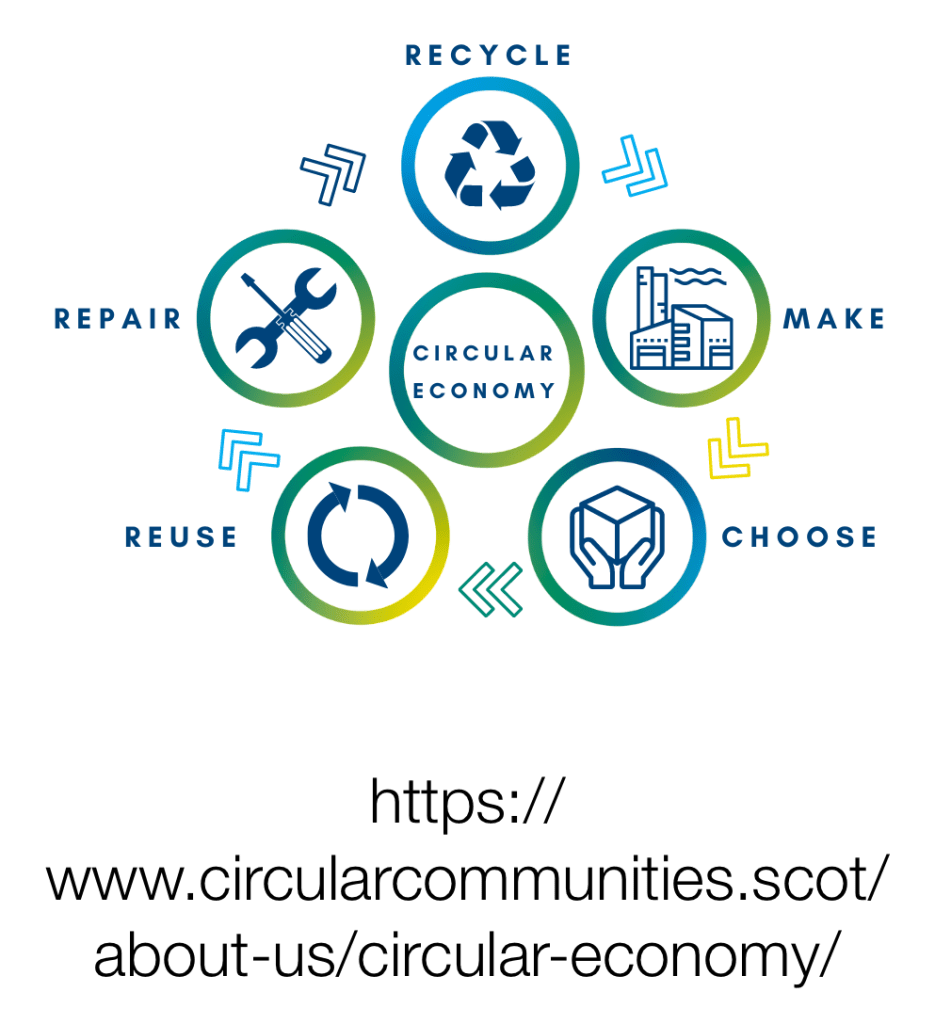
What is a circular economy? 

It is easier to describe its opposite. A non circular economy is that takes, makes and throws away. For example, chop down a tree, make its wood into a sheet of paper and then, after a single use, throw the paper away. Another example would be taking oil out of the ground, making it into a plastic cup  and then, after a single use, throwing it away.

In a circular economy the ‘throw away’ section is discarded. Instead the product is reused or recycled or repurposed so that its value is not lost. In a circular economy the sheet of paper after its initial use, may be reused (writing on the back of it), possible repurposed (used to wrap a parcel) and then recycled. Being recycled the waste paper may become a fresh sheet of (recycled) paper. Going back into the economy that sheet of paper can be recycled 6 or so times before the fibres become too short. At that point the sheet of paper might be recycled as a lower grade material and become a paper bag, a news paper, a cardboard box etc. Ultimately this paper based waste product can be composted and its nutrients returned to the soil. 

In a circular economy the intention is not only to ensure the reuse of waste material (really it is not waste but ‘raw’ material) but also to ensure that there is no waste of energy and water.  Recycling paper uses about 70% less energy and water than making virgin paper and produces about 70% less air pollution. If the paper mill has solar panels, say, it operate with zero loss of energy. If it can clean, reuse and/ or  return its water to the water system, it can operate without loss to the water system.

A circular economy seeks to regenerate natural resources. In the case of paper this would be planting and maintaining woodland to ensure supplies of wood for future generations who wish to make and use paper. Not all resources can be regenerated. Once fossil oil has been extracted from the earth, more cannot be generated. Oil was created 300 million years ago when climatic conditions were particularly suitable for its formation. The formation itself took place over 200 million years during which time climatic conditions were again suitable. Oil is finite resource. 

Is the rate at which we using the earth’s resources sustainable? Bluntly, no! If we compare the amount of resources we use each year against the rate at which those resources can be replaced, then we have not been living within our means since 1970. Each year the Global Footprint Network calculates the resources we use against the capacity of the earth to regenerate its resources and pin points that day in which the two coincide. In 1970 that date was 31st December. Since then this date – Earth Overshoot Day – has rapidly receded global consumption has exceeded the rate of regeneration. In 2021, it fell on July 29. Our current lifestyle is unsustainable. Moving to a circular economy is one way of addressing this problem. 

The development of a circular economy, both globally and locally, is happening. We see it in recycling schemes where plastic bottles are collected, processed and remade into new bottles. We see it with clothing manufacturers where clothes no longer required by the user are returned and either re sold or recycled to create new cloth. There are schemes which reuse and repurpose old furniture. There are even companies that reuse and repurpose unwanted kitchen units. Some projects are small, others large but they are all a step in the right direction. As consumers we need to step up and activity choose to be part of the circular economy.

Further reading: https://www.chathamhouse.org/2021/06/what-circular-economy

Counting on …day 102 

22nd February 202s

Another refill? Did you know that Lush make their black plastic pots from recycled plastic and that each one that is returned, goes to their own reprocessing facility to be remade into a new pot ready to be filled again. And for each one returned 50p is paid back! Lush calls this ‘packaging as a service’! 

Sadly only about 15% of pots are returned. It sounds as if we consumers need to be more proactive participants of the circular economy.  

Counting on …day 101

21st February 2022

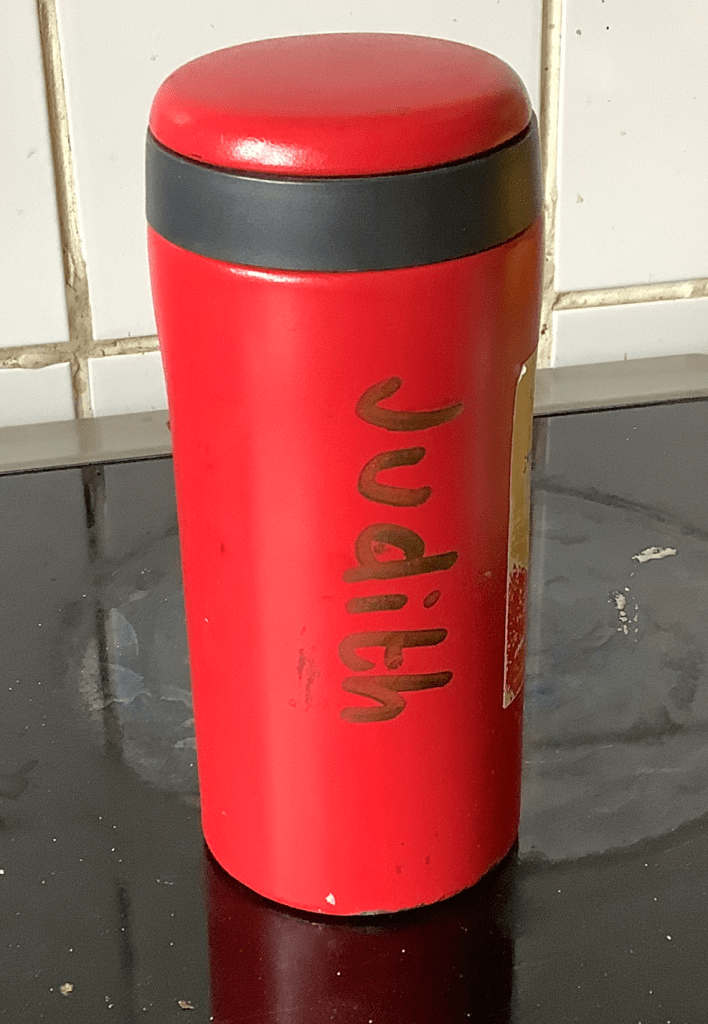
 Fancy a refill? Following on from last week’s Green Tau, reusable water bottles and coffee cups – keep cups – are excellent for refills, avoiding creating yet more single use paper/plastic items that require recycling/ disposal. (You do of course have to remember to take them with you!) My favourite is a small flask  as it keeps cold drinks cold in the summer and hot ones hot in the winter. 

 Counting on… day 100

20th February 2022

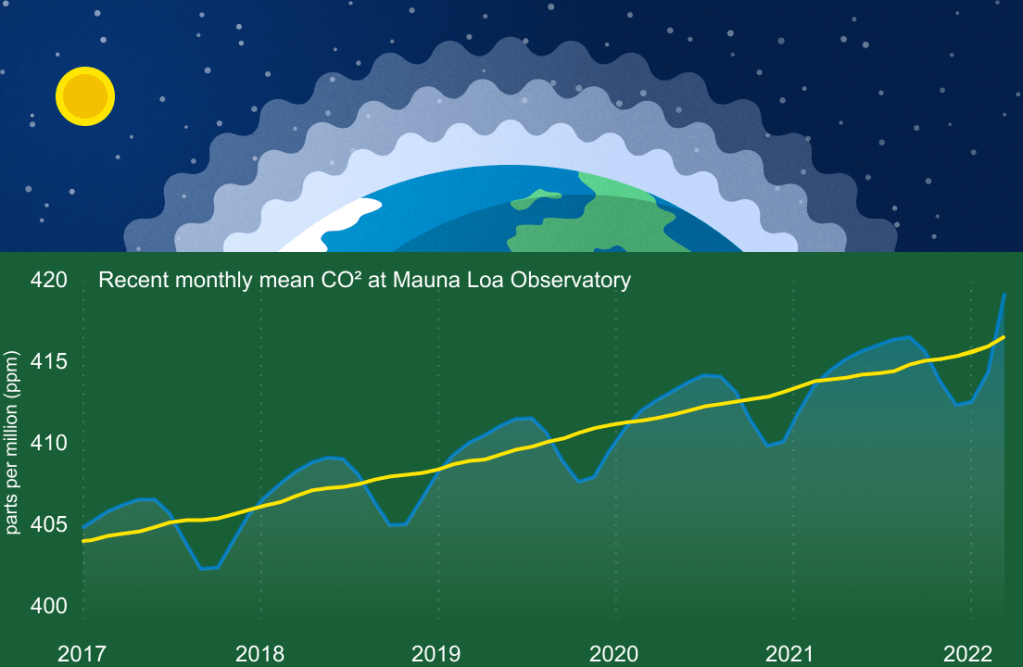
The Guardian posts a daily note of global CO2 levels. They are a stark reminder of the seriousness of the crisis that we are facing. 

C02 weekly averages
6 February, 2022: 418.38ppm
This time last year: 417.04ppm
1 Year Change: 1.38ppm (0.32%)
10 years ago: 393.99ppm
Safe level: 350ppm” 

Second Sunday before Lent

20th February 2022

Genesis 2:4b-9, 15-25In

In the day that the Lord God made the earth and the heavens, when no plant of the field was yet in the earth and no herb of the field had yet sprung up—for the Lord God had not caused it to rain upon the earth, and there was no one to till the ground; but a stream would rise from the earth, and water the whole face of the ground— then the Lord God formed man from the dust of the ground, and breathed into his nostrils the breath of life; and the man became a living being. And the Lord God planted a garden in Eden, in the east; and there he put the man whom he had formed. Out of the ground the Lord God made to grow every tree that is pleasant to the sight and good for food, the tree of life also in the midst of the garden, and the tree of the knowledge of good and evil.

The Lord God took the man and put him in the garden of Eden to till it and keep it. And the Lord God commanded the man, ‘You may freely eat of every tree of the garden; but of the tree of the knowledge of good and evil you shall not eat, for in the day that you eat of it you shall die.’

Then the Lord God said, ‘It is not good that the man should be alone; I will make him a helper as his partner.’ So out of the ground the Lord God formed every animal of the field and every bird of the air, and brought them to the man to see what he would call them; and whatever the man called each living creature, that was its name. The man gave names to all cattle, and to the birds of the air, and to every animal of the field; but for the man there was not found a helper as his partner. So the Lord God caused a deep sleep to fall upon the man, and he slept; then he took one of his ribs and closed up its place with flesh. And the rib that the Lord God had taken from the man he made into a woman and brought her to the man. Then the man said,
‘This at last is bone of my bones
   and flesh of my flesh;
this one shall be called Woman,
   for out of Man this one was taken.’
Therefore a man leaves his father and his mother and clings to his wife, and they become one flesh. And the man and his wife were both naked, and were not ashamed.

Psalm 65 

To the leader. A Psalm of David. A Song.
Praise is due to you,
   O God, in Zion;
and to you shall vows be performed,
   O you who answer prayer!
To you all flesh shall come.
When deeds of iniquity overwhelm us,
   you forgive our transgressions.
Happy are those whom you choose and bring near
   to live in your courts.
We shall be satisfied with the goodness of your house,
   your holy temple. 


By awesome deeds you answer us with deliverance,
   O God of our salvation;
you are the hope of all the ends of the earth
   and of the farthest seas.
By your strength you established the mountains;
   you are girded with might.
You silence the roaring of the seas,
   the roaring of their waves,
   the tumult of the peoples.
Those who live at earth’s farthest bounds are awed by your signs;
you make the gateways of the morning and the evening shout for joy. 


You visit the earth and water it,
   you greatly enrich it;
the river of God is full of water;
   you provide the people with grain,
   for so you have prepared it.
You water its furrows abundantly,
   settling its ridges,
softening it with showers,
   and blessing its growth.
You crown the year with your bounty;
   your wagon tracks overflow with richness.
The pastures of the wilderness overflow,
   the hills gird themselves with joy,
the meadows clothe themselves with flocks,
   the valleys deck themselves with grain,
   they shout and sing together for joy.

Revelation 4

After this I looked, and there in heaven a door stood open! And the first voice, which I had heard speaking to me like a trumpet, said, ‘Come up here, and I will show you what must take place after this.’ At once I was in the spirit, and there in heaven stood a throne, with one seated on the throne! And the one seated there looks like jasper and cornelian, and around the throne is a rainbow that looks like an emerald. Around the throne are twenty-four thrones, and seated on the thrones are twenty-four elders, dressed in white robes, with golden crowns on their heads. Coming from the throne are flashes of lightning, and rumblings and peals of thunder, and in front of the throne burn seven flaming torches, which are the seven spirits of God; and in front of the throne there is something like a sea of glass, like crystal.

Around the throne, and on each side of the throne, are four living creatures, full of eyes in front and behind: the first living creature like a lion, the second living creature like an ox, the third living creature with a face like a human face, and the fourth living creature like a flying eagle. And the four living creatures, each of them with six wings, are full of eyes all around and inside. Day and night without ceasing they sing,
‘Holy, holy, holy,
the Lord God the Almighty,
   who was and is and is to come.’
And whenever the living creatures give glory and honour and thanks to the one who is seated on the throne, who lives for ever and ever, the twenty-four elders fall before the one who is seated on the throne and worship the one who lives for ever and ever; they cast their crowns before the throne, singing,
‘You are worthy, our Lord and God,
   to receive glory and honour and power,
for you created all things,
   and by your will they existed and were created.’

Luke 8:22-25

One day Jesus  got into a boat with his disciples, and he said to them, ‘Let us go across to the other side of the lake.’ So they put out, and while they were sailing he fell asleep. A gale swept down on the lake, and the boat was filling with water, and they were in danger. They went to him and woke him up, shouting, ‘Master, Master, we are perishing!’ And he woke up and rebuked the wind and the raging waves; they ceased, and there was a calm. He said to them, ‘Where is your faith?’ They were afraid and amazed, and said to one another, ‘Who then is this, that he commands even the winds and the water, and they obey him?’

Reflection

The small fishing boat caught in the midst of a storm is at risk of capsizing and its crew of drowning. At Jesus’s word the storm is calmed and the danger averted. His disciples are astonished. They had not expected this outcome: perhaps in waking Jesus they had been hoping for some words of comfort before they drowned. Or may they had woken him so that he too might have time to prepare for his death. ‘Who is this,’ they ask, ‘that he commands even the winds and the water and they obey?’ 

The control of the elements belongs to God. Yet as this story reminds us, Jesus, as much as he is of human flesh, he is also of God. 

 All our readings today remind us that God is the creator, the one who created the earth and all life that flourishes therein. And it reminds us of our role as humans and God’s expectation of us. The story from Genesis tells us that God specifically created humans to till and keep the earth, to ensure its continuing flourishing. Gods has created a regenerative earth that abounds with life such that it is self sustaining providing food and nourishment for all. 

The psalm exhorts  us that to God is due both praise and the performance of vows. This is balanced by the reminder that God is the source of our hope and  salvation – and then describes the wonder and bounty of nature with which Gods has endowed the world. This is a world of joyful abundance . 

Even the passage from Revelation extols the wonders of God’s creation. Seen through the lens of a spiritual vision, the writer sees heaven as a place where God is endlessly praised by and for all that is created.

So what of our world in the 21st century? Destructive winds and storms we certainly know about even here in London. Earlier this month Boston, USA, received a record snowfall of over 60cm with gusting winds that brought temperatures down to -28C. In Australia monsoon rains resulted in 381mm falling over night in Queensland. Tropical Storm Ana caused nearly 80 deaths in Madagascar, Mozambique, and Malawi  as well as displacing 160, 000 people. Whilst this week heavy rains in Brazil caused a landslide that has killed at least 94 people. In California 66 of the state is now affected by severe drought, and the risk of further wild fires. 

All around we are seeing the affects of human-made climate change. We cannot control the wind and the waves, but we can wreak devastation. Where is God in this? Does God hear our cries that we are perishing?

Yes, God does here our cries, and the cries of creation. God knows the fear and pain being suffered. God does not will storms or destruction, floods or droughts. God does not override the wind and the waves. God does not control humans as if we were automatons. Rather God desires that we tend and care for the world around us, that we learn from and understand the workings of creation, that we cease those activities that cause harm and damage.  Scientists have been studying the causes of climate change over the last 50 plus years. They have been modelling future effects of human activity and how we can alter our behaviour to constrain the worsening effects of the crisis. International groups, even governments, have accepted the validity and necessity of achieving net zero carbon emissions by 2050 – not to stop extreme weather events but to keep them within such limits that those who are vulnerable  can be protected. God is certainly there at the heart of these endeavours. 

‘Where is your faith?’ Jesus asked his companions. And today that is still his question: Where is our faith? Do we place our faith in God, in the wisdom of creation, in the knowledge discerned by scientists? If so, then why are we not taking all necessary steps to reduce our carbon emissions, to achieve net zero? Why are we not providing the finances to enable everyone to take part, whether that is those in this country who cannot meet the cost of insulating their houses, or buy sustainably produced food, or afford the cost of rail travel? Why are we not providing the finance marginalised countries who don’t have the capital to switch to renewables, who are ill-equipped to cope with storms and floods, who can’t meet the cost of adaptation, who can’t afford to develop new farming techniques? 

Or is it that we place our faith in human ego, in human independence? Is it that we place our faith in the motivation of profit? Is it that we find ourselves trapped in the iniquity of systems? Systems that promote short term gain over long term well being? Systems that trap the poor and the vulnerable? Systems that can’t envisage change?

Let us resolve to place our faith in God. God created the world, and as part of it, humanity. By studying how the world works, how ecosystems develop and thrive, we learn how to live sustainably and in harmony with creation. We learn how to live as God desires. Continuing to live lives that destroy habitats, that diminish the world’s biodiversity, that consume resources faster than they can be renewed, is to live in opposition to God’s will. Where we struggle is that as individuals, however much we try to live sustainably and in harmony with God, we cannot outweigh the contri effects of those who choose not to live sustainably, who choose to ignore God’s will. Often these are not individuals but are companies, governments and systems. 

We need to pray for these situations, to pray for for a softening of hearts and a change of disposition. To pray for those who are suffering. To pray for the strengthening of those who strive to do what is right.  We need to be prophetic, to call out the wrong where we see it, to challenge misplaced convention and tradition, to raise awareness of what is right and what is wrong. We need to join forces one with another to make our voices heard and make our message credible. And for this we need faith.  Like yeast in dough, like the mustard seed in the soil, faith can grow and work miracles.