The Green Tau: issue 37 

17th March 2022

Natural Wealth

We usually think of wealth in terms of money. Maybe we have an image of a vault full of coins and precious jewels like that of Harry Potter’s at Gringotts Bank.  Today I want to focus on natural wealth by which I mean the stock of natural resources that the earth provides for us. These natural resources range from water, air and soil,  plants and animals, to rocks and minerals.  The World Bank describes these things as being ‘natural capital’   which points to their use as means of generating something more. This is not an inappropriate concept. It fits with the repeated phrase used in Genesis chapter 1, ‘Be fruitful and multiply’. In creating the world, God was creating a thing that would grow and reproduce, diversify and abound, prosper and flourish.

What the two terms, natural wealth and natural capital, may point to is that natural resources can be misused  diminishing wealth and productivity. Let’s look at a couple of examples.

Soil

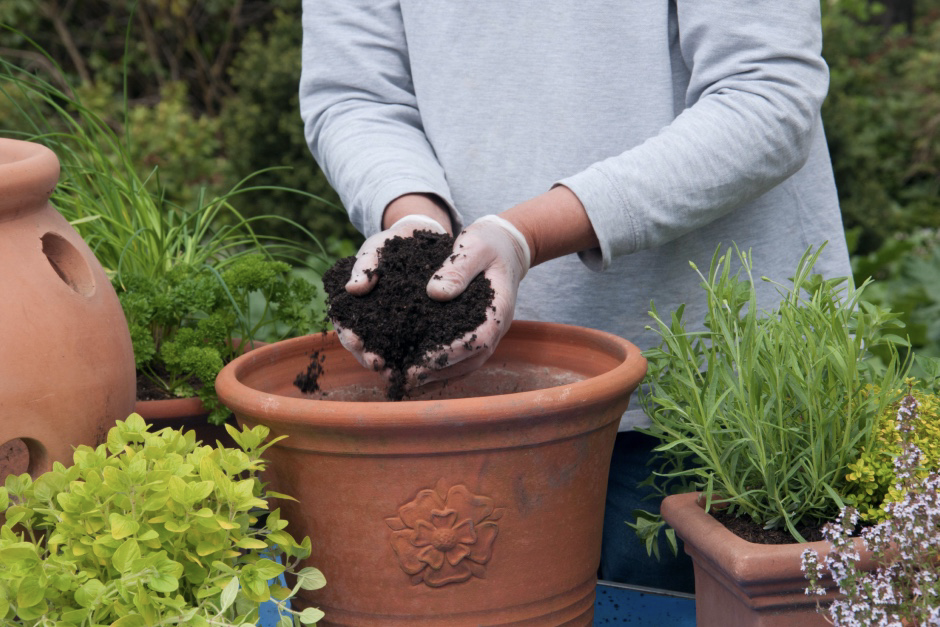
Soil is a natural resource to be found in all parts of the world. It should be valued as a key part of the world’s natural wealth. Soil enables plants to grow. Without plants we would starve and so too would all other creatures. Without plants, our atmosphere would suffer: carbon dioxide would cease to be absorbed and oxygen produced. Soil absorbs water preventing flash floods. Soil is home to wealth of biodiversity – moles, worms, ants, mites, fungus, bacteria etc. it is the nesting place for puffins and shearwaters, for rabbits and foxes.

Soil was not created ready formed. Soil is the result of the erosion of rocks creating small mineral particles; the decaying  of plant and animal remains; the addition by water of further chemicals; and the digging, mixing, tilling action of creatures as diverse as ants and worms, birds and badgers. When soil is being newly formed such as on lava outcrops or newly exposed rock surfaces, or where shores have been exposed, pioneer species of plants will begin the soil making process, to be replaced overtime by other plants, insects and animals as the soil’s fertility increases. 

However the wealth of the soil can be lost. If it looses its protective plant covering, it can be blown or washed away. If its goodness is used to grow successive generations of plants without that goodness being replaced, it becomes a non-fertile dust. If is infused with poisons (pesticides, herbicides etc) the biodiversity within the soil will lost and with it the ability of the soil to process and absorb decaying plant and animal material that gives the soil its fertility.  If it is overridden by heavy equipment, its structure is crushed, spaces for air and water are lost and with it, the soil’s ability to support life forms. Across the world, as self destructive as it may seem, humans misuse the soil: deforestation; monoculture; use of increasingly large and heavy farm equipment; use of insecticides, herbicides and overuse of artificial fertilisers; destruction of the infrastructure for biodiversity (hedgerows, verges, copses); over grazing etc. All these contribute to the destruction of the soil. 

All soil, cultivated or not, needs to be protected. Where it is cultivated it needs to be carefully tended and fed, and its structure and maintained. 

Forests

Forests are another key part of the natural wealth of the planet. Forests stabilise and protect soils. They are home to a great variety of different plants (more than just trees!), animals, birds, insects and many other living things. They provide humans with timber for building (homes, railway tracks,  bridges etc), for furniture, tools boxes. Timber for making paper and card, for making fabrics (eg viscose). Fruit, nuts and saps for food, as well as saps that are used to make rubber and resins. Many forest plants have medicinal uses. Forests provide shade which can be used to protect vulnerable crops (eg shade grown coffee). Tree cover can protect the soil for either drying out or being washed away, and sylvan farming techniques utilise this value of forests. Forests slow the flow of water so reducing the risks or scale of flooding. Forests absorb carbon and contribute considerably counterbalancing the excesses of carbon dioxide generated by human lifestyles.

And yet the wealth of our forests is being diminished. 

‘Forests cover 31 percent of the global land area – 4.06 billion hectares… Between  2015 and 2020, the rate of deforestation was estimated at 10 million hectares per year, down from 16 million hectares per year in the 1990s.  Agricultural expansion continues to be the main driver of deforestation and forest degradation and the associated loss of forest biodiversity… Large-scale commercial agriculture (primarily cattle ranching and cultivation of soya bean and oil palm) accounted for 40 percent of tropical deforestation between 2000 and 2010, and local subsistence agriculture for another 33 percent.’  https://www.fao.org/state-of-forests/en/

Oil

Oil, like coal and gas, is a substance formed over many millennia in very precise circumstances that coincided hundreds of millennia ago. It is a highly adaptable material that can be used not just as an energy source, but also to make products as diverse as lipstick and fertilisers, and of course, plastic. Plastic has proved a very useful material being cheap, light, non perishable, highly mouldable etc. However oil was formed by locking away carbon deposits over hundreds of thousands of year but which we are now released into the atmosphere in just three centuries. This rate of release is far more greater than the ability of the atmosphere to safely contain it. Oil has become the biggest human pollutant. Oil extraction, through oil leaks etc is also a cause of  localised pollution. And in addition we are now aware of the polluting effects of the plastics we have produced – micro particles of plastic have been found in all parts of the planet as well as in animals, fish, birds and human beings. Oil whilst appearing to offer many benefits, has and continues to damage the earth.

Unlike soils, which can be rescued and regenerated, and forests that can be replanted and restored, oil – and other minerals that we extract from the earth – is a non renewable resource. For those those things for which oil-based products are beneficial, we should make every effort to recycle and reuse all that we do have.

Natural wealth is a gift from God, a gift of creation. We should not squander or degrade it. Rather we should cherish and nurture it. This should determine how we use that wealth, how we care for the soils and the forests, how we use – or rather don’t use oil -and how we recycle and reuse plastic items.

Whilst the level of care given to our natural wealth may vary between nations (and this could be for any number of reasons such as economic policies, poverty, heritage), the distribution of natural wealth across the planet is independent of  national boundaries and its distribution could be viewed as inequitable. Some countries have large areas of fertile soil conducive to growing wheat, corn or rice. Others have soils and climates conducive to the growth of forests. Some countries have large reserves of minerals such as iron ore, lithium and gold. Some countries have large reserves of fossil fuels. Some have tides, rivers and reservoirs suitable for producing hydro electricity, or climates suitable for wind and solar power. More recently we have realised that some countries have reserves of natural wealth that excel as carbon sinks: forests, peat bogs, mangroves, kelp forests. What we have not perhaps resolved is how we share this global wealth fairly – other than through economic markets – or how we share the responsibility of caring for this wealth, and ensuring that we pass it on us diminished to future generations.  

Whilst wealth and money are not, per se, the same thing, putting a monetary value on natural wealth helps countries and people to recognise the value of natural wealth and to shape their actions accordingly. The World Bank has been working on an Ecosystem Accounting framework that allows countries to assess the services contributed by natural wealth and give them a monetary value. By having a standardised system countries can  calculate how the natural wealth contributes to their GDP. “This is a huge step towards seeing nature as an economic asset that needs to be managed and preserved to ensure sustainable growth. For example, the Government of Cambodia asked the World Bank to provide the economic rationale behind preserving 65% of the country’s forests as protected land. While some benefits were  obvious, it did not have the economic analysis to fully justify such a  wide-ranging decision. Using ecosystem accounting, the World Bank team supported the Government of Cambodia in quantifying a suite of services that forests offer  –  water, agriculture and hydropower, ecotourism and carbon storage – for the Pursat River Basin in the Cardamom Mountains in Cambodia. The analysis revealed that economic gains from preserving the forests was five times higher than cutting them down for charcoal production or agriculture. It also found that the benefits to other economic sectors derived from forest ecosystems are 20 times higher than the cost of maintaining them”. https://blogs.worldbank.org/voices/giant-leap-towards-measuring-natures-contributions-economy

The British Government, too, is developing the use of ecosystem accounting. ‘The Office for National Statistics estimate that England’s woods and forests deliver a value of services estimated at £2.3 billion annually. Of this figure, only a small proportion – 10% – is in timber values. The rest of the value derives from other more ‘hidden’ benefits to society, such as human recreation and air pollution removal, which improve health, and carbon sequestration which can help combat climate change’. https://www.gov.uk/government/news/natural-capital-tool-launched-to-help-protect-the-environment If followed through, this should ensure that we – as a nation, as a society, as landowners and as business enterprises –  do actually value and safeguard our forests and woodlands. 

As individuals we can speak out for and protect our world’s natural wealth –

  • Be an ethical consumer 
  • Be an ethical investor whether that is with direct investments or via investments made on your behalf by your pension fund provider, insurers, bank etc.
  • Support nature conservation schemes, nature friendly farming research, alternative energy etc
  • Be a campaigner, make your voice heard 
  • Visit and enjoy local nature reserves and green or blue spaces. 

Visit https://greentau.org/2022/02/24/eco-tips/ for more  tips on being a sustainable consumer.

Lent Reflection

https://www.pinterest.co.uk/pin/582160689307976534/

The mustard seed tree? One of Jesus’s famous parables concerns a mustard seed which he likens to the kingdom of heaven. A person plants a single mustard seed – the smallest of all seeds – which then grows into the largest of all trees. It is so large that within its branches all the birds of the air find a place to nest. In The Great Storm by Nick Butterworth, Percy the Park Keeper finds places in a single oak tree for all the animals whose homes were lost in the storm. His final action is to plant an acorn to become the oak tree for the future. 

The tree grew great and strong, its top reached to heaven, and it was visible to the ends of the whole earth.Its foliage was beautiful, its fruit abundant, and it provided food for all. The animals of the field found shade under it, the birds of the air nested in its branches, and from it all living beings were fed. Daniel 4: 10-12

Someone is sitting in the shade today because someone planted a tree a long time ago. Warren Buffett

Counting on ….day 125

17th March 2022

Following on from the Green Tau, issue  about fossil fuel divestment, various companies and institutions are divesting from Russian investments. This includes the Church of England’s Church Commissioners and Pension Board.  Divesting is a positive way of demonstrating and establishing one’s ethical principles. https://www.churchtimes.co.uk/articles/2022/4-march/news/uk/church-of-england-ditches-shares-in-russian-firms

Lent Reflection

Flowers Wesel Wild Cherry Plant Auesee Spring http://www.maxpixel

The wild or bird cherry – prunus avium – is a British native. Its name refers to the roles birds play in its propagation: birds that eat the fruit whole often deposit its stone (seed) further afield. The tree grows to a height of 30m and can live for about 60 years. Its wood is strong, hard and honey coloured. Traditionally the wood was sued for casks and vine poles.

Cherry blossoms is highly valued in Japan where its brief flowering is a reminder of joy and the transience of life. Yet as the flower holds that which becomes the cherry, it is also a reminder of new life to come.

So of anyone is in Christ, there is a new creation: everything old has passed away; see, everything has become new! 2 Corinthians 5:17

In the cherry blossom’s shade there’s no such thing as a stranger. Kobayashi Issa

 Counting on ….day 124

16th March 2022

Recently I have inquired of a number of producers whether their plastic packaging uses recycled plastic. The response has been mixed, but two commented that part of the issue was a lack of recycled plastic. According to Recycling Today  ‘The collection rate for plastics packaging recycled from April 2019 to March 2020 is 59 percent for bottles; 33 percent for pots, tubs and trays, 7 percent for film and 39 percent for all household plastic packaging’. https://www.recyclingtoday.com/article/recoup-plastic-recycling-rate-april-2019-march-2020/

This highlights the importance of ensuring waste materials are recycled and not jettisoned to land fill/ incineration. It also highlights the importance of cutting back on the amount of plastic we use. 

Lent Reflection

The English, or field, elm tree – ulmus minor Atinia – grows to a height of 30m and can live for more than 100 years. Its wood is strong with a tight grain making it water resistant. It was widely used in the last for water pipes, as well as for wheel hubs, furniture, floorboards and coffins. Cities such as Bristol and Reading has mains water delivered through elm pipe work.

World wide 1 in 9 people do not have clean water: Water Aid

Then he said to me, ‘It is done! I am the Alpha and the Omega, the beginning and the end. To the thirsty I will give water as a gift from the spring of the water of life.’ Boom of Revelation 21:6

 Counting on …day 123

15th March 2022

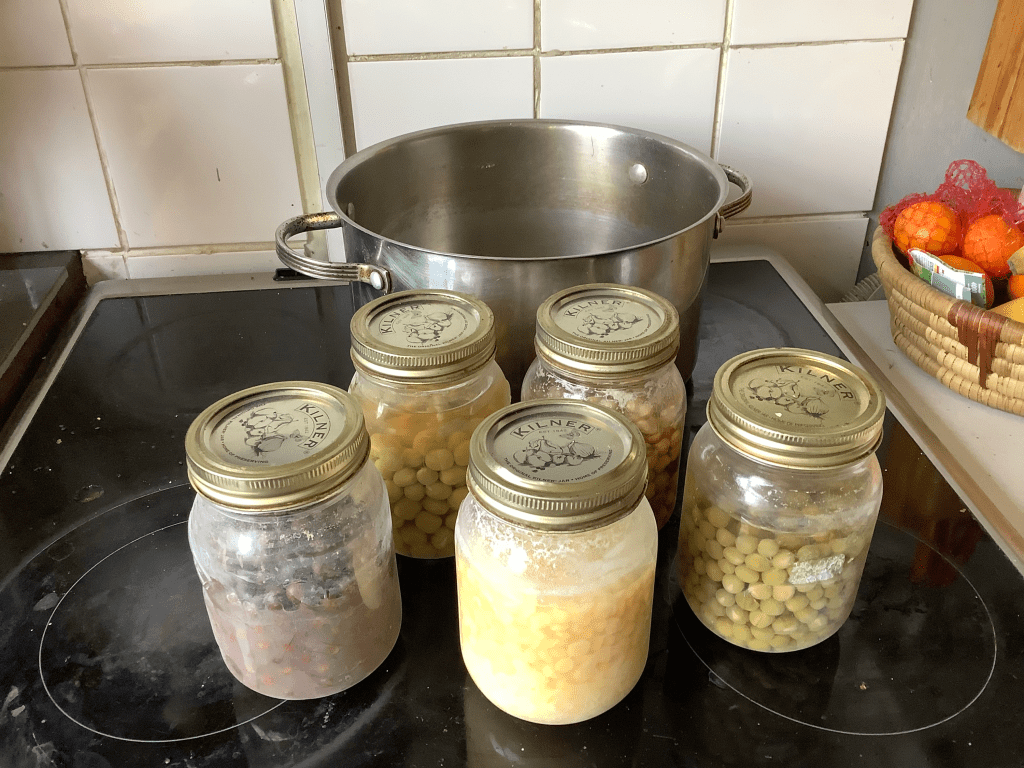
Having just used the last of some sticky tape, I was pleasantly surprised to discover that you can now by zero plastic Sellotape which is made from cellulose film and naturally based glue. The cellulose film is derived from wood pulp, sourced from PEFC certified sustainable forests. The tape and its packaging is biodegradable and can be composted or recycled with paper items. 

Daily life can be plastic free.

Lent Reflection

Green May Green Leaves Spring Tree Forest Wood http://www.maxpixel

The beech – fagus sylvatica (Fagus being the Celtic god of beech trees) – will grow to a height of 40m and live for several centuries; even longer if coppiced. The dense leaf canopy produced by the beech tree provides a habitat beneath for various rare plants such as the red helleborine. As beech trees come into leaf late in the spring, beech woods are an ideal habitat for English bluebells. Beech tree also play host to a truffle fungus: the fungus provides the tree with nutrients and in return benefits from the sweet sap of the tree. Beechmast – beech nuts – can be by eaten humans although being high in tannins have a bitter taste. This does not prevent other creatures from eating the mast, and is said to be popular with pigs.

Beech wood is widely used for furniture, kitchen utensils, and tool handles. Beech bark was used for writing on – poor man’s vellum – and this may give rise to its association with knowledge and writing. 

The earth is filled with you love, Lord; teach me your decrees  … Teach me knowledge and good judgement, for I trust your commands. Psalm 119: 64, 66

If knowledge is not put into practice, it does not benefit one. Muhammad Tahiti-ul-Qadri 

 Counting on … day 122

14th March 2022

Another sign of spring: we have two clumps of frogspawn in the pond. Despite large number of eggs laid, few will make it to adulthood. Most will be an essential part of the food chain – including the dragonfly larvae which currently live in the murky depths of the pond but who will in the summer make their dazzling transformation to dragon flies. I wonder if we fully understand the role of life and death in the cycle of the ecosystem. 

Second Sunday of Lent

13th March 2022

Genesis 15:1-12,17-18
The word of the Lord came to Abram in a vision, “Do not be afraid, Abram, I am your shield; your reward shall be very great.” But Abram said, “O Lord God, what will you give me, for I continue childless, and the heir of my house is Eliezer of Damascus?” And Abram said, “You have given me no offspring, and so a slave born in my house is to be my heir.” But the word of the Lord came to him, “This man shall not be your heir; no one but your very own issue shall be your heir.” He brought him outside and said, “Look toward heaven and count the stars, if you are able to count them.” Then he said to him, “So shall your descendants be.” And he believed the Lord; and the Lord reckoned it to him as righteousness.

Then he said to him, “I am the Lord who brought you from Ur of the Chaldeans, to give you this land to possess.” But he said, “O Lord God, how am I to know that I shall possess it?” He said to him, “Bring me a heifer three years old, a female goat three years old, a ram three years old, a turtledove, and a young pigeon.” He brought him all these and cut them in two, laying each half over against the other; but he did not cut the birds in two. And when birds of prey came down on the carcasses, Abram drove them away.

As the sun was going down, a deep sleep fell upon Abram, and a deep and terrifying darkness descended upon him.

When the sun had gone down and it was dark, a smoking fire pot and a flaming torch passed between these pieces. On that day the Lord made a covenant with Abram, saying, “To your descendants I give this land, from the river of Egypt to the great river, the river Euphrates.”

Psalm 27

1 The Lord is my light and my salvation;
whom then shall I fear? *
the Lord is the strength of my life;
of whom then shall I be afraid?

2 When evildoers came upon me to eat up my flesh, *
it was they, my foes and my adversaries, who
stumbled and fell.

3 Though an army should encamp against me, *
yet my heart shall not be afraid;

4 And though war should rise up against me, *
yet will I put my trust in him.

5 One thing have I asked of the Lord;
one thing I seek; *
that I may dwell in the house of the Lord all the days of my life;

6 To behold the fair beauty of the Lord *
and to seek him in his temple.

7 For in the day of trouble he shall keep me safe
in his shelter; *
he shall hide me in the secrecy of his dwelling
and set me high upon a rock.

8 Even now he lifts up my head *
above my enemies round about me.

9 Therefore I will offer in his dwelling an oblation
with sounds of great gladness; *
I will sing and make music to the Lord.

10 Hearken to my voice, O Lord, when I call; *
have mercy on me and answer me.

11 You speak in my heart and say, “Seek my face.” *
Your face, Lord, will I seek.

12 Hide not your face from me, *
nor turn away your servant in displeasure.

13 You have been my helper;
cast me not away; *
do not forsake me, O God of my salvation.

14 Though my father and my mother forsake me, *
the Lord will sustain me.

15 Show me your way, O Lord; *
lead me on a level path, because of my enemies.

16 Deliver me not into the hand of my adversaries, *
for false witnesses have risen up against me,
and also those who speak malice.

17 What if I had not believed
that I should see the goodness of the Lord *
in the land of the living!

18 O tarry and await the Lord’s pleasure;
be strong, and he shall comfort your heart; *
wait patiently for the Lord.

Philippians 3:17-4:1

Brothers and sisters, join in imitating me, and observe those who live according to the example you have in us. For many live as enemies of the cross of Christ; I have often told you of them, and now I tell you even with tears. Their end is destruction; their god is the belly; and their glory is in their shame; their minds are set on earthly things. But our citizenship is in heaven, and it is from there that we are expecting a Saviour, the Lord Jesus Christ. He will transform the body of our humiliation that it may be conformed to the body of his glory, by the power that also enables him to make all things subject to himself. Therefore, my brothers and sisters, whom I love and long for, my joy and crown, stand firm in the Lord in this way, my beloved.

Luke 13:31-35

Some Pharisees came and said to Jesus, “Get away from here, for Herod wants to kill you.” He said to them, “Go and tell that fox for me, ‘Listen, I am casting out demons and performing cures today and tomorrow, and on the third day I finish my work. Yet today, tomorrow, and the next day I must be on my way, because it is impossible for a prophet to be killed outside of Jerusalem.’ Jerusalem, Jerusalem, the city that kills the prophets and stones those who are sent to it! How often have I desired to gather your children together as a hen gathers her brood under her wings, and you were not willing! See, your house is left to you. And I tell you, you will not see me until the time comes when you say, ‘Blessed is the one who comes in the name of the Lord.'”

Reflection

In the reading from Genesis, Abram is feeling disconsolate about the future. He has no offspring that his house may continue. House here is used not in the sense of the building in which one lives, but of the family line: the line of continuity from forebears to offspring and future generations. Even today we talk of the House of Windsor in reference to the royal family. Abram has no offspring and fears he never will. His house, his inheritance, will pass to someone outside his family. God takes Abram outside (outside the tent where he lives) and showing him all the stars, promises that Abram’s descendants will be as numerous: his house, his line, is assured! And Abram believed and it counted to him as righteousness. 

I wonder if there is also something here about what is outside? Abram’s family is not going to be limited to what inside but is to encompass the greater number of all who are in the outside: a most inclusive family!

Then another worry surfaces for Abram. Will his line have secure possession of the land where they are living? Will they have a safe place to call ‘home’? Now God makes a covenant with Abram, conferring on his descendants possession of the land. In Hebrew the phrase to make a covenant  has two words. The first ‘karat’ means to cut; the second ‘beriyt’ to select or choose the best. Abram takes the prescribed animals and cuts them in half, laying them so as to speak either side of a path. From Jeremiah 34:18-20 we hear of this as a means of affirming an agreement: the undertaker of the agreement walks between the animal cut in two, to signify that, should they default, that same fate will be their due. Here it is God who walks between the two halves of the animals: God is taking on the burden of forfeiture in this covenant! 

Abram could certainly have agreed with the psalmist: with the Lord on one’s side, one has nothing to fear! The psalmist asserts that the Lord is the light, salvation and strength of those who put their trust in God. Thus assured, the psalmist has only one further request, to dwell in the house of the Lord. Here house is used in terms of a place, and specifically in this case, the temple – a place of safety and a place where one praises God.

Paul in his letter to the Philippians wants to make it quite clear that there is the wrong way of living and the right way. The wrong way has its focus on worldly gain whilst the right way is that of a citizen of heaven. The word used in the Greek is ‘politeuma’, has the meaning of behaving as a citizen, of conducting oneself appropriately, of undertaking one’s due responsibilities. Paul is appealing to us to live in this way, to stand firm in Jesus because, through him, we are citizens of heaven. This is both a privilege and responsibility. What we have  as citizens is, in essence, what Abram sought: an identity and a home.

Talk of citizenship and responsibility seems very topical when we look across to Ukraine and the commitment and strength being shown by the citizens of that land. Do we have the same fervour and commitment to the kingdom of heaven?

In the Gospel reading, we meet Jesus lamenting over the fate of Jerusalem. Jerusalem, the city consecrated to God, the site of the temple – the place of sacrifice – and the focal point for all who understood themselves to be the descendants of Abraham. Jesus knows that it will be the place where he will finally be killed by the authorities. He also knows the vulnerability of the place, that is going to be a place of desolation, a house whose line has died out, whose occupants have been taken away, a place whose inhabitants spurn all help. Yet there will be a happy resolution. The day will come when the people will say ‘Blessed is the one who comes in the name of the Lord’ – a quote from psalm 118 entitled a ‘Song of Victory’!

On this the second Sunday in Lent we are being reminded of the importance of belonging. We are, as it were, of the line of Abraham, we are of the house of God co heirs with Jesus, we are citizens of heaven, and our safety is secured by the promises of God. In this we are privileged. 

For those of us in East Sheen, we are also privileged that we can live securely in our homes, with ample supplies of food, energy and clean water. As citizens of heaven we have a responsibility to ensure that others too have equal access to such essentials. Whether that is for other people who even in Britain do not have secure accommodation, or the assurance of affordable food and heating. Whether that is for those who are refugees, or those still trapped behind battle lines. Or whether it is for those who are being dispossessed by the climate crisis. 

Each year Southwark Diocese raises money via a Lent Call. This year’s is focused on the need to provide people with homes, both here in south London, in Beirut and in our link dioceses in Zimbabwe. 

Our home – our place with God – is desolate until we receive the one who comes in the name of the Lord, until we welcome Jesus.