Counting on … day 51

4th January 2022

Seville oranges that are the key ingredient of marmalade are now in the shops and as they are a seasonal crop, now is the time to buy them and make marmalade. This recipe is adapted from one belonging to my great aunt.

7 Seville oranges

1 sweet orange

2 lemons

3kg sugar with pectin

Cut fruit into quarters and boil until skin is soft. If you have a slow cooker this is ideal – just put the fruit and 5 pints of water into the slow cooker, cover with its lid and leave gently simmering for 4 to 6 hours as necessary. If you are using a large saucepan, cover fruit with 7 pints of water and bring to the boil, uncovered. You will find the 2 pints of additional water will evaporate during the boiling.

Allow fruit to cool, slice the fruit thinly discarding all the pips as you find them. 

Put sliced fruit, the strained water/ juice and sugar into a large pan, bring to the boil whilst stirring (to prevent the sugar from burning). Boil, stirring frequently until setting point is reached. If possible use a jam thermometer. Otherwise test by dripping a small amount onto a cold plate. As it cools the mixture should form jelly like surface that wrinkles when pushed. 

Pour into sterilised jars and seal. 

Green Tau: issue 29

Caring for creation with every meal – Use your LOAF!

What we eat impacts the world around us – the welfare of animals, the welfare of wildlife, the fair sharing of water, the  fertility of the soil, the  well being of those who grow and produce food. It also contributes to the climate crisis. Making step by step changes, we can better care for creation.

The organisation Green Christian has produced the nemonic LOAF – Local, Organic, Animal friendly, fairly traded – to help us buy and eat sustainably with care for the world. https://greenchristian.org.uk/gc-campaigns/loaf/

L locally grown, locally produced. 

Local reduces the carbon miles attached to our food. Local keeps us in touch with those who grow, make and sell our food. Growing our own keeps us in touch with the soil itself!

O organic.

Food, whether that is crops grown or animals raised, that is produced organically removes chemical fertilisers and pesticides from the environment where they cause damage to water supplies, wild life and human health. Instead organic farming works in harmony with the environment boosting its well being and biodiversity.

A animal friendly. 

Animals including birds and fish, should always be treated with care and respect. Factory farming for example, treats animals as profit-making commodities. Arable farming also has a responsibility to be animal friendly, including the wellbeing of birds and insects.

F fairly traded. 

Throughout the supply chain from farm labourer to shelf stacker, lorry driver to barista, each person deserves to be treated fairly.

In a previous issue of the Green Tau – https://greentau.org/2021/08/14/green-tau-issue-12/

I have written about food and our carbon footprint. The Ethical Consumer’s Climate Gap Report notes that to be on track for net zero we need to reduce the carbon footprint of our food by 15% by 2030. So far (ie since 2019) reductions have not even risen above 0%.  It is imperative that we do look at and adjust what we eat, to reduce waste, to reduce our carbon footprint and to reduce the negative impact we have on the environment. Eating sustainably we can safeguard our own futures and improve that of the world in which we live.

  1. Eat less meat and dairy, replacing these with plant-based alternatives. “Veganuary” makes this a good time to try different vegan options. See the Eco Tips page on swopping to a vegan diet – https://greentau.org/2021/10/12/eco-tips-11/
  2. Use local food shops. Buy locally produced food. 
  3. In supermarkets choose UK grown rather than imported fruit and vegetables. 
  4. Eat what’s in season – strawberries in May/ June, blueberries in July/ August. 
  5. Subscribe to a veg box – eg Riverford’s or Abel and Cole – or OddBox which fills its boxes with fruit and veg that would otherwise go to waste.
  6. Use local farmers’ markets 
  7. Expand the variety of fruits and vegetables that you buy. Biodiversity is an important way forward for farming – https://greentau.org/2021/10/08/the-green-tau-issue-20-2/
  8. Opt for UK produce over imports. Hodmedod sells UK grown beans and pulses rather than those that come from Canada/ China etc.  https://hodmedods.co.uk/
  9. Opt for organic produce.
  10. Opt for fair trade products. This article relates to chocolate – https://greentau.org/2021/12/11/green-tau-issue-26/
  11. Use refill shops – also known as bulk stores. Take your own containers or use the shop’s paper bags to buy loose ingredients such as beans and pulses, grains, dried fruit etc. 
  12. When buying meat, find a butcher who knows where the meat comes from and how it has been raised.
  13. Be prepared to pay more for meat and diary products that have been reared to a higher ethical standard.
  14. Use a milk delivery service such as Milk and More for both dairy and oat milk in refillable glass bottles.
  15. When buying fish, check whether it is sustainably sourced and/or farmed. Refer to the Marine Conservation Society’s guide as to which fish are not endangered.
  16. Plan your meals and your shopping to avoid throwing food away – https://greentau.org/2021/08/09/eco-tips-4/
  17. Keep a habit of saying Grace at meals. Appreciation and gratitude go together. 

Counting on … day 50

3rd January 2022

The National Fruit Collection is held at Brogdale in Kent. Of all their collections, the apple is the largest  – 2131 varieties that come from across the UK and from across the world too. There is here a rich diversity in size, taste, texture, colour and use. Diversity is good both for the pleasure it gives us as eaters of apples but also as a means of protecting apple trees against viruses and other calamities. 

Why not contact your local supermarket and ask them to stock a greater range of varieties of British grown apples? (And ideally not in plastic packaging!!)

Counting on … day 49

2nd January 2022

Winter is a time for pruning various plants including apple and pear trees. Pruning helps them stay healthy and concentrates the plant’s energy for the coming year. It also helps maintain a manageable shape.  Traditionally this accompanied by wassailing – blessing the trees and making loud cheerful music to re awaken them so that they would produce plenty of fruit. 

It is a good reminder that we do count on the fertility of fruit trees and their successful pollination by  bees and other insects to ensure a rich and varied diet.


Second Sunday of Christmas

2nd January 2022

Isaiah 60: 1-6 

Arise, shine; for your light has come,
   and the glory of the Lord has risen upon you.
For darkness shall cover the earth,
   and thick darkness the peoples;
but the Lord will arise upon you,
   and his glory will appear over you.
Nations shall come to your light,
   and kings to the brightness of your dawn. 


Lift up your eyes and look around;
   they all gather together, they come to you;
your sons shall come from far away,
   and your daughters shall be carried on their nurses’ arms.
Then you shall see and be radiant;
   your heart shall thrill and rejoice,
because the abundance of the sea shall be brought to you,
   the wealth of the nations shall come to you.
A multitude of camels shall cover you,
   the young camels of Midian and Ephah;
   all those from Sheba shall come.
They shall bring gold and frankincense,
   and shall proclaim the praise of the Lord.

Psalm 84: 1-8

1 How dear to me is your dwelling, O Lord of hosts! *
My soul has a desire and longing for the courts of the Lord;
my heart and my flesh rejoice in the living God.

2 The sparrow has found her a house
and the swallow a nest where she may lay her young; *
by the side of your altars, O Lord of hosts,
my King and my God.

3 Happy are they who dwell in your house! *
they will always be praising you.

4 Happy are the people whose strength is in you! *
whose hearts are set on the pilgrims’ way.

5 Those who go through the desolate valley will find it a place of springs, *
for the early rains have covered it with pools of water.

6 They will climb from height to height, *
and the God of gods will reveal himself in Zion.

7 Lord God of hosts, hear my prayer; *
hearken, O God of Jacob.

8 Behold our defender, O God; *
and look upon the face of your Anointed.

Ephesians 3:1-12

This is the reason that I Paul am a prisoner for Christ Jesus for the sake of you Gentiles— for surely you have already heard of the commission of God’s grace that was given to me for you, and how the mystery was made known to me by revelation, as I wrote above in a few words, a reading of which will enable you to perceive my understanding of the mystery of Christ. In former generations this mystery was not made known to humankind, as it has now been revealed to his holy apostles and prophets by the Spirit: that is, the Gentiles have become fellow-heirs, members of the same body, and sharers in the promise in Christ Jesus through the gospel.

Of this gospel I have become a servant according to the gift of God’s grace that was given to me by the working of his power. Although I am the very least of all the saints, this grace was given to me to bring to the Gentiles the news of the boundless riches of Christ, and to make everyone see what is the plan of the mystery hidden for ages in God who created all things; so that through the church the wisdom of God in its rich variety might now be made known to the rulers and authorities in the heavenly places. This was in accordance with the eternal purpose that he has carried out in Christ Jesus our Lord, in whom we have access to God in boldness and confidence through faith in him.

Matthew 2: 1-12

In the time of King Herod, after Jesus was born in Bethlehem of Judea, wise men from the East came to Jerusalem, asking, ‘Where is the child who has been born king of the Jews? For we observed his star at its rising, and have come to pay him homage.’ When King Herod heard this, he was frightened, and all Jerusalem with him; and calling together all the chief priests and scribes of the people, he inquired of them where the Messiah was to be born. They told him, ‘In Bethlehem of Judea; for so it has been written by the prophet:
“And you, Bethlehem, in the land of Judah,
   are by no means least among the rulers of Judah;
for from you shall come a ruler
   who is to shepherd my people Israel.” ’

Then Herod secretly called for the wise men and learned from them the exact time when the star had appeared. Then he sent them to Bethlehem, saying, ‘Go and search diligently for the child; and when you have found him, bring me word so that I may also go and pay him homage.’ When they had heard the king, they set out; and there, ahead of them, went the star that they had seen at its rising, until it stopped over the place where the child was. When they saw that the star had stopped, they were overwhelmed with joy. On entering the house, they saw the child with Mary his mother; and they knelt down and paid him homage. Then, opening their treasure-chests, they offered him gifts of gold, frankincense, and myrrh. And having been warned in a dream not to return to Herod, they left for their own country by another road.

Reflection 

The glory of the Lord has risen, the glory of the Lord has appeared. It is a light shines in dark places and summons people. Not a search light seeking the intruder or the escapee. Not a light house beam flashing up warnings of danger. But like a light over the door way that says ‘Welcome, come in’. Like a street light that illuminates the road you should follow. Like a neon advertisement that says ‘Come! Be amazed! Be persuaded!’

The word used in Hebrew of glory is ‘kabod’ or ‘kavod’. The original meaning of the word was weight, but also has meanings of abundance, importance  and dignity. It was the ‘kavod’ of the Lord that filled the tabernacle. It was the ‘kavod’ of the Lord that went ahead of the people in the form of a pillar of cloud by day and  of fire by night. It was the ‘kavod’ of the Lord that enveloped Mount Sinai. In the days of Moses the glory of the Lord leads the people through the wilderness to the promised land. Now, here in the words of Isaiah, the glory of the Lord is not only  bringing light to the Israelites, but to the leaders of the nations across the world. As the peoples and nations come together, they will gather an abundance of the earth’s gifts. ‘Lift up your eyes and see!’ says Isaiah. 

Is it that sometimes we don’t see the glory of God in the world around us, that we do not realise the abundance that the world has to offer us?  If only we had the eyes to see? If only we perceived that by caring for the soil by understanding the importance of its micro-organisms, it would produce bountiful crops. Instead we damage these by flooding the soil with fertilisers and pesticides. If only we perceived that by sharing resources equitably, we would remove the causes of war and migration. If only we perceived that by sharing vaccines and vaccine patents,  we could end the threat that covid poses.

The psalmist cries out his – or maybe her – earnest desire to be at one, to be at home with God. To live in God’s presence is to be happy! Happy are those who find their strength in God, who follow the pilgrim way. This seems to echo the idea of the Israelites following God through the wilderness. The pilgrims’ way is not necessarily straight forward but God will reveal his presence  to them, will hear the prayers of those who seek him, and will defend them.

The epistle reading today comes from the Letter to the Ephesians. Whilst it is probably not the writing of Paul himself, it is written as if from him because of his significant role in taking the gospel to people outside the Jewish faith. The good news, the Christian faith is for everyone! It is good news because it brings  to everyone the boundless riches (an echo of the glory of God?) that come through Christ. The writer explains that it is a mystery that was previously kept hidden but which now it is revealed beings a wisdom that will benefit in rich variety all leaders and authorities.

So to today’s gospel. Here we have people of wisdom who can read the signs of the times, who discern their significance of their pilgrimage as it unfolds. They think logically at first and go to the court of Herod to find the newly born king. 

Herod too has a certain amount of wisdom. These visitors have come from the east – outside the bounds of the Roman Empire. Do they perhaps perceive that this king is not just going to have influence in Judea but further afield too? Maybe both in their home land but in the lands currently controlled by Rome? Maybe a new world wide reign? If so, this is not a message Herod wants to hear. His wisdom may not extend to understanding God’s plan – or maybe he hopes to thwart God. Certainly he acts with cunning hiding his plan from his own advisers and instead using the services of the wise men to further his own objectives. 

The pilgrims from the east continue following the light, seeking the place where they might find God’s glory. On entering the house where Jesus dwells, they are filled with joy and ‘proclaim their praise’ showering one who is  Emmanuel – God with us – with rich gifts.

This Sunday’s readings are proclaiming the good news – the glory of God – that is there for all who lift their eyes to see. It is good news that, like Paul, we are urged to share with everyone.

Counting on … day 48

1st January 2022 

A day to give thanks for the charities and activist movements that we are counting on to make our lives more sustainable and the earth a happier place. 

For Friends of the Earth, the WWF, the National Trust, the Woodlands Trust, A Rocha, the RSPB , Green Christians, Practical Action, the UN, Traid Craft, the Climate Coalition, the Wildlife Trust, Christian Climate Action, Cafod, Christian Aid, the Wetlands Trust,  Extinction Rebellion and more.

Counting on …. Day 47

31st December 2021

Whilst we are still in 2021 some countries in the global south will already be in 2022.
One of the first is Kiribati a nation in the Pacific Ocean comprising 33 islands, and rising, at present, not much more than 2m above sea level. As the climate crisis and rising sea levels escalates so the future of life here diminishes – the islands  may be largely uninhabitable by 2030. The government of Kiribati has bought land in Fiji to safe guard some future for the islanders.  New Zealand permits 75 islanders a year to  settle there. But what the people really want is financial support for desalination plants to ensure fresh water, flood resistant seeds and plants, early storm warning systems, housing that can withstand periodic inundation, and support to preserve and maintain their special culture and language. Kiribati has made a negligible contribution to the climate crisis but stands to be its first victim. Reparations are needed now from those nations that have both created and benefitted from the fossil fuelled climate crisis. One agency that is giving support is the United Nations Pacific Office.

 Counting on ….day 46

30th December 2021

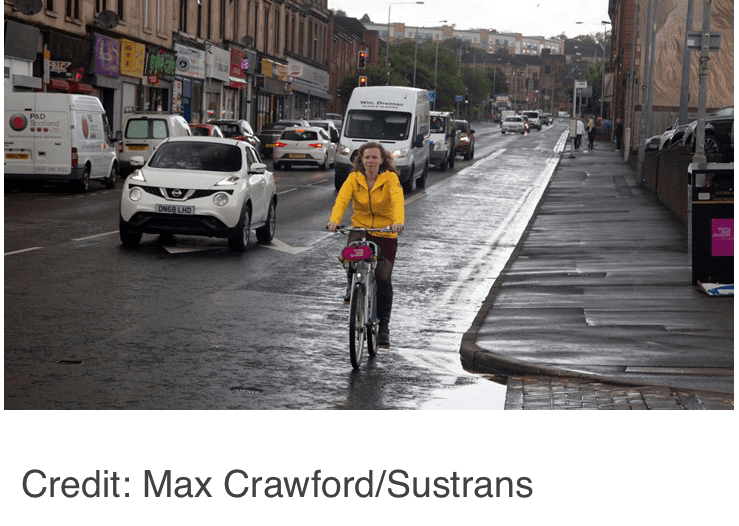
As well as counting on ourselves, as consumers, to make changes, we should be counting on our  government and councils to make changes too. Chose a topic close to your heart (re-wilding, cycle lanes, biodiversity etc) and write to your local council and/MP and ask them how they are going to effect the change to a more sustainable world. 

Counting on … update

We can count on our corporate efforts as individuals to bring about change!

Green Peace reported: “28 December 2021: Today the Grahamstown High Court in Makhanda ordered Shell to immediately cease its seismic blasting along South Africa’s Wild Coast, while ordering Shell and the Minister of Mineral Resources and Energy to pay the costs of the application for the interim interdict.”

This is good news for the local people and for the whales and other marine life. And it demonstrates that people can work together against international businesses for the common good.

Counting on … day 45 

29th December 2021

A New Year’s resolution is a good way of setting our own targets for a more sustainable, climate friendly life-style. What will you choose?

Buying from sustainable sources. Consuming smaller quantities of higher quality goods. Giving up the private car. Furnishing our wardrobe from pre- loved sources. Supporting tree planting, bog restoration and re-wilding projects. Volunteering. Switching to green energy suppliers, and ethical banks, insurance, mortgage  and pension providers.