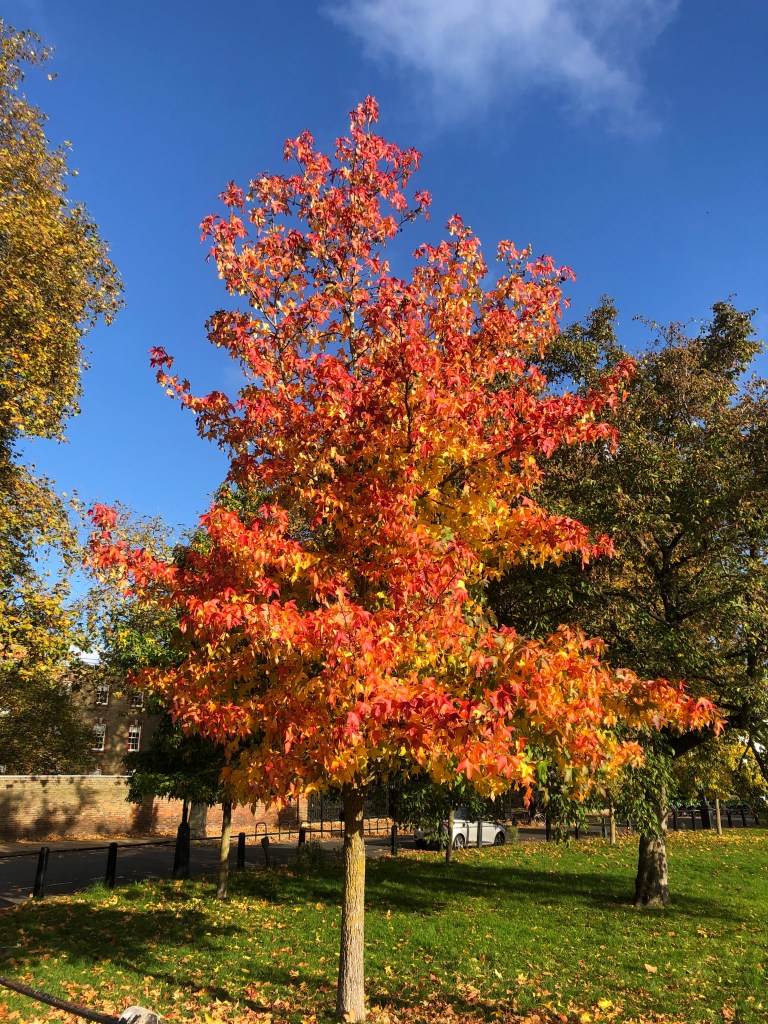
Proper 7, third Sunday after Trinity

21st June 2026

Reflection with readings below

I struggle – not I think unreasonably  – with today’s words from Matthew’s Gospel. Maybe they reflect the situation that prevailed in 1st century Christian communities.  Maybe they were struggling with division and conflict between those who believed and those who didn’t; those eager to speak out and those who preferred discretion; those who felt it was more important to survive as a community within their society and those who felt it was more important to stand apart from the prevailing society. If so, then it seems a if the writer of Matthew’s gospel wants to reassure those whose faith pits them at odds with their families, with their community, with society. 

On the other hand, it is important to consider that for some people their Christian faith – or maybe their understanding of that faith – does put them at odds with family, with friends, with work colleagues, with governments.  Only last week we saw 4 young people imprisoned because their views on the outrageous actions carried out by the State of Israel against Palestinians, put them at odds with our government. They felt that that those manufacturing arms to supply the Israeli Defence Force should be stopped where as the government did not. 

In the Church Times one can read letters and articles that highlight the differing views of Christians on the rights of transpeople, or about the conflicting views about national identity and Christian identities. 

Perhaps what we can learn from today’s gospel is the importance of listening to other people’s viewpoint (even if we don’t agree) and in seeking to understand the situations that lead to conflict, as well as the importance of trying to establish the truth. Today’s gospel also encourages to be willing to let go of long held views when these prevent us living more truthfully as followers of Jesus.

The passage from Jeremiah also makes for a challenging read. To serve God does not guarantee a life of roses. God understands that life is not always straightforward, is not always easy, and that to counter what is going awry can demand vulnerability.  It is not everyone’s vocation to be a prophet, but for those who are, it is a challenging role. Jeremiah’s words express how it can feel to present a counter story or a counter argument to the accepted way of a society. How it feels to be mocked and here’s. How it feels to be the one – apparently – out on a limb. Yet when prophets speak and act in truth for God, they can find consolation in knowing that God understands and values what they are going through.

Paul knew well from his own experience how it felt to be persecuted, to be mocked and derided. He knew how hard it is to stand in opposition to those with whom you have grown up, in opposition with those with whom you had previously shared common beliefs, and how hard it was to strike out on a different path. He also knew how hard it was to challenge – and be challenged by – your fellow believers when points of conflict arise. But I think Paul saw that leaving behind past practices, past ties, was akin to leaving behind an old self, an old body. It was as he describes in the letter to the Romans, a dying to sin. And that conversely stepping away from the old ways and previously held beliefs, to follow the new of Jesus, was – and is! – a form of rebirth. In Christ we enlivened by new life that is without compare.

A few weeks ago we heard from Matthew’s gospel, the Pharisees complaining that Jesus was mixing with tax collectors and sinners – with those they deemed as undesirables. But Jesus sees it as his mission to drink and eat – to socialise – with them. Then he reminds the Pharisees that it is the sick who need a doctor. Do the Pharisees, I wonder, pause to think whether it is the tax collectors and sinners or they, the Pharisees, who are the ones in need of a doctor?

So let’s not be distracted by today’s gospel from following the example of Jesus of mixing and socialising and talking and listening to one and all.

Jeremiah 20:7-13

O Lord, you have enticed me,
and I was enticed; 

you have overpowered me,
and you have prevailed. 

I have become a laughingstock all day long;
everyone mocks me. 

For whenever I speak, I must cry out,
I must shout, “Violence and destruction!” 

For the word of the Lord has become for me
a reproach and derision all day long.

If I say, “I will not mention him,
or speak any more in his name,” 

then within me there is something like a burning fire
shut up in my bones; 

I am weary with holding it in,
and I cannot. 

For I hear many whispering:
“Terror is all around! 

Denounce him! Let us denounce him!”
All my close friends
are watching for me to stumble. 

“Perhaps he can be enticed,
and we can prevail against him,
and take our revenge on him.”

But the Lord is with me like a dread warrior;
therefore my persecutors will stumble,
and they will not prevail. 

They will be greatly shamed,
for they will not succeed. 

Their eternal dishonour
will never be forgotten. 

O Lord of hosts, you test the righteous,
you see the heart and the mind; 

let me see your retribution upon them,
for to you I have committed my cause. 

Sing to the Lord;
praise the Lord! 

For he has delivered the life of the needy
from the hands of evildoers. 

Psalm 69: 8-20

8 Surely, for your sake have I suffered reproach, *
and shame has covered my face.

9 I have become a stranger to my own kindred, *
an alien to my mother’s children.

10 Zeal for your house has eaten me up; *
the scorn of those who scorn you has fallen upon me.

11 I humbled myself with fasting, *
but that was turned to my reproach.

12 I put on sack-cloth also, *
and became a byword among them.

13 Those who sit at the gate murmur against me, *
and the drunkards make songs about me.

14 But as for me, this is my prayer to you, *
at the time you have set, O Lord:

15 “In your great mercy, O God, *
answer me with your unfailing help.

16 Save me from the mire; do not let me sink; *
let me be rescued from those who hate me
and out of the deep waters.

17 Let not the torrent of waters wash over me,
neither let the deep swallow me up; *
do not let the Pit shut its mouth upon me.

18 Answer me, O Lord, for your love is kind; *
in your great compassion, turn to me.’

19 “Hide not your face from your servant; *
be swift and answer me, for I am in distress.

20 Draw near to me and redeem me; *
because of my enemies deliver me.

Romans 6:1b-11

Should we continue in sin in order that grace may abound? By no means! How can we who died to sin go on living in it? Do you not know that all of us who have been baptised into Christ Jesus were baptised into his death? Therefore we have been buried with him by baptism into death, so that, just as Christ was raised from the dead by the glory of the Father, so we too might walk in newness of life. 

For if we have been united with him in a death like his, we will certainly be united with him in a resurrection like his. We know that our old self was crucified with him so that the body of sin might be destroyed, and we might no longer be enslaved to sin. For whoever has died is freed from sin. But if we have died with Christ, we believe that we will also live with him. We know that Christ, being raised from the dead, will never die again; death no longer has dominion over him. The death he died, he died to sin, once for all; but the life he lives, he lives to God. So you also must consider yourselves dead to sin and alive to God in Christ Jesus.

Matthew 10:24-39

Jesus said to the twelve disciples, “A disciple is not above the teacher, nor a slave above the master; it is enough for the disciple to be like the teacher, and the slave like the master. If they have called the master of the house Beelzebul, how much more will they malign those of his household!

“So have no fear of them; for nothing is covered up that will not be uncovered, and nothing secret that will not become known. What I say to you in the dark, tell in the light; and what you hear whispered, proclaim from the housetops. Do not fear those who kill the body but cannot kill the soul; rather fear him who can destroy both soul and body in hell. Are not two sparrows sold for a penny? Yet not one of them will fall to the ground apart from your Father. And even the hairs of your head are all counted. So do not be afraid; you are of more value than many sparrows.

“Everyone therefore who acknowledges me before others, I also will acknowledge before my Father in heaven; but whoever denies me before others, I also will deny before my Father in heaven. 

“Do not think that I have come to bring peace to the earth; I have not come to bring peace, but a sword. 

For I have come to set a man against his father,
and a daughter against her mother,
and a daughter-in-law against her mother-in-law;
and one’s foes will be members of one’s own household.

Whoever loves father or mother more than me is not worthy of me; and whoever loves son or daughter more than me is not worthy of me; and whoever does not take up the cross and follow me is not worthy of me. Those who find their life will lose it, and those who lose their life for my sake will find it.”

Listening to the sounds of the world

20th June 2026

I will listen to you, LORD God, because you promise peace to those who are faithful and no longer foolish. Psalm 85:8

You Lord, are the source of all good things: 

We praise you.

You call us to tend and care for your creation: 

May we strive to do your will.

You have made us as brothers and sisters with all that lives: 

May we live together in peace.

Reading from 1 Kings 19: 11b – 13a

Now there was a great wind, so strong that it was splitting mountains and breaking rocks in pieces before the Lord, but the Lord was not in the wind; and after the wind an earthquake, but the Lord was not in the earthquake;  and after the earthquake a fire, but the Lord was not in the fire; and after the fire a sound of sheer silence. When Elijah heard it, he wrapped his face in his mantle and went out and stood at the entrance of the cave.

The day is quiet. 

It catches my attention. 

No murmur of cars, nor drone of airplanes. 

No crash or thump of builders. 


Silence – 

Silence? Are you sure?

I can hear a bird – 

no not one but two, maybe three – 

singing. 

The buzz of a passing insect. 

The wind rustling a leaf.

The slight crunch of my shoes on the ground.

The soprano voice of a child – 

Mummy, why do ….?

God, creator and companion, 

Stay my attention on the sounds of ‘silence’, 

on the sounds of life. 

Attune my heart to hear 

the unabated sound of creation, 

to sift out the raucous noise 

of the unimportant sounds.

Open my ears just enough to know your presence.

Ever mindful God, be present 

with those surrounded with the noise 

of guns and bombs. 

Bring compassion 

into the hearts of those who wage war. 

Remove greed and pride from those 

who might then make peace.

Ever mindful God, be present 

with those surrounded with the noise 

of traffic and engines.

Bless the work of those who create green spaces, 

those who bring calm to frenzied lives.

Lend strength to those who protect the environment 

and those who seek a quieter way of life.

Ever mindful God, be present 

with those who seek to tell the truth – 

however inconvenient. 

Open hearts and minds to hear your word, 

to discern your wisdom. 

Give grace to all who question, 

to all who seek to understand 

and to all who are willing to learn – 

for you the way, the truth and the life. 

Amen.

Counting on 2026 …. Day 62

19th June

Prudence “is the virtue of being undeceived, of being in touch with reality.” (P 44)

Both authors agree that the urgency of the climate crisis is such that we can not wait for technological solutions to be innovated and/or scaled up. We need to act now with the knowledge and resources we already have – “we need to be prudent.” (P 44)

Davison explores a deeper understanding that says “to be prudent is to know what the world is like, to know what the world should be and to work out how to go from one to the other.” (P 45) This challenges us to identify realistically where the world is not as it should be – especially bearing in mind those people and places outside our immediate bubble (where I suspect we do feel everything is OK). And having been realistic in seeing the world as it really is, identifying what we can do to change it – including changing our own lifestyles – for those will be the changes that mirror the Lord’s Prayer: your kingdom come on earth as it is in heaven.

NB if you don’t feel you have time to read the book, or even if you do, you might like to watch a recording of the talk Julian Allwood gave to Green Christian.

Counting on 2026 …. Day 61

18th June

For the next few days I will pick up on Davison’s comments re the seven virtues.(1) 

Davison considers courage as the strength by which we overcome our fears and if need be make sacrifices for the good of others. Nevertheless this is not about being miserable or seeking out hardships. Rather it is about taking our fair share rather than leaving other to bear the bulk of the burden. “Courage” he writes,  “is a spur to action…[I]t is those of us with the most who need to make the largest change. There is good news in that: those who should change the most are those with the greatest resources to make it happen.” Page 27

Where the early Christians needed courage to stand by their faith even when others were pursuing other gods and cultural practices, maybe as modern day Christians we need courage to stand by our faith when it tells us we need to apply restraint in what we consume in the face of a system and culture that favours consumerism.

  1. https://www.cambridge.org/core/books/promise-the-earth/31E27442471A864A6582BA751ECD239F

Counting on 2026 …. Day 60

17th June

The co author of  Promise the Earth: A Safe Climate in Good Faith (1), Andrew Davison, writes the alternate chapters. These draw out the connection between what Allwood writes and the seven virtues – courage, prudence, temperance, justice, faith, hope and love. This is an excellent prompt for Christians – and others – to embrace restraint as part of their spiritual journey.

  1. https://www.cambridge.org/core/books/promise-the-earth/31E27442471A864A6582BA751ECD239F

Counting on 2026 …. Day 59

16th June

I’m currently reading Promise the Earth: A Safe Climate in Good Faith by Julian Allwood and Andrew Davison. (1)

The main thrust of Allwood’s argument is that, with less than 14 years until the 2050 deadline that scientists give for protecting us against the worst outcomes climate change, we don’t have time to rely  on technological interventions such as carbon capture, hydrogen power or sustainable aviation fuel. Instead we must embrace a programme of restraint. ie we need to reduce substantially what we consume where and whenever that uses fossil fuels or adds to carbon emissions. But as he repeatedly says, this does not mean a life of lack and misery for there is so much to enjoy in life – friends and family, meals, walks in the country side, gardening, cycling, the arts etc etc.

The four key areas for restraint that Allwood highlights, are our use of:

  • gas for heating air and water at home;
  • petrol or diesel in cars;
  • fossil-fuel-powered aeroplanes; and
  • consumption of beef, lamb, rice and dairy foods. (Page 194) 
  1. https://www.cambridge.org/core/books/promise-the-earth/31E27442471A864A6582BA751ECD239F

Green Tau issue 125

Defence or security?

16th June 2026

A recent article in the Church Times reported on 

The director of Trinity Centre for Post-Conflict Justice, at Trinity College, Dublin, Dr Jude Lal FernandoI, was among the participants, alongside Anglican church leaders, theologians, church partners, and USPG support. He warned that security concerns were increasingly being prioritised over communities’ basic needs, while hundreds of millions were still living in extreme poverty. “When space for peace and dialogue decreases, the space for violence and oppression increases, especially for women and children,” he said.

This led me to ponder what is the difference between security and defence?

Defence typically refers to the armed services and all their equipment and resources that can be used to repel enemy invasion either of our territory (here in the UK or elsewhere, eg the Falklands) or to support our allies where they are similarly threatened. Such defence would also include defence against cyber attack. 

Security I think is a wider issue that encompasses not just protection from enemy attack or aggression, but is about safeguarding the wellbeing of society as a whole. Thus security issues would include:

  • Food security: can we feed our population? Can we do so largely independent of imports? Do we keep enough in store to weather emergencies and/or supply disruption? Do we pay enough for farmers to survive financially? Do we ensure sufficient incomes so that everyone can afford healthy food? Do we grow the right range of crops (inc livestock) that allows us also to ensure the security of biodiversity and the environment?
  • Health security: are we doing enough to ensure the population is in good health? Do we have enough medical staff, hospital beds, drugs etc? Do we ensure everyone has access to a healthy diet? Do we ensure everyone has access to secure, safe housing – ie accommodation that does not damage their health? Do we ensure everyone has access to dental care? To mental health care? To social care? Do we ensure everyone has access to green spaces essential for mental wellbeing and to sports/ exercise facilities etc essential for physical health?
  • Community security: do we ensure everyone has access to education? That everyone can read, write, calculate and interpret information such that they are not likely to be deceived by false information. Do we ensure enough community spaces that are essential for developing and maintaining good social bonds and networks? Do we do enough to tackle discrimination essential for ensuring equality and harmony within communities?
  • Job security: do we ensure that everyone has access to an appropriate and fulfilling job? Do we ensure everyone has suitable skills and qualifications to enable them to contribute to the economy? Do we ensure sufficient investment in businesses to ensure that they contribute to our wellbeing and do not damage our environment? Do we ensure sufficient investment in our businesses that we can be self-reliant for all essentials? Do we ensure that all stakeholders in a business – staff, customers, nature etc – have a fair share of power and influence in determining the shape and future of the business? Do we ensure that everyone derives a fair benefit from the economy? 
  • Economic security: do we ensure that the economy that supports us financially does so in a way that is fair for everyone, that allows everyone to afford a healthy lifestyle, that protects the environment, that is sustainable over the long term?
  • Energy security: do we ensure we can produce enough energy ourselves to be self sufficient? Do we ensure that we do so at price that is affordable? Do we ensure all buildings, equipment and infrastructure is energy efficient? Do we have measures to ration water if necessary?
  • Water security: do we ensure that everyone has access to sufficient water for a healthy lifestyle? Do we ensure water efficiency at every level to ensure we do not consume more than we extract from our water resources? Do balance the need to maintain water resources against competing demands – whether from industry, agriculture, data centres, domestic users – and do we have measures to ration water if necessary?
  • Environmental security: do we look after the wellbeing of the natural environment to ensure that it can continue to support our wellbeing? Do we see it an essential life support system ensuring clean water supplies, for flood prevention, for clean air, plants to absorb carbon dioxide and provide protection from heat and winds, biodiversity to ensure fertile soils for food and insects for pollination, biodiversity to enrich life and safeguard against future unknowns?
  • Political security: do we ensure fair and democratic forms of government? Do we ensure truthfulness from political parties in both what they say and what they do? Do we ensure fair access to politicians such that those with money and power do not override the views of others? Do we ensure freedom of speech and nonviolent protest? Do we ensure a society where everyone feels valued and everyone feels their voice can be heard?
  • Judicial security: do we ensure a judicial system that provides access to justice to everyone and which is not influenced or used by those with money and power? Do we ensure fair policing? Do we ensure appropriate sentencing that will benefit the whole of society including both those who are victims and those who are offenders? Do we ensure a well designed and resourced custodial system that protects society and ensures the wellbeing of those imprisoned? 
  • Internet etc security: do we ensure that our internet and other communications systems are secure, that they cannot be compromised by error or deliberate intent? Do we ensure there are other systems in place such that if primary systems fail, essential services will be maintained?  Do we ensure that social media etc enhances rather than detracts from our wellbeing?
  • National security: do we ensure all the above which are essential for national security? Do we ensure good diplomatic, trade and welfare relations with other nations such that we work together to ensure peace? Do we ensure through good diplomatic, trade and welfare relations the wellbeing of other nations? – for unless they are at peace and thriving there will always be the risk of conflict and war that will impact us as part of a shred global economy.  Do we with care for the consequences of war, ensure  our nation has appropriately trained personnel and equipment that we can defend ourselves attack?

It seems to me that this bigger vision that the need for security rather than just focusing on defence, is essential if we are to be a happy secure nation. Indeed I’m not sure we gain much from defence if what is being defended doesn’t ensure happiness and well being for everyone.

Proper 6, 2nd Sunday after Trinity

14th June 2026

Reflection with readings below.

We cannot help but look at the news and feel despair. The news tells us of war and the suffering of innocent individuals. The news tells us of rioting, of violent marches designed to terrify the ‘other’. The news tells us of rising costs of living, of lack of housing, and of stressful employment practices that makes the daily lives of many a misery. Of inadequately funded schools and hospitals, and of inadequate provision for social care that deprives people of the support they need. Of harvests threatened by too much or too little rain, too much or too little sun. Of the spread via social media of misinformation and the lack of counter stories that provide both truth and the vision of a better future. 

How should we as Christians respond? Is there something that we have that can make a difference? Is it that what we have is confidence – assurance through faith: and that faith is of God. 

On the one hand this is to have faith  in God. To believe that God’s word, God’s vision for the world, is always the best – and for the best. And if we have faith in God, then we will know how to order our lives – in theory of not in practice – because we will want to shape our lives to match that best version of the world. (I add the proviso about in practice, because our ability to hear God’s wisdom can be blocked by other less helpful voices – those out to make a profit, those who have no regard for nature, those who been taught to hate the ‘other’).

On the other hand this is to accept the faith that God has in us. This is a faith that we can all be good citizens of creation, that we can be reformed, that we can flourish as God intends, for we were made in the image of God. All that is needful for us to be good is already there. And not only that – God loves us and engages with us even when we are on the wrong path, even when we are sceptical, even when we are hesitant.

Confide and confidence both have similar roots: con meaning being with or through, and fidelity meaning faith. When we confide in someone we trust them to be faithful to us, treating our words with discretion and empathy, not divulging information without our agreement. We are called to build up such relationships that we cane both confide in God and with our neighbours. 

How then might we as Christians respond to the distress we see in the world? With resilience – ie not sinking into an abyss of despair – because we have faith that God has faith in the world. With hope because we have faith that in God’s wisdom there are ways in which the world can become better – can achieve God’s best possibility. With determination because we have faith that we can live a better  life ourselves, putting into practice God’s wisdom. With love because God’s faith in us shows us how to love each other – and because that in practice means we are loved and cherished by our each other as part of the great family of faith.

From today’s collect: Keep, O Lord, your household the Church in your steadfast faith and love, 

Genesis 18:1-15, 21:1-7

The Lord appeared to Abraham by the oaks of Mamre, as he sat at the entrance of his tent in the heat of the day. He looked up and saw three men standing near him. When he saw them, he ran from the tent entrance to meet them, and bowed down to the ground. He said, “My lord, if I find favour with you, do not pass by your servant. Let a little water be brought, and wash your feet, and rest yourselves under the tree. Let me bring a little bread, that you may refresh yourselves, and after that you may pass on—since you have come to your servant.” So they said, “Do as you have said.” And Abraham hastened into the tent to Sarah, and said, “Make ready quickly three measures of choice flour, knead it, and make cakes.” Abraham ran to the herd, and took a calf, tender and good, and gave it to the servant, who hastened to prepare it. Then he took curds and milk and the calf that he had prepared, and set it before them; and he stood by them under the tree while they ate.

They said to him, “Where is your wife Sarah?” And he said, “There, in the tent.” Then one said, “I will surely return to you in due season, and your wife Sarah shall have a son.” And Sarah was listening at the tent entrance behind him. Now Abraham and Sarah were old, advanced in age; it had ceased to be with Sarah after the manner of women. So Sarah laughed to herself, saying, “After I have grown old, and my husband is old, shall I have pleasure?” The Lord said to Abraham, “Why did Sarah laugh, and say, ‘Shall I indeed bear a child, now that I am old?’ Is anything too wonderful for the Lord? At the set time I will return to you, in due season, and Sarah shall have a son.” But Sarah denied, saying, “I did not laugh”; for she was afraid. He said, “Oh yes, you did laugh.”

The Lord dealt with Sarah as he had said, and the Lord did for Sarah as he had promised. Sarah conceived and bore Abraham a son in his old age, at the time of which God had spoken to him. Abraham gave the name Isaac to his son whom Sarah bore him. And Abraham circumcised his son Isaac when he was eight days old, as God had commanded him. Abraham was a hundred years old when his son Isaac was born to him. Now Sarah said, “God has brought laughter for me; everyone who hears will laugh with me.” And she said, “Who would ever have said to Abraham that Sarah would nurse children? Yet I have borne him a son in his old age.”

Psalm 116:1, 10-17

1 I love the Lord, because he has heard the voice of my supplication, *
because he has inclined his ear to me whenever I called upon him.

10 How shall I repay the Lord *
for all the good things he has done for me?

11 I will lift up the cup of salvation *
and call upon the Name of the Lord.

12 I will fulfil my vows to the Lord *
in the presence of all his people.

13 Precious in the sight of the Lord *
is the death of his servants.

14 O Lord, I am your servant; *
I am your servant and the child of your handmaid;
you have freed me from my bonds.

15 I will offer you the sacrifice of thanksgiving *
and call upon the Name of the Lord.

16 I will fulfil my vows to the Lord *
in the presence of all his people,

17 In the courts of the Lord’s house, *
in the midst of you, O Jerusalem.
Hallelujah!

Romans 5:1-8

Since we are justified by faith, we have peace with God through our Lord Jesus Christ, through whom we have obtained access to this grace in which we stand; and we boast in our hope of sharing the glory of God. And not only that, but we also boast in our sufferings, knowing that suffering produces endurance, and endurance produces character, and character produces hope, and hope does not disappoint us, because God’s love has been poured into our hearts through the Holy Spirit that has been given to us. For while we were still weak, at the right time Christ died for the ungodly. Indeed, rarely will anyone die for a righteous person– though perhaps for a good person someone might actually dare to die. But God proves his love for us in that while we still were sinners Christ died for us.

The Gospel

Matthew 9:35-10:8-23

Jesus went about all the cities and villages, teaching in their synagogues, and proclaiming the good news of the kingdom, and curing every disease and every sickness. When he saw the crowds, he had compassion for them, because they were harassed and helpless, like sheep without a shepherd. Then he said to his disciples, “The harvest is plentiful, but the labourers are few; therefore ask the Lord of the harvest to send out labourers into his harvest.”

Then Jesus summoned his twelve disciples and gave them authority over unclean spirits, to cast them out, and to cure every disease and every sickness. These are the names of the twelve apostles: first, Simon, also known as Peter, and his brother Andrew; James son of Zebedee, and his brother John; Philip and Bartholomew; Thomas and Matthew the tax collector; James son of Alphaeus, and Thaddaeus; Simon the Cananaean, and Judas Iscariot, the one who betrayed him.

These twelve Jesus sent out with the following instructions: “Go nowhere among the Gentiles, and enter no town of the Samaritans, but go rather to the lost sheep of the house of Israel. As you go, proclaim the good news, ‘The kingdom of heaven has come near.’ Cure the sick, raise the dead, cleanse the lepers, cast out demons. You received without payment; give without payment. Take no gold, or silver, or copper in your belts, no bag for your journey, or two tunics, or sandals, or a staff; for labourers deserve their food. Whatever town or village you enter, find out who in it is worthy, and stay there until you leave. As you enter the house, greet it. If the house is worthy, let your peace come upon it; but if it is not worthy, let your peace return to you. If anyone will not welcome you or listen to your words, shake off the dust from your feet as you leave that house or town. Truly I tell you, it will be more tolerable for the land of Sodom and Gomorrah on the day of judgment than for that town.

“See, I am sending you out like sheep into the midst of wolves; so be wise as serpents and innocent as doves. Beware of them, for they will hand you over to councils and flog you in their synagogues; and you will be dragged before governors and kings because of me, as a testimony to them and the Gentiles. When they hand you over, do not worry about how you are to speak or what you are to say; for what you are to say will be given to you at that time; for it is not you who speak, but the Spirit of your Father speaking through you. Brother will betray brother to death, and a father his child, and children will rise against parents and have them put to death; and you will be hated by all because of my name. But the one who endures to the end will be saved. When they persecute you in one town, flee to the next; for truly I tell you, you will not have gone through all the towns of Israel before the Son of Man comes.”

Prayers for the outpouring of God’s Spirit

13th June 2026

I will establish my covenant between me and you, and your offspring after you throughout their generations, for an everlasting covenant, to be God to you and to your offspring after you. Genesis 17:17 

You Lord, are the source of all good things: 

We praise you.

You call us to tend and care for your creation: 

May we strive to do your will.

You have made us as brothers and sisters with all that lives: 

May we live together in peace.

A reading from Deuteronomy 8:6-9

Therefore keep the commandments of the Lord your God, by walking in his ways and by fearing him. For the Lord your God is bringing you into a good land, a land with flowing streams, with springs and underground waters welling up in valleys and hills, a land of wheat and barley, of vines and fig trees and pomegranates, a land of olive trees and honey, a land where you may eat bread without scarcity, where you will lack nothing, a land whose stones are iron and from whose hills you may mine copper.

As at the beginning, Lord God, 

you made us in your image 

and wrought with us a special bond, 

an everlasting covenant of faith and love.

Continue to breathe your Spirit 

into our hearts 

that we may truly return that love.

As at the beginning, Lord God, 

you have provided us good rich land, 

overflowing with the good things of creation – 

plants for food, water to drink.

Continue to breathe your Spirit 

into our hearts 

that we may be generous in caring and sharing this gift. 

As at the beginning, Lord God, 

you created all manner of creatures

 – our kith and kin – 

for companionship and teamwork.

Continue to breathe your Spirit 

into our hearts 

that we may be faithful friends with all.

As from the beginning, Lord God, 

you have filled the world with signs 

and words of wisdom 

so that we may learn and live well. 

Continue to breathe your Spirit 

into our hearts 

that we may be attentive to your instruction.

As from the beginning, Lord God, 

you have created a world of harmony 

and flourishing 

that all may live lives of fulfilment. 

Continue to breathe your Spirit 

into our hearts 

that we may be at one with all creation.

As from the beginning, Lord God, 

you have a created your world 

as a place for joy and love to thrive 

and where happiness will abound.

Continue to breathe your Spirit 

into our hearts 

that we may ever rejoice and praise your glory. 

Amen. 

Counting on 2026 …. Day 58

12th June

Another handy format for eating peas and beans is as flour. Dried beans and peas are ground into flour which can be used to make a vegan frittata or quiche filling, to add extra protein to bread and pastry, to thicken soups and sauces etc. Again I buy a selection of such flours from Hodmedod including green pea flour, yellow pea flour, lentil flour and fava bean flour.

For a frittata I mix 3 tablespoons of pea flour with oat milk or water to make a thick batter. I flavour it with yeast flakes/ black pepper/ paprika/ mustard/ turmeric etc. Whilst that is left to stand, I cook some vegetables – potato slices/ onion/ red pepper/ mushrooms/ broccoli (boiled or sautéd). Then I add the batter and the vegetables to a well oiled frying pan and cook until nearly set and then complete the cooking under the grill. 

NB Adding a little baking powdered before cooking can lightened the texture a little.