
6th Sunday after Trinity, Proper 10

16th July 2023

Reflection (readings are below)

Last week’s reflection looked at what makes people good, what helps us do the good things we know and want to do. Ultimately the answer is in our relationship with God. In accepting God, trusting in God, being responsive to God – letting God be at work in us.

In today’s story from Genesis we meet two people – Jacob and Esau – who are the same and yet different. They are both the children of Isaac and Rebekah, both conceived as a result of prayer. But where one pushes forward, the other is more patient. Where one is hairy, the other is smooth skinned. Where one loves hunting and the great outdoors, the other loves the quiet, orderly way of domestic life. Where one lives in the moment, the other is planning for the future. Later in the story we will learn that one is his mother’s favourite, whilst the other is his father’s favourite. 

That people are different (not necessarily meaning better or worse, and actually everyone has their faults) is a repeated narrative in the Bible: Cain and Abel; Joseph and his brothers, Moses and Aaron; Peter and Paul, Mary and Martha. Being different, having different skills, different insights, living through different experiences, is key to God’s creation of the human race. When we work together utilising those diverse skills and experience life is enhanced. When we oppose each other, despise our differences, make them a means of discrimination, then life is diminished. 

Another continuing narrative of the Bible is that biggest, strongest, first, is not always best. God chooses small people from small tribes, like Gideon and David. God chooses unpopular people like Jeremiah and Saul of Tarsus, and those from unpopular or despised professions like Matthew the tax collector and Rehab the prostitute. God chooses unreliable people like Thomas and Peter. God chooses insignificant people like Ruth and Mary. God chooses outsiders like Abraham the Aramean  and Cornelius the Gentile. We might say that God chooses upside down values that are not the way of the world. The first shall be last. The rock that was discarded will become the corner stone.

The last verse from the Genesis reading could be translated as ‘He did not esteem primogeniture’. Maybe there was more to Esau response than just hunger.

People are different but sometimes those difference change – are even reversed – over time. Later in the story of Esau and Jacob we hear that Jacob flees fearing his brother’s anger – indeed Esau has threatened to kill him. But later yet in the story, and we see Esau full of welcome and forgiveness for his returning brother. Likewise the arch persecutor Saul becomes the ardent convert Paul. The rash and unreliable Peter becomes the strong rock. The retiring widow Judith becomes the courageous assassin. The ability to change and develop, to be adaptable and flexible are useful traits that God uses to good effect. 

The working together of people who are different, the constructive use of diverse skills, the ability to change and adapt, are all going to be essential as we as a human race work with God in facing up to the climate crisis we have created, and thus working together in  transitioning to a net zero carbon world And not just net zero carbon, but net zero pollution, net zero injustice, and net zero biodiversity loss too. As we pray in the Lord’s Prayer, May your kingdom – ie God’s rule, God’s reign – come on earth as in heaven.

So what then do we make of the parable in today’s Gospel? Sometimes it is called the parable of the Sower, or the parable of the seeds or even the parable of the soils. It is a parable about difference but it starts with sameness – it is the same seed that is being sown everywhere by the sower. But everywhere the seed lands is different. The  parable suggests that everywhere that the seed lands, the soil has the potential to allow the seed to grow. It is not then that the soil is different but that the circumstances, the environment surrounding the soil and the seed, that determines what fruit the seed produces. These environmental factors do not give the seeds an equal chance, an equal opportunity, to flourish. Does that sound familiar? How often do we hear that people do not have successful lives because they have not had an equal opportunity to flourish? The different circumstances of their back ground, of the environment they have grown up in, has put the, at disadvantage. Their skills and characteristics have not been discerned or have been despised as unsuitable, unwanted. Maybe hearing this parable today, we should be hearing a challenge to ensure equally opportunities for all, a challenge to value diversity, a challenge to nurture flourishing for all God’s creation? Can we scare away the ‘birds’ that prey on others? Can we remove the obstacles of poor diet, low educational standards, lack of green spaces and places to exercise? Can we provide an attractive alternative to the consumer driven market? Can we in this way also experience the reign of God?

Genesis 25:19-34

These are the descendants of Isaac, Abraham’s son: Abraham was the father of Isaac, and Isaac was forty years old when he married Rebekah, daughter of Bethuel the Aramean of Paddan-aram, sister of Laban the Aramean. Isaac prayed to the Lord for his wife, because she was barren; and the Lord granted his prayer, and his wife Rebekah conceived. The children struggled together within her; and she said, “If it is to be this way, why do I live?” So she went to inquire of the Lord. And the Lord said to her,

“Two nations are in your womb,
and two peoples born of you shall be divided;

the one shall be stronger than the other,
the elder shall serve the younger.”

When her time to give birth was at hand, there were twins in her womb. The first came out red, all his body like a hairy mantle; so they named him Esau. Afterward his brother came out, with his hand gripping Esau’s heel; so he was named Jacob. Isaac was sixty years old when she bore them.

When the boys grew up, Esau was a skilful hunter, a man of the field, while Jacob was a quiet man, living in tents. Isaac loved Esau, because he was fond of game; but Rebekah loved Jacob.

Once when Jacob was cooking a stew, Esau came in from the field, and he was famished. Esau said to Jacob, “Let me eat some of that red stuff, for I am famished!” (Therefore he was called Edom.) Jacob said, “First sell me your birthright.” Esau said, “I am about to die; of what use is a birthright to me?” Jacob said, “Swear to me first.” So he swore to him, and sold his birthright to Jacob. Then Jacob gave Esau bread and lentil stew, and he ate and drank, and rose and went his way. Thus Esau despised his birthright.

Psalm 119:105-112

105 Your word is a lantern to my feet *
and a light upon my path.

106 I have sworn and am determined *
to keep your righteous judgments.

107 I am deeply troubled; *
preserve my life, O Lord, according to your word.

108 Accept, O Lord, the willing tribute of my lips, *
and teach me your judgments.

109 My life is always in my hand, *
yet I do not forget your law.

110 The wicked have set a trap for me, *
but I have not strayed from your commandments.

111 Your decrees are my inheritance for ever; *
truly, they are the joy of my heart.

112 I have applied my heart to fulfil your statutes *
for ever and to the end.

Romans 8:1-11

There is no condemnation for those who are in Christ Jesus. For the law of the Spirit of life in Christ Jesus has set you free from the law of sin and of death. For God has done what the law, weakened by the flesh, could not do: by sending his own Son in the likeness of sinful flesh, and to deal with sin, he condemned sin in the flesh, so that the just requirement of the law might be fulfilled in us, who walk not according to the flesh but according to the Spirit. For those who live according to the flesh set their minds on the things of the flesh, but those who live according to the Spirit set their minds on the things of the Spirit. To set the mind on the flesh is death, but to set the mind on the Spirit is life and peace. For this reason the mind that is set on the flesh is hostile to God; it does not submit to God’s law– indeed it cannot, and those who are in the flesh cannot please God.

But you are not in the flesh; you are in the Spirit, since the Spirit of God dwells in you. Anyone who does not have the Spirit of Christ does not belong to him. But if Christ is in you, though the body is dead because of sin, the Spirit is life because of righteousness. If the Spirit of him who raised Jesus from the dead dwells in you, he who raised Christ from the dead will give life to your mortal bodies also through his Spirit that dwells in you.

Matthew 13:1-9,18-23

Jesus went out of the house and sat beside the sea. Such great crowds gathered around him that he got into a boat and sat there, while the whole crowd stood on the beach. And he told them many things in parables, saying: “Listen! A sower went out to sow. And as he sowed, some seeds fell on the path, and the birds came and ate them up. Other seeds fell on rocky ground, where they did not have much soil, and they sprang up quickly, since they had no depth of soil. But when the sun rose, they were scorched; and since they had no root, they withered away. Other seeds fell among thorns, and the thorns grew up and choked them. Other seeds fell on good soil and brought forth grain, some a hundredfold, some sixty, some thirty. Let anyone with ears listen!”

“Hear then the parable of the sower. When anyone hears the word of the kingdom and does not understand it, the evil one comes and snatches away what is sown in the heart; this is what was sown on the path. As for what was sown on rocky ground, this is the one who hears the word and immediately receives it with joy; yet such a person has no root, but endures only for a while, and when trouble or persecution arises on account of the word, that person immediately falls away. As for what was sown among thorns, this is the one who hears the word, but the cares of the world and the lure of wealth choke the word, and it yields nothing. But as for what was sown on good soil, this is the one who hears the word and understands it, who indeed bears fruit and yields, in one case a hundredfold, in another sixty, and in another thirty.”
Counting on … day 1.129

16th July 2023

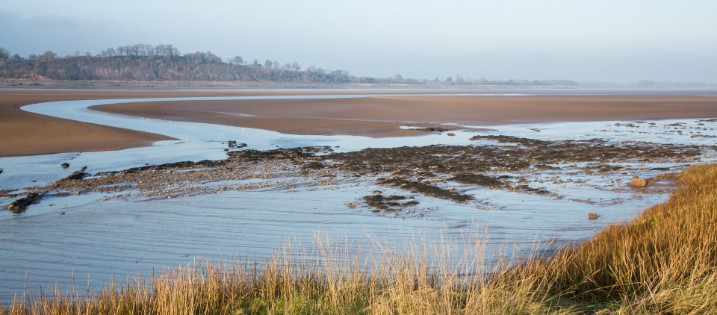
We can be part of the solution too creating wetland areas in our gardens, on a balcony, at church or school. Wetland areas help absorb carbon dioxide. They slow the flow of water into drains and rivers  helping to prevent flooding. They provide for greater biodiversity.

The WET has a guide for creating domestic wetlands from a pond in a pot to a bog garden. 

Counting on …. Day 1.128

15th July 2023

 Becky Speight comments in the current. RSPB magazine that we may think we are at a crossroads where we can either address the climate crisis or the biodiversity crisis, but in fact we can have both and! She writes that this future “is one where we work far more closely with nature, to mitigate and adapt to the worst effects of global warming; to help species adapt to the changes already locked into the system; and to recreate and reimagine our lives and homes as vibrant , lush, functioning and joyous places. The future could be better than today”! And chiming in with the WWT, there is much emphasis on the importance of using water to create climate resilient, biodiverse rich habitats. 

Counting on …. Day 1.127

14th July 2023

Having yesterday talked about tipping points and a succession of divestment announcements, it now appears that approvals for the Rosebank oil field may be delayed.

“Rosebank, the UK’s largest undeveloped oil and gas field, is highly unlikely to be approved in time for parliamentary recess, amid growing concerns from regulators over electrification and net zero compatibility across the industry.

City A.M. understands the site, which has to be green-lit by the Offshore Petroleum Regulator for Environment and Decommissioning (OPRED) and the North Sea Transition Authority (NSTA), is now not expected to be sanctioned until August at the earliest….

“When completed, Rosebank is expected to produce up to 500m barrels of oil and gas equivalent over its operating lifetime – which could begin as soon as 2027.  This has made the project the subject of intense controversy, with climate groups and energy transition advocates calling for the project to be rejected amid fears it would jeopardise the country’s climate ambitions. 

City A.M. has learned that the NSTA has written directly to oil and gas companies operating in the North Sea, warning them of the importance of electrification for new offshore platforms across future projects…

“Regulators are determined for new developments, including oil and gas fields, to have a clear pathway for the green energy transition – as the UK races to reach net zero over the next three decades and decarbonise its electricity grid by 2035.” https://www.cityam.com/rosebank-faces-fresh-delay-amid-regulator-concerns-over-industry-net-zero-goals/

Financing climate action – terminology and acronyms

13th July 2023

Exploring (and hopefully understanding) the terminology and acronyms of the investment world used in and around the issue of climate change. Many of the changes we are going to need to both reduce and to live with, the impacts of climate change require considerable sums of money. If that money doesn’t come through government from taxation, it has to come from the financial markets. 

“Climate change is having an ever-increasing impact on global capital markets. It presents a wide and complex range of risks from physical impacts such as flooded factories, to regulation risk such as the imposition of expected carbon taxes, litigation risk and transition risk as company cash flows and profits are affected by the move to a low-carbon economy. There is also mounting evidence that companies who care about their broader eco-systems, tend to financially outperform those who do not. ” https://www.transitionpathwayinitiative.org/investors

IPCC – Intergovernmental Panel on Climate Change, organised by the United Nations. The UN currently has a membership of 193 nations.

COP – conference of the parties being  “the supreme governing body of an international convention (treaty, written agreement between actors in international law). It is composed of representatives of the member states of the convention and accredited observers. Scope of the COP is to review the “implementation of the Convention and any other legal instruments that the COP adopts and take decisions necessary to promote the effective implementation of the Convention” https://en.wikipedia.org/wiki/Conference_of_the_parties 

The 28th United Nations Climate Change Conference will take place in Dubai in November this year  and is commonly referred to as COP28. Other COPs also take place such as the 15th United Nations Biodiversity Conference which met in Montreal in December 2022.

Paris Agreement (sometimes referred to as the Paris Accords) – “an international treaty on climate change. Adopted in 2015, the agreement covers climate change mitigation, adaptation, and finance. The Paris Agreement was negotiated by 196 parties at the 2015 United Nations Climate Change Conference in Paris. The Paris Agreement’s long-term temperature goal is to keep the rise in mean global temperature to well below 2 °C  above pre-industrial levels, and preferably limit the increase to 1.5 °C, recognising that this would substantially reduce the effects of climate change. Emissions should be reduced as soon as possible and reach net-zero by the middle of the 21st century. To stay below 1.5 °C of global warming, emissions need to be cut by roughly 50% by 2030. This is an aggregate of each country’s nationally determined contributions.” https://en.wikipedia.org/wiki/Paris_Agreement

Net zero targets – a zero target would reduce carbon/ greenhouse gas emissions to absolute zero. Net zero would reduce emission on balance to zero – ie remaining emissions that could not be avoided being offset by processes that absorb unwanted emissions. If the desired effect of curtailing global warming is be achieved, these offset amounts need to be minimal. 

Offsetting – a process whereby one invests in a project that will remove greenhouse gas emissions from the atmosphere and absorb them in such a way that they are not re-released. This removal might be achieved through planting trees which over their life time will absorb CO2 (the main greenhouse gas) from the atmosphere via their leaves and ‘lock’ them away in the trunk, roots and branches of the tree. It might equally be achieved by growing other plants including seaweeds. Greenhouse gases can also be ‘locked’ into the soil by developing peat bogs, by creating grasslands (that will not be tilled as this will release the gases from the soil) or by pursuing regenerative methods of farming. Some offsetting projects don’t plant new forests but rather concentrate on maintaining existing forests where trees will not be routinely cut for timber. This may particularly apply in regions of virgin rainforest where the investment can be an alternative income to that obtained from clearing the forest for agriculture. The idea behind offsetting is that where emissions from an operation cannot be reduced to zero, that the residual amount of produced by the operator is offset by an equivalent  re- capturing of gases. To be of value, carbon offsetting schemes need to be scientifically proven to be effective, and to be certified so that the offsetting cannot be resold. Offsetting should always be a last resort. 

Climate Transition Plan – an action plan that outlines how an organisation will develop or change its use of assets and resources, and its entire business plan to meet agreed climate targets – typically  halving greenhouse gas emissions by 2030 and reducing them to net zero by 2050. In November 2021 the UK Government set up a Transition Plan Taskforce (TPT). As of 2023 listed UK companies are required to publish transition plans with guidance from the TPT using rules agreed with the Financial Conduct Authority (FCA) – although apparently it doesn’t have to have net zero as its target. 

Just Transition – “ A ‘just transition’ means moving to a more sustainable economy in a way that’s fair to everyone – including people working in polluting industries.“ Greenpeace. In the financial world the Impact Investment Institute this year produced a set of Just Transition Criteria to enable investors make better judged investments that will fulfil the objectives of a just transition – https://www.impactinvest.org.uk/wp-content/uploads/2023/05/Just-Transition-Criteria.pdf (This pdf is an interesting read)

IEA – International Energy Agency is an “autonomous intergovernmental organisation, established in 1974, that provides policy recommendations, analysis and data on the entire global energy sector. The 31 member countries and 13association countries of the IEA represent 75% of global energy demand. The IEA was set up under the framework of the Organisation for Economic Co-operation and Development (OECD) in the aftermath of the 1973 oil crisis to respond to physical disruptions in global oil supplies, provide data and statistics about the global oil market and energy sector, promote energy savings and conservation, and establish international technical collaboration on innovation and research. Since its founding, the IEA has also coordinated use of the oil reserves that its members are required to hold.” https://en.wikipedia.org/wiki/International_Energy_Agency. In May 2019 the IEA reported that investors should not fund new oil, gas and coal supply projects if the world wants to reach net zero emissions by mid-century – “The pathway to net zero is narrow but still achievable. If we want to reach net zero by 2050 we do not need any more investments in new oil, gas and coal projects,” said  Fatih Birol, the IEA’s executive director. “It is up to investors to chose whatever portfolio they prefer but there are risks and rewards.”

Transition Pathway Initiative (TPI) – supported by research from the LSE and the Grantham Research Institute, this scheme assesses the performance of major companies using publicly available data so as to rate the companies on their Management Quality (ie how well their business plans relate to measuring and controlling their greenhouse gas emissions) and Carbon Performance (how well their business plans align with the UN Paris Agreement goals). This information is then made available to anyone who is interested and in particular to investors who want to ensure that the companies they invest in are transitioning appropriately to net zero. https://www.transitionpathwayinitiative.org/

NIBs  – National Investment Bodies – the Church of England has three such bodies comprising:- 

Church of England Pensions Board – “We provide retirement housing and pensions, set by the Church of England, for those who serve or work for the Church. We assist over 42,000 people across almost 700 employers with their pensions, carefully stewarding the funds under our care of around £3.2 billion.

Church Commissioners for England – “ The Church Commissioners manages a £10.3bn investment fund. The money it makes from those investments contributes to the cost of mission projects, dioceses in low-income areas, bishops, cathedrals, and pensions. The Church Commissioners also provides administrative support for the Church. We contribute about £1.2bn every three years to various parts of the Church of England, around 20% of the Church’s annual running costs, which makes us one of the largest charitable givers in the UK.”

CBF funds which are managed by CCLA (Churches, Charities and Local Authorities (CCLA) Investment Management Limited). These are the fund managers who look after most parish investment monies.

Ethical Investment Advice Group – this is a Church of England group that provides ethical investment advice for the Church  (and others who wish to access their web site where their thoughts are given in detail including theological reflection – https://www.churchofengland.org/about/leadership-and-governance/ethical-investment-advisory-group

Fiduciary Duty – A fiduciary is someone who has undertaken to act for and on behalf of another in a particular matter in circumstances which give rise to a relationship of trust and confidence — Lord Millett, Bristol and West Building Society v Mothew  A fiduciary duty in terms of finance sense exist to ensure that those who manage other people’s money act in their beneficiaries’ interests, rather than serving their own interests. (https://en.wikipedia.org/wiki/Fiduciary) For example, money given by its congregations and other donors must be managed for the benefit of the Church of England, and within that for example, many given to the Pensions Investment Board must be managed to benefit present and future C of E pensioners. 

TCFD – Task Force on Climate-related Financial Disclosures: when buying and selling investments one needs accurate information that enable you to assess the risk of making or loosing money. A new risk is that of climate change, and investors need accurate and standardised information so that they can fairly value what they are buying and selling. Ensuring such information is forthcoming – is disclosed – is the function of the TCFD.  https://www.fsb-tcfd.org/about/

Climate Action 100+  is a group of 700 global investors – including the Church of England Pensions Board – who undertake to to engage with the major companies* that will play a significant role in the transition to a net-zero emissions economy. Individual or small groups of these investors engage with a particularly company to monitor performance, and develop and implement company specific strategies that will ensure they meet the necessary targets on the route to net zero. https://www.climateaction100.org/about/

(* eg ArcelorMittal S.A. (steel), BP, E.On, Carrefour, National Grid, Honda Motors, Nestle, Quanta’s airlines etc)

Paris Aligned Investment Initiative -“ Paris Aligned Asset Owners are a global group of 56 asset owners, with over $3.3 trillion in assets. They have committed to transitioning their investments to achieve net zero portfolio GHG emissions by 2050, or sooner, drawing on the Net Zero Investment Framework to deliver these commitments”. The Church of England Pensions Board is a member of this group. https://www.parisalignedassetowners.org/ The Initiative is delivered by four investor networks covering the different regions of the globe. The network for Europe is The Institutional Investors Group on Climate Change (IIGCC). 

Net Zero Investment Framework – The Net Zero Investment Framework, published in March 2021, provides a common set of recommended actions, metrics and methodologies through which investors can maximise their contribution to achieving global net zero global emissions by 2050 or sooner. Its primary objective is to ensure investors can decarbonise investment portfolios and increase investment in climate solutions, in a way that is consistent with a 1.5°C net zero emissions future.

Net Zero Asset Owners Alliance – “Convened by the UN, the Net-Zero Asset Owner Alliance seeks to transform member investment portfolios to net zero GHG emissions by 2050. 29 institutional investors make up the alliance, representing over $5 trillion in assets. The alliance also works with other finance-related climate initiatives, such as Climate Action 100+ and The Investor Agenda.” https://netzeroclimate.org/net_zero_tools/net_zero_asset_owner_alliance/ All three Church of England Investment Bodies are part of this alliance. 

Net Zero Climate – an Oxford University based  which “brings together principles and policies, practical tools, and progress tracking to help businesses and policymakers achieve that [net zero emissions] goal.” https://netzeroclimate.org/  As well as hosting the Net Zero Asset Owners alliance, they provide tools for organisations including ‘How to set a net zero target’ :

1. Pledge at the head-of-organization level to reach net zero GHGs as soon as possible, and by mid-century at the latest, in line with global efforts to limit warming to 1.5C. Recognise that this requires phasing out all unabated fossil fuels as part of the transition.

Set an interim target to achieve in the next decade, which reflects maximum effort toward or beyond a fair share of the 50% global reduction in CO2 by 2030.

Targets must cover all GHGs, including Scopes 1, 2, and 3 for businesses and other organisations, all territorial emissions for cities and regions, all portfolio/financed/facilitated/insured emissions for financial entities, and all land-based emissions. 

2. Plan Within 12 months of joining, publicly disclose a Transition Plan, City/Region Plan, or equivalent which outlines how all other Race to Zero criteria will be met

Include what actions will be taken within the next 12 months, within 2-3 years, and by 2030.

3. Proceed Take immediate action through all available pathways toward achieving net zero, consistent with delivering interim targets specified.

Where relevant, contribute to sectoral breakthroughs.

4. Publish Report publicly both progress against interim and long-term targets, as well as the actions being taken, at least annually. 

Report in a standardised, open format, and via platforms that feed into the UNFCCC Global Climate Action Portal.

5. Persuade Within 12 months of joining, align external policy and engagement, including membership in associations, to the goal of halving emissions by 2030 and reaching global net zero by 2050.

Net Zero Engagement Initiative – launched by this Initiative expands the number of companies with whom investors are actively engaging vis a vis net zero targets beyond the Climate Action 100+ list. This should enable mot investors to develop portfolios where an even greater number of the companies they invest in, are aligned with the Paris Agreement. For more details visit their website – https://www.iigcc.org/resource/net-zero-engagement-initiative/ 

Net Zero Standard for Oil and Gas – Convened by members of IIGCC and informed by the Transition Pathway Initiative (TPI), this standard “sets minimum expectations for what must be included in net zero transition plans from oil and gas companies, to create a level playing field in corporate reporting and meet investor expectations for credible and comparable company net zero transition plans.” https://www.iigcc.org/resource/net-zero-standard-for-oil-and-gas-companies/

The standard notes “time is very much against all of us and we need to accelerate the pace and scale of commitments… These calls to action from industry groups and scientists alike, must translate into real, drastic, and immediate emissions reductions in all sectors. Emissions reductions across the board means significant fossil fuel demand destruction… Therefore it is essential that oil and gas company boards know that those with credible independently verified net zero* strategies will be supported by their investors. Equally important sis that this without will be challenged.” *Further on the standard specifies that these net zero strategies should include scope 3 emissions as well as scopes 1 and 2.

Counting on … day 1.125

13th July 2023

Sometimes change happens at speed. A tipping point is reached and everything accelerates. On Monday I reported on being at York where General Synod has received a report from their national investment body explaining their decision to divest from fossil fuels. Over the weekend the Diocese of York announced that it too had decided to divest from fossil fuels. Yesterday the Diocese of Southwark decided to follow the same course of action.

Can we ensure this rapid and increasing desire to take action to safeguard the environment from the worsening effects of the climate crisis will continue?
We can pray. We can talk about the issue and continue to raise awareness about the extent and urgency of the crisis. We can be motivated to make changes in our own lifestyles.

Counting on … day 1.124

12th July 2023

A post of thank yous that shows we can count on the kindness of others.

I was sat outside the Shell offices this morning as part of the Perpetual Shell Picket when a young woman thanked me for being there and asked if I needed a drink. I replied thank you, but I have a flask in my bag.

Later by chance we met again and she gave me a slice of banana cake she had bought for me. I said thank you, not knowing that I needed it. Later I stopped for a break, took out the cake and found I had lost my phone. The cake now not only satisfied my hunger but assuaged my anxiety too. I retraced my steps but couldn’t find the phone. I shared my feelings of stupidity with my colleagues at the Earth Vigil outside Parliament – there wasn’t much else I could do.
I met my husband for lunch and he had my phone! Some kind soul had handed it in to the staff at Foyles Bookshop who somehow managed to contact my daughter ….
So thank you to the young woman for the cake, the kind soul who found my phone and my husband who collected it!


Counting on … day 1.123

11th July 2023

Wildfowl and Wetlands Trust has been award £21 million by Aviva to restore saltmarsh habitats as part of Aviva’s net zero plans – investments in projects such as this will be used to offset residual emissions from their business.   

Saltmarsh, a nature-rich habitat historically in serious decline, is a mix of coastal land and water that helps to combat the causes and effects of climate change. Saltmarshes are brilliant carbon sinks, accumulating carbon forty times faster than forests, and offer natural flood protection; they also teem with wildlife that often cannot survive elsewhere, help improve water quality and make us feel better. A natural solution to some of our world’s most pressing problems.’ https://www.wwt.org.uk/news-and-stories/news/wwt-awarded-21-million-to-restore-coastal-saltmarsh-in-uk?utm_source=Supporter+newsletter+(11+July+2023)&utm_campaign=8cb9840a7e-EMAIL_CAMPAIGN_2023_07_10_07_21&utm_medium=email&utm_term=0_-8cb9840a7e-%5BLIST_EMAIL_ID%5D

Counting on … day 1.122

10th July 2023

Over the weekend I was with Christian Climate Action, raising awareness, through prayer and actions, about the urgency of the climate crisis amongst members of the Church of England who were attending the General Synod held in York. On the Saturday the Synod received a report from their National Investment Boards, outlining the strategy by which they make investments in relation to the climate crisis – a strategy created at the request of the General Synod in 2018. The NIBs response has included working with others to create  the Transition Pathway Initiative which examines – and rates – leading companies across all sectors to establish the degree to which they have a business plan compatible with the 2050 net zero emissions target. This year’s report to Synod was particularly focused on their decision to divest from major fossil fuel companies because their business plans are not so aligned – especially in the critical short term of the next few years.

Will NIBs and more importantly the Church of England as a whole now use its voice to urge other investors to follow suit? Will the remaining 6 C of E dioceses (including Southwark) now also divest themselves of  fossil fuel holdings? Will the Government pay attention and review its decision to license new oil and gas exploration and production?

Counting on … day 1.121

9th July 2023

Friends of the Earth, ClientEarth and Good Law Project to take government to court over inadequate climate action plans – again! https://www.clientearth.org/latest/press-office/press/uk-government-faces-fresh-legal-challenge-over-unlawful-climate-plans/?utm_source=net-zero2&utm_medium=email&utm_campaign=newsletter

A legal challenge was successfully made last year that the Government’s net zero strategy was unlawful because it did not cut emissions sufficiently to meet its legally binding targets. The Government was required by the High Court to produce a revised strategy which they have done but it still falls short of the required reduction in emissions, and ignoring the advise of the Climate Change Committee. Hence the repeated legal challenge!