Counting on … day 1.131

5th June 2023

World Environment Day.
The UK is one of the most nature-depleted places in the world. Many plant and animal species are in decline and threatened with extinction. Not only is that a real loss in its own right, it is also a threat to our food and climate security systems. The campaign group Zero Hour is therefore petitioning the Prime Minister to halt and reverse nature loss by 2030, asking for government support for the Climate & Ecology Bill.

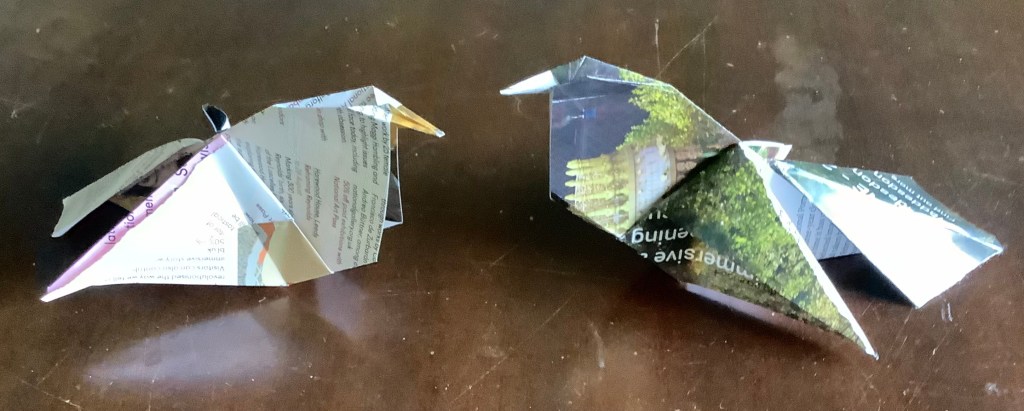
As part of this campaign, Zero Hour is inviting people to get crafty and to make an origami model of an endangered species which they can send to their MP.

For further details visit https://www.zerohour.uk/origamiaction/

and here are two nightingales I had a go at making!
Counting on … day 1.124

28th May 2023

When a seed bank saved the ‘day-sy’!

A recent article on the Guardian reported on the rescue of the York groundsel, Senecio eboracensis, from extinction.

https://www.theguardian.com/environment/2023/may/27/york-groundsel-bloom-again-britain-first-ever-de-extinction-event-natural-england


https://www.rarebritishplants.com/projects

Counting on … day 1.129

3rd June 2023

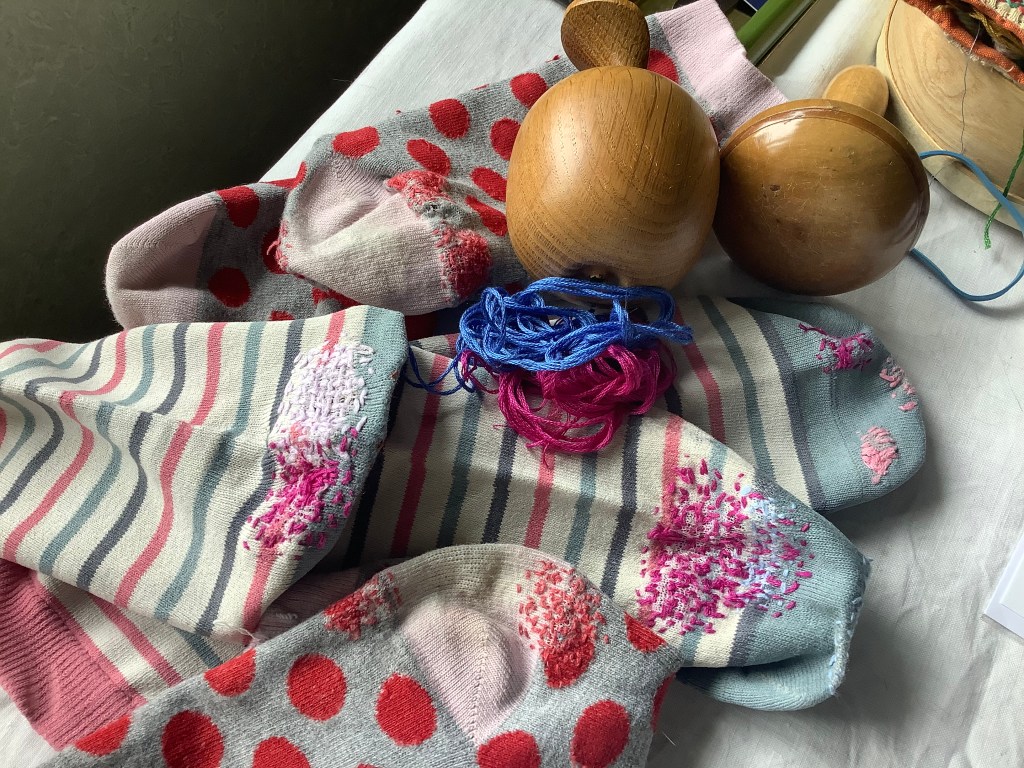
Darning – and redarning – socks adds years to their life span. Having a darning mushroom – or other round wooded object is useful and stops you sewing two sides of the sock together. I use embroidery silks rather than darning wool (few socks nowadays are made of wool – and work a weaving stitch in both directions to either fill in a hole, or more often to reinforce an area of the sock that is wearing thin.
With an attractive colour, the darning can add to the character of the sock!

Counting on … day 1.128

2nd June 2023

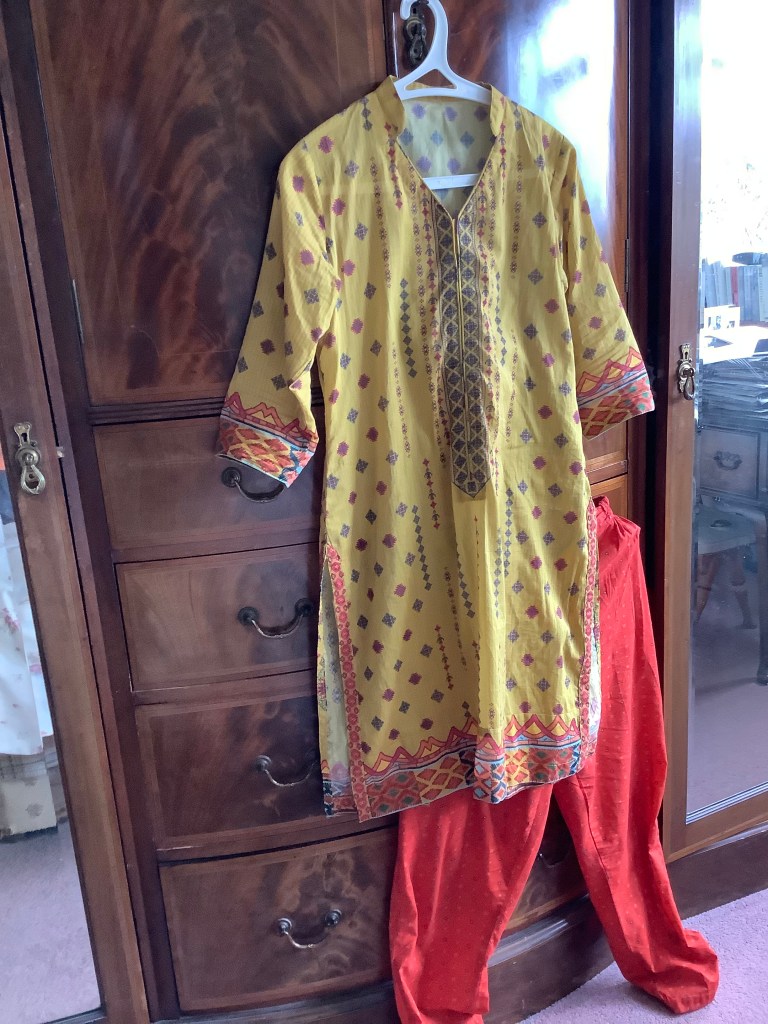
Buying second hand gives partially worn item a further length of life, so preventing unnecessary waste of resources in disposing of partially used items and in making more brand new items. I regularly drop in at the local charity shops looking for a book to read, a jigsaw for distraction or maybe something to wear. Yesterday I was feeling the lack of summer trousers – usually I expect to wear shorts at this time of year but the cold wind is making that less than comfortable – and I was particularly lucky in finding a pair of thin cotton trousers and a loose top both in bright colours that make one feel happy.

Counting on … day 1.127

1st June 2023

What are good ideas for bit to be shared?

Here is one from Cafod for writing a prayer for the Big Green Week. As well as posting it on line, why not write it out and post it on you church notice board too?

Counting on … day 1.126

31st May 2023

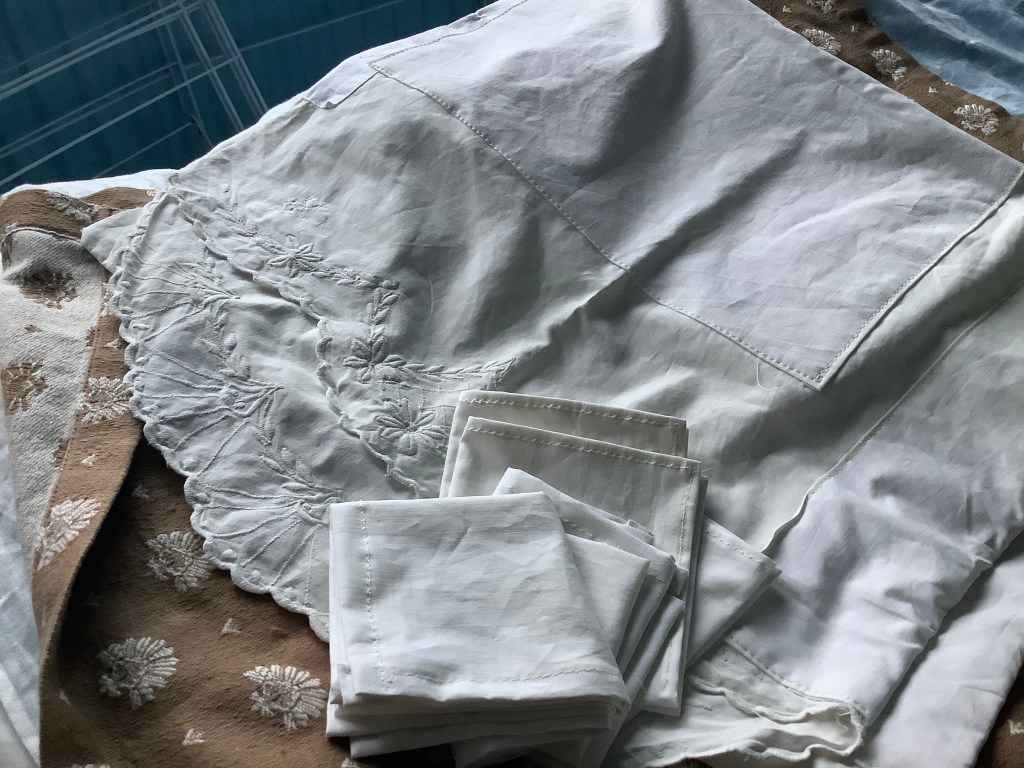
Having both a number of sheets and pillowcases that are wearing thin (even after turning the outsides into the middle) I have combined the two to make/ mend some new pillowcases, and used the left overs to make handkerchiefs. Possibly a bit excessive but it does give the cotton an extended life.

For more on making repairs and mending – https://greentau.org/tag/repairs/

and https://greentau.org/tag/up-cycling/

Counting on … day 1.125

30th May 2023

This is a noisy time of year – the young starlings can now fly but have not yet learnt to feed themselves. They fly off with their parents and perch in easy reach of food and then squawk loudly to ensure that their parents keep on putting food into their ever open beaks! The juniors are a delicate shade of grey compared with the shiny sparkly back that they will sport when they reach adulthood.

It is good to see – and hear – them as their number have declined by 66% since the mid-1970s, placing them on the red list. According to the RSPB only 15% survive the first year to make it to adulthood. I hope that keeping our feeders full of fatty insect based nibbles will give them a helping hand.

Counting on … day 1.122

26th May 2023

The ongoing climate crisis makes local weather patterns more unpredictable and with that comes the risk of some plants species dying out in the short term. For example the speed with which bluebells can naturally migrate northwards to cooler climes may soon be slower than the speed with which unseasonal heat is advancing. If the bluebell seeds can be artificially transported to more suitable climes then the species can be saved.
Seedbanks gather and store seeds to protect all our futures. Their stocks can allow for replanting in the future. They are also our security against our short sighted eradication of plants that we currently see as weeds, but which hold as yet unforeseen virtues.

You might like to find out about the UK based Heritage Seed Library https://www.gardenorganic.org.uk/what-we-do/hsl

Kew Gardens maintains a global seed bank, The Millennium Seed Bank (MSB) with over 2.4 billion seeds, representing over 39,000 different species of the world’s storable seeds.  You can make financial donations to support this work.

https://www.kew.org/science/collections-and-resources/research-facilities/millennium-seed-bank

Counting on… day 1.121

25th May 2023

I thought I saw the following headline – “Sowing the Seeds of Biodiversity Conversation’ – but when I looked a second time, I saw it read “Sowing the Seeds of Biodiversity Conservation”. And yet perhaps I did read it aright as I am now having a conversation about biodiversity. My reading had been about the idea that to assist biodiversity it helps to sow and grow local seeds and plants – ie ones that are most likely to grow where you are and to be a significant part of the localities food chain – nettles for comma butterflies for example. One way of doing this would be to collect seeds from such plants and share them with your neighbours.

How to collect and store seeds – https://www.gardenersworld.com/how-to/grow-plants/how-to-collect-and-save-seeds/

And for a list of seed swop events – https://www.gardenorganic.org.uk/what-we-do/hsl/seed-swaps