Counting on … day 138

8th September 2025

Inequalities vis a vis the climate crisis exist not just between richer and poorer nations, but also between different communities within individual nations. Typically poorer communities struggle more and are more frequently adversely affected by the climate crisis. Whilst richer communities are better insulated against the impact of climate change whilst at the same contributing far more to the problem.

“The wealthiest 1 per cent of people in the UK each produce 11 times the amount of carbon emissions of someone in the poorest half of the population … Their carbon footprint is 6 times that of the national average. Those in the wealthiest 10 per cent – with income after tax of at least £41,000 per year – have a carbon footprint that is more than double the national average and four times that of someone in the poorest half.” (1) 

Richer people because they spend more, consuming more goods and services, will generate a larger carbon footprint. At the same time, as influencers and trend setters they encourage others to to mimic their high carbon lifestyles. One clear example of this is the explosion in the number of SUVs that now fill our streets. These began life as a utility vehicle for areas where the ground was rough and unsuitable for regular vehicles. Next they became the new toy for the rich and wealthy. Now they are the must-have for the aspiring classes. So rather than seeing a switch to smaller, less polluting electrical vehicles which would benefit air quality, reduce pollution, and assist in mitigating the affects of climate crisis, we have a increased pollution and higher carbon emissions.

(1) https://www.oxfam.org.uk/media/press-releases/wealthiest-brits-have-a-carbon-footprint-11-times-that-of-someone-in-the-poorest-half-of-society/

More information on SUVs – 

Falling in Love Again

1st September 2025

This is the first of a series of reflections I wrote for creation-tide a couple of years ago. Following the link should lead you to each of the daily reflections .

The world around us is full of curious, beautiful and amazing things. As small children our curiosity and our amazement knew no bounds. Every day would produce novelties- things to see, things to chew or eat, things to grab and hold, things to poke and explore. 

As we have grow older we have often lost that sense of wonder. Things that were new have become mundane. In the rush to be busy, small things flop below the radar. Decorum dictates that we shouldn’t prod or lick things and, unless we’re wine tasters, swirling stuff around our mouth and spitting are frowned upon. Stopping suddenly just to look is discouraged – it interrupts the flow of traffic. Daily routines take over. 

And our love for the world wains and falters. 

Today begins the season of creation-tide which runs from 1st September till 4th October, the Feast of St Francis. Let’s fall in love again with creation. 

Snails may be slimy, commonplace and the bane of gardeners but look again ! They are beautiful, with muted colours, a fluid muscular body and a wonderful spiralling shell. This is a white lipped snail, one of many which has occupied our garden this year. 

Falling in Love 34

A green tau/ cross


Today is the feast of St Francis, known as the patron saint of environmentalism. He was someone who was constantly falling in love with God, with the world around him, with all the diverse creatures and people he met – many of whom were despised by others – and with simplicity and poverty. Indeed he declared himself betrothed to Lady Poverty.

Let us follow his example of delighting all that is around us, of pursuing a life of simplicity, and of joyfully loving God.

Falling in Love 33

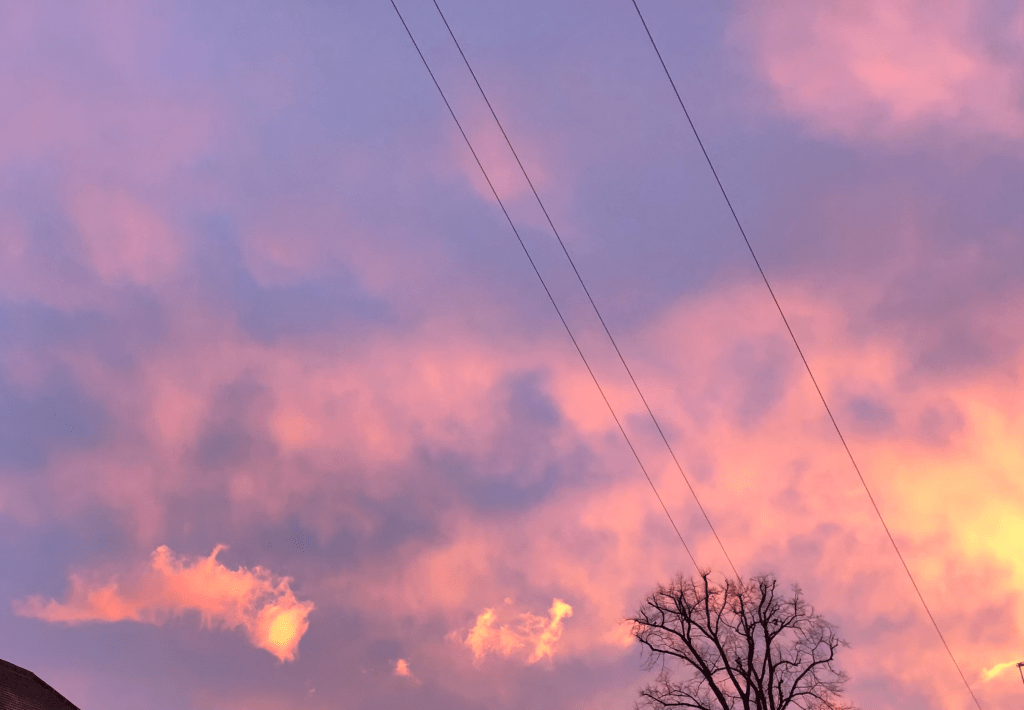
Who says the sky is blue? The sky’s palate is constantly changing as its mood. Does this sunset suggest glory, energy, future hopes, turmoil or beauty?

The world around us is full of curious, beautiful and amazing things. As small children our curiosity and our amazement knew no bounds. Every day would produce novelties- things to see, things to chew or eat, things to grab and hold, things to poke and explore. 

As we have grow older we have often lost that sense of wonder. Things that were new have become mundane. In the rush to be busy, small things flop below the radar. Decorum dictates that we shouldn’t prod or lick things and, unless we’re wine tasters, swirling stuff around our mouth and spitting are frowned upon. Stopping suddenly just to look is discouraged – it interrupts the flow of traffic. Daily routines take over. 

And our love for the world wains and falters. 

The season of creation-tide runs from 1st September till 4th October, the Feast of St Francis. Let’s fall in love again with creation. 

Falling in Love 32

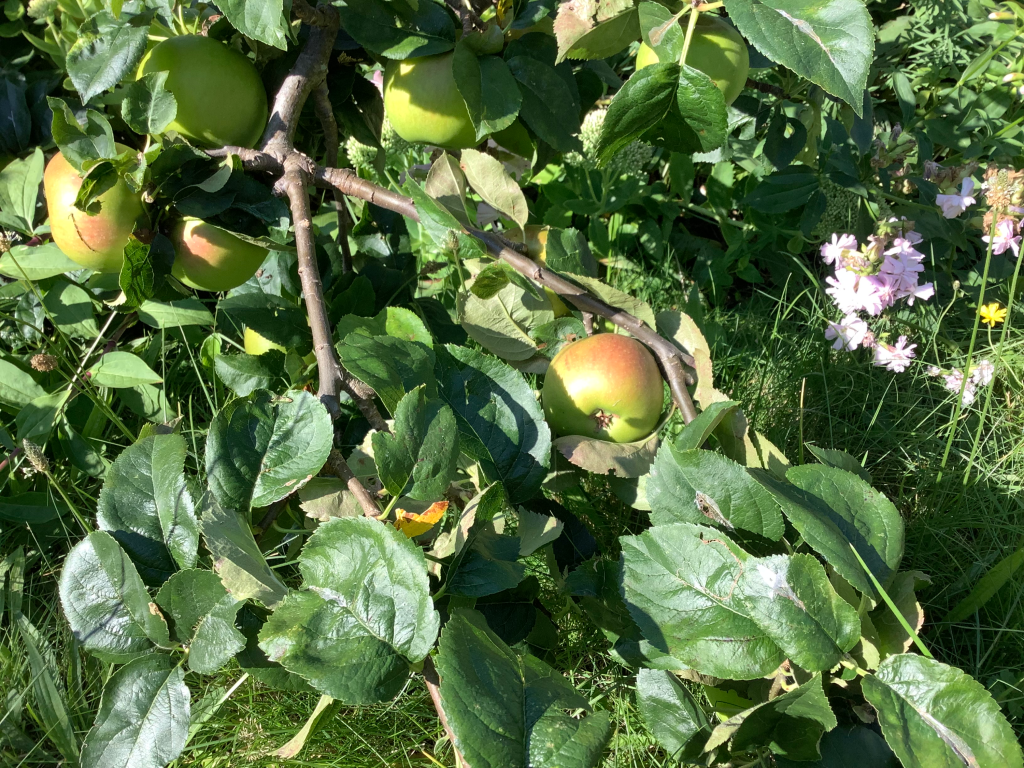
Apples are reputed to have been grown in the Garden of Eden. Their colour, crunch and savour are enticing even though now we see them as commonplace rather than exotic. They are a homely fruit and adaptable for use in puddings, jams and chutneys, cakes and pies – or simply to scrump straight from the tree. 

The world around us is full of curious, beautiful and amazing things. As small children our curiosity and our amazement knew no bounds. Every day would produce novelties- things to see, things to chew or eat, things to grab and hold, things to poke and explore. 

As we have grow older we have often lost that sense of wonder. Things that were new have become mundane. In the rush to be busy, small things flop below the radar. Decorum dictates that we shouldn’t prod or lick things and, unless we’re wine tasters, swirling stuff around our mouth and spitting are frowned upon. Stopping suddenly just to look is discouraged – it interrupts the flow of traffic. Daily routines take over. 

And our love for the world wains and falters. 

The season of creation-tide runs from 1st September till 4th October, the Feast of St Francis. Let’s fall in love again with creation. 

Falling in Love 31

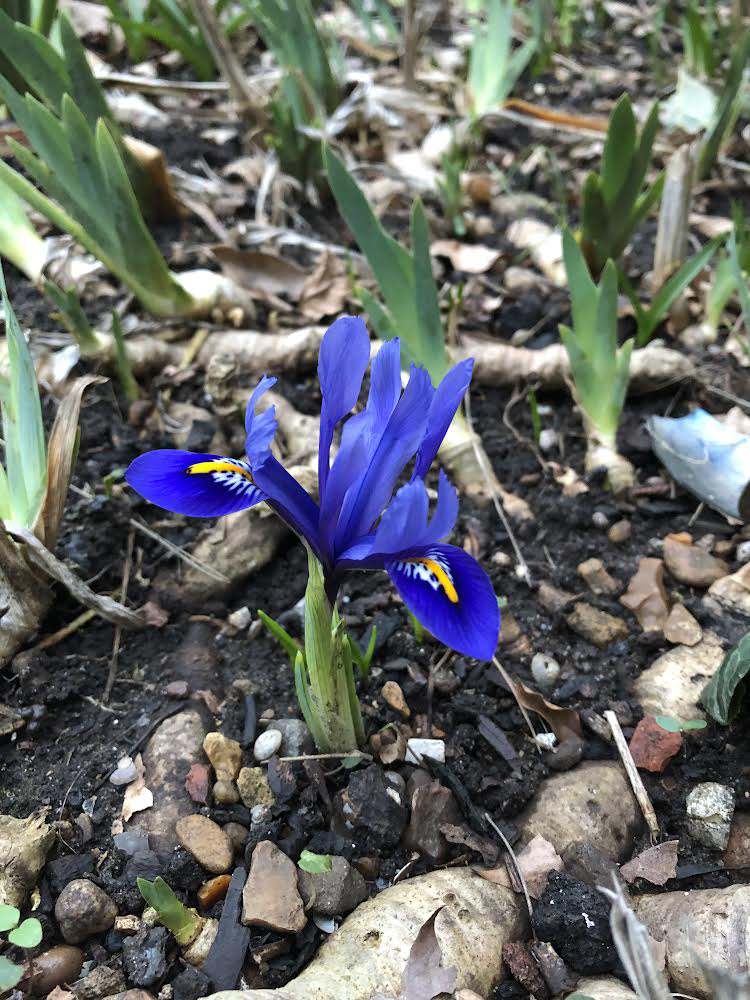
This winter flowering iris is such a vibrant blue which offsets the yellow streak that must be so attractive to insects. Blue is often associated with heaven, the skies above and the waters below –  and with precious minerals. Blue is: lapis lazuli, sapphire, turquoise, aquamarine, navy, cobalt, cyan, cerulean, marine, gentian, peacock, and celestine. 

The world around us is full of curious, beautiful and amazing things. As small children our curiosity and our amazement knew no bounds. Every day would produce novelties- things to see, things to chew or eat, things to grab and hold, things to poke and explore. 

As we have grow older we have often lost that sense of wonder. Things that were new have become mundane. In the rush to be busy, small things flop below the radar. Decorum dictates that we shouldn’t prod or lick things and, unless we’re wine tasters, swirling stuff around our mouth and spitting are frowned upon. Stopping suddenly just to look is discouraged – it interrupts the flow of traffic. Daily routines take over. 

And our love for the world wains and falters. 

The season of creation-tide runs from 1st September till 4th October, the Feast of St Francis. Let’s fall in love again with creation. 

Falling in Love 30

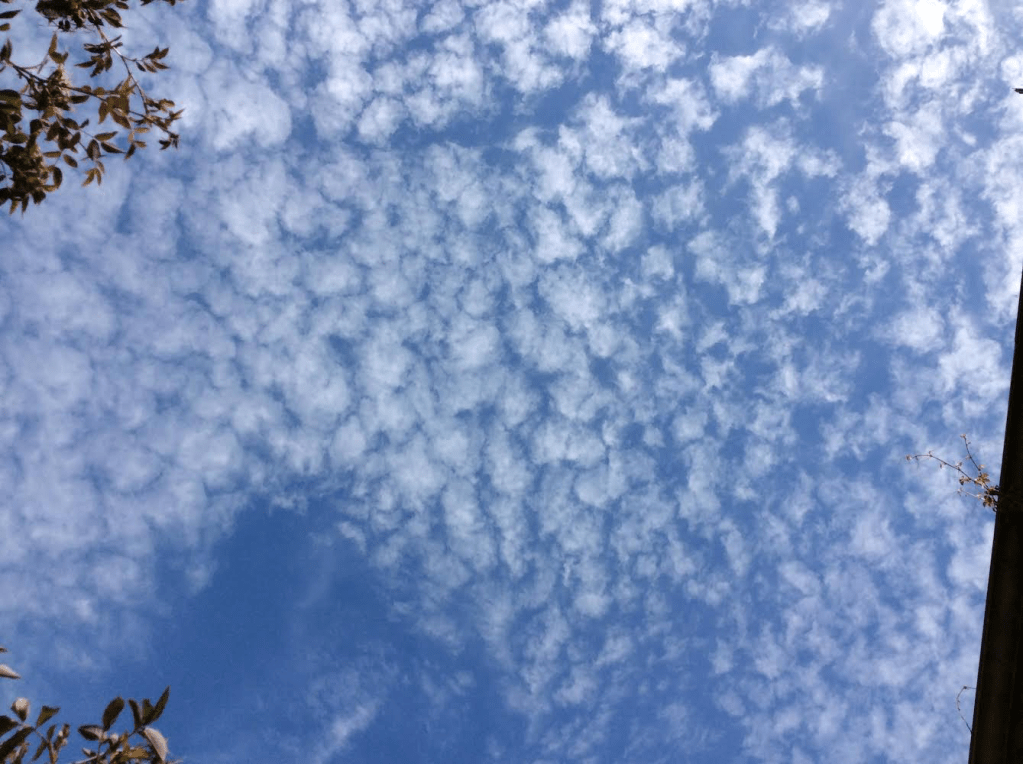
Clouds, like water, are fantastically varied – maybe because they are themselves made up of a myriad of  mini water droplets. Here the clouds resemble little puffs of candy floss or maybe cotton wool. Although the air seems still, these clouds are constantly moving and morphing, and whilst down here it is a warm summer’s day, up there the temperatures are very much colder!

The world around us is full of curious, beautiful and amazing things. As small children our curiosity and our amazement knew no bounds. Every day would produce novelties- things to see, things to chew or eat, things to grab and hold, things to poke and explore. 

As we have grow older we have often lost that sense of wonder. Things that were new have become mundane. In the rush to be busy, small things flop below the radar. Decorum dictates that we shouldn’t prod or lick things and, unless we’re wine tasters, swirling stuff around our mouth and spitting are frowned upon. Stopping suddenly just to look is discouraged – it interrupts the flow of traffic. Daily routines take over. 

And our love for the world wains and falters. 

The season of creation-tide runs from 1st September till 4th October, the Feast of St Francis. Let’s fall in love again with creation. 

Falling in love 29

Hilda

Cats are both attentive and self-contained. Alert when they wish, and asleep when they wish: they have no hang-ups about what they ‘should’ be doing. Christopher Smart, the eighteenth century poet describes his cat Jeoffry as having a daily routine that is a life prayerfully aligned with God. 

The world around us is full of curious, beautiful and amazing things. As small children our curiosity and our amazement knew no bounds. Every day would produce novelties- things to see, things to chew or eat, things to grab and hold, things to poke and explore. 

As we have grow older we have often lost that sense of wonder. Things that were new have become mundane. In the rush to be busy, small things flop below the radar. Decorum dictates that we shouldn’t prod or lick things and, unless we’re wine tasters, swirling stuff around our mouth and spitting are frowned upon. Stopping suddenly just to look is discouraged – it interrupts the flow of traffic. Daily routines take over. 

And our love for the world wains and falters. 

The season of creation-tide runs from 1st September till 4th October, the Feast of St Francis. Let’s fall in love again with creation. 

Falling in love 28

Log and moss, Lake District

Close up mosses create their own landscape in miniature. And the closer we look, the more detail we see. Delicate fronds and feather-like leaves; small rounded pebbles; a semi decayed leaf; a spike of grass; the age-worn grain of the log. 


The world around us is full of curious, beautiful and amazing things. As small children our curiosity and our amazement knew no bounds. Every day would produce novelties- things to see, things to chew or eat, things to grab and hold, things to poke and explore. 

As we have grow older we have often lost that sense of wonder. Things that were new have become mundane. In the rush to be busy, small things flop below the radar. Decorum dictates that we shouldn’t prod or lick things and, unless we’re wine tasters, swirling stuff around our mouth and spitting are frowned upon. Stopping suddenly just to look is discouraged – it interrupts the flow of traffic. Daily routines take over. 

And our love for the world wains and falters. 

The season of creation-tide runs from 1st September till 4th October, the Feast of St Francis. Let’s fall in love again with creation. 

Falling in love 27

Moonlight on the Lake, Ticino

If sunlight is golden, moon light is silvery. Living in an age of electric lights, we have forgotten the importance of the moon as a source of light. Less intense than sunlight, moonlight still casts shadows. And as we move away from artificial light allowing our eyes to adjust, moonlight is certainly strong enough for us to walk along roads and across fields.

The world around us is full of curious, beautiful and amazing things. As small children our curiosity and our amazement knew no bounds. Every day would produce novelties- things to see, things to chew or eat, things to grab and hold, things to poke and explore. 

As we have grow older we have often lost that sense of wonder. Things that were new have become mundane. In the rush to be busy, small things flop below the radar. Decorum dictates that we shouldn’t prod or lick things and, unless we’re wine tasters, swirling stuff around our mouth and spitting are frowned upon. Stopping suddenly just to look is discouraged – it interrupts the flow of traffic. Daily routines take over. 

And our love for the world wains and falters. 

The season of creation-tide runs from 1st September till 4th October, the Feast of St Francis. Let’s fall in love again with creation.