14th May 2023
Reflection (readings below)
Breathing is something we all do, all of the time, whether we’re asleep or awake, a newborn baby or as old as the hills.and as often as not, something we do without thinking. It’s a natural reflex. We do it subconsciously, without a thought.
Yet if you have ever been to a yoga class or taken part in a guided meditation, you may have been invited to focus on your breathing. To feel the breath come in through your nose, followings it’s flow down into your body and feeling it lift your belly. And then to focus on the out breath, the air returning up through your body and out through your nose or mouth. Sudden,y you are much more aware of your breathing, its sound, its feel, it rhythm. It can be a surprisingly calming and enriching experience!
Focusing on something, being more aware of it, can be a positive experience. Think of painting hanging on a wall – it can be just something we glance at. Or it might be that someone invites us to look at more carefully. It might be that someone can illuminate for us something about the making of the picture, about the artist or the circumstance. It might be someone can point out to us something interesting about the way the composition is structured, or about the symbolism of items or colours that have been used. Once our attention has drawn to the painting we may see it in a new, fuller and more rewarding way.
The same can be true of a poem, a piece of music, a piece of engineering, a landscape – once we know more about it, so our interest and enjoyment can be enhanced.
I wonder if the same can be said of God? Whether or not we know God, whether or not we are aware of God, God is nevertheless always there. Whether or not we believe in God, God’s presence is still there, God’s power of life is still actively operating. God doesn’t need our awareness or our acknowledgment to be exist, to be God. This is something of what Paul is trying to articulate in his conversation with the people in Athens. He is doing it tactfully – not condemning them for not knowing God in a personal way, but affirming their endeavours to name that which can seem unknowable. (And who of us can say we truly know God? Often our own knowledge of God is vague or sketchy or misguided. I no longer think he is a white haired, bearded old man who is apt to throw thunderbolts. Indeed I don’t think he is a ‘he’ although at times ‘father’ or ‘dad’ can be a useful metaphor).
Thinking of metaphors, of names for God, I find it interesting that in the passage from John’s gospel, the Greek word “Paraklēton” is translated in so many different ways depending which version of the Bible you read:
- phonetically as Paraclete,
- Comforter – which might suggest a warm scarf or one of those security blankets we might have had as a child, but might equally might suggest the warm embrace of a loved one,
- Advocate – someone to speak up in our defence, to present our character in the best possible light,
- Guide – someone showing us the way, but not just showing the way, but explaining to us what is we are seeing as we journey, (think of London’s Blue Guides)
- Helper – which now a days has perhaps the connotation of a daily cleaner, someone to pick up after us, or equally someone who an step in when our efforts fall short. It can a.so suggest team work.
- Counsellor – someone who will advise us on the best course of action, maybe a heavenly sort of civil servant
- Intercessor – someone praying or pleading on our behalf
- Perhaps less often, as a Consoler,
- Or, jumping ahead to the feast of Pentecost, as Holy Spirit.
Etymologically the word ‘paraclete’ has two parts ‘para’ meaning alongside or around, and ‘kalein’ meaning to call or shout out: a shout out for help or assistance.
What Jesus is offering to his disciples, his friends, sounds exactly like what they were going to need in the aftermath of Jesus’s death, and what we certainly need today – a constant, at hand, source of comfort, support and guidance. Like our breathing, God is – and always has been – a constant presence; it’s just we need to be reminded to think about God. Like the painting – or like the scenery around us – God is and has always been there but until someone – like Jesus, like Paul, like St Francis, like the current Pope – invite us to look more closely, to see the underlying stories, the intricate details – we may miss out on the greater depth and joys that comes from an intimate relationship with God. This is what the life, death and resurrection of Jesus, offers us – the opportunity of a deep, close and intimate relationship with the ever-present God. Throughout the gospels Jesus is introducing us to God – God as the Son, God as the Father, and in today’s reading, God as the Spirit. It is something he does expertly because he is God making God real to us.
Acts 17:22-31
Paul stood in front of the Areopagus and said, “Athenians, I see how extremely religious you are in every way. For as I went through the city and looked carefully at the objects of your worship, I found among them an altar with the inscription, ‘To an unknown god.’ What therefore you worship as unknown, this I proclaim to you. The God who made the world and everything in it, he who is Lord of heaven and earth, does not live in shrines made by human hands, nor is he served by human hands, as though he needed anything, since he himself gives to all mortals life and breath and all things. From one ancestor he made all nations to inhabit the whole earth, and he allotted the times of their existence and the boundaries of the places where they would live, so that they would search for God and perhaps grope for him and find him—though indeed he is not far from each one of us. For ‘In him we live and move and have our being’; as even some of your own poets have said,
‘For we too are his offspring.’
Since we are God’s offspring, we ought not to think that the deity is like gold, or silver, or stone, an image formed by the art and imagination of mortals. While God has overlooked the times of human ignorance, now he commands all people everywhere to repent, because he has fixed a day on which he will have the world judged in righteousness by a man whom he has appointed, and of this he has given assurance to all by raising him from the dead.”
Psalm 66:7-18
7 Bless our God, you peoples; *
make the voice of his praise to be heard;
8 Who holds our souls in life, *
and will not allow our feet to slip.
9 For you, O God, have proved us; *
you have tried us just as silver is tried.
10 You brought us into the snare; *
you laid heavy burdens upon our backs.
11 You let enemies ride over our heads;
we went through fire and water; *
but you brought us out into a place of refreshment.
12 I will enter your house with burnt-offerings
and will pay you my vows, *
which I promised with my lips
and spoke with my mouth when I was in trouble.
13 I will offer you sacrifices of fat beasts
with the smoke of rams; *
I will give you oxen and goats.
14 Come and listen, all you who fear God, *
and I will tell you what he has done for me.
15 I called out to him with my mouth, *
and his praise was on my tongue.
16 If I had found evil in my heart, *
the Lord would not have heard me;
17 But in truth God has heard me; *
he has attended to the voice of my prayer.
18 Blessed be God, who has not rejected my prayer, *
nor withheld his love from me.
1 Peter 3:13-22
Now who will harm you if you are eager to do what is good? But even if you do suffer for doing what is right, you are blessed. Do not fear what they fear, and do not be intimidated, but in your hearts sanctify Christ as Lord. Always be ready to make your defence to anyone who demands from you an accounting for the hope that is in you; yet do it with gentleness and reverence. Keep your conscience clear, so that, when you are maligned, those who abuse you for your good conduct in Christ may be put to shame. For it is better to suffer for doing good, if suffering should be God’s will, than to suffer for doing evil. For Christ also suffered for sins once for all, the righteous for the unrighteous, in order to bring you to God. He was put to death in the flesh, but made alive in the spirit, in which also he went and made a proclamation to the spirits in prison, who in former times did not obey, when God waited patiently in the days of Noah, during the building of the ark, in which a few, that is, eight persons, were saved through water. And baptism, which this prefigured, now saves you– not as a removal of dirt from the body, but as an appeal to God for a good conscience, through the resurrection of Jesus Christ, who has gone into heaven and is at the right hand of God, with angels, authorities, and powers made subject to him.
John 14:15-21
Jesus said, ”If you love me, you will keep my commandments. And I will ask the Father, and he will give you another Advocate, to be with you forever. This is the Spirit of truth, whom the world cannot receive, because it neither sees him nor knows him. You know him, because he abides with you, and he will be in you.
”I will not leave you orphaned; I am coming to you. In a little while the world will no longer see me, but you will see me; because I live, you also will live. On that day you will know that I am in my Father, and you in me, and I in you. They who have my commandments and keep them are those who love me; and those who love me will be loved by my Father, and I will love them and reveal myself to them.”

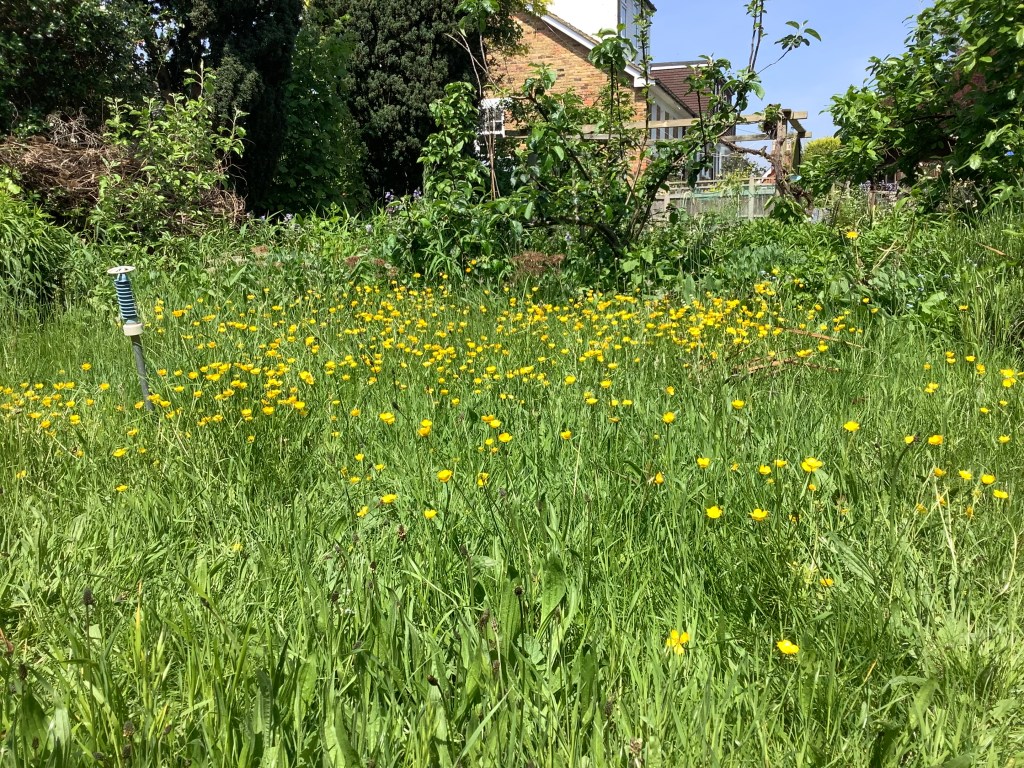


 The Green Tau