Sunday next before Lent

27th February 2022

Exodus 34:29-35

Moses came down from Mount Sinai. As he came down from the mountain with the two tablets of the covenant in his hand, Moses did not know that the skin of his face shone because he had been talking with God. When Aaron and all the Israelites saw Moses, the skin of his face was shining, and they were afraid to come near him. But Moses called to them; and Aaron and all the leaders of the congregation returned to him, and Moses spoke with them. Afterward all the Israelites came near, and he gave them in commandment all that the Lord had spoken with him on Mount Sinai. When Moses had finished speaking with them, he put a veil on his face; but whenever Moses went in before the Lord to speak with him, he would take the veil off, until he came out; and when he came out, and told the Israelites what he had been commanded, the Israelites would see the face of Moses, that the skin of his face was shining; and Moses would put the veil on his face again, until he went in to speak with him.

Psalm 99

1 The Lord is King;
let the people tremble; *
he is enthroned upon the cherubim;
let the earth shake.

2 The Lord is great in Zion; *
he is high above all peoples.

3 Let them confess his Name, which is great and awesome; *
he is the Holy One.

4 “O mighty King, lover of justice,
you have established equity; *
you have executed justice and righteousness in Jacob.”

5 Proclaim the greatness of the Lord our God
and fall down before his footstool; *
he is the Holy One.

6 Moses and Aaron among his priests,
and Samuel among those who call upon his Name, *
they called upon the Lord, and he answered them.

7 He spoke to them out of the pillar of cloud; *
they kept his testimonies and the decree that he gave them.

8 O Lord our God, you answered them indeed; *
you were a God who forgave them,
yet punished them for their evil deeds.

9 Proclaim the greatness of the Lord our God
and worship him upon his holy hill; *
for the Lord our God is the Holy One.

2 Corinthians 3:12-4:2

Since, then, we have such a hope, we act with great boldness, not like Moses, who put a veil over his face to keep the people of Israel from gazing at the end of the glory that was being set aside. But their minds were hardened. Indeed, to this very day, when they hear the reading of the old covenant, that same veil is still there, since only in Christ is it set aside. Indeed, to this very day whenever Moses is read, a veil lies over their minds; but when one turns to the Lord, the veil is removed. Now the Lord is the Spirit, and where the Spirit of the Lord is, there is freedom. And all of us, with unveiled faces, seeing the glory of the Lord as though reflected in a mirror, are being transformed into the same image from one degree of glory to another; for this comes from the Lord, the Spirit.

Therefore, since it is by God’s mercy that we are engaged in this ministry, we do not lose heart. We have renounced the shameful things that one hides; we refuse to practice cunning or to falsify God’s word; but by the open statement of the truth we commend ourselves to the conscience of everyone in the sight of God.

Luke 9:28-36, [37-43a]

Jesus took with him Peter and John and James, and went up on the mountain to pray. And while he was praying, the appearance of his face changed, and his clothes became dazzling white. Suddenly they saw two men, Moses and Elijah, talking to him. They appeared in glory and were speaking of his departure, which he was about to accomplish at Jerusalem. Now Peter and his companions were weighed down with sleep; but since they had stayed awake, they saw his glory and the two men who stood with him. Just as they were leaving him, Peter said to Jesus, “Master, it is good for us to be here; let us make three dwellings, one for you, one for Moses, and one for Elijah”–not knowing what he said. While he was saying this, a cloud came and overshadowed them; and they were terrified as they entered the cloud. Then from the cloud came a voice that said, “This is my Son, my Chosen; listen to him!” When the voice had spoken, Jesus was found alone. And they kept silent and in those days told no one any of the things they had seen.

Reflection

Ascending Mount Sinai, Moses draws close to God. It is a transformative experience: God’s glory shines through him. But is is not just Moses’ appearance that has changed; so too has his understanding of God and what God desires. Moses comes back down from the mountain with a new teaching, a new way of living that is in accordance with God’s will. Moses presents this to the Israelites through the medium of the Law.

The psalmist presents God as king. A king is one who reigns, one who determines how people will live within the  bounds of his kingdom.  God’s kingdom, God’s rule, says the psalmist, is characterised, by justice, equity and righteousness. 

I think Paul in his letter to the Corinthians is being a bit harsh in its condemnation of the the Jews. But then we too can equally be blinkered especially if we do not expect to see or hear a different interpretation – and that is as true of what we may hear on the news as of what we hear from scripture. We need to question are assumptions and to be enquiring. 

What Paul does want to say is that when we see and hear through the medium of our relationship with Jesus, our understanding will be completely transformed. It will be a route to freedom, a route that will see us being daily transformed by the glory of God. 

As with Moses’ experience, so for the disciples. When they are in such close proximity to God’s presence, they are overwhelmed by God’s glory. When Moses came back down from the mountain, he brought with him the Law, enscribed on tablets of stone. When the disciples came down from the mountain, they return with Jesus. Jesus is the living embodiment of God’s will for humankind. In Jesus’s example and teaching, we learn what is God’s will for the world. And as God says, ‘This is my Son, my Chosen; listen to him!’

Today’s readings are about hearing and seeing differently – hearing and seeing as God, and not the world, would have us hear and see. If we did, we would experience the world as a place where justice and equity and righteousness flourish. 

Pause a moment. What would such a world be like? Would there be people going to bed hungry? Would there be people fearing the loss of freedom and citizenship? Would there be people exposed to bombs and bullets? Would there be widespread destruction of rain forests, the depletion of soils, the loss of habitat and extinction of plants and animals? Would there be extreme weather patterns caused by human exploitation? Would there be a super rich 1% and an impoverished 90%? Would there be families dependent on food banks,  people with no stable income, young people unable to afford  homes, old people unable to afford care? 

If we know Jesus Christ, if we have faith in his teachings, if we were to follow his example, then through us God’s Spirit would be transforming the world. We can see it happening in small ways.

A couple of week’s ago at Christ Church we heard about the work of Partners for Change transforming the lives of Ethiopian communities. This fortnight we are marking the work of the Fairtrade Foundation, seeing both how it transforms the lives of others and protects and enhances the natural environment, and are being reminded how we can actively participate in that change. In our intercessions today we will be praying for the work of Christians Against Poverty which provides support and life skills and encouragement for people whose lives have been eroded by debt. 

We can use the time and discipline Lent gives us to hear anew what Jesus teaches, to reshape our lives to express his love for the people we meet day by day, to care for the natural world in which we live, and to support the work that is bringing justice and equity and righteousness to prevail. Let God’s kingdom come on earth! 

Counting on …day 106 

26th February 2022

Slowly we are seeing more products being made of recycled materials. Brabantia is one such producer. Their StepUp Pedal Bins are made from 91% recycled plastic consumer waste from Dutch households. The bins are also 99% recyclable. The Cradle-to-Cradle Products Innovation Institute assesses products on material quality, material reuse, the use of renewable energy and CO2 management, water management and fairness, and has awarded these bins a silver accreditation. 

They are on sale in our local hardware shop – however only buy one if you need it. It is more ecological to stick with the bin you have. 

 Counting on…day 105

25th February 2022

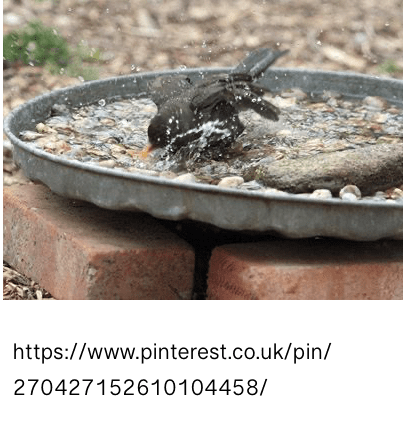
This winter I have noticed more birds using the bird bath both for drinking and for washing. I make a point of changing the water frequently – and replacing ice with water! It’s new popularity maybe because I have resisted it so that it is in the middle of the lawn well away from plants and bushes where predators could hide.

https://www.rspb.org.uk/birds-and-wildlife/advice/how-you-can-help-birds/how-to-make-a-bird-bath/

Fairly traded

24th February 2022

This week is the first half of Fairtrade fortnight when the Fairtrade Foundation draws our attention to the their work in protecting and supporting farmers, farm workers and small businesses in developing countries. For products to gain the Fairtrade mark a thorough investigation of trading practices is made, standards attained and goals established. Products with the Fairtrade mark often command a higher price which consumers are willing to pay knowing that the extra supports the wellbeing of those involved in its production and of the environment.  

These principles are clearly ones one would wish to apply in every circumstance. As consumers we can make the effort to find out about workers pay and conditions, the effects of production on the environment, of safe guards and sustainable practices, company practices, shareholder remuneration and the payment of taxes. It is not just in developing companies that one should desire fair trade practices, but here in the UK too. Being better informed we can chose to support those companies which trade fairly. The following groups/ foundations etc offer standards and identifying logos that help inform us as consumers. 

  • Fairtrade is a system of certification that aims to ensure a set of standards are met in the production and supply of a product or ingredient. For farmers and workers, Fairtrade means workers’ rights, safer working conditions and fairer pay. For shoppers it means high quality, ethically produced products. Choosing Fairtrade means standing with farmers for fairness and equality, against some of the biggest challenges the world faces. It means farmers creating change, from investing in climate friendly farming techniques to developing women in leadership. With Fairtrade you change the world a little bit every day. Through simple shopping choices you are showing businesses and governments that you believe in fair and just trade. https://www.fairtrade.org.uk/what-is-fairtrade/ 
  • The Rainforest Alliance is a global leader in sustainability certification. Farms, forest communities, and businesses that participate in our certification program are audited against rigorous sustainability standards based on the triple bottom line: environmental, economic, and social well-being. More than two million farmers follow our agriculture standards in 70 countries around the globe. Our programs focus on coffee, cocoa, tea, bananas, and many other important commodity sectors facing urgent environmental and social challenges.  https://www.rainforest-alliance.org/approach/
  • The Living Wage Foundation is at the heart of the independent movement of businesses and people that campaign for the idea that a hard day’s work deserves a fair day’s pay. They celebrate and recognise the leadership of responsible employers who choose to go further and pay a real Living Wage based on the cost of living, not just the government minimum. They coordinate the announcement of the real Living Wage rates each November, based on the best available evidence about living standards in London and the UK. We also provide advice and support to employers and service providers implementing the independently-calculated Living Wage rates. This includes best practice guides, case studies from leading employers, model procurement frameworks and access to specialist legal and HR advice. They offer accreditation to employers that pay the independently-calculated Living Wage rates to all staff in London and the UK, or those committed to an agreed timetable of implementation, by awarding the Living Wage Employer Mark. https://www.livingwage.org.uk/living-wage-foundation  
  • The Fair Tax Foundation was launched in 2014 and operates as a not-for-profit social enterprise. Our Fair Tax Mark accreditation scheme seeks to encourage and recognise businesses that pay the right amount of corporation tax at the right time and in the right place. We believe companies paying tax responsibly and transparently should be celebrated, and any race to the bottom resisted. Tax contributions are a key part of the positive social and economic impact made by business. The growth of tax havens and unethical corporate tax conduct have become prominent concerns across the world. Aggressive tax avoidance negatively distorts national economies and undermines the ability of responsible business to compete fairly, both domestically and internationally. https://fairtaxmark.net/  
  • Certified B Corporations, or B Corps, are companies verified by B Lab to meet high standards of social and environmental performance, transparency and accountability.B Lab is the non-profit network transforming the global economy to benefit all people, communities and the planet.  It was created in 2006 with the mission to inspire and enable people to use business as a force for good. There are B Labs across the globe (forming the B Global Network) including Australia, East Africa, mainland Europe and North and South America. B Lab UK is a charity that launched in 2015.  As part of this international network, B Lab UK leads economic systems change to support our collective vision of an inclusive, equitable and regenerative economy. Our purpose is to redefine success in business through building a community of engaged businesses, raising awareness of the B Corp Movement and influencing change in the UK economy. Together, we are shifting our global economy from a system that profits few to one that benefits all: advancing a new model that moves from concentrating wealth and power to ensuring equity, from extraction to generation, and from prioritising individualism to embracing interdependence. https://bcorporation.uk/about-b-lab-uk/  
  • The Soil Association is the charity that digs deeper to transform the way we eat, farm and care for our natural world.Why do we do this? Because we want to live in a world which is in balance with nature. In a future with good health and a safe climate. For the last 75 years, we’ve worked with citizens, farmers, policy makers and businesses, supporting them to explore the vital relationship between the health of soil, plants, animals and people. Because the only way to solve the issues we face is to understand that they are all connected – and that food, farming and forestry are a vital part of the solution. Any product sold as ‘organic’ in the UK has to comply with organic regulation requirements written into a set of Standards. The Soil Association acts as a certification body and its symbol is a recognised and trusted international mark of organic certification internationally.  https://www.soilassociation.org/who-we-are/  
  • The Marine Stewardship Council (MSC) is an international non-profit organisation on a mission to  stop overfishing. For over 20 years, they have been working with fisheries, seafood companies and scientists to help protect the oceans around us, and safeguard seafood supplies. The blue MSC ecolabel is the world’s most recognised label for sustainable seafood. It is found on retail products and in restaurants identifying fish and seafood that has been wild-caught in a sustainable way and is fully traceable. The blue MSC ecolabel is only awarded to well-managed fisheries that meet the MSC’s independently verified standards for sustainable seafood production. https://www.msc.org/ 
  • The Forestry Stewardship Council, the original pioneers of forest certification, has 25 years of experience in sustainable forest management. They use their expertise to promote the responsible management of the world’s forests, bringing together experts from the environmental, economic and social spheres. 12 Irreplaceable Forest Products in Our Daily Lives: paper, toilet paper, books, cardboard, paper packaging, wood, furniture, musical instruments, charcoal, rubber products such as condoms, balls, tires, fruits and berries, and  medicines – A lot of medicines have important ingredients that come from the rainforest. While there are not any FSC-certified medicines (yet!), the standards set by FSC for responsible forest management protect the forests where these ingredients come from, thus ensuring that we will have access to them for future generations. Next time you add them to your shopping bag, make sure they are sourced sustainably by looking for the FSC logo.  https://fsc.org/en  
  • In 2008 The Round Table on Sustainable Palm Oil developed a set of environmental and social criteria which companies must comply with in order to produce Certified Sustainable Palm Oil (CSPO) in response to the ever-urgent need and growing global concern that commodities are produced without causing harm to the environment or society. Sustainable palm oil is responsive to increasing global food demand, supports affordable food prices, supports poverty reduction, safeguards social interests, communities and workers, and protects the environment. All organisations in the supply chain that use RSPO certified sustainable oil products are audited to prevent overselling and mixing palm oil with conventional (or non-sustainable) oil palm products. https://www.rspo.org/certification

 Counting on day 104

24th  February 2022

Safe guarding scarce resources.

Helium is a naturally occurring gas. It is very light and once released it quickly escapes to the edges of the earth’s  atmosphere. Where helium has become trapped in rock strata it can be Helium extracted for commercial use. It cannot be chemically manufactured and is therefore a limited finite resource.  Helium is is a key component in the operating of MRI scanners. 

It is surely irresponsible to use it to fill party balloons? 

 Counting on …day 103

23rd February 2022

As well as counting on ourselves to take action, we count on others too. Our local council, the Borough of Richmond upon Thames has recently review it progress vis a vis its climate emergency strategy. An independent assessment of all councils, ranked Richmond as eleventh overall, and third highest within the London Boroughs. Richmond scored particularly highly on ‘Community, engagement and communications’ and well above average on ‘Ecological emergency’. For full details see 

https://www.richmond.gov.uk/news/february_2022/cllr_neden_watts_on_richmond_council_climate_emergency_action_plan_annual_update

Green Tau issue 35

22nd February 2022

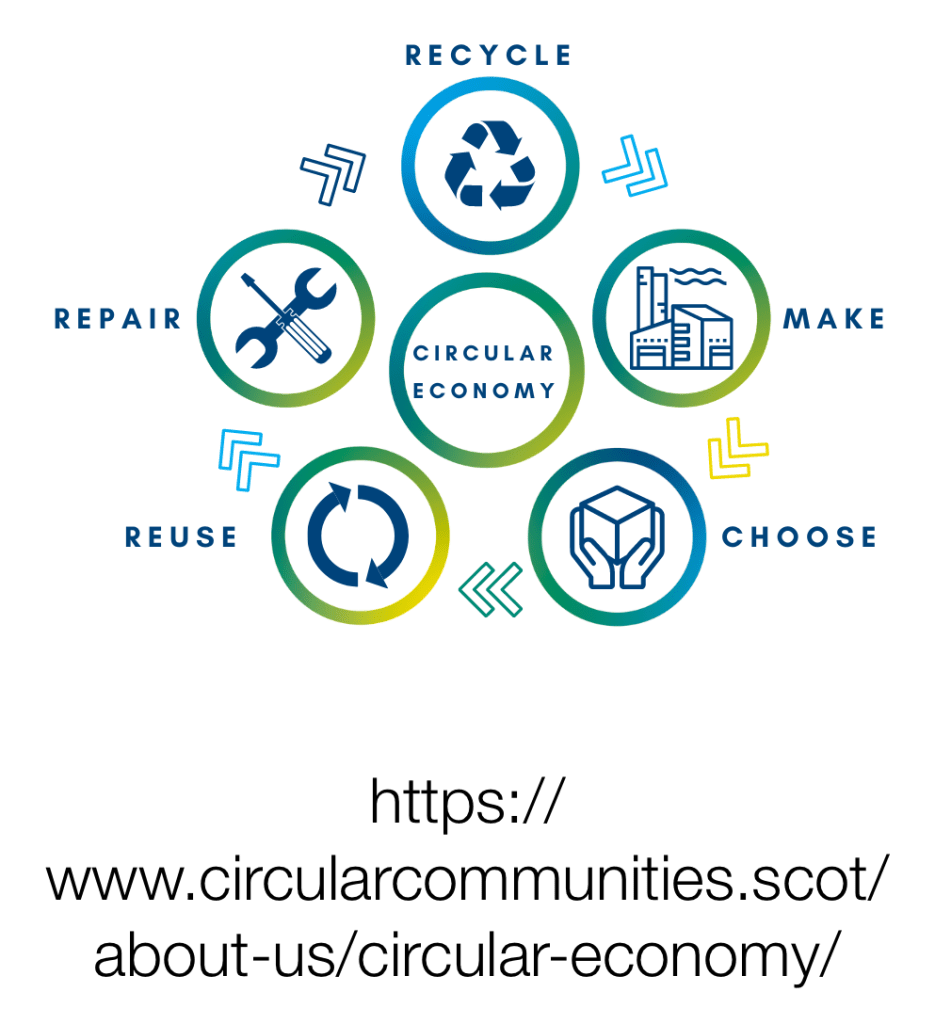
What is a circular economy? 

It is easier to describe its opposite. A non circular economy is that takes, makes and throws away. For example, chop down a tree, make its wood into a sheet of paper and then, after a single use, throw the paper away. Another example would be taking oil out of the ground, making it into a plastic cup  and then, after a single use, throwing it away.

In a circular economy the ‘throw away’ section is discarded. Instead the product is reused or recycled or repurposed so that its value is not lost. In a circular economy the sheet of paper after its initial use, may be reused (writing on the back of it), possible repurposed (used to wrap a parcel) and then recycled. Being recycled the waste paper may become a fresh sheet of (recycled) paper. Going back into the economy that sheet of paper can be recycled 6 or so times before the fibres become too short. At that point the sheet of paper might be recycled as a lower grade material and become a paper bag, a news paper, a cardboard box etc. Ultimately this paper based waste product can be composted and its nutrients returned to the soil. 

In a circular economy the intention is not only to ensure the reuse of waste material (really it is not waste but ‘raw’ material) but also to ensure that there is no waste of energy and water.  Recycling paper uses about 70% less energy and water than making virgin paper and produces about 70% less air pollution. If the paper mill has solar panels, say, it operate with zero loss of energy. If it can clean, reuse and/ or  return its water to the water system, it can operate without loss to the water system.

A circular economy seeks to regenerate natural resources. In the case of paper this would be planting and maintaining woodland to ensure supplies of wood for future generations who wish to make and use paper. Not all resources can be regenerated. Once fossil oil has been extracted from the earth, more cannot be generated. Oil was created 300 million years ago when climatic conditions were particularly suitable for its formation. The formation itself took place over 200 million years during which time climatic conditions were again suitable. Oil is finite resource. 

Is the rate at which we using the earth’s resources sustainable? Bluntly, no! If we compare the amount of resources we use each year against the rate at which those resources can be replaced, then we have not been living within our means since 1970. Each year the Global Footprint Network calculates the resources we use against the capacity of the earth to regenerate its resources and pin points that day in which the two coincide. In 1970 that date was 31st December. Since then this date – Earth Overshoot Day – has rapidly receded global consumption has exceeded the rate of regeneration. In 2021, it fell on July 29. Our current lifestyle is unsustainable. Moving to a circular economy is one way of addressing this problem. 

The development of a circular economy, both globally and locally, is happening. We see it in recycling schemes where plastic bottles are collected, processed and remade into new bottles. We see it with clothing manufacturers where clothes no longer required by the user are returned and either re sold or recycled to create new cloth. There are schemes which reuse and repurpose old furniture. There are even companies that reuse and repurpose unwanted kitchen units. Some projects are small, others large but they are all a step in the right direction. As consumers we need to step up and activity choose to be part of the circular economy.

Further reading: https://www.chathamhouse.org/2021/06/what-circular-economy

Counting on …day 102 

22nd February 202s

Another refill? Did you know that Lush make their black plastic pots from recycled plastic and that each one that is returned, goes to their own reprocessing facility to be remade into a new pot ready to be filled again. And for each one returned 50p is paid back! Lush calls this ‘packaging as a service’! 

Sadly only about 15% of pots are returned. It sounds as if we consumers need to be more proactive participants of the circular economy.  

Counting on …day 101

21st February 2022

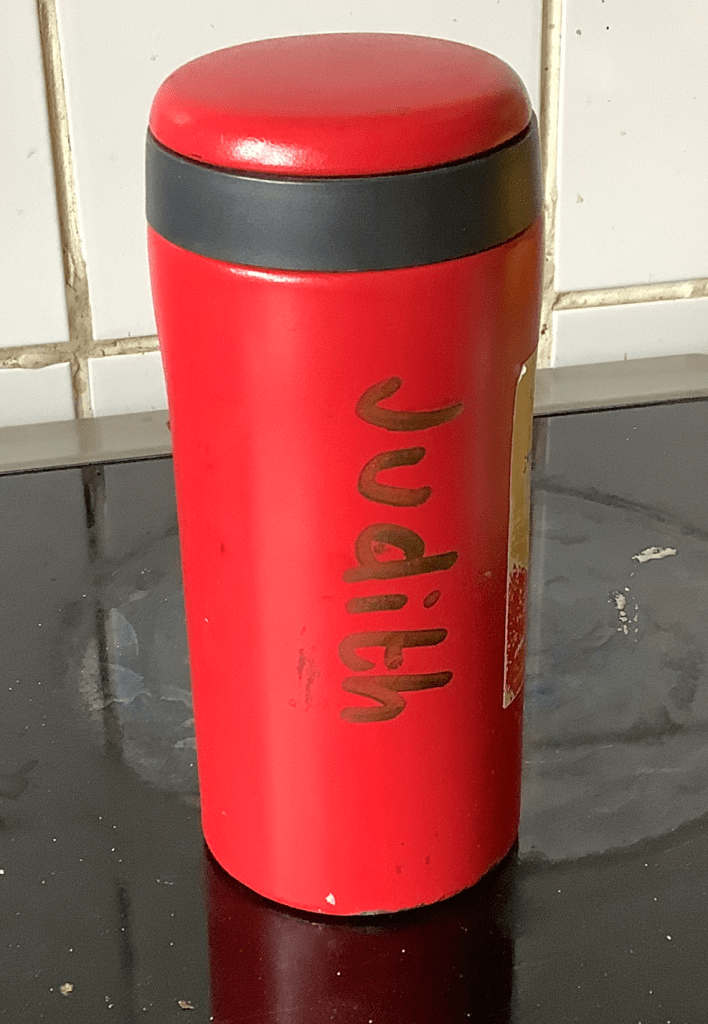
 Fancy a refill? Following on from last week’s Green Tau, reusable water bottles and coffee cups – keep cups – are excellent for refills, avoiding creating yet more single use paper/plastic items that require recycling/ disposal. (You do of course have to remember to take them with you!) My favourite is a small flask  as it keeps cold drinks cold in the summer and hot ones hot in the winter.