The Green Tau: plastic as a pollutant

Plastic: the pollutant we live with daily

First issued 4th July 2021; edited and reissued

Organic September, Movember, Veganuary, No-Mow May and now, Plastic-free July. Most months  have a focus on changing habits to create a better future. Plastic-free July advocates remove all plastic from our daily lives – from the tooth brush in the bathroom, the plastic fruit packet from the supermarket to the once ubiquitous plastic carrier bag. The tax on plastic bags – now at 10p per bag – has significantly reduced their use: 212 billion plastic bags were sold by retailers in 2016-17, and only 496m in 2021-22. It is likely that it has not been so much the cost of the bags that has led to their decreasing use, but the change in expectation and habit that the original introduction of the tax engendered. Cotton reusable bag in all shapes and sizes are now widely available (often as freebies) and to carry one is the social norm.

Why is it desirable to get rid of plastic?

Plastic is made from oil, one of the main sources of carbon dioxide emissions causing global warming. Producing one tonne of plastic generates up to 2.5 tonnes of carbon dioxide (Material Economics, 2018). As the world’s use of plastic rises, so does its consumption of oil. In 2019 we the world produced 460 million tonnes of plastic, up from 313 million tonnes in 2010 and is likely to,triple by 2060https://ourworldindata.org/grapher/global-plastics-production

This figure is expected to triple by 2050. (World Economic Forum)

One way of reducing the carbon footprint of plastic is to reuse existing plastics. Some items such as PET bottles, widely used for soft drink, can be recycled repeatedly. This is closed loop recycling meaning that the plastic is recycled to create an identical replacement item. (Open loop recycling recycles plastics but produces a lower grade plastic for which an alternative use must be found). To be effective closed loop recycling depends upon consumers ensuring that they do put their plastics – washed and clean – in the correct recycling bin and upon manufactures using exclusively that recycled plastic. In the UK only  30% of plastics are recycled!

Plastic rubbish pollutes our streets, rivers, woodlands, and oceans. It doesn’t naturally decay and instead remains intact for 100s of years. Plastic that does tear and break down into smaller and smaller pieces still doesn’t decay. Micro plastic particle have been found polluting glaciers and icecaps, and polluting oceans where it is being ingested by sea birds and fish. Micro plastics are also found in the air we breathe and in the water we drink. Micro plastics can be found lodged in our lungs and in our blood.

https://www.nationalgeographic.co.uk/environment-and-conservation/2022/04/microplastics-are-in-our-bodies-how-much-do-they-harm-us

 (https://www.theguardian.com/environment/2019/dec/27/revealed-microplastic-pollution-is-raining-down-on-city-dwellers

Current estimates suggest that 8 million tonnes of plastic end up in the oceans every year adding to the 150 million tonnes already there. Projects are now being set up to remove plastic waste from the oceans. In 2020 a 48 day expedition by the Ocean Voyage Institute removed 103 tons from the Great Pacific Garage Patch. Other projects are being developed to process such waste into reusable plastic based materials: Patagonia uses recycled marine polyester in its clothes, Parley Ocean Plastics supplies material for Adidas shoes and Waterhaul in Cornwall uses marine plastic to produce sunglasses.

This is till only ‘a drop in the ocean’! The better solution is not to use the plastic in the first place.  Hence Plastic Free July! Why not start now?

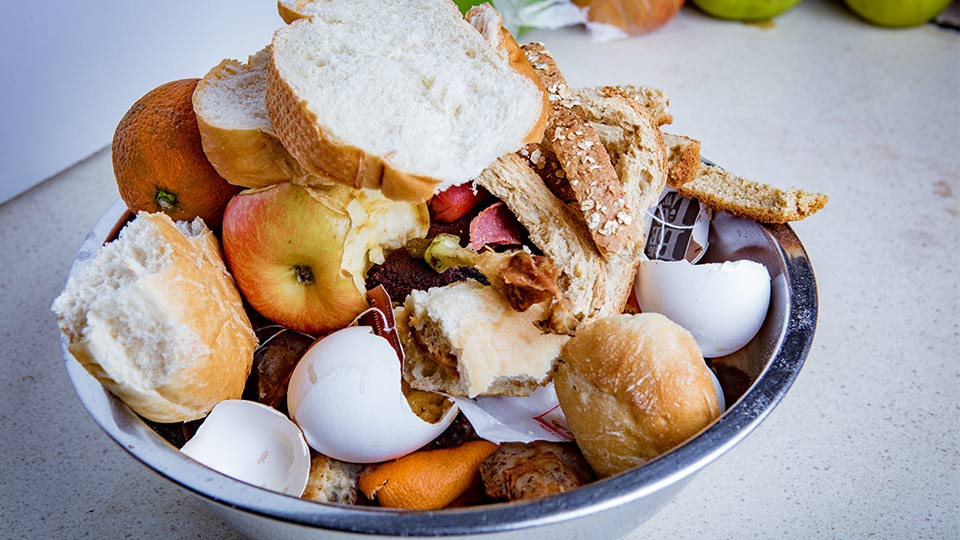
Plastic Free July’s own web site is a good starting point as is that of Friends of the Earth and City to Sea. You will also find plenty of web sites looking to sell you plastic-free products – and possible more than you need! Our own personal experience of shifting to a – largely – plastic free lifestyle began by collecting all the plastic that came into the house over a two week period. Then for each item we looked to see if there was a plastic free alternative for the product itself or of buying the same product without the plastic packaging, or whether we actually could manage without the item altogether. Over the next few months we looked for tried different ways of shopping – going to farmers’ markets, refill stores, buying in bulk, taking our own washable box to the butchers or coffee jar to the roasters – until we found the best fit for our lifestyle. Even today we are still making adjustments as new options become available. We have also written to suppliers asking them to use plastic free packaging. Whilst I don’t often have anything positive to say about Amazon, they have developed a simple straightforward cardboard packet for their deliveries!

Our own shift towards plastic-free and zero waste living has reduced both the amount that goes into our recycling bins as well as what goes into our dustbin. The latter is currently needs emptying twice a year.

https://www.plasticfreejuly.org/get-involved/what-you-can-do/category/getting-started/

https://friendsoftheearth.uk/sustainable-living/how-go-almost-plasticfree-kitchen

https://www.citytosea.org.uk/plastic-free-living/

Sunday Reflections for Proper 9, 4th July 2021

Ezekiel 2:1-5; Psalm 123; 2 Corinthians 12:2-10, Mark 6:1-13

Reflection

Today’s readings describe different ways in which people encounter God. Ezekiel is filled with God’s spirit with a view to his becoming God’s prophet. The track record of prophets in the Old Testament suggests that this will not be an easy role, especially when God tells him that he is to prophesy to those who are rebellious. That introduces another type of relationship between people and God: those who ignore or are ignorant of God and/ or who chose to rebel, ie to live not according to the ways of God. 

The Psalmist likens the relationship between God and his faithful people as being like that of a servant, of one who is alert and dedicated to the desires of the one they serve. These are contrasted with others who deride God and pour contempt on God’s people. These sound familiar, similar to the characters in the Wisdom of Solomon (one of last week’s readings) who only focused on themselves and saw nothing at the end of life other than death. 

In the reading from Corinthians we hear of someone who is caught up in the spirit, someone who has an ecstatic experience of God. Although he is diffident, it is likely that Paul is talking about himself. His is a deeply emotional and spiritual relationship in which Paul lives at the extreme opposites of life: absolutely against Christ then absolutely for Christ; energetically travelling from town to town then staying put for several years; toughing it out in the front line, winning converts and enemies in equal numbers. It is likely that his spiritual highs were counterbalanced by lows, perhaps associated with Paul’s ‘thorn in the flesh’.

So to Mark’s Gospel where the home crowd in Nazareth have a very clear idea of what someone who is anointed by God – ie a messiah – should look like and it doesn’t look like Jesus. They cannot believe how someone like them – artisans from a small hill town – could be a conduit for the healing power and wisdom that comes from God. Jesus was too ordinary to be such a person! Yet they are the ones who loose out. Their view of Jesus prevents them from relating to God, they are not able to be open and receptive to the power of God,  and their hurts and sufferings go unhealed.

Jesus, disappointed with the response of the people in Nazareth, commissions his disciples – another  group of everyday people: small scale fishermen, tax officials, fellow artisans – and sends them out to be conduits of healing power and preachers of God’s message. Again the ability of those they encounter to recognise God’s presence determines whether they receive God’s blessing.

What then is it to be a child of God, a believer, a seeker of God?

It is to be open minded, to curious, to be alert, to be trusting, to be ready to risk ridicule. It is to set aside both self reliance  and self doubt. It is to be ordinary and it is to be faithful. You don’t need special clothes, or special training or even special equipment – not even  bread, bag, or money! But there is no guarantee that it will be an easy or effortless existence – but God will be with you all the way!

How Long O Lord?

How many heat waves?

How many droughts?

How many floods?

How many lost coast lines?

How many before we admit our error?

Before we recognise the crisis?


How many lost penguins?

How many missing polar bears?

How many extinct butterflies?

How many disappearing swifts?

How many before we admit our error?

Before we recognise the crisis?


How many car journeys?

How many air miles? 

How many beef steaks?

How many tonnes of cement?

How many before we admit our error?

Before we recognise the crisis.


Creator God, we admit our error

and recognise the crises we have caused. 

Grant us the wisdom and determination to make amends:

To change the way we live,

To change the way we see things,

To have care for the future.

Amen.

Green Tau: tipping points

27th June 2021,

Tipping Points

In Alan Stoppard’s play Jumpers, George Moore, a philosophy professor, muses that at some point in history, the balance of believers versus non believers tipped from the former being the majority to the latter. He suspected it was the decline in woollen socks in preference for nylon ones that precipitated this tipping point: woollen socks kept the wearer in mind of the link between nature and daily life and thus a link between a divine creator and daily life. 

We have seen a number of social issues reach a tipping point: the acceptability or not of smoking, the acceptability or not of drink-driving, the use of plastic bags versus reusable versions, and most recently the wearing of face masks. At some point social pressure, social acceptance and/ or social understanding shifted in favour of a new status quo. Social norms are not fixed and what interests me is what initiates and sustains the sequence of changes that lead us to change our patterns of behaviour and belief. 

The Intergovernmental Panel on Climate Change is increasingly concerned that the current rate of global warming could reach a number of tipping points. One such scenario centres on the Arctic. As temperatures increase so the frozen soil have melted – not just the surface levels which is ‘normal’ but also the deeper levels of the permafrost. As they melt they release methane locked away for thousands of years ago. This flammable gas has led to outbreaks of wild fires across the Arctic destroying large areas of the tundra’s flora and fauna. Methane is one of the greenhouse gases and has a warming effect on the climate 80 times that of carbon dioxide. The melting of the permafrost in the Arctic disproportionately adds to the heating of the global environment and to the consequential further melting of frozen soils as well as sea ice. In other words the rise in temperatures that allows the Artic to thaw triggers a sequence of events that leads to a further upward spiralling of temperatures. 

Other tipping points have also been observed: in Greenland where the more the ice-sheet melts the faster is the rate of melting in subsequent years, leading both to rising sea levels and a likely reversal of the Gulf Stream; in the Amazon the loss of rainforest (due to commercial felling) is expanding the area of land covered by Savannah grass lands causing rising air temperatures and depleting levels of rainfall which both threatened the natural regeneration of the rainforest; in the tropics rising sea temperatures bleach coral reefs as plant and animal life grows more slowly or dies off completely. As these living forms die so they absorb less carbon dioxide which in turn compounds rising air and sea temperatures. 

Worryingly the danger presented by such scenarios doesn’t become apparent until the tipping point has been reached! This means preventative action needs to be taken before the affects of the danger are felt. We have in recent months learnt the lesson that the way to limit rocketing covid infections is to follow lockdown procedures before the number of cases becomes unmanageable. Can we do the same to prevent the extreme effects of climate change? Can we as individuals rapidly decarbonise our lifestyles now to safeguard the future for ourselves and our grandchildren? Can we create the social groundswell needed to make a carbon neutral lifestyle the norm? Can we create the popular groundswell to change the direction of our political leaders?

Now is the Sky Blue

Now is the sky blue!

Now is the verge blowsy 

with lady’s lace and buttercups,

and tousle headed  grasses.

The dog rose in the hedge 

the sheep beyond.

The burbling refrain of the curlew, 

the acrobatic swerve of the swift.

All is now, and now, and now!

But tomorrow, next week, next year? 

Merciful God will they still be there?

Will our apathy, 

our slowness to act, 

our aversion to change 

allowed all this 

to be threatened, 

diminished, and 

evicted from life?

Have mercy.

But not just mercy –

rather prod us, prompt us, 

push us into action.

Renew our hearts and minds,

reverse our expectations

so that we change the future 

and once more 

be restorers of creation.

Amen. 

Canal towpath, Gargr

Choose Life

We stand at a tipping point, O God,

teetering between life and death:

Shall we fall or rise?

“Chose life!” 

Shall we retreat into our shells, bury our heads in the sand:

Or shall we step forth into a new age of sustainability?

“Chose life!”

Shall we ignore the science, hide ourselves in the trappings of consumerism:

Or shall we openly embrace renewable lifestyles?

“Chose life!”

Shall we pointlessly mourn the loss of polar bears and elephants, bees and butterflies:

Or shall we live our lives so that all may live?

“Chose life!”

Shall we fly to the ends of the earth while ice sheets melt:

Or value the future by enjoying what is local?

“Chose life!”

Shall we disregard floods and droughts, storms and heat waves, as seasonal blips:

Or acknowledge them as already-present signs of climate change?

“Chose life!”

Shall we close our ears to cries of help from farmers and islanders as their lands disappear:

Or shall we join voices in calling for justice?

“Chose life!”

Holy God,

Prompt us and urge us, encourage and propel us,

to now change our life styles so that all may have life and live!

Amen.

About the Green Tau

The Green Tau blog comes from my love of life, of the natural world and of those human endeavours which are kind and generous. This love itself stems from my Christian faith which prioritises living life well and seeks to establish heaven on earth so all may live life to the full.

What is a green ‘tau’? Tau  τ is the Greek letter similar to the English T. Tau itself  developed from the Phoenician letter  Tāw X  (from which the  Hebrew letter  Tav ת is also derived).  In ancient times, tau was used as a symbol meaning eternal life or resurrection. In Hebrew tav means mark and this was the sign marked on the foreheads of those who lamented their sins (Ezekiel 9:4). For early Christians tau became an apt symbol of the cross on which Jesus  was crucified. 

Francis of Assisi used the tau as his mark when signing his letters and other writings. The tau cross, often made of wood, is worn by many Franciscans across the world. Francis is widely known as the saint who spoke with the birds, and to the hungry wolf in Gubio – he worked out a deal between the wolf and the people of Gubio such that they could live together in harmony. Francis was the author of the canticle ‘Brother Sun, Sister Moon’ – probably the first piece of literature written in Italian.  Francis understood that everything in creation had been made by God and was deserving of equal love and respect and should be treated as brother or sister.  In 1979 Pope John Paul II declared St Francis as the patron saint of ecologists,   reflecting not only Francis’s love for all creatures, but also his intuitive understanding of the interconnectedness of the whole of creation.  I therefore chose a green tau to represent my desire to live sustainably, protecting the earth.  

I want to use this blog to reach out to people, to inform them about the facts and the dangers of climate change, to point to changes we can make, and ways in which we can change the behaviour of businesses and governments,  to minimise the adverse affects of climate change and at the same time achieve fair and sustainable lifestyles that benefit everyone. 

τ