31 Days Wild: 23rd May 2025

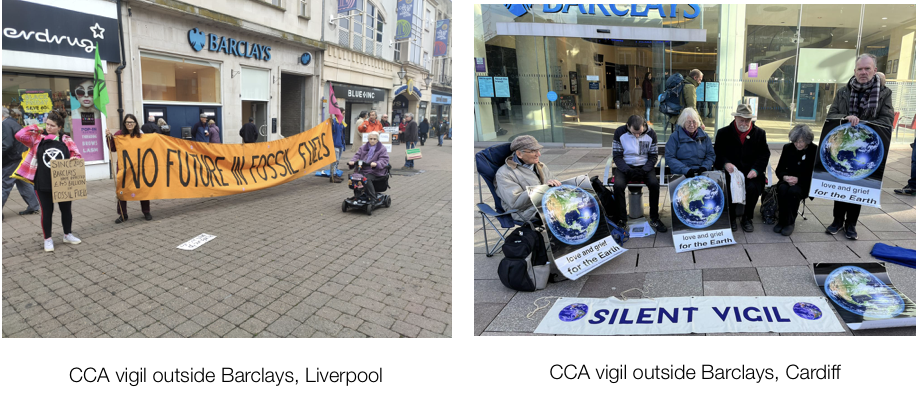
Some days seem so busy I feel I fail to engage with anything wild. Today was such a day which took me – late afternoon – to Guildford Cathedral for a Christian Climate Action vigil, praying that  both cathedral and diocese would pursue the path of financial integrity and switch to an ethical bank aligned with the principles of social justice and care for the environment. 

As we prayed I saw a couple of tiny red creatures scurrying back and forth on the steps – money spiders! Or at least that’s what we called them as children: they were good luck creatures. Checking on the web, they are a red velvet mite or Trombidiidae, and having eight legs (but no feelers – instead they use their front pair of legs) are classified as  arachnids. However it is another group of spiders – Linyphiidae – that are noted as being called money spiders.

Either way, who we bank with can have a big impact on whether or not we are promoting care of the wild aspects of  the environment. 

m

Counting on … Day 52

30th April 2025

Becoming more informed, you will become aware of the many lifestyles changes that we can make to begin to address the climate crisis.

Make My Money Matter argued that the most impactful change we can make is to switch to a green pension provider – ie one that doesn’t fund fossil fuels. All commercial undertakings including fossil fuel exploration and extraction rely on finance and the operations of the financial sector – whether that is banking that enables the continuing day to day, week to week, and year year  transactions of ongoing the business;; insurance protection for every aspect of the business; investment in expansion and new enterprises; maintaining share values and dividend payments etc. Many pension funds – as well as banks, mortgage and insurance companies – are key players in ensuring the flow of such finances.

Although Make My Money Matter closed this year, their website is, for the current year, a good source of information on pensions and banking.

Ethical Consumer is another good source of information on matter financial – subscribing enables you to access their reports in full

And for climate friendly banking options – https://justmoney.org.uk/the-big-bank-switch/

Green Tau: issue 104

Reshaping how we can talk positively about the climate crisis – part 3: Finance

April 2025

How can we talk about the climate crisis in a way that sounds encouraging?

The climate crisis is an existential threat which is certainly not good news. Its causes and impact are diverse and numerous such that it is hard to pin down ‘This is the cause’ or ‘This is the solution’. It is hard to quantify ‘This is how it will effect you’ and ‘This will be the time table.’ 

All this makes it difficult to find a way of talking to people about the crisis and how we might respond.

So here are some thoughts that might help.

Finance for a Better Future

We are told that one of the most effective ways of tackling climate change is to redirect the money that funds climate damaging industries such as oil and gas production . Make My Money has campaigned on this issue with both humour (short films and ) and straightforward  facts and graphics:  

“All of these banks refuse to stop funnelling money to the companies pumping new fossil fuels. 

They each talk about climate change, but we need less talk and more action on what really matters:

* Immediately stop providing money to new clients who are involved in expanding fossil fuel operations

* End the flow of new money to existing fossil fuel clients who won’t stop the expansion of fossil fuel operations and haven’t published credible plans aligned to a 1.5 degree global warming limit
* Set out a clear timeline for cutting ties with existing clients that continue to expand fossil fuel operations”

But despite the ease with which we can switch banks, many of us haven’t bothered to take this simple action. Perhaps because there is no immediately visible result. Stop driving to the shops and you straight away see the benefit of not having to refuel your car. Switch your bank and there is no noticeable reduction in oil production, no financial gain. And anyway aren’t high street customers mere minnows in an ocean of big financial organisations?

Is it also that with banking we see ourselves as customers buying a service, not as patrons providing banks with money and probity? Banks like – need – to be seen as upright, trustworthy and moral institutions: people with whom you can safely entrust your money. That is part of the reason that banks will sponsor sporting and cultural events – it improves their perceived reputation as ‘responsible’ companies. And that is why groups have campaigned against such greenwashing bank relationships eg Barclays and Wimbledon Lawn Tennis/ Live Nation music festivals/ National Trust/ Sadler’s Wells. 

Turning the situation round, should we be actively expecting our bank – the bank we support with our money and our patronage – to demonstrate how it is using its financial clout to create  better world? By way of example let’s look at Triodos. Triodos scored the top mark in a recent survey by Ethical Consumer, scoring 96 out  of a possible 100 points. The big five high street banks – Lloyds, HSBC, NatWest, Santander and Barclays scored 6 or less. (1)

Triodos does not provide finance for fossil fuels, nor fast fashion, nor weapons and warfare, nor gambling. Triodos does provide finance for renewable energy, nature restoration, healthcare, art and culture: “We believe it’s not enough to avoid funding harmful practices, so we actively support those building a better tomorrow. Our commitment goes beyond avoiding harmful investments. We proactively seek out and support initiatives that contribute to a sustainable future, ensuring that every loan and investment aligns with our mission.” (2)

For example, “Ember, the UK’s first all-electric intercity bus operator, has increased its fleet of zero emission coaches with a £5.6m loan from Triodos Bank UK. The electric coach operator, based in Scotland, has a fleet of vehicles designed specifically for intercity travel. These buses are zero-emission, contributing to environmental sustainability by reducing carbon footprints and improving urban air quality.” (3) 

Triodos also finances “Copeland Park … a social, cultural and creative hub in Peckham, an area of London that is becoming increasingly known as a haven for artistic individuals and collectives. At Copeland Park, traditional warehouses and industrial buildings have been transformed into workspace for a number of creative businesses. The historic Bussey Building, for example, now provides a home for artists’ studios, theatre groups, live music venues, fitness studios and faith groups – along with incomparable views of London.” 

In Wandsworth “Beyond Autism seeks to improve the education and health of children diagnosed with autism and/or related communication disorders. A loan from Triodos Bank allowed Beyond Autism to purchase their facility.” 

On Mull “NWMCWC was set up by the local community in 2006 to purchase and manage the Langamull and West Ardhu forests in North West Mull. With 2 Triodos loans, we were able to help with a variety of projects, including helping with the construction of a woodshed for timber felled at the woodland.”

And in Wales “NWMCWC was set up by the local community in 2006 to purchase and manage the Langamull and West Ardhu forests in North West Mull. With 2 Triodos loans, we were able to help with a variety of projects, including helping with the construction of a woodshed for timber felled at the woodland.” (4)

In addition Triodos does not use its profits to pay bonuses to its staff. Rather “Triodos believe all our workers should be paid fairly and our focus should be on impact – for the whole Triodos community.” (2)

Choosing – switching to – an ethical banking really does enable our money to create a better future, and can do so in a clearly transparent way, such that we can be proud of what our patronage can achieve. 

The following websites help individuals switch to ethical banks:-

(1) https://www.ethicalconsumer.org/money-finance/shopping-guide/current-accounts 

NB the other banks recommended in the Ethical Consumer report included Coop Bank/ Smile, Cumberland Building Society, and Nationwide, all scoring 70 or more.

(2) https://www.triodos.co.uk/your-money-has-power

(3) https://www.triodos.co.uk/articles/2024/powering-sustainable-travel-with-ember

(4) https://www.triodos.co.uk/know-where-your-money-goes

Green Tau Issue 97

3rd November 2024

Is the National Trust Walking the Talk?

The National Trust is the UK’s largest conservation and environmental protection charity with between 6 and 7 million members and is custodian of just under 260,000 hectares of land. One of its two overarching strategic priorities is its ambition of reaching net zero emissions by 2030. It has already met its target of creating and restoring 25,000 ha of new wildlife habitats and is working towards 50% of Trust land being nature friendly, by 2025. It also aims to plant 20 million trees by 2030.(1)

Recognising the scale of  the twin crises of climate change and biodiversity loss, and that neither of these recognises boundaries in terms of either cause or effect, the National Trust collaborates with other bodies such as the RSPB and WWF. This trio has produced the  The People’s Plan for Nature and the Save our Wild Isles campaign. The National Trust has joined many more groups in supporting events such as the Restore Nature Now March and the March for Clean Water.

Surely the National Trust can be said to be walking the talk? 

And yes in so many ways they are, but to quote the UN Secretary General, Antonio Guterres, we must do ‘everything, everywhere, all at once’ if we are to avert the worst of the climate and biodiversity crises. 

So what about banking? Over recent years many organisations and individuals have looked at their financial arrangements and divested from fossil fuels – whether that is selling shares directly linked to oil and gas production or withdrawing from pension and investment funds that are reliant on returns generated through the production of fossil fuels. In 2019 the National Trust announced its decision to divest from fossil fuels to safeguard the long term future of the environment. 

So what about banking?

Banks are essential to the ongoing production of fossil fuels. Their banking services enable companies, such as Shell and BP, to remain operational and able to continue to develop new oil and gas fields. The annual fossil fuel finance report for 2024, ‘Banking on Climate Chaos’,(2) shows that  Barclays is still the eighth largest funder of fossil fuels globally and, once again, holds the number one slot in Europe. In 2023 Barclays supplied the fossil fuel industry with $24 billion. 

Clearly who you bank with has an environmental impact element! For individuals several organisations exist – such as Make My Money Matter, Switch It Green and JustMoney (3) –  to enable people to review their banking arrangements and to switch to a more environmentally friendly alternative. Other organisations such as Mothertree (4) offer the same service for both individuals, organisations and businesses. Most notably this past year both Christian Aid and Oxfam (organisations with complex banking needs) have dropped Barclays as their bank. 

Yet Barclays is the National Trust’s bank. 

Not surprisingly, there has been growing pressure on the National Trust to switch to a more environmentally friendly bank. Continuing to bank with Barclays does dint the National Trust’s credibility as a leading conservation and environmental protection charity.

Christian Climate Action has been actively campaigning on this issue for the last three years, attending the National Trust’s AGMs, writing to and talking with people inside the Trust’s organisation. 

In July Christian Climate Action, along with other organisations, organised a week of action, targeting National Trust properties with banners and placards, banking-themed picnics, fancy dress, questionnaires, scoreboards, and an online petition calling on the Trust to ‘Drop Barclays’.(5) (Later we learnt that the staff and volunteers were pleasantly surprised at the engaging and friendly approach of the actions having previously experienced more aggressive tactics from other campaign groups).

This year’s National Trust’s AGM was held in Newcastle. A group of us from Christian Climate Action organised a pilgrimage -well equipped with flags, pennants and banners (and flapjack) – that set off from The Sill and walked along Hadrian’s  Wall and via the Tyne Valley to Newcastle. On the way we happy band of pilgrims stopped off at National Trust sites – Housesteads Roman Fort, Cherryburn (Thomas Bewick’s birthplace) and the one room dwelling that had been Stephenson’s birthplace.

Up bright and early on the day of the AGM, the CCA pilgrims were joined by other climate activists standing outside the Civic Centre handing out leaflets about the Drop Barclays campaign – and about the equally important Climate and Nature (CAN) Bill campaign. (6) NT staff greeted us with smiles and a genuine interest in what we were doing. 

Those who were members with tickets to go into the AGM, were able to have many face to face conversations with Trustees, Council members and members of the executive team, and to talk with them openly on issues related to the climate, environment and biodiversity loss. Altogether there were some 400 National Trust members attending in person, there were a further 3000 who took part on line – and when it came to questions and comments during the AGM, each contingent was able to participate equally. I was surprised that more people didn’t take part. I asked a question in the first Q and A session and thought that I would then have to sit on my hands thereafter to give space to others. But there was no rush of hands so I was able to make a further two comments in subsequent discussions. 

There were only two points of contention. One concerned the system of Quick Votes – an issue which had been the basis of an unsuccessful resolution the previous year which was felt by a vocal minority to be undemocratic. The Quick Vote is an option where members chose to follow the position of the Trustees. It is a system used by many organisations with a large membership. It is only an option and members can mix and match the way they vote on the different issues.  It does not stifle debate: anyone can still join in the debate regardless of which voting method they have chosen. As the use of the Quick Vote was not a resolution this year (the same topic can not be brought back until three years has elapsed) there was no vote on the matter.

The other issue that produced contentious debate was that of plant based foods. Some members asserted that the proposal forced them to eat food which was not of their choosing, whilst – as  the resolution itself highlighted – felt that instead the proposal gave everyone choices about what they ate. Others were concerned about the impact on the Trust’s tenant farmers. The National Trust aims to use local produce and produce from their farms as much as possible – much of the flour used in their cafes comes from wheat grown on the Trust’s Wimpole Estate. 

In all three member’s resolutions were proposed, discussed and voted on. One called for an increase of plant based foods in the National Trust’s cafes (from the current 40% to 50%). Another called for the strengthening of the National Trust’s response to climate and ecological emergency, and the third called for the National Trust to give its formal support to the Climate and Nature Bill. All three resolutions were passed with significant majorities – voting included votes cast before the AGM and those cast on the day whether in person or online. Whilst the Trustees are not obliged to adhere to the resolutions, they clearly show the Trustees what topics matter most to the Trust’s members.  

I came away from the AGM feeling physically and emotionally drained. I felt taking part had been both important and, as it happened, highly productive. I felt that the pilgrimage had been a good preparation – walking along companions, walking through some of the wonderful landscapes and habitats that we wish to protect and enhance, meeting and sharing with local people, grappling with and overcoming tiredness, and creating the headspace to think clearly and prayerfully. 

Our conversations with the National Trust will continue as we both applaud the many good things they do and  press them to Drop Barclays.

  1. https://www.nationaltrust.org.uk/who-we-are/annual-reports

(2) https://www.bankingonclimatechaos.org/ This report was a joint effort among Rainforest Action Network (RAN), BankTrack, Center for Energy, Ecology, and Development, Indigenous Environmental Network (IEN), Oil Change International (OCI), Reclaim Finance, the Sierra Club, and Urgewald. The finance data was co-researched with significant contributions from Profundo.

(3) https://makemymoneymatter.co.uk/; https://www.switchit.green/; https://justmoney.org.uk/the-big-bank-switch/

(4) https://www.mymothertree.com/

(5) https://christianclimateaction.org/2024/06/08/week-of-action-urging-national-trust-to-drop-barclays/

(6) https://www.zerohour.uk/

Counting on … day 136

29th July 2024

Today is the start of Christian Climate Action’s week of action urging the National Trust to switch away from its current bank, Barclays, because Barclays is Europe’s biggest funder of fossil fuels in Europe. “We love the National Trust – not Barclays”

There is an online petition you can sign and you can reader a longer article here – https://greentau.org/2024/07/29/green-tau-issue-91/

Green Tau: issue 91

An even greener National Trust?

29th July 2024

Over the last few weeks I have made a grand tour of England and Wales, visiting iconic National Trust sites. Ours is still a green and pleasant land, from St Michael’s Mount in the south west to Newcastle’s Souter Lighthouse in the northeast; from Windermere in the northwest to Box Hill in the south east, from Worms Head on the Gower Peninsula in the west to Kinder Scout in the middle. It is green and pleasant because people care passionately about the environment!

This is not to say that there isn’t room for improvement – uniform green fields full of grazing sheep may in reality be products of monoculture, and placid waters may mask life-damaging pollutants.

One of the greatest threats to our green and pleasant land is climate change. Rocketing temperatures in the oceans are fuelling a wet and windy summer here and across Northern Europe. Flooding and tree damage, poor harvests and dwindling numbers of butterflies is one of the many consequences. Late autumns and early springs upset the breeding patterns of birds, and the flowering cycles of plants. Intermittent heat waves stress many plants and animals, and increase the risk of wild fires.

And yes, generally, people do care and do want a sustainable, green, accessible, biodiverse rich environment in which to live. The National Trust is one of the bigger organisations that is making that a reality. And we know we must do all we can to limit the output of carbon dioxide to keep climate change in check. And again the National Trust is addressing this specific issue with a target of net zero by 2030.

We know we need fossil fuel companies to cut back their output and transition to renewables. We know we need pension funds, insurers and banks to use their financial power to press for faster change. 

So why then does the National Trust – the nation’s largest conservation charity – still bank with Barclays, the biggest funder of fossil fuels in Europe?

This week there is a week of action, coordinated by Christian Climate Action, which aims to press the National Trust to go that one more step, to become that bit greener, by switching from Barclays to a bank that is fully aligned with the National Trust’s environmental credentials.

The actions at various National Trust sites across the country with banners and placards – possibly even with visits by Peter Rabbit -will be peaceful and friendly, inviting people to learn more about banking with Barclays is an issue and inviting them to sign a petition asking the National Trust to drop Barclays – something which other charities, such as Oxfam and Christian Aid, have already done.

Does it matter which bank we bank with?

21st February 2024

Banks are key players in ensuring the flow of finance through global and national economies. As such they can influence which industries and companies receive funds and grow, and which do not. One of the greatest threats to life is the climate crisis which is primarily driven by emissions from fossil fuels. The International Energy Agency (IEA) has already told us that if we are to keep emissions and hence global warming at a tolerably safe level, we should not open up any new oil and gas projects. Yet this is precisely what the fossil fuel industry is doing, with funding secured by a – still – large number of banks. 

Make My Money Matter has long been urging us to direct our money so that it supports action to tackle the climate crisis, rather than allowing it to fill the coffers of those who perpetuate the problem. 

“The fossil fuel industry cannot exist without banks, yet our high street banks are continuing to pump money into them. So our message is simple – don’t bank on fossil fuel expansion. Banks must act and you can drive that change. ” https://makemymoneymatter.co.uk/

Another such platform advocating and enabling change is Switch it Green.

“Together, we will move £7 billion out of fossil fuel support this year; pressuring banks to phase out their climate-harming investments.

“We are harnessing the power of switching en masse. By switching alongside thousands of others – and maximising your switch with our ready-to-go lobbying features – your individual action is transformed into a collective call for change.” https://www.switchit.green/why-switch-it/article/how-do-banks-contribute-to-climate-change

And coming from a specifically Christian focus there is Just Money which provides information  and leads  campaigns on issues of money and justice.

“The money that we put into a bank helps it to do its work. A growing movement of Christians want to bank more ethically and campaign for a fairer, greener banking sector…Some banks are good news for people and planet. As Christians we can champion these, and support ethical alternatives, like credit unions.” https://justmoney.org.uk/

This Lent Just Money has a special campaign encouraging us all to switch to a green bank – https://justmoney.org.uk/the-big-bank-switch/

I am involved with Christian Climate Action and their campaign to highlight the harmful practices of Barclays Bank – the largest European funder of the fossil fuel industry (2016-2022) – and to encourage both individuals but also organisations and charities to switch to greener, more ethical banks. 

Actions taken by CCA include regular vigils held outside local branches of Barclays. This is done by local CCA groups often in conjunction with other groups concerned about justice and the environment. See CCA’s event page for more details – https://christianclimateaction.org/events/

  CCA has also written to and met with organisations – such as Christian Aid, Oxfam  and The National Trust – and have held prayerful vigils outside their headquarters. 

See also – https://www.churchtimes.co.uk/articles/2024/2-february/news/uk/more-charities-sever-ties-with-barclays-over-stance-on-fossil-fuels

CCA is also liaising with those Church of England dioceses that bank with Barclays, and recently organised a workshop for diocese to share and explore how they can switch to a better bank. (For more information about CCA’s campaign with dioceses – https://christianclimateaction.org/2023/11/14/urging-church-to-drop-barclays/

Success is being achieved. Christian Aid, Greenbelt, Sheffield Cathedral and Oxfam have all  undertaken to switch away from Barclays. 

Green Tau: issue 86

5th February 2024

Banking on a better future

The world – people, animals, plants, birds, economies, agriculture, water supplies etc – is already suffering from the effects of climate change and this is a crisis that will continue to grow (exponentially) unless action is taken. The major contributor of the greenhouse gases cause this, is fossil fuels. 

The IPCC AR6 Synthesis Report (2023) states  “Limiting human-caused global warming requires net zero CO2 emissions. Cumulative carbon emissions until the time of reaching net-zero CO2 emissions and the level of greenhouse gas emission reductions this decade largely determine whether warming can be limited to 1.5°C or 2°C (high confidence). Projected CO2 emissions from existing fossil fuel infrastructure without additional abatement would exceed the remaining carbon budget for 1.5°C (50%) (high confidence)”. https://www.ipcc.ch/report/ar6/syr/resources/spm-headline-statements/

In other words, our current production levels and use of fossil fuels will, cumulatively (because they build up and remaining in the atmosphere for generations), cause global temperatures rises in excess of 1.5C.  (In 2023 the global temperature rise was 1.2C above the average for NASA’s baseline period (1951-1980))

For more insight into the urgency of the situation, see https://www.theguardian.com/environment/2023/mar/20/ipcc-climate-crisis-report-delivers-final-warning-on-15c?CMP=Share_iOSApp_Other

The IPPC’s report goes on to to say “Finance, technology and international cooperation are critical enablers for accelerated climate action. If climate goals are to be achieved, both adaptation and mitigation financing would need to increase many-fold. There is sufficient global capital to close the global investment gaps but there are barriers to redirect capital to climate action.”

Finance is key but it will only be effective if it is targeting projects that reduce emissions. One would expect therefore to be seeing an ongoing g and rapid transfer of money away from fossil fuel projects and into the support of renewable energy. Yet in January 2023 Reuters reported “The share of bank finance going to renewable energy rather than fossil fuels has little changed in six years, raising questions about how fast lenders are pushing energy clients to become greener, according to research published Tuesday. Since 2016 renewable energy has taken 7% of a total $2.5 trillion in bank loans and bond underwriting for energy activities, according to a report commissioned by environmental groups including Sierra Club and Fair Finance International.” https://www.reuters.com/business/sustainable-business/bank-funding-renewables-stagnates-vs-oil-gas-report-2023-01-24/

A report, Banking on Climate Chaos, records that fossil fuel financing from the world’s 60 largest banks reached $5.5 trillion in the six years since the Paris Agreement, 2015, and 2022. Of these JP Morgan, the worst bank overall, financed $39 billion in 2022, so totalling $434 billion between 2016 – 2022. Top rating amongst the European banks was Barclays, which took seventh place in the league table, having $190.5 billion over the time frame. 

Barclays provides finance to numerous oil companies including Exxon, Shell, BP, Chevron, Total, and Equinor. This is finance that supports both existing and new projects. Yet there is no space in the world’s carbon budgets for this continuing increase in emissions. “Potential emissions from fossil fuels already in production or under construction – the wells already drills or being drilled – already takes the world well past 2C of global warming… world cannot afford any fossil fuel expansion…”  https://www.bankingonclimatechaos.org/

Not surprisingly a number of climate concerned groups are pushing for change – both of banks that they stop financing the fossil fuel industry, and of customers that they stop using these highly destructive banks. 

It is often argued that moving one’s money out of Barclays will have no impact as it will merely be replaced by money from elsewhere. I’m not sure that that can always be true – there must at some point be a finite sum of money to be banked. But turning it round, the money you move can then be invested by a greener bank to support renewable energy and other beneficial projects – and this indeed might be money they would otherwise not get. And don’t worry of the amount you are banking with is small: for every £ deposited, banks will lend a multiple amount. Even if that multiplier was  only 2 it would double the financial contribution that you money makes to green investments.

Here in the UK Make My Money Matter is calling on individuals to “green their money” as well as encouraging students and alumni to call on their universities to switch to  sustainable  banks – https://makemymoneymatter.co.uk/

Another useful website is ‘switch it green’  helping people find a better bank – https://www.switchit.green/about

Just Money offers another  perspective on the issue, this time from a Christian view point, and has advice and resources for churches and charities wishing to switch to green banking.  

I have been involved with Christian Climate Action’s ongoing campaign to encourage charities to switch to greener banks – especially those charities whose remit encompasses people and places adversely affected by the climate crisis. To date Christian Aid, Greenbelt and Oxfam have all declared their decision to switch away from Barclays Bank. Read more on this at – https://www.churchtimes.co.uk/articles/2024/2-february/news/uk/more-charities-sever-ties-with-barclays-over-stance-on-fossil-fuels

And it is not just charities that are being asks to reconsider their banking arrangements. The same ask is being made of churches and dioceses. Christians are called to care for creation and to love their neighbour – which are actually overlapping  vocations – and switching to a bank that does not pursue profit through the financing of fossil fuels,  is one of the easier steps  they can take!

Prayer vigil outside Oxfam’s headquarters.

Count Down

 Action 33:  Check out your bank. You may not have thought about it, but the money in your bank may be being used to finance the fossil fuel industry.  “since the 2015 Paris agreement, 35 of the world’s major private banks have provided a total of $2.7 trillion in lending and underwriting to the fossil fuel industry – with fossil fuel financing increasing each year” Ethical Consumer. 

The Ethical Consumer report gives details about which banks invest in what and on other ethical issues such as tax avoidance practices. This may be time to swop to a new bank.