
2nd February
Food security is a pertinent issue. A recent Government report, Nature security assessment on global biodiversity loss, ecosystem collapse and national security, investigates “how global biodiversity loss and the collapse of critical ecosystems could affect the UK’s resilience, security and prosperity.” (1)
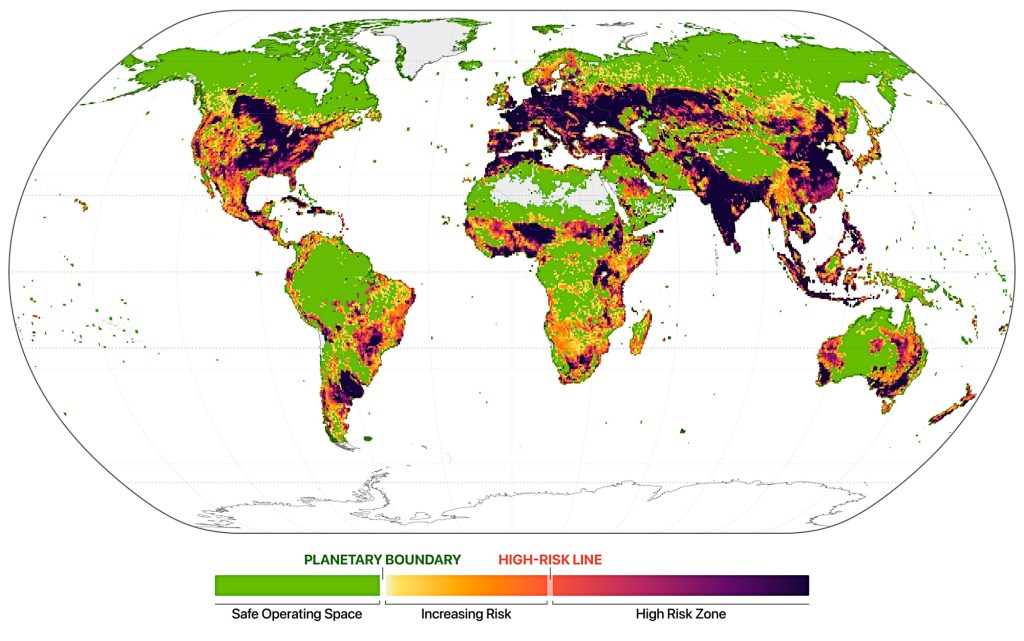
At the top of the list of events the poses a high risk for the UK is global ecosystem breakdown: ie the ecosystems on which we depend for fresh water, clean air and food, and for predictable weather patterns, and which protect us from diseases, would cease to function.
Without major interventions, the report states that this is a highly likely outcome based on current trends.
Not only would this impact us locally, the UK would also be impacted by the knock on effects of systems collapse in other countries leading to increased competition for limited resources such as food and water, greater risk of global pandemics, an increase in both armed conflict and mass migration. Partial system collapse is likely by 2030 and a global collapse as early as 2050.
In a repeat of what has been said so widely, measures needed to reduce the likelihood of global ecosystem collapse include:-
- Protecting 30% of global land and ocean by 2030 (now just four years away)
- 30% of global nature to be under rest by 2030
- Mobilising finance to close the funding gap of $700bn
- Reducing risks from pesticide usage by 50% by 2050
- Eliminating or reforming harmful subsidies by $500bn by 2050
- Meeting the 1.5C Paris climate agreement target
So why aren’t we – whether as individuals, as industries or as the government – a) doing more to curtail activities that are driving this ecological breakdown, and b) doing more to increase national and global resilience?
 The Green Tau