Action 29: Plan next year’s holiday? Since air travel comes with a disproportionate carbon footprint, why not see where you might go travelling by train: Berlin? Moscow? Venice? The Alps? The Fiords? Or maybe closer to home: Tenby? St Ives? Scarborough? Brighton? Fort William? Windermere? Maybe plan a grand railway tour.
Become savvy. Give packaging a long, hard look. Is it necessary? Is it recyclable? Is there an alternative? Can you take your own packaging – be that a shopping basket, cloth bag or box?
There is little – if anything – that we consume that does not have a carbon footprint which is why when we seek to reduce our carbon footprint, we should be reviewing everything that we consume. And that includes the packaging. Whether what you buy comes in a plastic bag or a paper one, whether it comes in a plastic tray or a cardboard punnet, whether it comes in a plastic bottle or a glass jar, whether it is wrapped in tissue paper or bubble wrap – that packaging will have a carbon footprint. If the packaging is excessive or simply unnecessary, then we increase our carbon footprint with no gain or merit. Our aim should be to avoid unnecessary packaging and where packing is needed, to seek out packing that can – and will be – recycled.
Packaging Scenarios
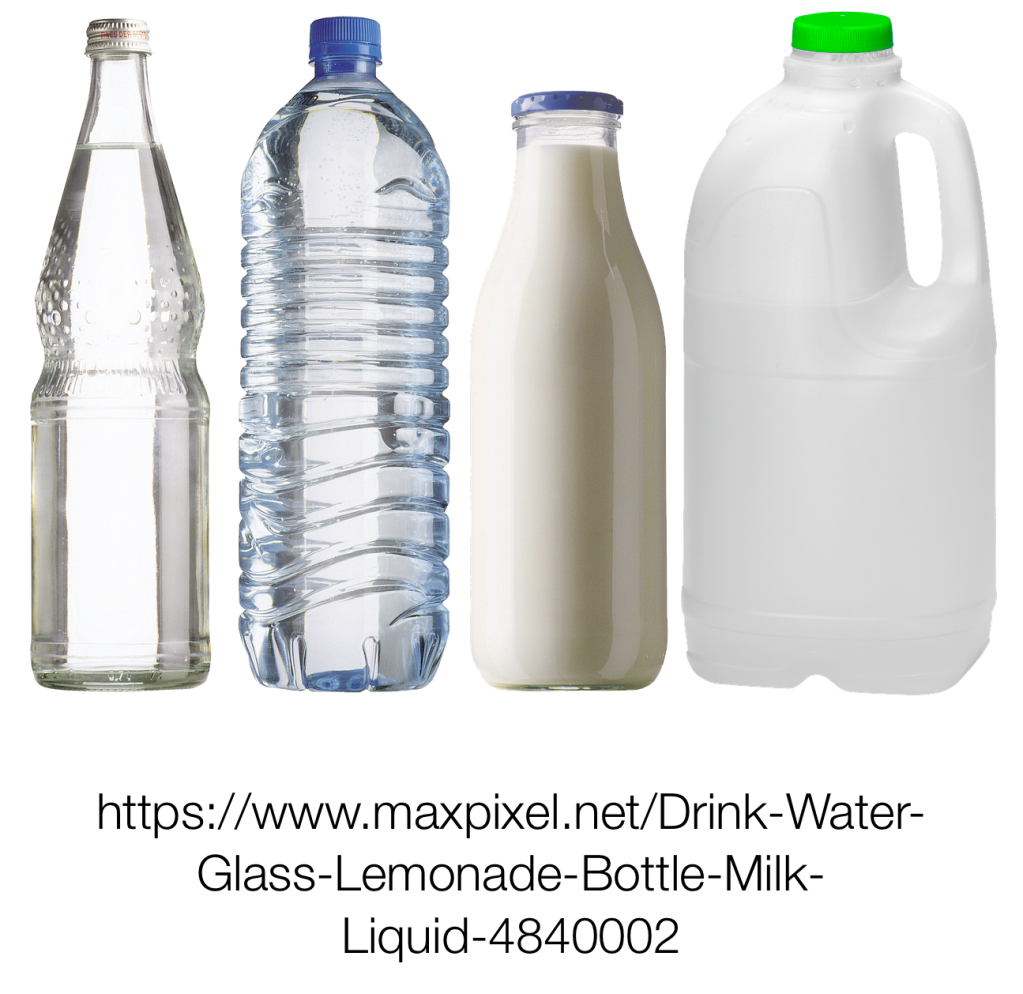
1. Some packaging is necessary: imagine taking home a pint of milk with no packaging! Milk is usually sold in plastic or glass or tetra-pacs containers – and in fact all these can be recycled (although the loop for tetra-pacs is not yet fully closed), whilst glass milk bottles can be reused some 60 to 70 times before being recycled.
2. But some packaging is not. Do apples need to come in plastic bags (even if they are a compostable plastic substitute)? Loose fruit and vegetables can simply be picked up, weighed and popped into you own shopping bag/ basket.
3. For some items such as strawberries and raspberries, the packing prevents the items becoming damaged and potentially inedible . The carbon footprint of the packing may outweigh the carbon footprint of wasted food. Punnets are often made of PET plastic which can be fully recycled into a new punnet but the film on top is not so readily recycled – the Co op has just introduced a recycling scheme which accepts all scrunchable plastics.
4. Some packaging is excessive! Biscuits that come in a plastic tray inside a plastic sleeve, inside a cardboard box …. Refusing to buy such items is the best response – and can feeling very satisfying. You might instead make you own ‘up-market’ biscuits with zero packaging
5. Some packaging cannot be recycled such as polystyrene or, in the case of black plastic, is routinely incinerated/ sent to landfill because the recycling machinery finds black hard to detect!
6. But if fruit and vegetables can be bought packaging free, what about other things such as pasta or dried fruit? Soap or washing up liquid? There is a growing number of refill stores where customers can buy loose goods, decanting what they want into either their own reusable jar or container, or into a paper bag.
Governments and businesses do certainly exert control over various aspects of what can and cannot do, yet we may be surprised how much we can do to reduce our individual – and therefore to our national – carbon footprint.
The WWF estimates that the production and consumption of food accounts for 20% of the UK’s green house gas emissions which currently equates to 82 million tonnes a year – say roughly 1.5 tonnes per year person. By changing how we eat and shop, we can substantially reduce these emissions.
Reduce the amount of meat and dairy products you consume. Globally 58% of GHG emissions for food arise from the production of meat and dairy items. Agricultural animals have to be fed, and to ensure good productivity, their food is nutrient rich including items such as soya beans. Large amounts of land and water are used in providing food and grazing, all of which comes with its own carbon footprint. Farm animals are also GHG emitters in their own right. Each cow emits 70 – 129kg of methane per year. Removing meat and dairy products from your diet can reduce you GHG emissions by 0.6 tonnes per year (Carbon Independent Calculator).
The alternatives to meat and dairy are to be found in eating beans, pulses and nuts as sources of protein and numerous minerals. Soya beans which are particularly rich in protein have traditionally been fermented to produce foods such as tofu. Soya beans – as well as almonds, hemp, coconut, oats etc – are also used to create dairy replacement items: milks, butter, yogurts, cream, ice cream etc as well cheeses. Ideally one wants to buy products that are locally produced. Hodmedod specialises in selling beans and pulses, seeds (chia etc) and grains (including quinoa) that are grown here in the UK. There is a growing number of UK based producers of plant based milks. Milk and More, a reinvention of the traditional milk delivery service, sells freshly bottled oat milk that comes from Lancashire.
Choose organic foods. Organic food production because it avoids mineral fertilisers, ensures improved soil conditions such that the soil retains a higher proportion of carbon than do other soils. This carbon sequestration reduces the carbon footprint of organic foods vis a vis non organic ones. Choosing organic foods can reduce your GHG emissions by 0.7 tonnes a year. It can be difficult deciding between organic vegetables from Europe versus local non organic items,
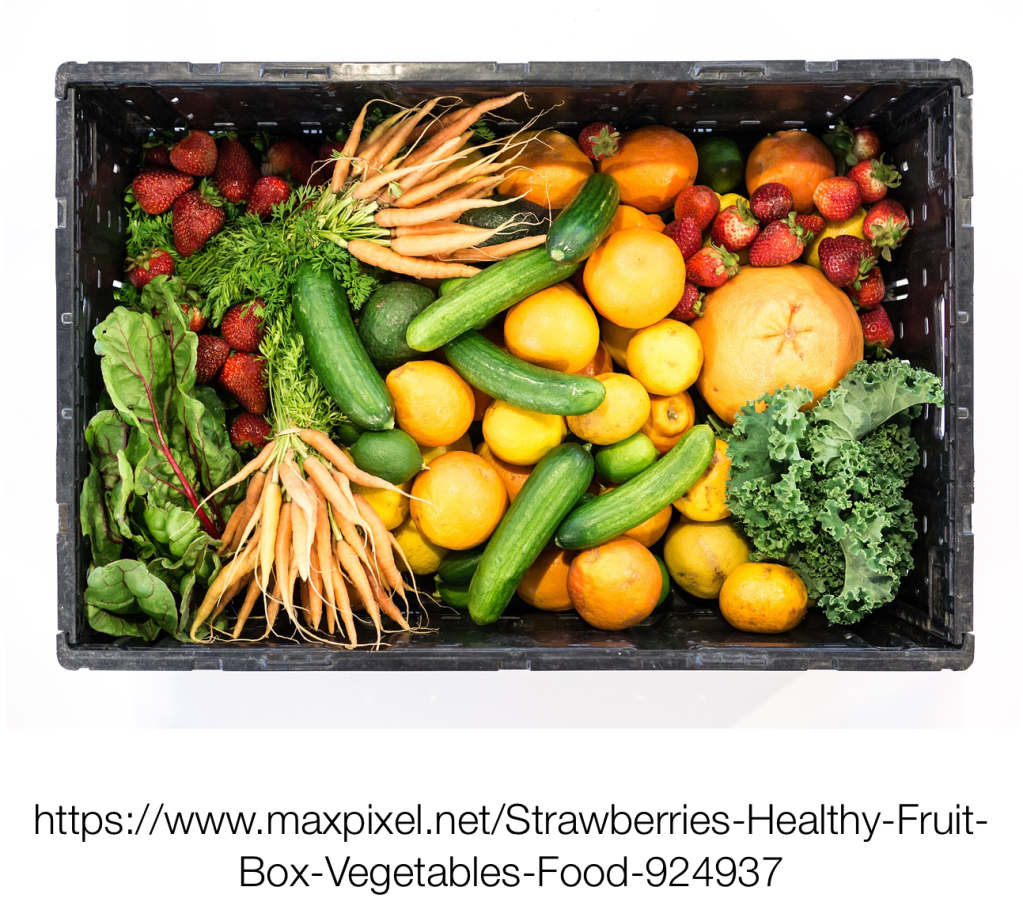
Buy locally grown food – or eat home grown food. Locally grown food has a lower carbon footprint because the distance the food is moved is less and therefore transport inputs are less. This is especially true when food stuffs are imported by air and often includes the import of out of season foods from the Southern Hemisphere such as asparagus and blue berries. Eating locally produced food can reduce your GHG emissions by 0.4 tonnes per year. There is a growing number of veg box schemes where farms make a weekly delivery of vegetables straight from the farm to your front door, which reduces transport emissions and food waste. OddBox specialises in fruit and veg boxes that collect together fruit and vegetables that would otherwise go to waste either at the farm or in the wholesale market.
Avoid food processing and packaging. Ready meals packed in plastics can have a disproportionately higher carbon footprint than meals freshly made from raw, unpackaged ingredients. Reducing the amount of packaged and processed food you consume can reduce your GHG emissions by 0.5 tonnes.
Minimising food waste. Throwing away food rather than eating it is obviously wasteful and a misuse of GHG emissions. Planning daily or weekly menus, using a shopping list, only buying and cooking the portions you will eat, careful storage of food etc are all ways fo reducing food waste. (For more details see the Eco Tips post of 9th August). Cutting food waste can reduce you GHG emissions by 0.5 tonnes per year. If you compost food waste such as the outer leaves of cabbages, banana skins and tea bags you can reduce your GHG emissions by a further 0.2 tonnes.
How you cook your food will also impact on your carbon footprint. Putting on the oven to bake one potato is more carbon intensive than boiling or pan frying the same potato in a pan. This aspect of your carbon footprint will be considered in a later post looking at household energy consumption.
We often say we are what we eat. If we eat with a conscience for what is good for the planet, and what is good for human and animal welfare, we will be part of the growing movement creating a better world for all.
In many religious and cultural traditions there is a practice of saying thank you before or after a meal. This recognises our dependence upon others for what we eat, whether that is the cook, the farmer, the retailer or above all, God as creator. Saying Grace at meals is one way of being more aware of the providence of the food we eat.
As we sit to eat this meal, we give thanks for all have been involved in its preparation.
For the farmers and the worms, bees and pollinating insects, for shelf stackers and retailers, for those who cook and those who wash up,
and for the bountiful diversity of our God-given world. Amen.
NB I have swopped between the terms carbon footprint and green house gas GHG emissions as if they are the same thing which they aren’t. Strictly speaking our carbon footprint measures our carbon emissions whereas GHG emissions includes all gas emissions but of which carbon dioxide is the largest.
Consuming less is one clear way of reducing our carbon footprint. Consuming less is not about being parsimonious nor being a kill joy.
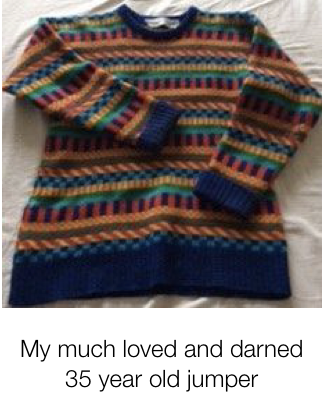
Consuming less can involve buying second or hand – pre-loved items. It is equally about ‘loving’ what we do have. Why not look through your wardrobe or your cupboard and pick out a favourite item that you have had for a long while, and appreciate its personal history.
4..5 million tonnes of food is wasted by UK households each year – that equates to 12.5 million tonnes CO2. Avoiding waste is about only buying what is actually going to be eaten within the shelf life of the food stuff.
Plan meals
plan a daily menu or a weekly menu. This way you will know what food/ ingredients you need.
think about portion sizes: eg portion of protein = 30g nuts, 2 eggs, 90g meat, or 150g cooked beans or pulses.
check which ingredients you already have and which additional items you need to buy.
Make a shopping list and use it: buying extra may be storing up future waste.
Think about using alternative or substitute ingredients.
if a recipe asks for peas and you haven’t any, can you use chopped courgette/ apple/ dried peas?
if celeriac is on your shopping list but not in the shop, can you buy carrots/ parsnips/ sweet potato instead?
Plan your meal according to what you already have.
Rather than buying a complete set of ingredients, create a recipe that uses what you already have.
Use up ingredients that are in your fridge that would otherwise go out of date. Try the internet for ‘fridge clearing’ recipes.
If you have left leftovers from a previous meal, incorporate them into today’s meal
Make good use of a glut. If you have an excess amount of a food or if there is a really good offer at your local shop, have a go at food preserving . Excess fruit can be bottled, made into jam, or made into chutney. Excess vegetables can be pickled, fermented or made into chutney.
Store all food stuffs carefully so as to keep them fresh and maintain their life. Some foods – like potatoes – are best kept in breathable (paper/ cotton) bag that excludes light. Some are best kept in bags – eg carrots and root vegetables – to stop them drying out. Some are best kept in the fridge such as cucumbers and lettuces. Some are best kept out of the fridge such as apples and tomatoes.
If you shop locally and buy locally produced foods, less food is likely to be wasted in the distribution chain. Try a fruit and veg box scheme that comes direct from the farm.
Be ready to buy small or oddly shaped fruit and vegetables that would otherwise be discarded. Some fruit and veg box schemes such as OddBox, specialise in sourcing products that are either small, misshapen or surplus to demand.
Buy and eat food that is in season.
Have a few recipes that use only store cupboard ingredients so that you can always make a meal with what’s in the house. Eg spaghetti with a tinned tomato and haricot bean sauce, garnished with black olives.
The ongoing global climate crisis arise because human activities and lifestyles
are putting carbon dioxide into the atmosphere at a faster rate than this gas can be absorbed by the planet. The resulting increasing levels of CO2 in the atmosphere insulates the planet so that year on year average global temperatures are rising. This impact of human activity on the planet is termed our carbon foot print. The word conveys the idea that what we do each day is leaving a mark, a footprint, on the face of the earth. We can measure the carbon footprint of different activities eg cycling, driving a car, skiing or hiking. We can measure the carbon footprint of different products eg a book, a DVD, a litre of milk, a dozen eggs, a wooden jumper, or a pair of trainers. We can measure the carbon footprint of a household or a business, of a person living in a flat or medium sized estate agents, a supermarket or a hospital. We can compare the difference between the carbon footprint of a typical resident of Nepal and the typical resident of Norway. We can compare the difference between alternative modes of transport, alternative methods of farming, or between a range of land uses.
Here in the UK the average individual carbon footprint is 10.5 tonnes (WWF).
The Carbon Independent and the Carbon Footprint websites both offer a detailed on line footprint calculator which includes inputting the amount of electricity, gas, petrol etc that you use each year.
but it does relate your carbon footprint to the target UK footprint vis a vis a linear reduction in per capita carbon emissions to net zero by 2045. And that is one of the reasons for calculating our carbon footprint: to see how big it is currently and the to see how it can be reduced to a net zero target.
The simplest way of reducing our carbon footprint is to look at individual aspects of our lifestyle and see how in practical terms we can reduce our carbon consumption. To some extent we will be limited by factors outside our control. For example if we choose to travel by train we cannot decide which railways lines are powered by electricity and which rely on diesel engines (although we can press Network Rail and our government to address this). If we shop at Waitrose, part of our food footprint is linked to the carbon emissions of Waitrose’s operations (Waitrose’s aim is that their entire operation should achieve net zero by 2035). On the other hand we can make positive choices to use businesses that are carbon neutral. For example, Kiss the Hippo’s coffee roasting business is carbon negative.
Over the next few weeks I will add ideas and information about reducing our personal carbon footprint on the Eco Tips page.








 The Green Tau