Keeping Warm in Winter

  1. Wear layers of clothes. Each layer will trap air that is warmed by your body. Every layer is another layer of insulation. 
  2. Wear thermal underwear or alternatively wear extra leggings and T-shirts which will save having to buy more clothes.  
  3. Outside wear a hat, gloves and scarf – and why not do the same inside? Historically people have often worn hats inside – neat bonnets, Tudor caps,  Monmouth caps, smoking hats, head squares and scarves, beanies and berets. 
  4. Cosy socks and slippers are pluses too – make sure your winter shoes and boots are big enough to allow for warm/ thick socks. If you have thin socks, double up and wear two pairs.
  5. Close curtains and pull down blinds at dusk, for once  the sun sets temperatures will drop. Drawing your curtains will keep the warmth in the room. The more layers between you and the outside, the better the insulation. You might have blinds and curtains for example. Alternatively you can get extra thermal linings to hang behind your curtains. 
  6. If overnight your bedroom has remained warm, allow that warmth to permeate the rest of the house before opening the windows to air the room.
  7. If windows are draughty, you can seal the gaps with a proprietary stick on strip.  
  8. If your doors are draughty or if they are not very thermally efficient (maybe with lots of glass) you can hang a curtain to pull across at night time. You can make a sausage shaped door stop  to prevent draughts that come under a door, or if it is an external door you could fix on a draught excluder. 
  9. Take exercise – it will warm you up. If you get cold through sitting still, even running up and down the stairs a few times will help. 
  10. Wrap up well and have a brisk walk. 
  11. Have plenty of hot drinks and at least one hot meal a day. 
  12. Use a hot water bottle in bed – you can also use one if you are sitting down for a while, either under your feet or on your lap. Equally if you are sitting still for a while, have a blanket to put over your knees. Or if you are watching TV you might  wrap yourself in a blanket.
  13. Make a hand warmer – this could be a cotton bag filled with uncooked rice  that you heat for a few seconds in a microwave. You will find plenty of DIY instructions on line. Or you could use a small heat resistant bottle or jar, fill it with hot water and wrap it in a sock. 
  14. Our own body heat will  heat up a room. Plan your day so that you spend most of it in one room rather than heating up several spaces. 
  15. With all these measures, you should be able to turn your thermostat down so reducing your carbon footprint. Similarly use the controls on your heating to limit the number of hours you need the heating on. During the day, especially if the sun is shining, or if you are active, you will not need extra heating.

Count Down

 Action 44: Change any high energy light bulbs. Replace them with LED bulbs – these use the least amount of electricity  and yet produce high levels of light (measured in lumen). The Energy Saving Trust provides a useful guide about LED  lighting. https://energysavingtrust.org.uk/how-get-best-out-energy-efficient-lighting/ And they also remind us that turning lights off when not in use is another easy way of saving energy.

Green Tau: reducing our carbon footprint – heating homes

3rd September 2021 – revised 11th January 2023

Domestic energy use, ie for heating, lighting and electrical appliances, generates around 22% of the UK’s carbon footprint. The majority of that 22% comes from heating our homes. This is not surprising when you consider that 90% of homes are heated using gas boilers. Gas, one of the main fossil fuels, is burnt to heat water to warm our homes. As it burns, carbon dioxide is released. A three bedroom house with a 30KW condensing boiler will, for every hour the boiler is running, will emit around 7kg of CO2 or over the course of year around 3.65 tonnes of CO2.

It is obvious that we cannot continue to heat our homes using gas (or oil or coal) if we are to prevent the catastrophic rise in global temperatures. The Paris Agreement signed by parties at the Paris COP in 2015 set as it goal that participants should reduce carbon emissions so as to keep the rise in mean global temperature to below 2 °C .

In April 2021 the UK’s sixth Carbon Budget set the goal of cutting emissions by 78% by 2035. This time the Budget was set to also include the UK’s share of international aviation and shipping emissions. This revised budget should put us three-quarters of the way to achieving net zero by 2050.

Parties at COP27 in November 2021 agreed that this target should be reduced further to just 1.5 °C. To achieve this target the means by which we heat our homes will have to be radically transformed. 

This can happen in surprising ways. In Islington waste heat from the Northern Line is being soused to heat 1350 homes, a primary school and two leisure centres. In addition the heat is also generating electricity that powers lifts and communal lighting in a nearby tower block. Similar district heating solutions are being developed in other parts of the country too, for example heat  extracted from a flooded coal mine in Durham will heat 1500 homes. 

Both these projects use heat pump technology. This is the most promising solution for drastically reducing carbon emission whether heating a large office block or the average house. A heat pump is a scaled up fridge that works in reverse. Its refrigerant liquid absorbs heat from the air – or the ground – outside the building. This is compressed and transfers inside the building  where it is released as heat via warm air or via warm water (for radiators or underfloor heating). The heat pump is powered by electricity. Heat pumps, in terms of energy used and heat produced, are at least 3 times as efficient as gas boilers. In terms of running costs, the carbon footprint of a heat pump will depend on the source of the electricity it uses. Electricity from a wind farm has a carbon footprint of 10-20g/KWh compared with 450g/KWh for electricity from a gas fired power station. 

The Government’s net zero carbon targets anticipates the installing of 600,000 heat pumps a year by 2028. However in 2021 only 42,779 heat pumps were installed make this target look questionable.

There needs to be an expansion of both the production capacity of heat pump manufacturers and of the number of qualified heat pump installers, as well as improved Government finance to make the switch affordable for everyone.

The other approach to reducing the carbon footprint arising from heating our homes, is to insulate them. The better insulated a property is, the less additional heat is needed to achieve a comfortable level of warmth. Thus less energy is needed and one’s carbon footprint is reduced. A well insulated home also reduces draughts and cold spots which makes spaces feel warmer. 

Home insulation options include:

  • cavity wall insulation 
  • External wall insulation suitable for buildings with solid walls
  • Loft insulation 
  • Draught proofing doors and windows 
  • Double – or even triple – glazing windows
  • Underfloor insulation
  • Thermal external doors
  • Fully enclosed porches

Information on the potential cost savings of upgrading home insulation plus available grants can be viewed in various websites including https://www.which.co.uk/reviews/home-grants/article/insulation-grants-aGAZv8p9hGkY

NB Relevant information is constantly changing.

Turning your garden into a carbon sink 

Our back garden

As well as minimising the amount of carbon we emit/ consume/ use we need also to do all we can to keep as much carbon locked away undisturbed in the ground. Our gardens can be made into carbon sinks ie net absorbers of carbon. 

  1. Don’t buy or use peat. The UK’s peatlands are an important carbon sink (1 hectare of peatland  can absorb up to 2000 tonnes of CO2 per year). Digging up and removing the peat seriously damages these fragile habitats. 
  2. Don’t buy plastic plant pots whether with or without plants (plastic is made from oil). Instead use pots made from plant fibres, paper or clay. The Hairy Plant Pot Company grows plants for sale in coir pots. The whole pot with plant  goes straight into the solid where the coir will decompose over time.  
  3. Don’t use artificial fertilisers, pesticides or herbicides. These have a high carbon footprint and are damaging to natural ecosystem.
  4. Make a compost bin and fill it with garden waste and plant based kitchen waste. Once well rotted, the bin’s contents will provide soil enriching natural compost that locks the carbon into the soil. Compost bins can be made from wood (eg recycled pallets), wire mesh or you could buy a plastic bin made from recycled plastic. 
  5. Plant trees and shrubs as these will, by their size, be able to absorb more carbon as they grew. 
  6. Opt for perennial plants over annuals. The perennial plant both develops a larger root mass and has a longer growing season enabling it to absorb more carbon. Interestingly you can opt for perennial varieties of vegetables rather than growing them each year from seed: spinach, watercress, kale, perennial leeks and onions, cabbage etc.
  7. Choose plants that will be happy in the micro environment that your garden offers. You can waste time, energy and carbon, trying to make plants grow where the conditions are unsuitable. Grow together plants that form a natural ecosystem so that they help each other. 
  8. Avoid over digging the soil as this can release carbon locked into the soil.  
  9. Avoid leaving the earth bare as carbon from the soil can easily be lost into,the atmosphere. Instead cover the earth with a mulch or with a cover crop.
  10. Let your lawn grow. Frequent cutting of the grass requires the input of water and fertilisers to keep it green and the lack of depth of  cover makes it susceptible to drying out during periods of drought. Instead let the grass grow longer – you can still run over it, sit on it and play on it.
  11. Transform your lawn into a meadow by introducing a greater variety of plants, especially flowering ones. These extra plants will tend to have longer root systems enabling more carbon to be absorbed by the soil.
  12. Avoid or replace hard surfaces, especially concrete ones. (Concrete has a particularly high carbon footprint). Hard surfaces leave the soils underneath compacted and bereft of mini beasts and micro organisms that absorb carbon. Use gravel and bark in preference to paving stones, or even bricks set in sand. 
  13. Build a pergola so that you can grow climbing plants to provide shade in the summer. Consider adapting any garden sheds so that you can plant them with a green roof. The more we plant, the more carbon our garden can absorb.

Green Tau: reducing our carbon footprint – transport

21st August 2021

Transport in the UK (the getting from a to b and back rather than the transporting of goods) accounts for about 20% of the average person’s carbon footprint. If we are to achieve net zero by 2050, reducing – or actually zeroing – transport emissions is critical.  

There are two key means of transport which are already carbon neutral: walking and cycling. Whilst long distance walking or cycling may not be the most practical ways of getting around, they are ideal means of making all those short journeys. Approximately 60% of journeys of less than 2 miles are currently made by car. Walking and cycling are not just good for the climate, they are good for our health too!

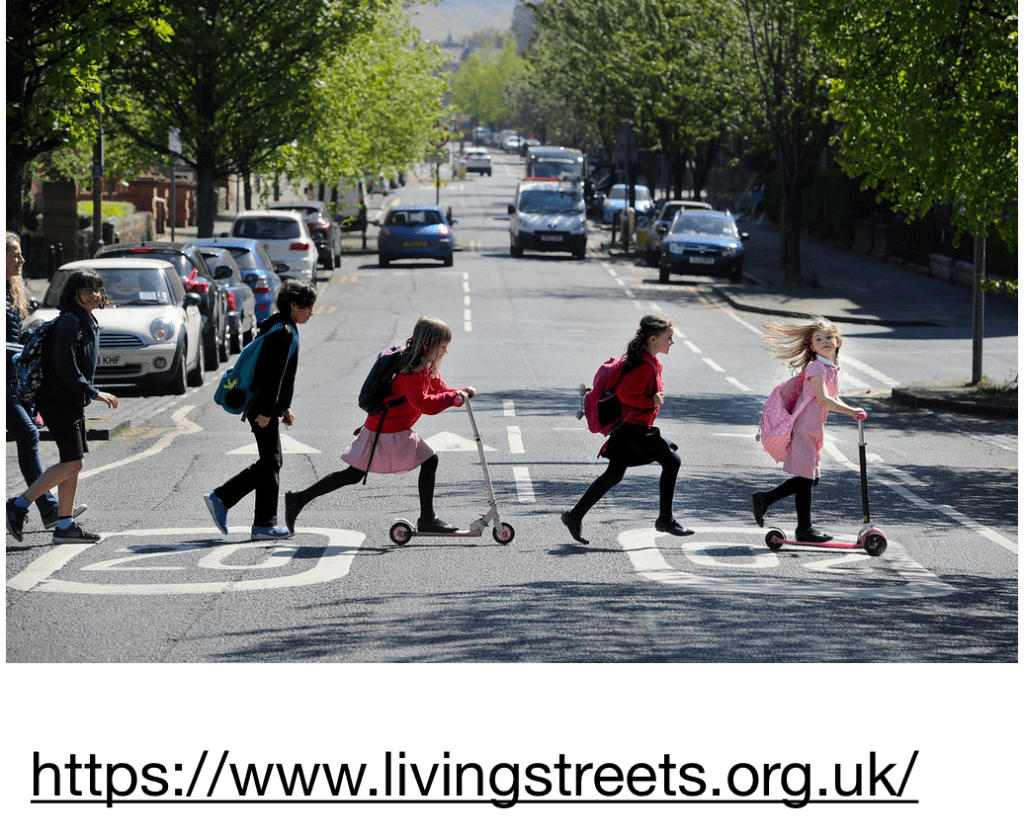
As well as walking and cycling ourselves, we can also be active in pressing our local authority and the government to do more to support cycling with the provisions of cycle lanes, cycle parking, cycling courses, subsidised cycles for those with disabilities and for those on low incomes. Living Streets is a charity that promotes and enables walking. One of its aims is to increase the number of children walking or cycling to school. A generation ago, 70% of pupils walked or cycled to school; now it is less than 50%.

There are 32,697,408 cars on the road in the UK – and most are quite literally on the road – parked that is! Only 0.5% meet the ultra low emissions standard, ie hybrid vehicles that produce less than 75 grams of CO2 per kilometre from the tail pipe and electric vehicles that produce zero emissions. In other words most cars in the UK are heavy polluters both in terms of greenhouse gas emissions and in terms of air polluting chemicals and particulates. Air pollution caused the deaths of 15,000 people in 2019.

Reducing or eliminating the use of fossil fuel cars will substantially reduce the UK’s carbon footprint. Where journeys cannot be made on foot or by cycle, public transport offers a more carbon efficient alternative, whilst at the same time reducing congestion on roads. Most of Transport for London’s bus fleet are either electric or meet the ultra low emissions standard. Ideally similar policies should be  implemented in other parts of the country. This is dependent upon Government disposition and funding. Levelling up should include levelling up access to frequent, reliable and affordable public transport. 

London’s ULEZ scheme has substantially reduced air pollution – “According to the study, which looked at data for 12 months from September 2023, air quality has improved at 99% of air quality monitoring sites across London since 2019, and London’s air quality is improving at a faster rate than the rest of England.”

https://www.bbc.co.uk/news/articles/cgq9nnj274xo

Public transport includes trams (electric), coaches and trains. Disappointingly only 38% of the UK rail network is currently electrified compared with 55% in France and 100% in Switzerland.  Nevertheless for UK rail passengers emissions average out at 35g per passenger km. This compares with 100g (small fossil fuel car) and 200g (large fossil fuel car) per car per km. Rail travel will

need to continue to grow to achieve net zero targets, replacing not only car journeys but air flights too. Short haul flights give rise to a particularly high level of emissions – 254g per passenger km. Travelling from London to Berlin by plane has a carbon footprint of 160kg compared with 40kg by train. Even by train, the journey can be made in a day, and increasingly there is now the option of making the journey overnight.

Long haul flights are an even greater concern vis a vis net zero targets. A return flight from London to New York emits around 3.3 tonnes of CO2 per person – ie about one third of the average carbon footprint for someone living in Britain. It is hard to see how continuing to make such journeys can be compatible with a net zero target – yet many people will have good reasons for wanting to do so – eg to visit close family. Some companies offer carbon offsetting packages where you pay to enable someone else to reduce their carbon emissions, or where you pay to plant trees etc that will at some future date absorb sufficient CO2 to equal what you have already generated. What it does not do is to eliminate or reduce carbon emissions in the  present moment.

One alternative to long haul flights might be to travel by ship where destinations involve crossing oceans (it is possible to travel London to Singapore by train!) You can travel as a passenger on board a cargo ship: Liverpool to Newark takes  11 nights and costs from £1300.  Whilst the carbon footprint of cargo ships is not great – 3 to 15 grams of CO2 per tonne cargo per km – the add on cost per passenger is minimal. 

Reducing our carbon footprint to achieve net zero is demanding and will involve both substantial changes to the way we travel and imaginative ones too!

Count Down

Action 29: Plan next year’s holiday? Since air travel comes with a  disproportionate carbon footprint, why not see where you might go travelling by train: Berlin? Moscow? Venice? The Alps? The Fiords? Or maybe closer to home: Tenby? St Ives? Scarborough? Brighton? Fort William? Windermere? Maybe plan a grand railway tour. 

Eco Tips: Packaging

Become savvy.
Give packaging a long, hard look.
Is it necessary? Is it recyclable? Is there an alternative? Can you take your own packaging – be that a shopping basket, cloth bag or box?

There is little  – if anything – that we consume that does not have a carbon footprint which is why when we seek to reduce our carbon footprint, we should be reviewing everything that we consume. And that includes the packaging. Whether what you buy comes in a plastic bag or a paper one, whether it comes in a plastic tray or a cardboard punnet, whether it comes in a plastic bottle or a glass jar, whether it is wrapped in tissue paper or bubble wrap – that packaging will have a carbon footprint. If the packaging is excessive or simply unnecessary,  then we increase our carbon footprint with no gain or merit. Our aim should be to avoid unnecessary packaging and where packing is needed, to seek out packing that can  – and will be – recycled. 

Packaging Scenarios 

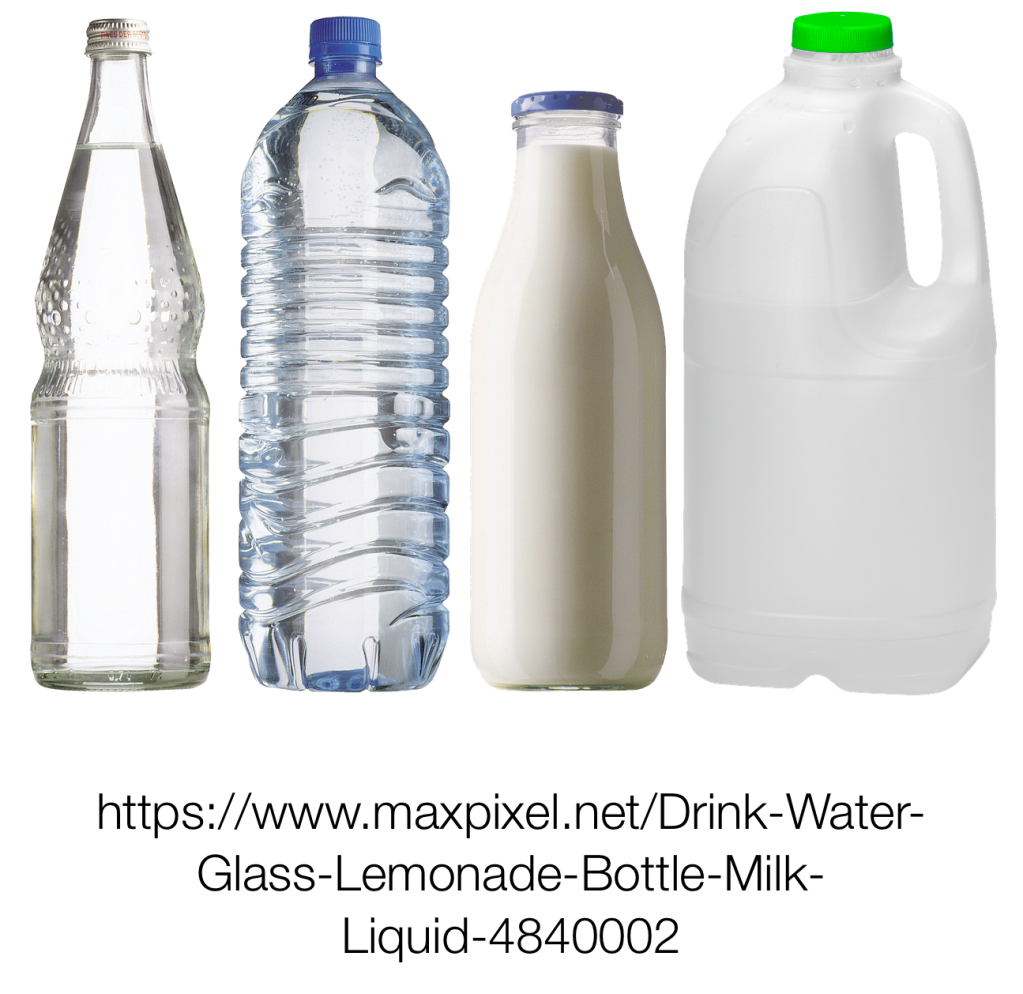
1. Some packaging is necessary: imagine taking home a pint of milk with no packaging! Milk is usually sold in plastic or glass or tetra-pacs containers – and in fact all these can be recycled (although the loop for tetra-pacs is not yet fully closed), whilst glass milk bottles can be reused some 60 to 70 times before being recycled. 

2. But some packaging is not. Do apples need to come in plastic bags (even if they are a compostable plastic substitute)? Loose fruit and vegetables can simply be picked up, weighed and popped into you own shopping bag/ basket.  

3. For some items such as strawberries and raspberries,  the packing prevents the items becoming damaged and potentially inedible . The carbon footprint of the packing may outweigh the carbon footprint of wasted food. Punnets are often made of PET plastic which can be fully recycled into a new punnet but the film on top is not so readily recycled –  the Co op has just introduced a recycling scheme which accepts all scrunchable plastics. 

4. Some packaging is excessive! Biscuits that come in a plastic tray inside a plastic sleeve, inside a cardboard box …. Refusing to buy such items  is the best response – and can feeling very satisfying. You might instead make you own ‘up-market’ biscuits with zero packaging

5. Some packaging cannot be recycled such as polystyrene or, in the case of black plastic, is routinely incinerated/ sent to landfill because the recycling machinery finds black hard to detect! 

6. But if fruit and vegetables can be bought packaging free, what about other things such as pasta or dried fruit? Soap or washing up liquid? There is a growing number of refill stores where customers can buy loose goods, decanting what they want into either their own reusable jar or  container, or into a paper bag.  


Green Tau: reducing our carbon footprint – food

14 August 2021

Governments and businesses do certainly exert control over various aspects of what can and cannot do, yet we may be surprised how much we can do to reduce our individual  – and therefore to our national – carbon footprint. 

The WWF estimates that the production and consumption of food accounts for 20% of the UK’s green house gas emissions which currently equates to 82 million tonnes a year – say roughly 1.5 tonnes per year person. By changing how we eat and shop, we can substantially reduce these emissions.

  1. Reduce the amount of meat and dairy products you consume. Globally 58% of GHG emissions  for food arise from the production of meat and dairy items. Agricultural animals have to be fed, and to ensure good productivity, their food is nutrient rich including items such as soya beans. Large amounts of land and water are used in providing food and grazing, all of  which comes with its own carbon footprint.  Farm animals are also GHG emitters in their own right. Each cow emits 70 – 129kg of methane per year. Removing meat and dairy products from your diet can reduce you GHG emissions by 0.6 tonnes per year (Carbon Independent Calculator).
  1. The alternatives to meat and dairy are to be found in eating beans, pulses and nuts as sources of protein and numerous minerals. Soya beans which are particularly rich in protein have traditionally been fermented to produce foods such as tofu. Soya beans – as well as almonds, hemp, coconut, oats etc – are also used to create dairy replacement items: milks, butter, yogurts, cream,  ice cream etc as well cheeses. Ideally one wants to buy products that are locally produced. Hodmedod specialises in selling beans and pulses, seeds (chia etc) and grains (including quinoa) that are grown here in the UK. There is a growing number of UK based producers of plant based milks. Milk and More, a reinvention of the traditional milk delivery service, sells freshly bottled oat milk that comes from Lancashire.
  1. Choose organic foods. Organic food production because it avoids mineral fertilisers, ensures improved soil conditions such that the soil retains a higher proportion of carbon than do other soils. This carbon sequestration reduces the carbon footprint of organic foods vis a vis non organic ones. Choosing organic foods can reduce your GHG emissions by 0.7 tonnes a year. It can be difficult deciding between organic vegetables from Europe versus local non organic  items, 
  1. Buy locally grown food – or eat home grown food. Locally grown food has a lower carbon footprint because the distance the food is moved is less and therefore transport inputs are less. This is especially true when food stuffs are imported by air and often includes the import of out of season foods from the Southern Hemisphere such as asparagus and blue berries. Eating locally produced food can reduce your GHG emissions by 0.4 tonnes per year. There is a growing number of veg box schemes where farms make a weekly delivery of vegetables straight from the farm to your front door, which reduces transport emissions and food waste. OddBox specialises in fruit and veg boxes that collect together fruit and vegetables that would otherwise go to waste either at the farm or in the wholesale market. 
  1. Avoid food processing and packaging. Ready meals packed in plastics can have a disproportionately higher carbon footprint than meals freshly made from raw, unpackaged ingredients. Reducing the amount of packaged and processed food you consume can reduce your GHG emissions by 0.5 tonnes.
  1. Minimising food waste. Throwing away food rather than eating it is obviously wasteful and a misuse of GHG emissions. Planning daily or weekly menus, using a shopping list, only buying and cooking the portions you will eat, careful storage of food etc are all ways fo reducing food waste. (For more details see the Eco Tips post of 9th August). Cutting food waste can reduce you GHG emissions by 0.5 tonnes per year. If you compost food waste such as the outer leaves of cabbages, banana skins and tea bags you can reduce your GHG emissions by a further 0.2 tonnes. 
  1. How you cook your food will also impact on your carbon footprint. Putting on the oven to bake one potato is more carbon intensive than boiling or pan frying the same potato in a pan. This aspect of your carbon footprint will be considered in a later post looking at household energy consumption.

We often say we are what we eat. If we eat with a conscience for what is good for the planet, and what is good for human and animal welfare, we will be part of the growing movement creating a better world for all. 

In many religious and cultural traditions there is a practice of saying thank you before or after a meal. This recognises our dependence upon others for what we eat, whether that is the cook, the farmer, the retailer or above all, God as creator. Saying Grace at meals is one way of being more aware of the providence of the food we eat.  

As we sit to eat this meal, we give thanks for all have been involved in its preparation.

For the farmers and the worms, bees and pollinating insects, for shelf stackers and retailers, for those who cook and those who wash up,

and for the bountiful diversity of our God-given world.
Amen. 

NB I have swopped between the terms carbon footprint and green house gas GHG emissions as if they are the same thing which they aren’t. Strictly speaking our carbon footprint measures our carbon emissions whereas GHG emissions includes all gas emissions but of which carbon dioxide is the largest. 

Count Down

Action 21: Embrace minimalism. Favour frugalism.  

Consuming less is one clear way of reducing our carbon footprint. Consuming less is not about being parsimonious nor being a kill joy. 

Consuming less can involve buying second or hand – pre-loved items. It is equally about ‘loving’ what we do have. Why not look through your wardrobe or your cupboard and pick out a favourite item that you have had for a long while, and appreciate its personal history. 

Eco Tips

Curtailing food waste

Photo by Karolina Grabowska on Pexels.com

Reducing food waste

4..5 million tonnes of food is wasted by UK households each year – that equates to 12.5 million tonnes CO2. Avoiding waste is about only buying what is actually going to be eaten within the shelf life of the food stuff.

  • Plan meals
    • plan a daily menu or a weekly menu. This way you will know what food/ ingredients you need.
    • think about portion sizes: eg portion of protein = 30g nuts, 2 eggs, 90g meat, or 150g cooked beans or pulses.
    • check which ingredients you already have and which additional items you need to buy.
  • Make a shopping list and use it: buying extra may be storing up future waste.
  • Think about using alternative or substitute ingredients.
    • if a recipe asks for peas and you haven’t any, can you use chopped courgette/ apple/ dried peas?
    • if celeriac is on your shopping list but not in the shop, can you buy carrots/ parsnips/ sweet potato instead?
  • Plan your meal according to what you already have.
    • Rather than buying a complete set of ingredients, create a recipe that uses what you already have.
    • Use up ingredients that are in your fridge that would otherwise go out of date. Try the internet for ‘fridge clearing’ recipes.
    • If you have left leftovers from a previous meal, incorporate them into today’s meal
  • Make good use of a glut. If you have an excess amount of a food or if there is a really good offer at your local shop, have a go at food preserving . Excess fruit can be bottled, made into jam, or made into chutney. Excess vegetables can be pickled, fermented or made into chutney.
  • Store all food stuffs carefully so as to keep them fresh and maintain their life. Some foods – like potatoes – are best kept in breathable (paper/ cotton) bag that excludes light. Some are best kept in bags – eg carrots and root vegetables – to stop them drying out. Some are best kept in the fridge such as cucumbers and lettuces. Some are best kept out of the fridge such as apples and tomatoes.
  • If you shop locally and buy locally produced foods, less food is likely to be wasted in the distribution chain. Try a fruit and veg box scheme that comes direct from the farm.
  • Be ready to buy small or oddly shaped fruit and vegetables that would otherwise be discarded. Some fruit and veg box schemes such as OddBox, specialise in sourcing products that are either small, misshapen or surplus to demand.
  • Buy and eat food that is in season.
  • Have a few recipes that use only store cupboard ingredients so that you can always make a meal with what’s in the house. Eg spaghetti with a tinned tomato and haricot bean sauce, garnished with black olives.