Carbon sequestration is a formal name given to the processes by which carbon is captured from the atmosphere and stored on a long-term basis. Such long-term storage might include peat bogs, forests, kelp beds etc and may be referred to as ‘carbon sinks’.
Carbon sequestration can be used as a means of mitigating the effects of climate change. This can be biologically by, for example, planting more forests, restoring peat bogs and wetlands, and re-establishing kelp meadows. This natural sequestration can be enhanced, in the case of forests, by using felled timber to make items such as buildings, furniture etc and keeping those items for hundreds of years. However growing trees for timber needs to be carefully managed to a) maximise the carbon captured by the growing tree, and b) to maximise the flourishing of biodiversity.
Carbon can also be sequestered geologically if the CO2 can be captured eg from a cement factory. Then the CO2 “can be compressed to ≈100 bar into a supercritical fluid. In this form, the CO2 could be transported via pipeline … and injected deep underground, typically around 1 km, where it would be stable for hundreds to millions of years.” (https://en.wikipedia.org/wiki/Carbon_sequestration)
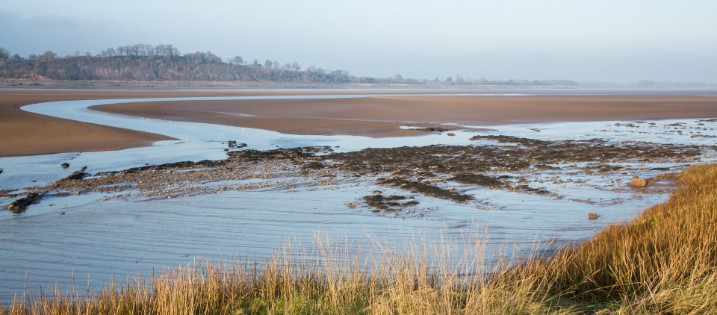
Wildfowl and Wetlands Trust has been award £21 million by Aviva to restore saltmarsh habitats as part of Aviva’s net zero plans – investments in projects such as this will be used to offset residual emissions from their business.
The world has several natural carbon cycles all of which function to maintain a balance between carbon dioxide in the atmosphere and carbon locked away within element earth and its inhabitants. During in the geological time span of the earth there have been peaks and troughs giving rise to to eras when the earth is climate was positively tropical and eras when much of the earth was trapped in an ice age. But since the last true ice age, fluctuations in global temperature have been small scale and prior to the start of the Industrial Age carbon dioxide levels in the atmosphere stood at around 278 ppm.
Some of the earths carbon cycles are short term: eg plants absorb carbon dioxide from the air during the process of photosynthesis to cellulose which becomes the building blocks for stems, leaves, roots etc. As the plant respires it will release a small portion of carbon dioxide back,into the atmosphere. When the plant dies, these parts of the plant fall to the ground and decay. As the plant decays some of the carbon is released into,the atmosphere as CO2 whilst some is drawn down into the soil where it remains.
This short term cycle does vary in length. If the plant life consists of, say, grass it can be an annual cycle. If the plant life is an oak tree, the cycle can last in excess of 1000 years. The cycle can be lengthened if the plant is eaten by a creature that will use the carbon products to provide both energy for the creature and to build up its own body using the carbon to form bones and muscles etc. Whilst some carbon will be released back into the atmosphere as the creature breathes, most is locked away until the creature dies and its body goes through the process of decay.
Others are long term cycles: eg volcanic eruptions emit carbon dioxide into the atmosphere that may originally have kicked started basic plant life. Decaying plant remains and the bones and shells of creatures (which have a significant carbon content) build up as layers in the soil or on ocean beds. Over time these carbon based materials become compressed into rock strata eg chalk, coal and oil. Here carbon is locked away for millennia until is released through erosion or volcanic action.
However things have changed with the onset of the Industrial Age when initially coal, and then later oil, have been extracted from the earth and burnt releasing large amounts of carbon dioxide into the atmosphere at a rate faster than could be absorbed by natural processes. The increased levels of carbon dioxide in the atmosphere led to an increase in global temperatures for carbon dioxide acts like a blanket keeping warmth trapped within the earth’s biosphere. This increase was initial small and gradual but as fossil fuel based energy and products have increased, has rocketed. As of July 2021 carbon dioxide levels in the atmosphere stood at 417 ppm.
Our current global climate crisis arises from this rapid increase in carbon dioxide levels in the atmosphere and its consequential affect on global temperatures. The current consensus is that if carbon dioxide emissions (and other similar gases that caused global warming) can be brought to a level of net zero by 2050, it may be possible that the rise in global temperatures will be limited to between 1.5 and 2C.
This problem can be tackled from two angles: limiting our carbon emissions and increasing the earth’s capacity to absorb carbon dioxide. Most of the earth’s carbon is already locked away in rock strata. Our interest here is with those parts of the earth where increasing amounts of carbon dioxide can be stored. These are called carbon sinks and include:
Oceans
Boreal forests and rain forests,
Grasslands and peatlands
Coral reefs
Wetlands and lakes
Salt marshes
Each of these habitats can and does absorb significant amounts of carbon dioxide. Some are under threat of destruction due to human operations, including expanding requirements for land to be used for farming and construction. In South America large areas of the rain forest have been cleared to make way for cattle ranches. In the UK significant areas of ancient woodland have been cleared or are under threat from the contraction of HS2.
Two courses of action are needed. Firstly to preserve and maintain existing habitats that are significant and effective carbon sinks. This must include stopping the destruction of such habitats and alongside this, ending further extraction of coal and oil deposits. Secondly to restore and expand such habitats to increase the earth’s capacity to absorb carbon dioxide.
13.2% of the UK’s land surface is covered by trees but this compares with 35% across the EU. 30 year old woodland can store approximately 250 tonnes of carbon per hectare and 100 year old woodland approximately 450 tonnes per hectare.
Peatlands cover about 10% of the UK’s land surface but of these 80% have been severely damaged by mismanagement such as draining the land for planting trees or other farming purposes, burning on grouse moors, and overgrazing by sheep and deer. Peatlands can store up to 2000 tonnes of carbon per hectare.
Various charities and other bodies are involved in maintaining and expanding natural habitats in the UK which are effective carbon sinks – eg Woodlands Trust, the RSPB, the National Trust, various local Wild Life Trusts including the Cumbrian Wild Life Trust which is busy restoring Lakeland peatlands. We can support their work through donations and volunteering. The Peatland Action Programme for Scotland estimates that it costs a little over £2000 to restore a hectare of peatland.



 The Green Tau