Counting on …day 140 

3rd April 2022

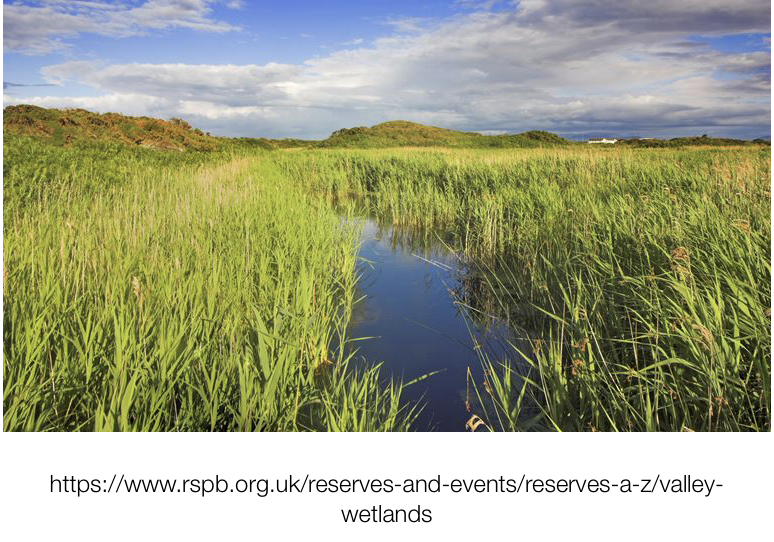
Nature is good for us. Being out in nature, taking note of the natural world around us help us maintain a sense of proportion. The Conversation recently posted this article suggesting five short walks to help us address our climate crisis fears. 

5th Sunday of Lent

3rd April 2022

Isaiah 43:16-21

Thus says the Lord,
who makes a way in the sea,
a path in the mighty waters,

who brings out chariot and horse,
army and warrior;

they lie down, they cannot rise,
they are extinguished, quenched like a wick:

Do not remember the former things,
or consider the things of old.

I am about to do a new thing;
now it springs forth, do you not perceive it?

I will make a way in the wilderness
and rivers in the desert.

The wild animals will honour me,
the jackals and the ostriches;

for I give water in the wilderness,
rivers in the desert,

to give drink to my chosen people,
the people whom I formed for myself

so that they might declare my praise.

Psalm 126

1 When the Lord restored the fortunes of Zion, *
then were we like those who dream.

2 Then was our mouth filled with laughter, *
and our tongue with shouts of joy.

3 Then they said among the nations, *
“The Lord has done great things for them.”

4 The Lord has done great things for us, *
and we are glad indeed.

5 Restore our fortunes, O Lord, *
like the watercourses of the Negev.

6 Those who sowed with tears *
will reap with songs of joy.

7 Those who go out weeping, carrying the seed, *
will come again with joy, shouldering their sheaves.

Philippians 3:4b-14

If anyone else has reason to be confident in the flesh, I have more: circumcised on the eighth day, a member of the people of Israel, of the tribe of Benjamin, a Hebrew born of Hebrews; as to the law, a Pharisee; as to zeal, a persecutor of the church; as to righteousness under the law, blameless.

Yet whatever gains I had, these I have come to regard as loss because of Christ. More than that, I regard everything as loss because of the surpassing value of knowing Christ Jesus my Lord. For his sake I have suffered the loss of all things, and I regard them as rubbish, in order that I may gain Christ and be found in him, not having a righteousness of my own that comes from the law, but one that comes through faith in Christ, the righteousness from God based on faith. I want to know Christ and the power of his resurrection and the sharing of his sufferings by becoming like him in his death, if somehow I may attain the resurrection from the dead.

Not that I have already obtained this or have already reached the goal; but I press on to make it my own, because Christ Jesus has made me his own. Beloved, I do not consider that I have made it my own; but this one thing I do: forgetting what lies behind and straining forward to what lies ahead, I press on toward the goal for the prize of the heavenly call of God in Christ Jesus.

John 12:1-8

Six days before the Passover Jesus came to Bethany, the home of Lazarus, whom he had raised from the dead. There they gave a dinner for him. Martha served, and Lazarus was one of those at the table with him. Mary took a pound of costly perfume made of pure nard, anointed Jesus’ feet, and wiped them with her hair. The house was filled with the fragrance of the perfume. But Judas Iscariot, one of his disciples (the one who was about to betray him), said, “Why was this perfume not sold for three hundred denarii and the money given to the poor?” (He said this not because he cared about the poor, but because he was a thief; he kept the common purse and used to steal what was put into it.) Jesus said, “Leave her alone. She bought it so that she might keep it for the day of my burial. You always have the poor with you, but you do not always have me.”

Reflection

The passage from Isaiah tells us that war and military strength are not the solution to problems in the kingdom of God. They are not solutions that bring in God’s reign. God’s way is new, is different, says the prophet. Perhaps not new to God but new to humans who are slow to perceive it! Wake up humans! God’s way inhabits the natural world, creating what is needed for life – water in dry areas, paths where it’s rough, things that bring life to creatures and people alike. The psalmist knows that when we recognise these occasions of restoration and transformation – those occasions when we align our ways with God’s ways – they will be times of joy and laughter and flourishing. 

How is it that we can seem to slip in and out of God’s kingdom, or more accurately, in and out of being aligned with God’s reign, God’s way? 

Paul in his letter to the Christians in Philippi, recalls how in the past he had closely cherished his Jewish heritage and assiduously followed its practices which he had been taught would keep him in alignment with God. But all that guarantee he has now forgone having found something even better: the life he knows through Jesus Christ. Faith in Christ brings resurrection – and resurrection means new life, means a new way of experiencing life, means a new way of living. It is a life not limited to this world and our mortal time frame. 

The story related In John’s Gospel takes place on the eve of Palm Sunday, on the eve of the most momentous week. Jesus, in John’s gospel, is a figure confident of his own destiny, who sees and understands how that destiny is going to pan out. Jesus has already raised  Lazarus from the dead; Jesus has declared, “I am the resurrection and the life. Anyone who believes in me will live, even after dying. Everyone who lives in me and believes in me will never ever die”. This is the eve of the week in which Jesus will ride publicly in to Jerusalem; in which he will continue to  declare his message that he is the light of the world; that through belief in him, people will have eternal life – new life which is not of this world; that he will be raised up for all to see in what will be his culminating hour of glory.  It is a week that will end with his burial. 

In the scene John depicts, there are two contrari protagonists. On the one hand Mary who it seems understands how this week will unfold, and Judas who it seems is either oblivious, or wilfully ignoring, what the state of play. Mary recognises the importance of what is going to happen and pours out this expensive ointment as her best acknowledgement of who Jesus is and of what he represents. It is her expression of adoration and love. It witnesses to her belief that what is to come will be worth so much more than this perfume. Judas, on the other hand, just wants to come across as the good guy – the one standing up for the poor. What Judas has failed to understand is that what the poor need is not just extra alms now, but system change. 

“I am the way and the truth and the life”: Jesus is the true system change. 

System change is what the world still needs. In the UK where an increasing number of people are facing poverty, what is needed is not just increased benefits, but a system change in which everyone is  awarded a wage on which they can genuinely live, in which goods are produced and sold at a price that reflect their true cost, in which animals reared as food are given genuinely good lives, in which taxes paid genuinely reflect the person/ company’s ability to pay, in which the real cost of fossil fuels is recognised and in which economic policies really do focus on zero carbon emissions. 

System change is about aligning the world’s systems to God’s ways – not just some of the time, but all of the time!

Counting on day 139

2nd April 2022

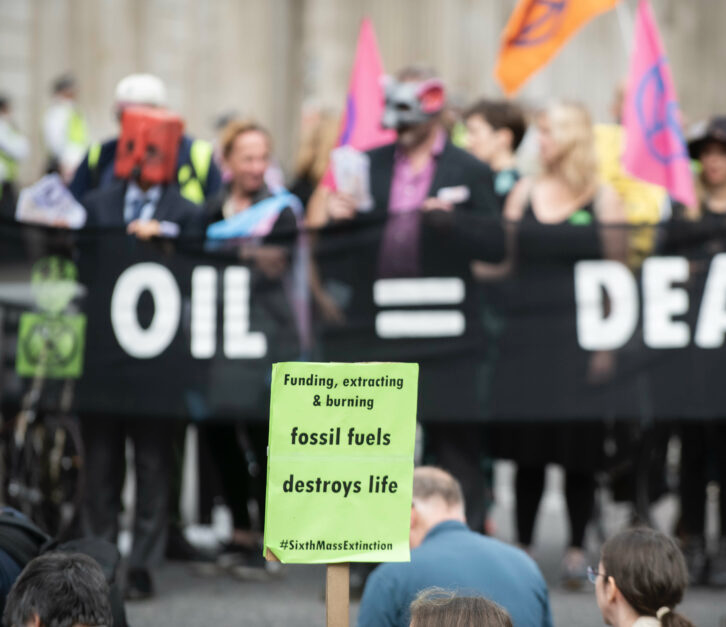
Why not use your window, gate post, car windscreen to host a poster to support the demand for action to  address the climate crisis? It may spark interesting conversations; it may give others like you the feeling of solidarity; it will demonstrate how widespread is the concern. 

XR has various posters – https://extinctionrebellion.uk/act-now/resources/art-group/ – but equally you might want to find other sources on line or create your own. 

Counting on …day 138 

1st April 2022 

‘Climate change is a threat to human well-being and planetary health. Any further delay in concerted anticipatory global action on adaptation and mitigation will miss a brief and rapidly closing window of opportunity to secure a liveable and sustainable future for all’ –  from February’s IPCC report. 

The time is now and we need to take action. Earlier this month Extinction Rebellion wrote to the Government highlighting the situation: ‘Every day the UK government fails to act makes our common future more bleak, our prospects more terrifying.’ Extinction Rebellion is calling for an end of the fossil fuel economy and is inviting everyone to take part and join in the demonstrations taking place on 9th April.

 Counting on ….day 137

31st March 2022 

This May, 5th, London’s local councils will be up for re-election. It is important that our local councillors know which things actually matter to us. The London Cycling Campaign has created an email letter to send to candidates asking them to prioritise various cycling matters that will create greener and pleasanter neighbourhoods. Richmond Council is already instigating many of these proposals but there is always scope for more if councillors feel it is something g we really want. 

https://action.lcc.org.uk/climate-safe-streets

 Counting on ….day 136

30th March 2022 

The following Early Day Motion has been put forward by our local MP, Sarah Olney. 

“That this House maintains an unwavering commitment to achieving net zero targets; acknowledges the urgent need to tackle high carbon emissions produced by homes across the UK; recognises the need for a comprehensive Government scheme to incentivise retrofitting to improve energy efficiency of homes and buildings; pledges that any future additional investment in energy production is directed to renewable sources of energy; extends the phasing out of Russian energy supply imports to include natural gas; and commits to making the transition away from Russian oil and gas a green one.”

Thank you Sarah!

 Counting on ….day 131

23rd March 2022

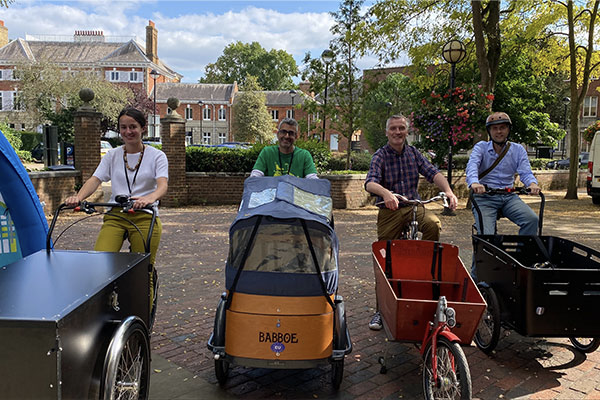
Cars might seem essential for picking up shopping, delivering goods, or transporting children, but in reality there are many alternatives. Cargo bikes can just as easily fit the bill. Our local authority of Richmond upon Thames, has a hire scheme so residents can make use of cargo bikes for a minimal outlay – indeed the first two hours are free. https://www.richmond.gov.uk/news/march_2022/new_cargo_bike_hire_scheme

If we are going to achieve net zero carbon and save ourselves and the whole planet from a complete climate catastrophe, we need to make real changes to the way we live our lives. Schemes like this make it that but easier.

Counting on …day 130 

22nd March 2022

The days are getting longer and milder – a good time to get back to cycling if you have had a winter break or to take it up as a new venture. Cycling is good for us mentally and physically as well as being far better for the environment than using a car. There are many sorts of cycles including specially adapted ones for people with particular disabilities, as well as e-assist cycles for those with less strength. 

Counting on ….day 129 

21st March 2022

As global temperatures rise it is probable that fruit trees and other plants will blossom earlier than previously. A research project is underway to collect date and plot exactly what is happening. Members of the public – citizen scientists! – are invited to contribute by recording when they see different fruit trees blossom in the local area. Results can be logged in at

Plum blossom in the back garden

http://www.fruitwatch.org/

If we are to adapt to the climate change that is already taking place we need this sort of information.

Green Tau: natural wealth

17th March 2022

We usually think of wealth in terms of money. Maybe we have an image of a vault full of coins and precious jewels like that of Harry Potter’s at Gringotts Bank.  Today I want to focus on natural wealth by which I mean the stock of natural resources that the earth provides for us. These natural resources range from water, air and soil,  plants and animals, to rocks and minerals.  The World Bank describes these things as being ‘natural capital’   which points to their use as means of generating something more. This is not an inappropriate concept. It fits with the repeated phrase used in Genesis chapter 1, ‘Be fruitful and multiply’. In creating the world, God was creating a thing that would grow and reproduce, diversify and abound, prosper and flourish.

What the two terms, natural wealth and natural capital, may point to is that natural resources can be misused,  diminishing wealth and productivity. Let’s look at a couple of examples.

Soil

Soil is a natural resource to be found in all parts of the world. It should be valued as a key part of the world’s natural wealth. Soil enables plants to grow. Without plants we would starve and so too would all other creatures. Without plants, our atmosphere would suffer: carbon dioxide would cease to be absorbed and oxygen produced. Soil absorbs water preventing flash floods. Soil is home to wealth of biodiversity – moles, worms, ants, mites, fungus, bacteria etc. It is the nesting place for puffins and shearwaters, for rabbits and foxes.

Soil was not created ready formed. Soil is the result of the erosion of rocks creating small mineral particles; the decaying  of plant and animal remains; the addition by water of further chemicals; and the digging, mixing, tilling action of creatures as diverse as ants and worms, birds and badgers. When soil is being newly formed such as on lava outcrops or newly exposed rock surfaces, or where shores have been exposed, pioneer species of plants will begin the soil making process, to be replaced overtime by other plants, insects and animals as the soil’s fertility increases. 

However the wealth of the soil can be lost. If it looses its protective plant covering, it can be blown or washed away. If its goodness is used to grow successive generations of plants without that goodness being replaced, it becomes a non-fertile dust. If it is infused with poisons (pesticides, herbicides etc) the biodiversity within the soil will be lost and with it the ability of the soil to process and absorb decaying plant and animal material that gives the soil its fertility.  If it is overridden by heavy equipment, its structure is crushed, spaces for air and water are lost and with it, both the soil’s ability to support life forms and its ability to absorb water. Across the world, as self destructive as it may seem, humans misuse the soil: deforestation; monoculture; use of increasingly large and heavy farm equipment; use of insecticides, herbicides and overuse of artificial fertilisers; destruction of the infrastructure for biodiversity (hedgerows, verges, copses); over grazing etc. All these contribute to the destruction of the soil. 

All soil, cultivated or not, needs to be protected. Where it is cultivated it needs to be carefully tended and fed, and its structure maintained. 

Forests

Forests are another key part of the natural wealth of the planet. Forests stabilise and protect soils. They are home to a great variety of different plants (more than just trees!), animals, birds, insects and many other living things. They provide humans with timber for building (homes, railway tracks,  bridges etc), for furniture, tools, doors and windows. Timber for making paper and card, for making fabrics (eg viscose). Fruit, nuts and saps for food, as well as saps that are used to make rubber and resins. Many forest plants have medicinal uses. Forests provide shade which can be used to protect vulnerable crops (eg shade grown coffee). Tree cover can protect the soil for either drying out or being washed away, and sylvan farming techniques utilise this value of forests. Forests slow the flow of water so reducing the risks or scale of flooding. Forests absorb carbon and contribute considerably counterbalancing the excesses of carbon dioxide generated by human lifestyles.

And yet the wealth of our forests is being diminished. 

‘Forests cover 31 percent of the global land area – 4.06 billion hectares… Between  2015 and 2020, the rate of deforestation was estimated at 10 million hectares per year, down from 16 million hectares per year in the 1990s.  Agricultural expansion continues to be the main driver of deforestation and forest degradation and the associated loss of forest biodiversity… Large-scale commercial agriculture (primarily cattle ranching and cultivation of soya bean and oil palm) accounted for 40 percent of tropical deforestation between 2000 and 2010, and local subsistence agriculture for another 33 percent.’  https://www.fao.org/state-of-forests/en/

Oil

Oil, like coal and gas, is a substance formed over many millennia in very precise circumstances that coincided hundreds of millennia ago. It is a highly adaptable material that can be used not just as an energy source, but also to make products as diverse as lipstick and fertilisers, and of course, plastic. Plastic has proved a very useful material being cheap, light, non perishable, highly mouldable etc. However oil was formed by locking away carbon deposits over hundreds of thousands of year but which we have now released into the atmosphere in just three centuries. This rate of release is far more greater than the ability of the atmosphere to safely contain it. Oil has become the biggest human pollutant. Oil extraction, through oil leaks etc is also a cause of  localised pollution. And in addition we are now aware of the polluting effects of the plastics we have produced – micro particles of plastic have been found in all parts of the planet as well as in animals, fish, birds and human beings. Oil whilst appearing to offer many benefits, has and continues to damage the earth.

Unlike soils, which can be rescued and regenerated, and forests that can be replanted and restored, oil – and other minerals that we extract from the earth – is a non renewable resource. For those those things for which oil-based products are beneficial, we should make every effort to recycle and reuse all that we do have.

Natural wealth is a gift from God, a gift of creation. We should not squander or degrade it. Rather we should cherish and nurture it. This should determine how we use that wealth, how we care for the soils and the forests, how we use – or rather don’t use oil -and how we recycle and reuse plastic items.

Whilst the level of care given to our natural wealth may vary between nations (and this could be for any number of reasons such as economic policies, poverty, heritage), the distribution of natural wealth across the planet is independent of  national boundaries and its distribution could be viewed as inequitable. Some countries have large areas of fertile soil conducive to growing wheat, corn or rice. Others have soils and climates conducive to the growth of forests. Some countries have large reserves of minerals such as iron ore, lithium and gold. Some countries have large reserves of fossil fuels. Some have tides, rivers and reservoirs suitable for producing hydro electricity, or climates suitable for wind and solar power. More recently we have realised that some countries have reserves of natural wealth that excel as carbon sinks: forests, peat bogs, mangroves, kelp forests. What we have not perhaps resolved is how we share this global wealth fairly – other than through economic markets – or how we share the responsibility of caring for this wealth, and ensuring that we pass it on us diminished to future generations.  

Whilst wealth and money are not, per se, the same thing, putting a monetary value on natural wealth helps countries and people to recognise the value of natural wealth and to shape their actions accordingly. The World Bank has been working on an Ecosystem Accounting framework that allows countries to assess the services contributed by natural wealth and give them a monetary value. By having a standardised system countries can  calculate how the natural wealth contributes to their GDP. “This is a huge step towards seeing nature as an economic asset that needs to be managed and preserved to ensure sustainable growth. For example, the Government of Cambodia asked the World Bank to provide the economic rationale behind preserving 65% of the country’s forests as protected land. While some benefits were  obvious, it did not have the economic analysis to fully justify such a  wide-ranging decision. Using ecosystem accounting, the World Bank team supported the Government of Cambodia in quantifying a suite of services that forests offer  –  water, agriculture and hydropower, ecotourism and carbon storage – for the Pursat River Basin in the Cardamom Mountains in Cambodia. The analysis revealed that economic gains from preserving the forests was five times higher than cutting them down for charcoal production or agriculture. It also found that the benefits to other economic sectors derived from forest ecosystems are 20 times higher than the cost of maintaining them”. https://blogs.worldbank.org/voices/giant-leap-towards-measuring-natures-contributions-economy

The British Government, too, is developing the use of ecosystem accounting. ‘The Office for National Statistics estimate that England’s woods and forests deliver a value of services estimated at £2.3 billion annually. Of this figure, only a small proportion – 10% – is in timber values. The rest of the value derives from other more ‘hidden’ benefits to society, such as human recreation and air pollution removal, which improve health, and carbon sequestration which can help combat climate change’. https://www.gov.uk/government/news/natural-capital-tool-launched-to-help-protect-the-environment If followed through, this should ensure that we – as a nation, as a society, as landowners and as business enterprises –  do actually value and safeguard our forests and woodlands. 

As individuals we can speak out for and protect our world’s natural wealth –

  • Be an ethical consumer 
  • Be an ethical investor whether that is with direct investments or via investments made on your behalf by your pension fund provider, insurers, bank etc.
  • Support nature conservation schemes, nature friendly farming research, alternative energy etc
  • Be a campaigner, make your voice heard 
  • Visit and enjoy local nature reserves and green or blue spaces. 

Visit https://greentau.org/2022/02/24/eco-tips/ for more  tips on being a sustainable consumer.