Counting On …

4th November 2021

Replacing fossil fuel powered energy with alternative renewable energy is key to addressing the climate crisis. But as well as being green, renewable energy can also provide remote communities with the advantages of electrical power without the need for large scale infrastructure. This can enable some amazing projects!

Practical Action has installed “ solar powered pumps [that] lift water from the river and distribute it to reservoirs close to Nepal’s farming communities, where pipes are installed to  distribute water. Local reservoirs also naturally collect rain water, which is then turned into clean water and can be distributed too.

Even when the sun is at its hottest in the most arid regions of Nepal, it continues to provide the solar powered irrigation systems with energy – and gets water to crops when they need it most.

By having a reliable and safe source of water, farming communities can enjoy bigger harvests that produce enough to feed their families, with enough crops to spare for selling at a profit at the market.

Areas in Nepal that were previously famous for apple farming – but threatened due to climate change – are now viable spaces for orchards again, alongside crop and vegetable farming, according to local farmers. The use of solar pumps helps farming communities produce crops all year round, even during the dry season. The result is hugely positive. Not just financially, but environmentally and for the health of the farmers. Not only does it enable them to drink water safely, it means they can grow crops and enjoy a more balanced diet”. https://practicalaction.org/news-media/2021/03/09/how-solar-power-lifts-water/

Counting On …

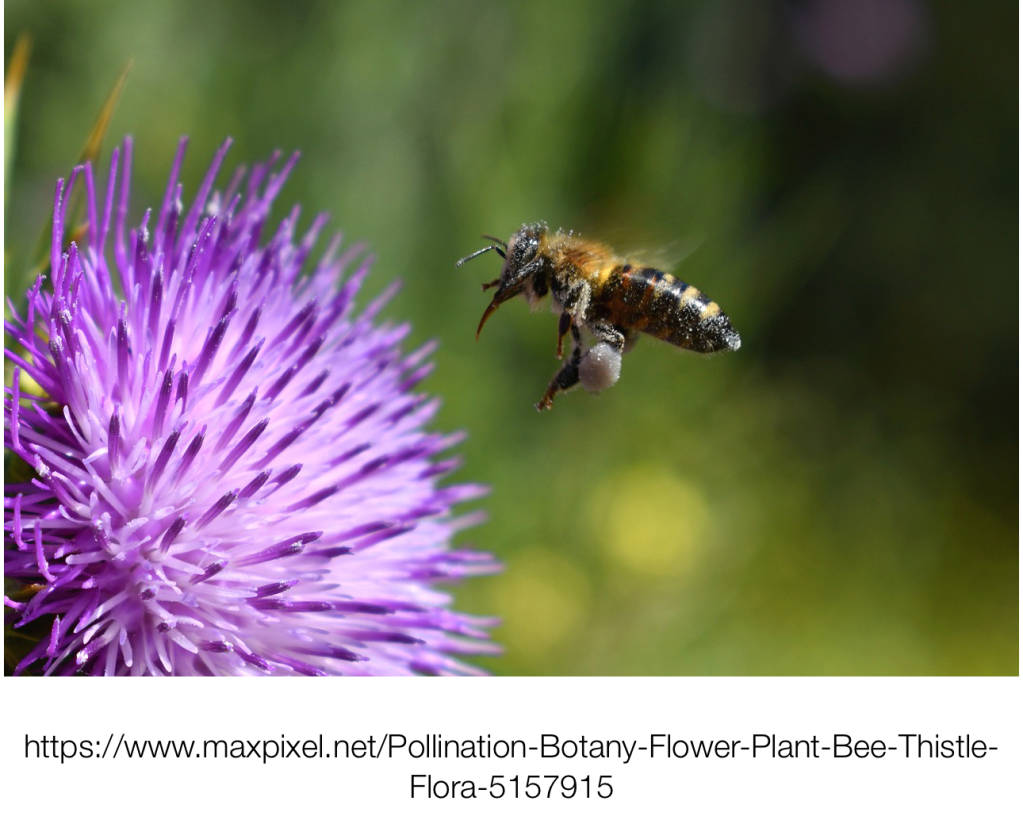
As participants meet, discuss, negotiate and take action at COP26, what is at stake is the wellbeing of the amazing ecosystem in which we live. Caring for and improving biodiversity is essential. So many of the earth’s ecosystems can protect us from the adverse effects of climate change, and yet they are so vulnerable to damage from human activity!

Pray for, and support, action to enhance global biodiversity.

Seagrass, the only flowering marine plant, grows in the shallower waters of our seas and oceans as it is reliant on sunlight for photosynthesis. Where it is well established it forms meadows where its roots stabilises sediment on the seabed preventing erosion. Its roots also oxygenate the sediments supporting many burrowing organisms. As it grows it sequesters carbon dioxide and does so at rates 10 to 40 higher than that of forests! It provides food, breeding grounds and nurseries for many marine species – from seahorses to seals, dog fish and octopus.

However world wide seagrasses are under threat. These marine meadows are damaged and destroyed by sewage and chemical effluents, by algal blooms that restrict sunlight penetrating the water and so preventing photosynthesis, by mechanical damage from anchor chains, marine vessels, and dredging as well as from over-fishing which disturbs the balance of the ecosystem. It is estimated that the UK has lost 95% of its seagrass meadows. Restoration projects are in progress in Swansea Bay, Dale Bay Pembrokeshire, in the Solent and off Skye – but they are still very small in scale.

Counting On …day 394

1st December 2022

Collage: The Kinship of Creation

Kinship of all creation: we are all interconnected, dependant upon each other, bound into a finely wrought ecosystem that abounds in beauty. Pray that the interests of all our kindred will be valued and protected.

Climate change is affecting all parts of the world, from the Artic southwards. it affects people, plants and creatures alike.

Reindeer herd, Canada © Peter Ewins / WWF-Canada  

Reindeer numbers across the Arctic have fallen by more than half in the past two decades. They survive by migrating to find food, using their hooves to dig through the snow to eat the nutritious lichen buried underneath. But climate change means herds must swim across previously frozen rivers and many young calves drown – and rising temperatures mean more rain, covering plants with ice instead of snow, making grazing harder.
https://www.wwf.org.uk/updates/11-arctic-species-affected-climate-change

://www.wwf.org.uk/updates/11-arctic-species-affected-climate-chang

And from The Guardian: 30 Oct 2021, Gennadiy Shukin Taymyr, north Russia

I was born in 1962 in a family of deer herders in Taymyr, on a peninsula in the very far north of Russia. I am part of the Dolgan community: we are an indigenous Russian group and there are about 6,000 left of us living in the tundra.

Growing up, the Soviet Union tried to deny us our traditional way of life, but since then climate change has become the biggest challenge to our survival. Our community lives by hunting, fishing and herding deer. Scientists say that Taymyr has the most rapid temperature increase in Russia, and we can really feel it.

Because of the warmer winters, we have seen that deer are giving birth earlier in the year. Many are born too weak and don’t survive the long journeys they have to make. This means there is much less deer for us to hunt and it hurts the whole ecosystem.

Rivers and lakes that we use for fishing have also started to dry out. Others are too polluted after all the big oil and gas plants have sprung up over the years in our lands. Some days we don’t catch any fish at all.

For generations, we have sold the food we caught to local towns and cities to buy basic products like sugar and wheat. Without animals, we cannot survive.

Big craters are also forming because the Arctic permafrost is starting to melt under our feet. This means the routes that we have used for decades to travel, hunt and fish have to be adjusted as whole roads have sunk. It is also dangerous as you never know where the next crater will form.

Our ecosystem is changing quickly: animals like sables that I have never seen before in my life have appeared in the tundra. And now we also have to deal with giant mosquitoes and bugs that attack our livestock. The summers are becoming unbearable. It’s madness.

The young people see that climate change is making our traditional way of life impossible and they are forced to move to the bigger cities to find jobs, which are often low-paid. Our culture is disappearing.

https://www.pressreader.com/uk/the-guardian-supplement/20211030/281732682701562

Count Down

Action 99: Pray. Green Christian’s co-Chaplain, Andrew Norman, will be leading simple and contemplative-style prayers for 10 minutes at 8am every morning from 1-12 November, based on “Why Faith Matters at COP26”.

+ Register for zoom prayers for COP26 +

(https://us02web.zoom.us/meeting/register/tZApcuugqDovHdzejfpqPLtc1ZZEfOVVy_gm%20)

This is the last of the Count Down series! For the next two weeks there will be a daily image and prayer relating to the COP26 agenda, ‘Counting On …’

Sunday Reflection

31st October 2021, 4th before Advent

Deuteronomy 6:1-9 https://bible.oremus.org/?ql=502594426 Hebrews 9:11-14 https://bible.oremus.org/?ql=502594518 Mark 12:28-34 https://bible.oremus.org/?ql=502594610

Reflection 

The text of Deuteronomy offers the people a quid pro quo: if you obey this command, then your days will be long, all will go well with you and you will multiply – ie dwell in growing number – in a land flowing with milk and honey. Wow! Who would not want that?

And what is the the qualifying command? That you love God with your total being, with the totality of your existence. The lawyerly minded might then ask for clarification: what is it to love God? For the writer of Deuteronomy, the answer has already been given. It is to keep all God’s statutes and ordinances which Deuteronomy details. To love God is to do that which God wants, to live life the way God directs. There is a great simplicity and logic in this. It is what one might expect when we read the creation stories, for they tell us that God created a world that was good, which was full of life and which was created so that that life in all its forms might multiply and flourish. To live in harmony in such a creation is surely to live in accordance with the creator’s intentions. 

Yet the fact that something is highly desirable and is straightforward to achieve, doesn’t necessarily mean that is what will happen. We know from reading the rest of the Bible that the people of Israel had great difficulty in sticking to following the ways of God. And we can clearly see when we look around the world now and see suffering, war, greed, destruction, deceit … that humanity still finds this a hard task. 

The Letter to the Hebrews uses much of the imagery and ideas of the Pentateuch, envisaging Jesus as the ultimate high priest – the one who mediates between humans (and indeed not just humans but creation too as we will see later) and God. The writer describes Jesus as the high priest of ‘the good things that have come’. Again the message that what God is and does give us, is good! He is also the high priest who, through his own death, has redeemed us for all ‘dead works’ so that we can worship the living God. Again a message that picks up the same message as that in Deuteronomy:  the desire that we should be in tune with God. To worship is to recognise the worth God, to offer our understanding of God’s nature. Jesus enables us to worship God not only because he embodies the nature of God in human form, but also because he redeems us from ‘dead works’: those things that come between us and God and between us and the rest of creation – those things that lead to suffering, war, greed, destruction, deceit. Jesus both aids our relationship with God and the resulting enjoyment of what is good in the world, and removes those stumbling blocks that damage that relationship. 

The passage from Mark continues on the theme of the kingdom of God and how one might access it. (A few weeks ago we heard of the rich man whose love of his wealth impeded his access). In today’s episode, the dialogue between the scribe and Jesus probe what  is involved in coming close to – and entering – the kingdom of heaven. The answer is two fold: loving God and loving neighbour. If we were to return to the creation stories, and in particular that set in the Garden of Eden, we would see that these as the subtext of that story. Whilst Adam and Eve and their companions – all the creatures God had created and which Adam had named – followed that two fold lifestyle, they enjoyed the fruitful life in the Garden. And maybe that too was a land flowing with milk and honey. But when they all respectively failed to love God and their neighbours, their companions, they found themselves living in a place of hardship and pain and enmity. 

And isn’t that still where we find ourselves today? As the delegates gather for COP26 and all the non delegates arrive in person or via zoom, we come to a crunch point in the wellbeing of the world. Over the decades and indeed the centuries, we have not loved our fellow neighbours, both our human brothers and sisters, and our creaturely brothers and sisters. We have not loved our common home but have allowed greed and cruelty, envy and ignorance to damage and despoil the land where we live. 

Let us pray earnestly that our global leaders will make the right decisions. Equally let us pray that we too as responsible individuals will do all we can to live penitent lives, truly loving God and neighbour  with all our being.

Halloween Scones

Food waste is a big contributor to global warming. Waste can occur anywhere from on the farm, whilst in transit, at the supermarket or in the home. In the home we should aim to  use all the food we buy. So here is a recipe for using up raw pumpkin – or squash. It is also cooked in a frying pan rather than in the oven which will use less energy. It is also plant-based  – another plus for the environment. 

250g self raising flour

60g vegan butter

1 tbsp of chia or camelina seeds

150g raw pumpkin/ squash

4 cardamom pods

Oat milk


Mix the seeds with 3 tbsp of warm water. Mix in the seeds from the cardamon pods. 

Cut the butter into,cubes and rub into the flour.

Chop the pumpkin into small pieces.

Mix everything together, adding enough milk to create a soft dough. 

Heat a frying pan with a little oil in the bottom.

Roll out the dough and cut into rounds or triangles. Place these in the pan. 

Cook for 5-10 minutes or until browning on the bottom. Turn over and cook on the other side.

Enjoy plain or with jam. 

Green Tau: issue 23

30th October 2021

Count me in?

This weekend COP26 starts. The coming together of interested parties from all over the world: government leaders, NGOs, scientists, economists, financiers, environmentalists, charities, development agencies – and if not inside the talks, then certainly present, protest groups – with the target of addressing the climate crisis:- 

agreeing and undertaking to implement and finance the action needed to contain the expansion of greenhouse gases in the atmosphere,

to limit further increases in global temperatures, 

to enable countries and communities to undertake adaptations to farming and                                             infrastructure, housing and businesses: 

to enable populations to live with the already built-in effects of climate change (rising sea levels, droughts, floods, wild fires, heat waves and cold snaps, storms and changing seasons)

and to do so in a way that is fair to all nations and all people.

Looking at past achievements, we are expecting a lot of COP26. If we are expecting a lot from the conference delegates then it must be right to expect a lot of ourselves too.

How far will we go? How far will we go in changing our lifestyle to protect the planet? How far will we go in curbing our consumption of limited resources? How far we we go in be willing to pay the true cost of what we buy?

Change has to begin somewhere. If no one takes the first step, then nothing happens, but if someone makes that first step them change can begin.  It can seem really hard to make changes when everyone  around you seems to be ignoring the problem and continuing as if no action is needed. How can we make change easier?

Be confident that you are doing the right thing. 

Be proud to be a trend setter.

Get the support of like minded people. 

Be an encouragement to others.

Raise awareness of why change is needed.

Raise awareness of the consequences of doing nothing.

Find ways in which change becomes satisfying, rewarding, even fun.

Keep focused on why change is necessary. 

See the positives you are achieving – and talk about them to others! 

Be proud to be part of the change.  

Lantern with a Message

Speaking out about the climate crisis and what we could and should be doing to avert an even worse crisis is important. We need to encourage and motivate change in the way we live our lives and in the way businesses and governments make use of resources.

Along with all the pumpkins lanterns this jam jar might spark a conversation with friends and neighbours.

For this activity you will need a jam jar, tissue paper, PVA glue and a night light. Cut strips of different coloured tissue paper that are long enough to wrap around your jam jar. Write some short simple messages on the paper.  

Apply glue to the outside of the glass jar. Stick on the strips of tissue paper allowing them to overlap a little. Coat all the tissue paper covering with a layer of PVA. This will create a translucent appearance.   

You can add an optional handle to your lantern using string or a length of thin wire. Place a nightlight in the bottom of your jar and then place it outside so that passers by can see your message.