
The Green Tau: issue 4 & a half

Me and /or future generations?

How we solve a problem depends upon aims for the future: are we seeking a short term or a long term fix? The nature of democracies is that governments’ timescales limited to the time remaining until the next election. In the UK that time scale is now 3 1/2 years. In France the next presidential election is less than 12 months away. Governments want to be re-elected so opt for policies that will win the favour of their most important voters. It is not surprising that at the G7 Summit President Macron has shied away from banning the sale of new petrol and diesel vehicles in the near future. The UK’s Department of the Environment released a press statement that “…all [G7] countries committed to reaching net zero carbon emissions by 2050…” but gave few details or commitments as to how that target is to be achieved. 

2050 is that beautiful place in the future when all things will be both green and rosey. But if we are to live in that future (or rather if our grandchildren are to live in that future) we need to tackle action now. Like the Covid virus, global temperatures increases and climate change will not hold back until we’re ready to tackle the problems. We need to be radically changing the way we generate energy now, the way we farm – now, the way we use energy to transport our selves and goods – now, the way we heat and/or cool our buildings – now, the way we consume – now! Otherwise our carbon emissions will continue to accelerate global warming and we will have no chance of keeping global temperature rises below 1.5C. 

There is a real conflict of interests between politicians with a five year view of the future and the rest of us  who see the future as somewhere to enjoy our old age and where our grandchildren will thrive. This is why it is important that we a) make all the changes we can in our own lifestyles, and b) campaign, sign petitions, write to our MPs and do we all we can to make climate change and carbon emission reductions the most important political issue of this Parliament. 

Hands Up! We’re all guilty protest: London October 2019

The Green Tau: issue 4

The G7 2021 summit has come and gone. What did it achieve?
Where does it lead us in relation to the COP climate talks in November? Below are some of the outcomes of the talks that relate to the global tackling of the climate crisis.

The G7 committed to accelerating efforts to cut green house gases so as to keep the temperature increases below 1.5 C – ie  a commitment to try harder to stick to their previously agreed target. The G7 agreed to end by 2021 all new government funding for unabated coal fired power stations whilst at the same time Australia plans to continue to support its coal mining industries. 
The G7 committed to the phasing out of petrol and diesel fuelled vehicles, although no date was agreed – the UK government has proposed ending the sale of all new petrol and diesel vehicles by 2030, but similar plans in France are proving unpopular at a time when President Macron faces an election in 2022 and the current earliest date for ending the sale of new petrol and diesel vehicles is 2040. The G7 agreed a 2030 Nature Compact with commitments to lead the transition to sustainable use of natural resources; investing in a nature positive economy; protecting, restoring and conserving nature with a target of 30% of the globe’s lands and oceans by 2030; and prioritising accountability for their commitments to nature. The how and where and finances have yet to be species.
The G7 pledge to provide $100,000 a year to support climate change action is the continuation of an existing pledge. And at the same time India is reluctant to do more to avert climate change without receiving further financial support. It was the first summit to be net carbon neutral but that example was marred by Boris Johnson’s decision to fly to Cornwall rather than to travel by train.

The G7 Summit may have confirmed the various government’s intentions to tackle the climate crisis but failed to produce any concrete plans as to how these might be achieved. The parable of the two brothers comes to mind. There once was a father who had two sons.  He asked  both to help him in the vineyard. The first said, Yes I’ll help! but then did nothing more. The second said, No, not me! but later changed his mind and helped in the vineyard.  If governments, organisations or individuals say Yes, I’ll help tackled climate change, then can we rest comfortably knowing that the crisis is going to be averted? If governments, organisations or individuals say No, I shan’t do anything – is climate change even real? do we feel that’s our own individual efforts are pointless? Clear leadership is needed! And if such leadership is lacking then we need to encourage one another, being clear about what we can and what we are doing to tackle the crisis. If you cycle rather than using the car, say so. If you take the train rather than the plane, then say so. If you are eating plant based meals, then say so. If you have solar panels, a heat-pump, an energy monitor, then say so. Let’s be outspoken about what we can and are doing!

NB Many organisations such as WWF, Friends of the Earth, the BBC,  all offer advise on how we as individuals can take action to tackle climate change. 
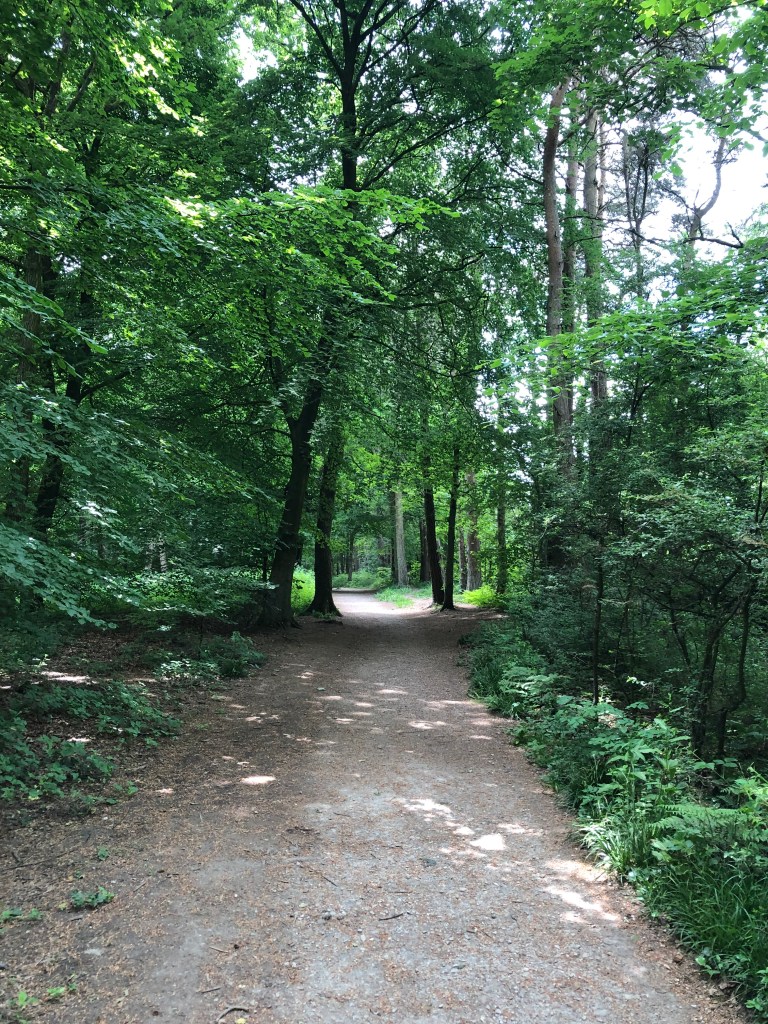
Woodlands are natural carbon stores as well as places for refreshment

The Green Tau: issue 3

Solidarity and knowing our place in the ecosystem


What is a green ‘tau’? Tau  τ is the Greek letter similar to the English T. Tau itself  developed from the Phoenician letter  Tāw X  (from which the  Hebrew letter  Tav ת is also derived).  In ancient times, tau was used as a symbol meaning eternal life or resurrection. In Hebrew tav means mark and this was the sign marked on the foreheads of those who lamented their sins (Ezekiel 9:4). For early Christians tau became an apt symbol of the cross on which Jesus  was crucified. 

Francis of Assisi used the tau as his mark when signing his letters and other writings. The tau cross, often made of wood, is worn by many Franciscans across the world. Francis is widely known as the saint who spoke with the birds, and to the hungry wolf in Gubio – he worked out a deal between the wolf and the people of Gubio such that they could live together in harmony. Francis was the author of the canticle ‘Brother Sun, Sister Moon’ – probably the first piece of literature written in Italian.  Francis understood that everything in creation had been made by God and was deserving of equal love and respect and should be treated as brother or sister.  In 1979 Pope John Paul II declared St Francis as the patron saint of ecologists,   reflecting not only Francis’s love for all creatures, but also his intuitive understanding of the interconnectedness of the whole of creation.  I therefore chose a green tau to represent my desire to live sustainably, protecting the earth.  

Brother Bee Sister Wasp

It is easy to love Brother Bee if only because bees produce honey.  We think of them as round, fluffy happy-go-lucky creatures and hold them up as paragons of productivity. Yet over the last 70 years their numbers have declined rapidly because we have not seen them as brother. Instead we have allowed them to be decimated by the use of insecticides and pesticides both on fields and in our gardens. We have ignored their loss of habitat through mono culture farming and the destruction of hedgerows. And we have shown little concern that climate change is happening so rapidly that bees cannot  adapt to these shifting seasons. But the story doesn’t end with the end of the bees. Worldwide three out of four food crops rely on successful pollination by bees and other insects. We humans may be facing a dire future.

Sister Wasp is less loved! Towards the end of the summer, we and she compete for sweet sugary fruits to satisfy our appetites. Would we be better off without Sister Wasp?  We forget – or perhaps never knew – that for the rest of the growing season wasps need a high

protein diet and are hugely important as predators who keep ‘pests’ such as caterpillars, aphids and greenfly,  in check. 

If you have a garden, you can be a generous host to our brother and sister pollinators – planting bee friendly flowers and ensuring an availability of flowering plants all year round including from late autumn through to spring: https://friendsoftheearth.uk/nature/10-easy-ways-help-bees. Or find out more about wasps: https://youtu.be/YnOK5KPNV3I 

The Green Tau: Issue 1

Introducing COP26: the 26th United Nations Climate Change Conference of the Parties. 

What is its purpose?

“Uniting the world to tackle climate change” 

Why? The trajectory of rising global temperatures threatens the health and well being of all living beings on earth. The speed of change is such that most life forms will not be able to evolve fast enough to avoid extinction. The primary cause of these global temperature rises is human activity.

These climate change conferences have been taking place annually since the first in Berlin in 1995. Parties have been working on strategies and agreements to enable world communities to work together to limit the impact of this crisis.  

COP3 produced the  Kyoto protocol agreeing legally binding target to reduce greenhouse gas emissions to 6-8% below 1990 levels by 2012. This was not fully implemented.

COP17 held in Durban began negotiating a legally binding deal to keep global warming to within a 2C rise compared with pre industrial levels.

COP21 produced the Paris agreement requiring individual countries to produce their own plans (NDC – nationally determined contributions) to mitigate the impacts of global warming and to keep global temperature  below a 1.5C rise by 2050 – and at least 45% of these reductions of be achieved by 2030. 

Are we on target as we approach COP26 this November? (Deferred from its original date in 2020 because of Covid). No. The UN Emissions Gap Report 2019 notes an ongoing annual 1.5% increase in greenhouse gas (GHG)  emissions over the last decade. Global emissions for 2018 reached 55.3 giga-tons. To keep global temperature increases within 1.5C, GHG need to be reduced to 32 Gt. 

The World Meteorological Organisation has reported global average temperature rises of 1.1C since the preindustrial age, and of 0.2C  for the period 2015-19 above that for 2011-15.

What then are the stated goals of COP26?

  1. Finalise the Paris Rulebook and ensuring transparency 
  2. Require all finance, public and private to support the global economy transition to net zero 
  3. Protect communities and natural habitats 
  4. Keep global temperatures increases within the 1.5C  target and keep on target for net zero carbon emissions by 2050

What role can we play?

  • Adopting sustainable life styles
  • Using our purchasing power to change business practices
  • Campaigning to ensure governments and other authorities know what we actual want 
  • Supporting others throughout the world to make changes too

For in this hope we were saved. Now hope that is seen is not hope. For who hopes for what he sees? (Romans 8:24) I cannot see how all the nations, and interested parties will at COP26 make the corporate and individual changes needed to avert the escalation of our climate crisis. Yet I have hope that things will right, and hope is a powerful thing, especially if it shared with others.

‘Hope is Power’ became the new (2019) campaign logo for the Guardian newspaper. 

“Hope does not disappoint us, because God’s love has been poured into our hearts through the Holy Spirit that has been given to us” (Romans 5:5).