Counting on ….day 136

30th March 2022 

The following Early Day Motion has been put forward by our local MP, Sarah Olney. 

“That this House maintains an unwavering commitment to achieving net zero targets; acknowledges the urgent need to tackle high carbon emissions produced by homes across the UK; recognises the need for a comprehensive Government scheme to incentivise retrofitting to improve energy efficiency of homes and buildings; pledges that any future additional investment in energy production is directed to renewable sources of energy; extends the phasing out of Russian energy supply imports to include natural gas; and commits to making the transition away from Russian oil and gas a green one.”

Thank you Sarah!

Spring Cleaning

Why spring cleaning? Because the hours of day light are longer and the sun brighter and we can see the dust and dirt more easily. With warmer weather we open doors and windows more readily  which feels conducive to create and removing dust. And there is the psychology of spring being the time for a fresh start! 

Spring cleaning – or indeed any cleaning – contri to the advertising of the

supermarkets, does not need a basketful of sprays and polishes, creams and scourers, nor a cupboard full of newly bought cloths – eco or otherwise. More useful are time and elbow grease. 

  • Use old/ worn thin towels and flannels, tea clothes and t-shirts/ vests. The soft material of an old vest is greater for picking up dust. Towelling is good for cleaning floors, sinks, tiles and other hard surfaces. Ex-cotton or linen tea towel are good for giving a polish to a surface. Old vests and socks are good for applying silver and brass polish and for buffing. 
  • Old toothbrushes are good for getting dust or dirt out of small crevices. (They are also good for cleaning bikes).
  • Water is good all round cleaner, especially for floors and tiles. Vinegar helps if surfaces are greasy. 
  • For washing windows use water with a splash of vinegar. Soap really isn’t needed.
  • When dusting a little vegetable oil helps pick up the dust but buff the surface after to remove excess oil to which further dust or dirt may stick. 
  • Vinegar is an acid. Acids dissolve lime scale so can use vinegar on taps etc – do a small check first that the taps haven’t been given a surface coating that can be damaged by an acid. 
  • In toilets vinegar may be insufficient to tackle lime scale. Try using instead citric acid which you can buy for cleaning purposes (cheaper than food quality citric acid) and you can improve the efficacy of the citric acid by first pouring a kettle of hot water into the toilet.
  • You can also use citric acid to descale kettles. Boil a kettleful of water, unplug and then add a little citric acid and leave to soak. Rinse well before using!
  • In line with reducing plastic products, wooden toilet brushes are a good alternative. Ideally they should have a hook so that you can let them drip dry over a suitable pot – eg a plant pot holder/ large jam jar.
  • Bicarbonate of soda is an alkaline which becomes a mild bleach when added to water. You can use bicarbonate of soda to clean your toilet – adding hot water will aid this. You can buy bicarbonate of soda for cleaning purposes from Robert Dyas or similar retailers. Again it will be cheaper than food quality bicarb)
  • Use a mixture of  bicarbonate of soda  and water to soak dish clothes to help keep them clean.
  • A mild solution of bicarbonate of soda and warm water is good for cleaning the inside of the fridge.  
  • Mixed together in water, bicarb and citric acid will react and fizz. You can use this to clean sink and shower drains. For best effect use 2 part bicarb to 1 part citric acid. This also works well in toilets. 
  • You can also use this to clean your washing machine.
  • Use bicarbonate of soda to clean sinks and baths by mixing the powder with a little water and apply with a cloth. Rinsing clean with vinegar will remove any residue.
  • As it is a mild bleach, you can also use bicarb to remove tea stains from mugs. Put a small amount in the bottom, add hot water and leave to soak. 
  • Although you can use a vacuum cleaner for hard floors, a brush doesn’t need any electricity and is much easier to put away. When you need a new brush, investigate non plastic options.
  • Brooms can be used carefully to remove cobwebs from ceilings or use a pole with a duster fixed to the end.
  • A regular quick clean prevents any build up of dirt which ultimately can be harder to shift.

The Green Tau: issue 37 

17th March 2022

Natural Wealth

We usually think of wealth in terms of money. Maybe we have an image of a vault full of coins and precious jewels like that of Harry Potter’s at Gringotts Bank.  Today I want to focus on natural wealth by which I mean the stock of natural resources that the earth provides for us. These natural resources range from water, air and soil,  plants and animals, to rocks and minerals.  The World Bank describes these things as being ‘natural capital’   which points to their use as means of generating something more. This is not an inappropriate concept. It fits with the repeated phrase used in Genesis chapter 1, ‘Be fruitful and multiply’. In creating the world, God was creating a thing that would grow and reproduce, diversify and abound, prosper and flourish.

What the two terms, natural wealth and natural capital, may point to is that natural resources can be misused  diminishing wealth and productivity. Let’s look at a couple of examples.

Soil

Soil is a natural resource to be found in all parts of the world. It should be valued as a key part of the world’s natural wealth. Soil enables plants to grow. Without plants we would starve and so too would all other creatures. Without plants, our atmosphere would suffer: carbon dioxide would cease to be absorbed and oxygen produced. Soil absorbs water preventing flash floods. Soil is home to wealth of biodiversity – moles, worms, ants, mites, fungus, bacteria etc. it is the nesting place for puffins and shearwaters, for rabbits and foxes.

Soil was not created ready formed. Soil is the result of the erosion of rocks creating small mineral particles; the decaying  of plant and animal remains; the addition by water of further chemicals; and the digging, mixing, tilling action of creatures as diverse as ants and worms, birds and badgers. When soil is being newly formed such as on lava outcrops or newly exposed rock surfaces, or where shores have been exposed, pioneer species of plants will begin the soil making process, to be replaced overtime by other plants, insects and animals as the soil’s fertility increases. 

However the wealth of the soil can be lost. If it looses its protective plant covering, it can be blown or washed away. If its goodness is used to grow successive generations of plants without that goodness being replaced, it becomes a non-fertile dust. If is infused with poisons (pesticides, herbicides etc) the biodiversity within the soil will lost and with it the ability of the soil to process and absorb decaying plant and animal material that gives the soil its fertility.  If it is overridden by heavy equipment, its structure is crushed, spaces for air and water are lost and with it, the soil’s ability to support life forms. Across the world, as self destructive as it may seem, humans misuse the soil: deforestation; monoculture; use of increasingly large and heavy farm equipment; use of insecticides, herbicides and overuse of artificial fertilisers; destruction of the infrastructure for biodiversity (hedgerows, verges, copses); over grazing etc. All these contribute to the destruction of the soil. 

All soil, cultivated or not, needs to be protected. Where it is cultivated it needs to be carefully tended and fed, and its structure and maintained. 

Forests

Forests are another key part of the natural wealth of the planet. Forests stabilise and protect soils. They are home to a great variety of different plants (more than just trees!), animals, birds, insects and many other living things. They provide humans with timber for building (homes, railway tracks,  bridges etc), for furniture, tools boxes. Timber for making paper and card, for making fabrics (eg viscose). Fruit, nuts and saps for food, as well as saps that are used to make rubber and resins. Many forest plants have medicinal uses. Forests provide shade which can be used to protect vulnerable crops (eg shade grown coffee). Tree cover can protect the soil for either drying out or being washed away, and sylvan farming techniques utilise this value of forests. Forests slow the flow of water so reducing the risks or scale of flooding. Forests absorb carbon and contribute considerably counterbalancing the excesses of carbon dioxide generated by human lifestyles.

And yet the wealth of our forests is being diminished. 

‘Forests cover 31 percent of the global land area – 4.06 billion hectares… Between  2015 and 2020, the rate of deforestation was estimated at 10 million hectares per year, down from 16 million hectares per year in the 1990s.  Agricultural expansion continues to be the main driver of deforestation and forest degradation and the associated loss of forest biodiversity… Large-scale commercial agriculture (primarily cattle ranching and cultivation of soya bean and oil palm) accounted for 40 percent of tropical deforestation between 2000 and 2010, and local subsistence agriculture for another 33 percent.’  https://www.fao.org/state-of-forests/en/

Oil

Oil, like coal and gas, is a substance formed over many millennia in very precise circumstances that coincided hundreds of millennia ago. It is a highly adaptable material that can be used not just as an energy source, but also to make products as diverse as lipstick and fertilisers, and of course, plastic. Plastic has proved a very useful material being cheap, light, non perishable, highly mouldable etc. However oil was formed by locking away carbon deposits over hundreds of thousands of year but which we are now released into the atmosphere in just three centuries. This rate of release is far more greater than the ability of the atmosphere to safely contain it. Oil has become the biggest human pollutant. Oil extraction, through oil leaks etc is also a cause of  localised pollution. And in addition we are now aware of the polluting effects of the plastics we have produced – micro particles of plastic have been found in all parts of the planet as well as in animals, fish, birds and human beings. Oil whilst appearing to offer many benefits, has and continues to damage the earth.

Unlike soils, which can be rescued and regenerated, and forests that can be replanted and restored, oil – and other minerals that we extract from the earth – is a non renewable resource. For those those things for which oil-based products are beneficial, we should make every effort to recycle and reuse all that we do have.

Natural wealth is a gift from God, a gift of creation. We should not squander or degrade it. Rather we should cherish and nurture it. This should determine how we use that wealth, how we care for the soils and the forests, how we use – or rather don’t use oil -and how we recycle and reuse plastic items.

Whilst the level of care given to our natural wealth may vary between nations (and this could be for any number of reasons such as economic policies, poverty, heritage), the distribution of natural wealth across the planet is independent of  national boundaries and its distribution could be viewed as inequitable. Some countries have large areas of fertile soil conducive to growing wheat, corn or rice. Others have soils and climates conducive to the growth of forests. Some countries have large reserves of minerals such as iron ore, lithium and gold. Some countries have large reserves of fossil fuels. Some have tides, rivers and reservoirs suitable for producing hydro electricity, or climates suitable for wind and solar power. More recently we have realised that some countries have reserves of natural wealth that excel as carbon sinks: forests, peat bogs, mangroves, kelp forests. What we have not perhaps resolved is how we share this global wealth fairly – other than through economic markets – or how we share the responsibility of caring for this wealth, and ensuring that we pass it on us diminished to future generations.  

Whilst wealth and money are not, per se, the same thing, putting a monetary value on natural wealth helps countries and people to recognise the value of natural wealth and to shape their actions accordingly. The World Bank has been working on an Ecosystem Accounting framework that allows countries to assess the services contributed by natural wealth and give them a monetary value. By having a standardised system countries can  calculate how the natural wealth contributes to their GDP. “This is a huge step towards seeing nature as an economic asset that needs to be managed and preserved to ensure sustainable growth. For example, the Government of Cambodia asked the World Bank to provide the economic rationale behind preserving 65% of the country’s forests as protected land. While some benefits were  obvious, it did not have the economic analysis to fully justify such a  wide-ranging decision. Using ecosystem accounting, the World Bank team supported the Government of Cambodia in quantifying a suite of services that forests offer  –  water, agriculture and hydropower, ecotourism and carbon storage – for the Pursat River Basin in the Cardamom Mountains in Cambodia. The analysis revealed that economic gains from preserving the forests was five times higher than cutting them down for charcoal production or agriculture. It also found that the benefits to other economic sectors derived from forest ecosystems are 20 times higher than the cost of maintaining them”. https://blogs.worldbank.org/voices/giant-leap-towards-measuring-natures-contributions-economy

The British Government, too, is developing the use of ecosystem accounting. ‘The Office for National Statistics estimate that England’s woods and forests deliver a value of services estimated at £2.3 billion annually. Of this figure, only a small proportion – 10% – is in timber values. The rest of the value derives from other more ‘hidden’ benefits to society, such as human recreation and air pollution removal, which improve health, and carbon sequestration which can help combat climate change’. https://www.gov.uk/government/news/natural-capital-tool-launched-to-help-protect-the-environment If followed through, this should ensure that we – as a nation, as a society, as landowners and as business enterprises –  do actually value and safeguard our forests and woodlands. 

As individuals we can speak out for and protect our world’s natural wealth –

  • Be an ethical consumer 
  • Be an ethical investor whether that is with direct investments or via investments made on your behalf by your pension fund provider, insurers, bank etc.
  • Support nature conservation schemes, nature friendly farming research, alternative energy etc
  • Be a campaigner, make your voice heard 
  • Visit and enjoy local nature reserves and green or blue spaces. 

Visit https://greentau.org/2022/02/24/eco-tips/ for more  tips on being a sustainable consumer.

 Counting on…day 120

12th March 2022

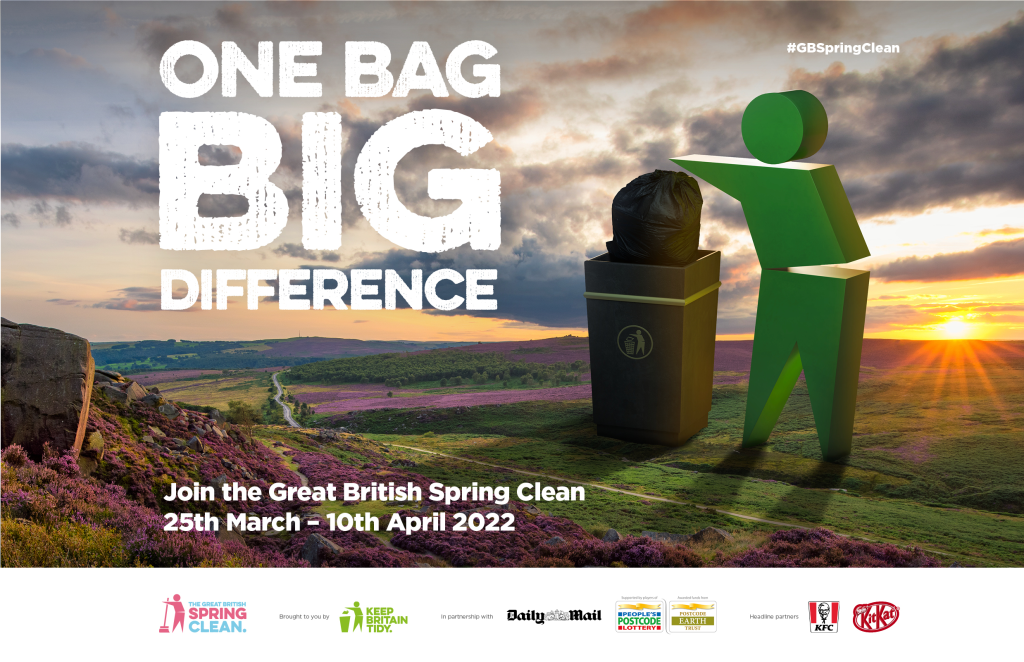
Litter is a form of pollution. It is an eye sore; if ingested by animals it can cause them pain and death; if it blocks drains it can cause flooding; if it blows into streams and rivers it can be ingested by fish etc. Overtime plastic waste breaks down into smaller particles which pollutes both air and water and which is already being found within the metabolism of humans and creatures. 

25th March – 10th April is dedicated to the Great British Spring Clean when participants are encouraged to go out and pick up litter. Why not give it a go?

https://www.keepbritaintidy.org/get-involved/support-our-campaigns/great-british-spring-clean

Green Tau: issue 36

8th March 2022

Suddenly the war in Ukraine is revealing anew our (in the UK and across the world) dependency in gas and oil and our lack of self reliance in the supply of energy. This week the IPCC issued its most recent support on the world’s position vis a vis the climate crisis and things are not looking good. We are as individuals, companies and governments are not reducing our carbon emissions at anything like the rate needed to safeguard a comfortable future, nor are we doing enough to adapt to those dangers of climate change that are already locked in by our current lifestyles. Surly this is the time to be urgently and radically addressing our production and consumption of carbon emitting energy.

The Need for Fossil Fuel Divestment

Oil and coal both began their existence about 300 million years ago as dead plant materials or marine life. When conditions allowed for anaerobic decay, the first stage of formation began. Later after another 200 millions of years of compression by overlying layers of debris, and exposure to high temperature found at geological depths, the decaying material slowly formed either seams of coal, or reservoirs of oil and/or gas. 

The earliest records of coal being mined and burnt date back to about 200BCE when it was being traded in China as a fuel. In the UK coal was mined and used by the Romans to heat water for their baths as well as for smelting metal.  In the mediaeval period the burning of coal in London was prohibited because of the issues of pollution. It was in the 1700s that the demand for coal rapidly increased as part of the industrial revolution – and has continued to increase across the world. Peak coal production probably  occurred in 2013, when 8 billion tonnes was demanded. Since then global demand has been declining but that is not to gainsay that in some countries demand for coal is still rising. 

The use of oil in the form of asphalt and pitch has been in use for at least 4000 years whilst the refining of crude oil to create, initially, lubricating oil, dates back to 1848. Since then the processing of oil has led to the creation of all sorts of materials – plastics, paints, fabrics, lipstick and nail varnish, weed killers and fertilisers – as well as its use a fuel for heating and for powering all manner of vehicles. Demand for oil has been even greater than that for coal. Peak oil is widely considered to be  imminent but as the date can only be seen in hindsight, its actual date is not yet clear. World oil production was 88.4  million barrels a day in 2020 and 99.5 in 2019.

Coal, oil and gas are major emitters of carbon dioxide and other greenhouse gases that are the root cause of the climate crisis. To contain the adverse affects of the crisis, these emissions need to be reduced to a net zero level by 2050. The International Energy Agency produced in  2021 a report –  Net Zero by 2050: a Roadmap for the Global Energy Sector – outlining the means by which such a target can be achieved. These include an end, as of 2021, to any further investment in new fossil fuel projects, no further sales of new internal combustion engine cars after 2035, and a net zero emissions global electricity sector by 2040.  By 2050 fossil fuel use would be solely in goods where the carbon produced can be embodied, such as recyclable plastics, and in a limited number of areas where  carbon emissions can be captured and where there is no other alternative resource.  (https://www.iea.org/news/pathway-to-critical-and-formidable-goal-of-net-zero-emissions-by-2050-is-narrow-but-brings-huge-benefits) The IEA was clearing stating that no new oil and natural gas fields were needed in this net zero pathway – all necessary supplies of fossil fuels can be met from existing extraction sites.

The imperative is to invest in alternative renewable energies, materials and technologies. Many Christians, individuals and organisations, are doing this as part of their commitment to the care of God’s creation. In the run up to COP26 37 faith institutions in Britain affirmed their decision to divest from fossil fuels investments – ie that they would withdraw from any investments that supported fossil fuels and would maintain that position thereafter. This groups included the Catholic Bishops’ Conference of Scotland; the Central Finance Board of the Methodist Church; the Presbyterian Church of Wales; the Presbyterian Church in Ireland; 15 Catholic dioceses in the UK and Ireland, including the Archdioceses of Glasgow, St Andrews & Edinburgh, Birmingham and Southwark; and from the Church of England, the Dioceses of Truro and Sodor & Man. This latter group has since been joined by the dioceses of Bristol, Oxford, Norwich and Durham. (https://brightnow.org.uk/news/global-faith-divestment-announcement-cop26/)

Bright Now, part of Operation Noah, campaigns on the issue of fossil fuel divestment and actively  encourages all parishes and churches to get involved in this campaign, which has at its heart the care of God’s creation. In the parish where I live, Parish funds are (in common with most Anglican churches) invested with CCLA Investment Management Limited, part of The CBF Church of England investment Fund – and as of July 2020, CCLA no longer holds any fossil fuel investments. However my local diocese, The Diocese of Southwark, which holds money on behalf of its parishes, has approximately £2.7 million in fossil fuel investments. This is the largest such holding pertaining to any of the Anglican Dioceses. 

As individuals we may feel we have no fossil fuel investments but (as with my church connections) it is highly likely that we do, even if only indirectly. Many of the companies who supply us with mortgages, insurance, pensions etc also hold investments in fossil fuels. The campaign group, Make My Money Matter, contends that swopping our pensions to a green provider is the most powerful thing we can do to reduce carbon emissions – UK pension funds invest £2.6 trillion on our behalf! (https://makemymoneymatter.co.uk/21x/) It is important that we as consumers ask how our money is being used when we hand it over to the care of others. Our money should be being used to create a better, kinder, just and peaceful world. 

Lent Reflection

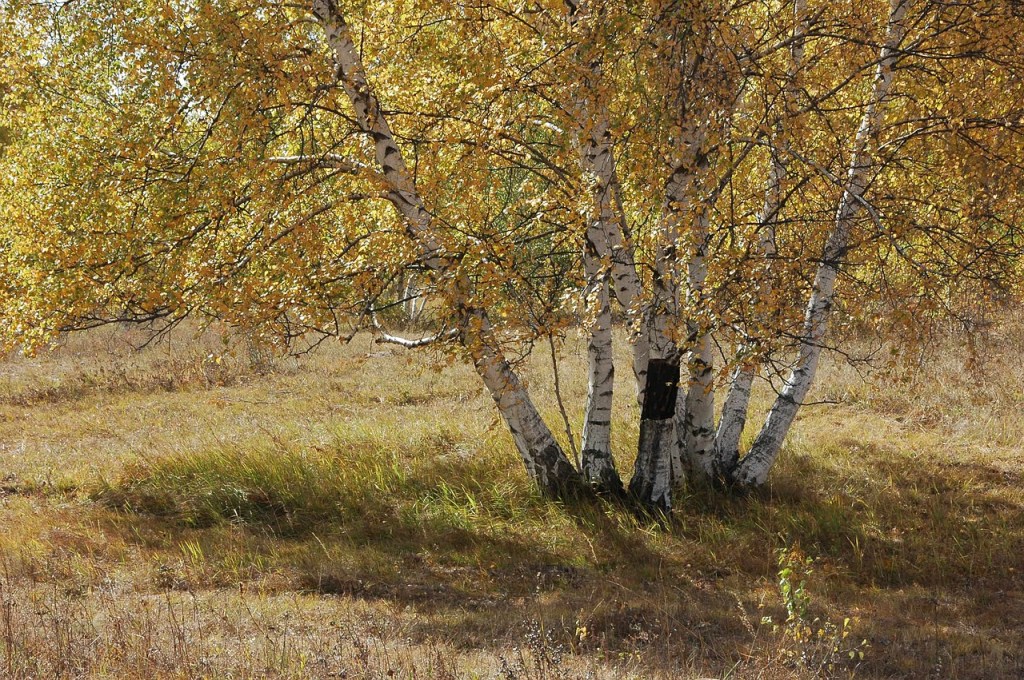
Grassland Autumn Forest White Birch Trees

The silver birch – betula pendula – can grow up to 30m in height. Its widely spread roots enables it to draw nutrients from a large area enabling it to grow where the soil’s fertility may initially be low. Its trunk often provides nesting spaces for woodpeckers as well as supporting various types of fungi.

Birch wood is often used in making ply wood. Its bark can be used to make bowls, boxes, baskets and even small boats. 

In Celtic mythology, the silver birch symbolised renewal and purification.

“…the birch trees which grew on this margin of the vast Edgon wilderness had put on their new leaves, delicate as butterflies’ wings and diaphanous as amber.” Thomas Hardy, The Return of the Native, Book VI, Chapter 1

Create in me a clean heart, O God, and put a new and right spirit within me. Psalm 51:10 

 Counting on…113

5th March 2022 

‘Toads which live on Ham Common are currently breeding and will make the 100-metre journey from their habitat to pools on the other side of the road to spawn for approximately three weeks.’ Our local council is temporarily closing this road to ensure the safety of the roads. Toad number have fallen by two thirds over the last 30 plus years largely because of the disappearance of ponds, ditches and wet ground which are part of their natural habitat. Toads are a gardener’s friend because they eat slugs and snails.

The Green Tau: preparing for Lent


1st March 2022

Lent is the forty day season of preparation for Easter; preparation for the new life that we share with Christ through his resurrection.

Lent is marked by Christians as a time of self examination, penitence, self denial and moderation, spiritual discipline (usually involving prayer and study/ reading) and alms giving. More generally it is seen as a time for giving up on a luxury we enjoy or giving up on a vice which has become an unwanted habit. The climate crisis has prompted some to use Lent as a season for fasting from carbon. 

Lent begins with Jesus in the wilderness, where with nothing to eat, he is totally reliant on his relationship with God. We might also think of other wilderness. The wilderness that lay outside the Garden of Eden, where Adam and Eve faced the challenge of tending and filling the earth so that it might bloom and flourish as it had in the garden planted by God. The wilderness between Egypt (where the prevailing system had been one of slavery and oppression) and the Promised Land. Here too the exiles had to learn to trust and learn from God how they should live, how they should adapt to a new environment. 

Lent can therefore be the time when we should  focus on how we tend and care for the environment, on how we pay attention  and respond to God’s will, so that we can flourish in harmony with God’s gift of creation.  

Jesus’s time in the wilderness occurs straight after he has been baptised by John in the Jordan. John too had chosen to locate himself in the wilderness, knowing its  symbolic status as a place of encounter with God and a place of repentance. John called on the people to own up to their sins, to change the way they lived, to transform their lifestyles, and to prepare the ground for the new era – the new creation – that the Messiah was bringing. John’s challenge was tough: the rich were to share their wealth, officials were not to cheat, and soldiers were not to abuse their power. Every tree that did not bear good fruit would be chopped down and burnt!

Should we too see Lent as the time to call truth to power? To point to both what is wrong in the way we live  and to what the dire consequences will be? Is it time to stand up in the wilderness calling on everyone to prepare for a new way of life, a new beginning, a fresh start? John and Jesus were charismatic activists. They spoke out, they told stories, they acted out their message. They spoke the truth. They healed and consoled people. And they showed people the right way.  

This Lent we need to be up front and open in talking about the climate crisis. We need to talk about it with our friends and neighbours. We need to both console and inspire. We need to show in our daily lives how we can live differently. We need to repeatedly demand change from those in power, MPs and local councillors, business leaders and investors, local businesses, manufacturers and retailers. We need to be vocal in our churches and in the streets (a poster in your window or on your gatepost). Now is the time to repent and change if we are to avert great disaster and instead to welcome in a new age of hope.

Jesus answered, ‘The first is, “Hear, O Israel: the Lord our God, the Lord is one; you shall love the Lord your God with all your heart, and with all your soul, and with all your mind, and with all your strength.”  The second is this, “You shall love your neighbour as yourself.” There is no other commandment greater than these.’ Mark 12:29-31

Keep these words that I am commanding you today in your heart.  Recite them to your children and talk about them when you are at home and when you are away, when you lie down and when you rise. Bind them as a sign on your hand, fix them as an emblem on your forehead, and write them on the doorposts of your house and on your gates. Deuteronomy 6:6-9

At core the message is simple: Love God, love your neighbour. Learn these words, teach them to your children, talk about them, repeat them at home and abroad, know them you sleep and when you rise, imprint them on your heart, display them on your gate post and door post, wear them on your sleeve. 

Sunday next before Lent

27th February 2022

Exodus 34:29-35

Moses came down from Mount Sinai. As he came down from the mountain with the two tablets of the covenant in his hand, Moses did not know that the skin of his face shone because he had been talking with God. When Aaron and all the Israelites saw Moses, the skin of his face was shining, and they were afraid to come near him. But Moses called to them; and Aaron and all the leaders of the congregation returned to him, and Moses spoke with them. Afterward all the Israelites came near, and he gave them in commandment all that the Lord had spoken with him on Mount Sinai. When Moses had finished speaking with them, he put a veil on his face; but whenever Moses went in before the Lord to speak with him, he would take the veil off, until he came out; and when he came out, and told the Israelites what he had been commanded, the Israelites would see the face of Moses, that the skin of his face was shining; and Moses would put the veil on his face again, until he went in to speak with him.

Psalm 99

1 The Lord is King;
let the people tremble; *
he is enthroned upon the cherubim;
let the earth shake.

2 The Lord is great in Zion; *
he is high above all peoples.

3 Let them confess his Name, which is great and awesome; *
he is the Holy One.

4 “O mighty King, lover of justice,
you have established equity; *
you have executed justice and righteousness in Jacob.”

5 Proclaim the greatness of the Lord our God
and fall down before his footstool; *
he is the Holy One.

6 Moses and Aaron among his priests,
and Samuel among those who call upon his Name, *
they called upon the Lord, and he answered them.

7 He spoke to them out of the pillar of cloud; *
they kept his testimonies and the decree that he gave them.

8 O Lord our God, you answered them indeed; *
you were a God who forgave them,
yet punished them for their evil deeds.

9 Proclaim the greatness of the Lord our God
and worship him upon his holy hill; *
for the Lord our God is the Holy One.

2 Corinthians 3:12-4:2

Since, then, we have such a hope, we act with great boldness, not like Moses, who put a veil over his face to keep the people of Israel from gazing at the end of the glory that was being set aside. But their minds were hardened. Indeed, to this very day, when they hear the reading of the old covenant, that same veil is still there, since only in Christ is it set aside. Indeed, to this very day whenever Moses is read, a veil lies over their minds; but when one turns to the Lord, the veil is removed. Now the Lord is the Spirit, and where the Spirit of the Lord is, there is freedom. And all of us, with unveiled faces, seeing the glory of the Lord as though reflected in a mirror, are being transformed into the same image from one degree of glory to another; for this comes from the Lord, the Spirit.

Therefore, since it is by God’s mercy that we are engaged in this ministry, we do not lose heart. We have renounced the shameful things that one hides; we refuse to practice cunning or to falsify God’s word; but by the open statement of the truth we commend ourselves to the conscience of everyone in the sight of God.

Luke 9:28-36, [37-43a]

Jesus took with him Peter and John and James, and went up on the mountain to pray. And while he was praying, the appearance of his face changed, and his clothes became dazzling white. Suddenly they saw two men, Moses and Elijah, talking to him. They appeared in glory and were speaking of his departure, which he was about to accomplish at Jerusalem. Now Peter and his companions were weighed down with sleep; but since they had stayed awake, they saw his glory and the two men who stood with him. Just as they were leaving him, Peter said to Jesus, “Master, it is good for us to be here; let us make three dwellings, one for you, one for Moses, and one for Elijah”–not knowing what he said. While he was saying this, a cloud came and overshadowed them; and they were terrified as they entered the cloud. Then from the cloud came a voice that said, “This is my Son, my Chosen; listen to him!” When the voice had spoken, Jesus was found alone. And they kept silent and in those days told no one any of the things they had seen.

Reflection

Ascending Mount Sinai, Moses draws close to God. It is a transformative experience: God’s glory shines through him. But is is not just Moses’ appearance that has changed; so too has his understanding of God and what God desires. Moses comes back down from the mountain with a new teaching, a new way of living that is in accordance with God’s will. Moses presents this to the Israelites through the medium of the Law.

The psalmist presents God as king. A king is one who reigns, one who determines how people will live within the  bounds of his kingdom.  God’s kingdom, God’s rule, says the psalmist, is characterised, by justice, equity and righteousness. 

I think Paul in his letter to the Corinthians is being a bit harsh in its condemnation of the the Jews. But then we too can equally be blinkered especially if we do not expect to see or hear a different interpretation – and that is as true of what we may hear on the news as of what we hear from scripture. We need to question are assumptions and to be enquiring. 

What Paul does want to say is that when we see and hear through the medium of our relationship with Jesus, our understanding will be completely transformed. It will be a route to freedom, a route that will see us being daily transformed by the glory of God. 

As with Moses’ experience, so for the disciples. When they are in such close proximity to God’s presence, they are overwhelmed by God’s glory. When Moses came back down from the mountain, he brought with him the Law, enscribed on tablets of stone. When the disciples came down from the mountain, they return with Jesus. Jesus is the living embodiment of God’s will for humankind. In Jesus’s example and teaching, we learn what is God’s will for the world. And as God says, ‘This is my Son, my Chosen; listen to him!’

Today’s readings are about hearing and seeing differently – hearing and seeing as God, and not the world, would have us hear and see. If we did, we would experience the world as a place where justice and equity and righteousness flourish. 

Pause a moment. What would such a world be like? Would there be people going to bed hungry? Would there be people fearing the loss of freedom and citizenship? Would there be people exposed to bombs and bullets? Would there be widespread destruction of rain forests, the depletion of soils, the loss of habitat and extinction of plants and animals? Would there be extreme weather patterns caused by human exploitation? Would there be a super rich 1% and an impoverished 90%? Would there be families dependent on food banks,  people with no stable income, young people unable to afford  homes, old people unable to afford care? 

If we know Jesus Christ, if we have faith in his teachings, if we were to follow his example, then through us God’s Spirit would be transforming the world. We can see it happening in small ways.

A couple of week’s ago at Christ Church we heard about the work of Partners for Change transforming the lives of Ethiopian communities. This fortnight we are marking the work of the Fairtrade Foundation, seeing both how it transforms the lives of others and protects and enhances the natural environment, and are being reminded how we can actively participate in that change. In our intercessions today we will be praying for the work of Christians Against Poverty which provides support and life skills and encouragement for people whose lives have been eroded by debt. 

We can use the time and discipline Lent gives us to hear anew what Jesus teaches, to reshape our lives to express his love for the people we meet day by day, to care for the natural world in which we live, and to support the work that is bringing justice and equity and righteousness to prevail. Let God’s kingdom come on earth!