Expanding access to clean, affordable and sustainable electricity to everyone is one of the UN’s development goals.
The following comes from a report by the Prometheus Institute
“Delivering universal access to “affordable, reliable, sustainable and modern energy for all” by 2030 has become a prominent global target under goal 7 of the UN’s Sustainable Development Goals (SDGs). Great progress has been made in recent years according to the 2024 State of the Global Mini-Grids Market (SOTM) Report, which found the number of people without electricity fell by 466 million between 2010 and 2021. Mini-grids have been a key driver towards greater energy access, with installations in 2024 set to be over six times higher than in 2018.
“The UN has nonetheless predicted that 660 million people around the world will still lack access to electricity by 2030, with Sub-Saharan Africa particularly in need of accelerated efforts.” (1)
Projects to meet these goals need to be financed.
This month the United Nations Development Programme noted that:-“As the global community prepares to convene in Sevilla for the Fourth International Conference on Financing for Development (FFD4) later this month, one question looms large: how can we mobilize the capital needed to deliver sustainable development in a world of constrained public finance?
“Africa offers a critical part of the answer.
“This week, UNDP launched the Fourth Africa Investment Insights Report—a data-rich guide to 250 real, investable opportunities across 20 countries. These projects span sectors such as renewable energy, health care, agriculture and inclusive infrastructure. Each one combines strong commercial potential with measurable development impact.
“This is not charity. It is strategic investment aligned with the United Nations Sustainable Development Goals (SDGs).” (2)
Whilst Climate Home News reported:-
“Climate negotiators in Bonn have been tasked with taking a “deep dive” into how a roadmap to boost climate finance for developing countries should look, so that it can be finalised at COP30 in Brazil –
“… At the start of the mid-year talks, UN climate chief Simon Stiell advised governments that the roadmap for mobilising $1.3 trillion a year by 2035 should not be “just a report, but a how-to guide with clear next steps on dramatically scaling up climate finance and investment”.
“That will mean reconciling widely divergent views among countries about what sources of finance the roadmap should draw on – and what form the money should come in…The “Baku to Belém Roadmap to 1.3T” was launched as part of the new climate finance goal (the NCQG) agreed at COP29, with a commitment for donors to raise $300 million annually – largely from the public purse – at its core.
“One main unresolved rift is that developing countries wanted the $1.3 trillion to consist of public money from rich nations – In general, developing countries have requested that the $1.3 trillion should consist of new money that is not re-labelled from other budgets, with public grant money as the bulk of it, excluding loans and other forms of debt.” (3)
Knowing what needs to be done – and knowing how it can be done – is not the same as being willing to pay for what needs to be done.
Becoming more informed, you will become aware of the many lifestyles changes that we can make to begin to address the climate crisis.
Make My Money Matter argued that the most impactful change we can make is to switch to a green pension provider – ie one that doesn’t fund fossil fuels. All commercial undertakings including fossil fuel exploration and extraction rely on finance and the operations of the financial sector – whether that is banking that enables the continuing day to day, week to week, and year year transactions of ongoing the business;; insurance protection for every aspect of the business; investment in expansion and new enterprises; maintaining share values and dividend payments etc. Many pension funds – as well as banks, mortgage and insurance companies – are key players in ensuring the flow of such finances.
Although Make My Money Matter closed this year, their website is, for the current year, a good source of information on pensions and banking.
Reshaping how we can talk positively about the climate crisis – part 3: Finance
April 2025
How can we talk about the climate crisis in a way that sounds encouraging?
The climate crisis is an existential threat which is certainly not good news. Its causes and impact are diverse and numerous such that it is hard to pin down ‘This is the cause’ or ‘This is the solution’. It is hard to quantify ‘This is how it will effect you’ and ‘This will be the time table.’
All this makes it difficult to find a way of talking to people about the crisis and how we might respond.
So here are some thoughts that might help.
Finance for a Better Future
We are told that one of the most effective ways of tackling climate change is to redirect the money that funds climate damaging industries such as oil and gas production . Make My Money has campaigned on this issue with both humour (short films and ) and straightforward facts and graphics:
“All of these banks refuse to stop funnelling money to the companies pumping new fossil fuels.
They each talk about climate change, but we need less talk and more action on what really matters:
* Immediately stop providing money to new clients who are involved in expanding fossil fuel operations
* End the flow of new money to existing fossil fuel clients who won’t stop the expansion of fossil fuel operations and haven’t published credible plans aligned to a 1.5 degree global warming limit * Set out a clear timeline for cutting ties with existing clients that continue to expand fossil fuel operations”
But despite the ease with which we can switch banks, many of us haven’t bothered to take this simple action. Perhaps because there is no immediately visible result. Stop driving to the shops and you straight away see the benefit of not having to refuel your car. Switch your bank and there is no noticeable reduction in oil production, no financial gain. And anyway aren’t high street customers mere minnows in an ocean of big financial organisations?
Is it also that with banking we see ourselves as customers buying a service, not as patrons providing banks with money and probity? Banks like – need – to be seen as upright, trustworthy and moral institutions: people with whom you can safely entrust your money. That is part of the reason that banks will sponsor sporting and cultural events – it improves their perceived reputation as ‘responsible’ companies. And that is why groups have campaigned against such greenwashing bank relationships eg Barclays and Wimbledon Lawn Tennis/ Live Nation music festivals/ National Trust/ Sadler’s Wells.
Turning the situation round, should we be actively expecting our bank – the bank we support with our money and our patronage – to demonstrate how it is using its financial clout to create better world? By way of example let’s look at Triodos. Triodos scored the top mark in a recent survey by Ethical Consumer, scoring 96 out of a possible 100 points. The big five high street banks – Lloyds, HSBC, NatWest, Santander and Barclays scored 6 or less. (1)
Triodos does not provide finance for fossil fuels, nor fast fashion, nor weapons and warfare, nor gambling. Triodos does provide finance for renewable energy, nature restoration, healthcare, art and culture: “We believe it’s not enough to avoid funding harmful practices, so we actively support those building a better tomorrow. Our commitment goes beyond avoiding harmful investments. We proactively seek out and support initiatives that contribute to a sustainable future, ensuring that every loan and investment aligns with our mission.” (2)
For example, “Ember, the UK’s first all-electric intercity bus operator, has increased its fleet of zero emission coaches with a £5.6m loan from Triodos Bank UK. The electric coach operator, based in Scotland, has a fleet of vehicles designed specifically for intercity travel. These buses are zero-emission, contributing to environmental sustainability by reducing carbon footprints and improving urban air quality.” (3)
Triodos also finances “Copeland Park … a social, cultural and creative hub in Peckham, an area of London that is becoming increasingly known as a haven for artistic individuals and collectives. At Copeland Park, traditional warehouses and industrial buildings have been transformed into workspace for a number of creative businesses. The historic Bussey Building, for example, now provides a home for artists’ studios, theatre groups, live music venues, fitness studios and faith groups – along with incomparable views of London.”
In Wandsworth “Beyond Autism seeks to improve the education and health of children diagnosed with autism and/or related communication disorders. A loan from Triodos Bank allowed Beyond Autism to purchase their facility.”
On Mull “NWMCWC was set up by the local community in 2006 to purchase and manage the Langamull and West Ardhu forests in North West Mull. With 2 Triodos loans, we were able to help with a variety of projects, including helping with the construction of a woodshed for timber felled at the woodland.”
And in Wales “NWMCWC was set up by the local community in 2006 to purchase and manage the Langamull and West Ardhu forests in North West Mull. With 2 Triodos loans, we were able to help with a variety of projects, including helping with the construction of a woodshed for timber felled at the woodland.” (4)
In addition Triodos does not use its profits to pay bonuses to its staff. Rather “Triodos believe all our workers should be paid fairly and our focus should be on impact – for the whole Triodos community.” (2)
Choosing – switching to – an ethical banking really does enable our money to create a better future, and can do so in a clearly transparent way, such that we can be proud of what our patronage can achieve.
The following websites help individuals switch to ethical banks:-
NB the other banks recommended in the Ethical Consumer report included Coop Bank/ Smile, Cumberland Building Society, and Nationwide, all scoring 70 or more.
“This year’s UN climate summit, being held in Azerbaijan, is focused on finance, and specifically the new collective quantified goal (NCQG) for climate finance, required under the 2015 Paris agreement. Rich countries are bound under the agreement to provide climate finance to help developing nations cut their greenhouse gas emissions and cope with the impacts of the climate crisis. The current finance goal, of providing $100bn a year to poor countries, is widely acknowledged to be inadequate, and most rich countries agree the figure needs to be several times higher.
Poor countries are asking for finance of about $1tn a year by 2035, based on widely accepted estimates of their needs. Rich countries are likely to agree to a considerably smaller sum, perhaps about half that amount, to be paid from their exchequers and through multilateral institutions such as the World Bank.
The gap could be met from a variety of means, including new taxes on fossil fuels or the diversion of existing subsidies to cleaner ends. These “innovative sources of finance” will not be fully articulated or agreed at Cop29 and will need further work.” (1)
The world – people, animals, plants, birds, economies, agriculture, water supplies etc – is already suffering from the effects of climate change and this is a crisis that will continue to grow (exponentially) unless action is taken. The major contributor of the greenhouse gases cause this, is fossil fuels.
The IPCC AR6 Synthesis Report (2023) states “Limiting human-caused global warming requires net zero CO2 emissions. Cumulative carbon emissions until the time of reaching net-zero CO2 emissions and the level of greenhouse gas emission reductions this decade largely determine whether warming can be limited to 1.5°C or 2°C (high confidence). Projected CO2 emissions from existing fossil fuel infrastructure without additional abatement would exceed the remaining carbon budget for 1.5°C (50%) (high confidence)”. https://www.ipcc.ch/report/ar6/syr/resources/spm-headline-statements/
In other words, our current production levels and use of fossil fuels will, cumulatively (because they build up and remaining in the atmosphere for generations), cause global temperatures rises in excess of 1.5C. (In 2023 the global temperature rise was 1.2C above the average for NASA’s baseline period (1951-1980))
The IPPC’s report goes on to to say “Finance, technology and international cooperation are critical enablers for accelerated climate action. If climate goals are to be achieved, both adaptation and mitigation financing would need to increase many-fold. There is sufficient global capital to close the global investment gaps but there are barriers to redirect capital to climate action.”
Finance is key but it will only be effective if it is targeting projects that reduce emissions. One would expect therefore to be seeing an ongoing g and rapid transfer of money away from fossil fuel projects and into the support of renewable energy. Yet in January 2023 Reuters reported “The share of bank finance going to renewable energy rather than fossil fuels has little changed in six years, raising questions about how fast lenders are pushing energy clients to become greener, according to research published Tuesday. Since 2016 renewable energy has taken 7% of a total $2.5 trillion in bank loans and bond underwriting for energy activities, according to a report commissioned by environmental groups including Sierra Club and Fair Finance International.” https://www.reuters.com/business/sustainable-business/bank-funding-renewables-stagnates-vs-oil-gas-report-2023-01-24/
A report, Banking on Climate Chaos, records that fossil fuel financing from the world’s 60 largest banks reached $5.5 trillion in the six years since the Paris Agreement, 2015, and 2022. Of these JP Morgan, the worst bank overall, financed $39 billion in 2022, so totalling $434 billion between 2016 – 2022. Top rating amongst the European banks was Barclays, which took seventh place in the league table, having $190.5 billion over the time frame.
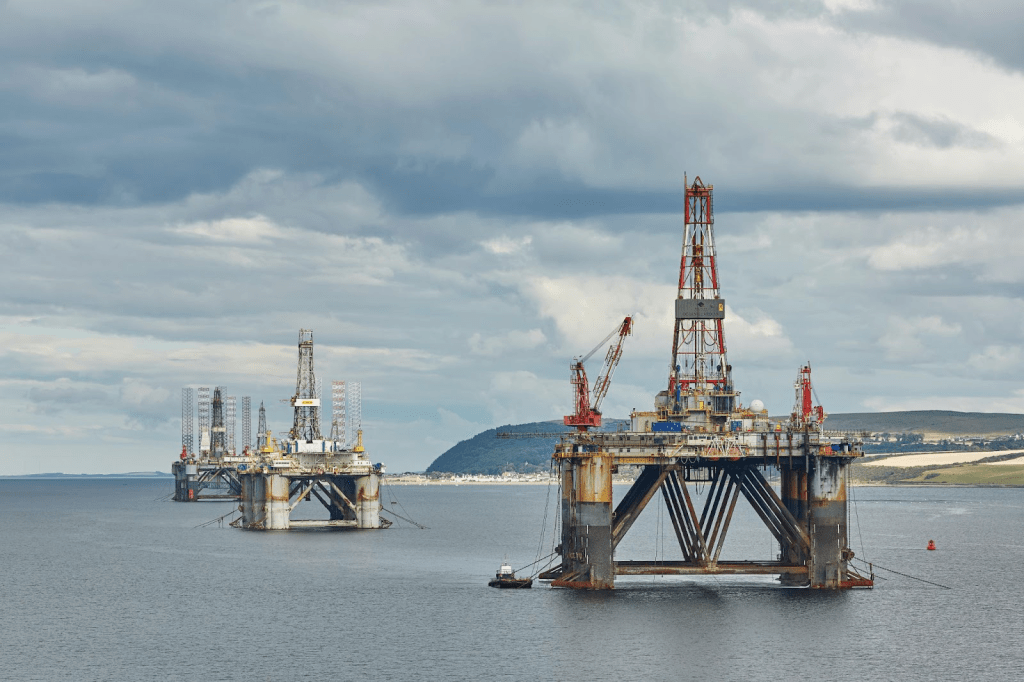
Barclays provides finance to numerous oil companies including Exxon, Shell, BP, Chevron, Total, and Equinor. This is finance that supports both existing and new projects. Yet there is no space in the world’s carbon budgets for this continuing increase in emissions. “Potential emissions from fossil fuels already in production or under construction – the wells already drills or being drilled – already takes the world well past 2C of global warming… world cannot afford any fossil fuel expansion…” https://www.bankingonclimatechaos.org/
Not surprisingly a number of climate concerned groups are pushing for change – both of banks that they stop financing the fossil fuel industry, and of customers that they stop using these highly destructive banks.
It is often argued that moving one’s money out of Barclays will have no impact as it will merely be replaced by money from elsewhere. I’m not sure that that can always be true – there must at some point be a finite sum of money to be banked. But turning it round, the money you move can then be invested by a greener bank to support renewable energy and other beneficial projects – and this indeed might be money they would otherwise not get. And don’t worry of the amount you are banking with is small: for every £ deposited, banks will lend a multiple amount. Even if that multiplier was only 2 it would double the financial contribution that you money makes to green investments.
Here in the UK Make My Money Matter is calling on individuals to “green their money” as well as encouraging students and alumni to call on their universities to switch to sustainable banks – https://makemymoneymatter.co.uk/
Just Money offers another perspective on the issue, this time from a Christian view point, and has advice and resources for churches and charities wishing to switch to green banking.
And it is not just charities that are being asks to reconsider their banking arrangements. The same ask is being made of churches and dioceses. Christians are called to care for creation and to love their neighbour – which are actually overlapping vocations – and switching to a bank that does not pursue profit through the financing of fossil fuels, is one of the easier steps they can take!
Exploring (and hopefully understanding) the terminology and acronyms of the investment world used in and around the issue of climate change. Many of the changes we are going to need to both reduce and to live with, the impacts of climate change require considerable sums of money. If that money doesn’t come through government from taxation, it has to come from the financial markets.
“Climate change is having an ever-increasing impact on global capital markets. It presents a wide and complex range of risks from physical impacts such as flooded factories, to regulation risk such as the imposition of expected carbon taxes, litigation risk and transition risk as company cash flows and profits are affected by the move to a low-carbon economy. There is also mounting evidence that companies who care about their broader eco-systems, tend to financially outperform those who do not. ” https://www.transitionpathwayinitiative.org/investors
IPCC – Intergovernmental Panel on Climate Change, organised by the United Nations. The UN currently has a membership of 193 nations.
COP – conference of the parties being “the supreme governing body of an international convention (treaty, written agreement between actors in international law). It is composed of representatives of the member states of the convention and accredited observers. Scope of the COP is to review the “implementation of the Convention and any other legal instruments that the COP adopts and take decisions necessary to promote the effective implementation of the Convention” https://en.wikipedia.org/wiki/Conference_of_the_parties
The 28th United Nations Climate Change Conference will take place in Dubai in November this year and is commonly referred to as COP28. Other COPs also take place such as the 15th United Nations Biodiversity Conference which met in Montreal in December 2022.
Paris Agreement (sometimes referred to as the Paris Accords) – “an international treaty on climate change. Adopted in 2015, the agreement covers climate change mitigation, adaptation, and finance. The Paris Agreement was negotiated by 196 parties at the 2015 United Nations Climate Change Conference in Paris. The Paris Agreement’s long-term temperature goal is to keep the rise in mean global temperature to well below 2 °C above pre-industrial levels, and preferably limit the increase to 1.5 °C, recognising that this would substantially reduce the effects of climate change. Emissions should be reduced as soon as possible and reach net-zero by the middle of the 21st century. To stay below 1.5 °C of global warming, emissions need to be cut by roughly 50% by 2030. This is an aggregate of each country’s nationally determined contributions.” https://en.wikipedia.org/wiki/Paris_Agreement
Net zero targets – a zero target would reduce carbon/ greenhouse gas emissions to absolute zero. Net zero would reduce emission on balance to zero – ie remaining emissions that could not be avoided being offset by processes that absorb unwanted emissions. If the desired effect of curtailing global warming is be achieved, these offset amounts need to be minimal.
Offsetting – a process whereby one invests in a project that will remove greenhouse gas emissions from the atmosphere and absorb them in such a way that they are not re-released. This removal might be achieved through planting trees which over their life time will absorb CO2 (the main greenhouse gas) from the atmosphere via their leaves and ‘lock’ them away in the trunk, roots and branches of the tree. It might equally be achieved by growing other plants including seaweeds. Greenhouse gases can also be ‘locked’ into the soil by developing peat bogs, by creating grasslands (that will not be tilled as this will release the gases from the soil) or by pursuing regenerative methods of farming. Some offsetting projects don’t plant new forests but rather concentrate on maintaining existing forests where trees will not be routinely cut for timber. This may particularly apply in regions of virgin rainforest where the investment can be an alternative income to that obtained from clearing the forest for agriculture. The idea behind offsetting is that where emissions from an operation cannot be reduced to zero, that the residual amount of produced by the operator is offset by an equivalent re- capturing of gases. To be of value, carbon offsetting schemes need to be scientifically proven to be effective, and to be certified so that the offsetting cannot be resold. Offsetting should always be a last resort.
Climate Transition Plan – an action plan that outlines how an organisation will develop or change its use of assets and resources, and its entire business plan to meet agreed climate targets – typically halving greenhouse gas emissions by 2030 and reducing them to net zero by 2050. In November 2021 the UK Government set up a Transition Plan Taskforce (TPT). As of 2023 listed UK companies are required to publish transition plans with guidance from the TPT using rules agreed with the Financial Conduct Authority (FCA) – although apparently it doesn’t have to have net zero as its target.
Just Transition – “ A ‘just transition’ means moving to a more sustainable economy in a way that’s fair to everyone – including people working in polluting industries.“ Greenpeace. In the financial world the Impact Investment Institute this year produced a set of Just Transition Criteria to enable investors make better judged investments that will fulfil the objectives of a just transition – https://www.impactinvest.org.uk/wp-content/uploads/2023/05/Just-Transition-Criteria.pdf (This pdf is an interesting read)
IEA – International Energy Agency is an “autonomous intergovernmental organisation, established in 1974, that provides policy recommendations, analysis and data on the entire global energy sector. The 31 member countries and 13association countries of the IEA represent 75% of global energy demand. The IEA was set up under the framework of the Organisation for Economic Co-operation and Development (OECD) in the aftermath of the 1973 oil crisis to respond to physical disruptions in global oil supplies, provide data and statistics about the global oil market and energy sector, promote energy savings and conservation, and establish international technical collaboration on innovation and research. Since its founding, the IEA has also coordinated use of the oil reserves that its members are required to hold.” https://en.wikipedia.org/wiki/International_Energy_Agency. In May 2019 the IEA reported that investors should not fund new oil, gas and coal supply projects if the world wants to reach net zero emissions by mid-century – “The pathway to net zero is narrow but still achievable. If we want to reach net zero by 2050 we do not need any more investments in new oil, gas and coal projects,” said Fatih Birol, the IEA’s executive director. “It is up to investors to chose whatever portfolio they prefer but there are risks and rewards.”
Transition Pathway Initiative (TPI) – supported by research from the LSE and the Grantham Research Institute, this scheme assesses the performance of major companies using publicly available data so as to rate the companies on their Management Quality (ie how well their business plans relate to measuring and controlling their greenhouse gas emissions) and Carbon Performance (how well their business plans align with the UN Paris Agreement goals). This information is then made available to anyone who is interested and in particular to investors who want to ensure that the companies they invest in are transitioning appropriately to net zero. https://www.transitionpathwayinitiative.org/
NIBs – National Investment Bodies – the Church of England has three such bodies comprising:-
Church of England Pensions Board – “We provide retirement housing and pensions, set by the Church of England, for those who serve or work for the Church. We assist over 42,000 people across almost 700 employers with their pensions, carefully stewarding the funds under our care of around £3.2 billion.
Church Commissioners for England – “ The Church Commissioners manages a £10.3bn investment fund. The money it makes from those investments contributes to the cost of mission projects, dioceses in low-income areas, bishops, cathedrals, and pensions. The Church Commissioners also provides administrative support for the Church. We contribute about £1.2bn every three years to various parts of the Church of England, around 20% of the Church’s annual running costs, which makes us one of the largest charitable givers in the UK.”
CBF funds which are managed by CCLA (Churches, Charities and Local Authorities (CCLA) Investment Management Limited). These are the fund managers who look after most parish investment monies.
Fiduciary Duty – A fiduciary is someone who has undertaken to act for and on behalf of another in a particular matter in circumstances which give rise to a relationship of trust and confidence — Lord Millett, Bristol and West Building Society v Mothew A fiduciary duty in terms of finance sense exist to ensure that those who manage other people’s money act in their beneficiaries’ interests, rather than serving their own interests. (https://en.wikipedia.org/wiki/Fiduciary) For example, money given by its congregations and other donors must be managed for the benefit of the Church of England, and within that for example, many given to the Pensions Investment Board must be managed to benefit present and future C of E pensioners.
TCFD – Task Force on Climate-related Financial Disclosures: when buying and selling investments one needs accurate information that enable you to assess the risk of making or loosing money. A new risk is that of climate change, and investors need accurate and standardised information so that they can fairly value what they are buying and selling. Ensuring such information is forthcoming – is disclosed – is the function of the TCFD. https://www.fsb-tcfd.org/about/
Climate Action 100+ is a group of 700 global investors – including the Church of England Pensions Board – who undertake to to engage with the major companies* that will play a significant role in the transition to a net-zero emissions economy. Individual or small groups of these investors engage with a particularly company to monitor performance, and develop and implement company specific strategies that will ensure they meet the necessary targets on the route to net zero. https://www.climateaction100.org/about/
Paris Aligned Investment Initiative -“ Paris Aligned Asset Owners are a global group of 56 asset owners, with over $3.3 trillion in assets. They have committed to transitioning their investments to achieve net zero portfolio GHG emissions by 2050, or sooner, drawing on the Net Zero Investment Framework to deliver these commitments”. The Church of England Pensions Board is a member of this group. https://www.parisalignedassetowners.org/ The Initiative is delivered by four investor networks covering the different regions of the globe. The network for Europe is The Institutional Investors Group on Climate Change (IIGCC).
Net Zero Investment Framework – The Net Zero Investment Framework, published in March 2021, provides a common set of recommended actions, metrics and methodologies through which investors can maximise their contribution to achieving global net zero global emissions by 2050 or sooner. Its primary objective is to ensure investors can decarbonise investment portfolios and increase investment in climate solutions, in a way that is consistent with a 1.5°C net zero emissions future.
Net Zero Climate – an Oxford University based which “brings together principles and policies, practical tools, and progress tracking to help businesses and policymakers achieve that [net zero emissions] goal.” https://netzeroclimate.org/ As well as hosting the Net Zero Asset Owners alliance, they provide tools for organisations including ‘How to set a net zero target’ :
1. Pledge at the head-of-organization level to reach net zero GHGs as soon as possible, and by mid-century at the latest, in line with global efforts to limit warming to 1.5C. Recognise that this requires phasing out all unabated fossil fuels as part of the transition.
Set an interim target to achieve in the next decade, which reflects maximum effort toward or beyond a fair share of the 50% global reduction in CO2 by 2030.
Targets must cover all GHGs, including Scopes 1, 2, and 3 for businesses and other organisations, all territorial emissions for cities and regions, all portfolio/financed/facilitated/insured emissions for financial entities, and all land-based emissions.
2. Plan Within 12 months of joining, publicly disclose a Transition Plan, City/Region Plan, or equivalent which outlines how all other Race to Zero criteria will be met
Include what actions will be taken within the next 12 months, within 2-3 years, and by 2030.
3. Proceed Take immediate action through all available pathways toward achieving net zero, consistent with delivering interim targets specified.
Where relevant, contribute to sectoral breakthroughs.
4. Publish Report publicly both progress against interim and long-term targets, as well as the actions being taken, at least annually.
Report in a standardised, open format, and via platforms that feed into the UNFCCC Global Climate Action Portal.
5. Persuade Within 12 months of joining, align external policy and engagement, including membership in associations, to the goal of halving emissions by 2030 and reaching global net zero by 2050.
Net Zero Engagement Initiative – launched by this Initiative expands the number of companies with whom investors are actively engaging vis a vis net zero targets beyond the Climate Action 100+ list. This should enable mot investors to develop portfolios where an even greater number of the companies they invest in, are aligned with the Paris Agreement. For more details visit their website – https://www.iigcc.org/resource/net-zero-engagement-initiative/
Net Zero Standard for Oil and Gas – Convened by members of IIGCC and informed by the Transition Pathway Initiative (TPI), this standard “sets minimum expectations for what must be included in net zero transition plans from oil and gas companies, to create a level playing field in corporate reporting and meet investor expectations for credible and comparable company net zero transition plans.” https://www.iigcc.org/resource/net-zero-standard-for-oil-and-gas-companies/
The standard notes “time is very much against all of us and we need to accelerate the pace and scale of commitments… These calls to action from industry groups and scientists alike, must translate into real, drastic, and immediate emissions reductions in all sectors. Emissions reductions across the board means significant fossil fuel demand destruction… Therefore it is essential that oil and gas company boards know that those with credible independently verified net zero* strategies will be supported by their investors. Equally important sis that this without will be challenged.” *Further on the standard specifies that these net zero strategies should include scope 3 emissions as well as scopes 1 and 2.
“Germany wants to help Kenya get from 90% renewables to 100%, its BMZ development ministry says. The two countries have announced a partnership at Cop27, with the details to be fleshed out in December. After Kenya’s power needs are met, it can use the electricity to make green hydrogen, BMZ said. ” Climate Home News
On the agenda today at COP27 is finance. Money is crucial if the world is to shift to a net zero economy.
The thought that our money is being used to potentially develop these new oil and gas fields is devastating and suggests that both these institutions and our government are not serious in their commitment to reducing green house gases.
Refocusing our environmental lifestyle should also include our finances. We can in small ways influence the environmental protection that financial world gives through our choice of bank, mortgage lender, insurance provider and pension fund. All these financial institutions invest money (our money in fact) to gain a return that finances their product. Where they invest their money can impact the environment. For example if they invest in companies that produce fossil fuels, they are financing the continued production of green house gases. If they invest in companies that manufacture plastic packaging, they are financing the continued production of the commonest form of litter. If they invest in companies that produce tobacco, they are financing the continued production of an addictive and carcinogenic commodity.
For more insight into the environmental issues around banks see this Ethical Consumer report. They also provide ratings for different financial institutions covering current accounts, savings accounts and mortgages etc. To access these you will need to be a subscriber.
For more information on pensions and pension funds see https://makemymoneymatter.co.uk/ which strongly advocates swopping your pension as the most effective way of tackling climate change. (However if, like me, you don’t have a portable pension this won’t be possible. Nevertheless you can still keep asking your pension provider to adopt an environmentally responsible approach to its investment strategy).
In order to tackle climate change finance is needed, both state and private finance. This comes in the form of investment needed to facilitate the transfer from carbon-based to green technologies, and to train those who will work in these new industries; to transfer from animal based agriculture to plant based agriculture, and from a meat and diary based food industry to a plant based food industry; the need to invest in restoring, enlarging and maintaining carbon sequestering land and seascapes; the need to adapt existing and build new infrastructure to cope with the changes in climate that are already happening such as flooding and heat waves, including paying for those individuals and groups who cannot afford to pay for these adaptions themselves; to develop the new systems and infrastructure needed to cope with the future changes in the climate which have already been locked into world and which may increase if global temperatures rise significantly above the current 1C increase.
Poorer countries and small island states are in particular need of support from affluent countries like ours. The intention – although not yet the fact – is that developed nations will be supplying $1 billion to finance support for these more vulnerable nations.




 The Green Tau